• Don't want to see ads? Install an adblocker like uBlock Origin or use a Europe-based privacy-friendly browser like Vivaldi or Mullvad.

Isolating WHG, EEF, EHG, CHG Traits

Phenotype is not constant over time, environment and epigenetic factors make this discussion trivial. Morphology evolves even within populations without outside genetic influence.

Good point. That's always something to consider. However, no one knows exactly how big its effect is. I'm just gonna guess its effect isn't very big. I say just go for the simple explanation: We inherit our looks from our ancestors, therefore, our ancestors looked like us.

The oldest truly accurate representation we have of ancient faces come from ancient Greece and Rome. And they look like typical modern Europeans even though they lived under such different environment. Genes effect looks more than culture.
 
I have two doubts at the moment, first that the western branches of R1B come from the steppe and second doubt, that the leguas centum come from the steppe, for the moment I am not clear, if I have clear that the languages baltoeslavas come from the steppe but nothing and that even Germanic languages may have a profound influence on the steppe but its component R1B and centum make them have a profound influence from other places other than the steppe.


I am a simple fan of these issues but I am interested and I would like to know the scientific truth (if possible) outside of political or other bias.

Such brutal levels of R1B between the Basques and Aquitanos and so little steppe as it is said?


This 25 percent steppe in most of France, Spain, Portugal, Italy, Greece, when it occurred?


There are areas with more than 80 percent R1B with very little stage. What's wrong here?

What is being Indo-European?


The Indian thing I put aside for being something alien at the moment to my subject of interest, the European thing if it raises Western Europe I understand that if you have R1b and halogroup and mitochondrial H1 (which are the most frequent in western europe) you sure you are europe Western, the rest I consider are labels that time will tell if they have a scientific basis or are biased approach, in the current approaches in these forums sure something goes wrong, there are things that are incoherent.
 
Last edited:
I understand that if you have R1b and halogroup and mitochondrial H1 (which are the most frequent in western europe) you sure you are europe Western, .

H1 is popular in all of Europe just Western Europe. H3 though is most popular in Western Europe. Both H1 and H3 also just as popular in Northwest Africa (Morocco, Algeria) as in Western Europe. mHG H1 and H3 probably arrived in Europe and North Africa from Anatolia about 8,000 years ago. At least that's what ancient DNA suggests.
 
Tool for estimate ancient ancestry proportions: Your ancient ancestry #1.
Results for most populations in Europe and Middle East: Here

Its purpose isn't to be precisely accurate but to give people who have taken DNA tests a reasonable idea how much ancestry EEF, Steppe, WHG, and some other groups they have.

Some new interesting trends appear. EEF gets well over 50% all over most of Southern Europe but only about 20% in much of Northeastern Europeans. That might turn out to have an impact on phenotype. We shouldn't expect the average Lithuanian or Finn to carry distinguishable EEF features while Spaniards and Greeks and northern Italians might more or less look like how EEF did.
 
Thanks, but I'll stick to something that uses actual ancient samples.
 
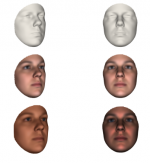
Original paper: http://www.pnas.org/content/early/2017/08/29/1711125114

https://www.technologyreview.com/s/608813/does-your-genome-predict-your-face-not-quite-yet/

In genetics, traits like the color of your eyes or cholesterol levels are called phenotypes. These phenotypes are determined, to a greater or lesser degree, by your particular DNA, or genotype.
That’s why identifying someone's face from their DNA isn’t just theoretically possible, but likely to be possible a few years, says Mark Shriver, who works on genes-to-face prediction at the department of anthropology at Penn State. “I think it’s in our future for sure,” he says.
However, scientists still have work to do to know exactly how, say, your DNA influences the length of your nose or the width of your mouth, or the timbre of your voice. Shriver thinks Venter’s paper didn’t add much to what can already be predicted using existing DNA tests that measure your ethnic makeup and sex.
“Calling it predicting from the genome is what’s wrong,” says Shriver. “The main message is way overstated. They just didn’t have enough people to find the genes that distinguish people. This is not the paper that is going to convince people that this is going to affect privacy or help forensics.”

Perhaps in a few years from now, they may be able to predict a person's face accurately using DNA. I wonder if it would be useful for ancient samples as well.
 
Perhaps in a few years from now, they may be able to predict a person's face accurately using DNA. I wonder if it would be useful for ancient samples as well.
I'm sure they will, and can't wait!
 
This my first prediction. I think EEF is the source for the basic white girl look which would be appropriate considering EEF:s legacy is mostly seen in mtDNA. It's super common and more common in girls than boys. Thin face, long thin nose.

Sardinian.
d_JcwvA3qFa1FNSZw_WFfbpiAEyb_TftaEIv8xaNKHXdtVDywVnwd-9DGDcawqjbbnqG32WA5GlurYHAfNMizR4Dw2xFVPl10N38pHJ9WXbmJhg5KQQA9C59Wm1jvXs84qRNJQ-v

IMO that's a mostly WHG-look (Alpinoid?)..large-round face, full lips, light-intermediate eyes..

I associate EEF phenotype with long and narrow face like this neolithic maltese woman

f03c5c64f9e4e1e5c7a4ce2f8a9c712d--malta-facials.jpg

or this Sardinian footballer (right)

View attachment 9494
 
Last edited:
Perhaps in a few years from now, they may be able to predict a person's face accurately using DNA. I wonder if it would be useful for ancient samples as well.

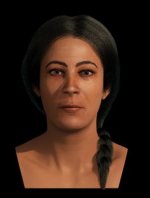
This reconstruction was published in a genetic study few months ago..SHG woman, a WHG and ANE mix
shg.PNG
 
^^I'd go with the Maltese Neolithic woman for EEF as well.

A lot of Sardinians don't look like the soccer player, imo. Many are shorter and broader faced, perhaps partly because they have more WHG in them than the early farmers had even if they plot close to the farmers. I think Otzi was that type, with more of a mesolithic skull and a broader face.


5679722704_3bb814befb_b.jpg


1160_4793_Old-Sardinian-Man.jpg


This guy looks like a bit of an Otzi type to me:
148751273
17%20Living%20To%20100.jpg

148751273


I doubt the eyes were ever blue. He was part of one of those longevity studies, I think, and at those kinds of ages all the pigment has leached out, except for what the sun and wind have done to the skin, of course.

There are what I think of as "purer" Med types as well, although I may be wrong. Perhaps these women more approximate the Maltese woman? On the first one make the eyes brown and narrow the face a bit? Although, we now know the AN people had brue eyes in a minor percentage. Only pretty girls get photographed, so there's that as well.

2594cb37b3b774ac8a1d43eb015195e3.jpg


b6a7bbef5e50c9f40303ba50d778dd53.jpg


The soccer player looks to me as if he has a good chunk of maybe late Neolithic, maybe Bronze Age in him.

Anyway, there's a lot of Neolithic farmer and other "Med" types in Sardinia, so you can find lots of examples.

hqdefault.jpg


Some people who've never traveled even out of their state, much less to other countries, and don't have the focus or the eye to distinguish between people they see in photos, even if the photos are a real random sample, post a lot of nonsense about phenotypes on these kinds of internet boards. If someone tried to correct all of them, they'd do nothing but that all day.
 
^^I'd go with the Maltese Neolithic woman for EEF as well.

A lot of Sardinians don't look like the soccer player, imo. Many are shorter and broader faced, perhaps partly because they have more WHG in them than the early farmers had even if they plot close to the farmers. I think Otzi was that type, with more of a mesolithic skull and a broader face.

Yes WHG look (large-broad faces, stocky etc..) is very common in Southern Europe, even in those areas classified as Mediterraneans in the old charts...like Spain or S. Italy for example.
 
Kurgan individuals, probably Khvalynsk culture but i'm not sure (ANE+CHG)

hvalynsk-6-1-.jpghvalynsk-7-3.jpghvalynsk-17.jpghvalynsk-7-1.jpghvalynsk-35.jpg
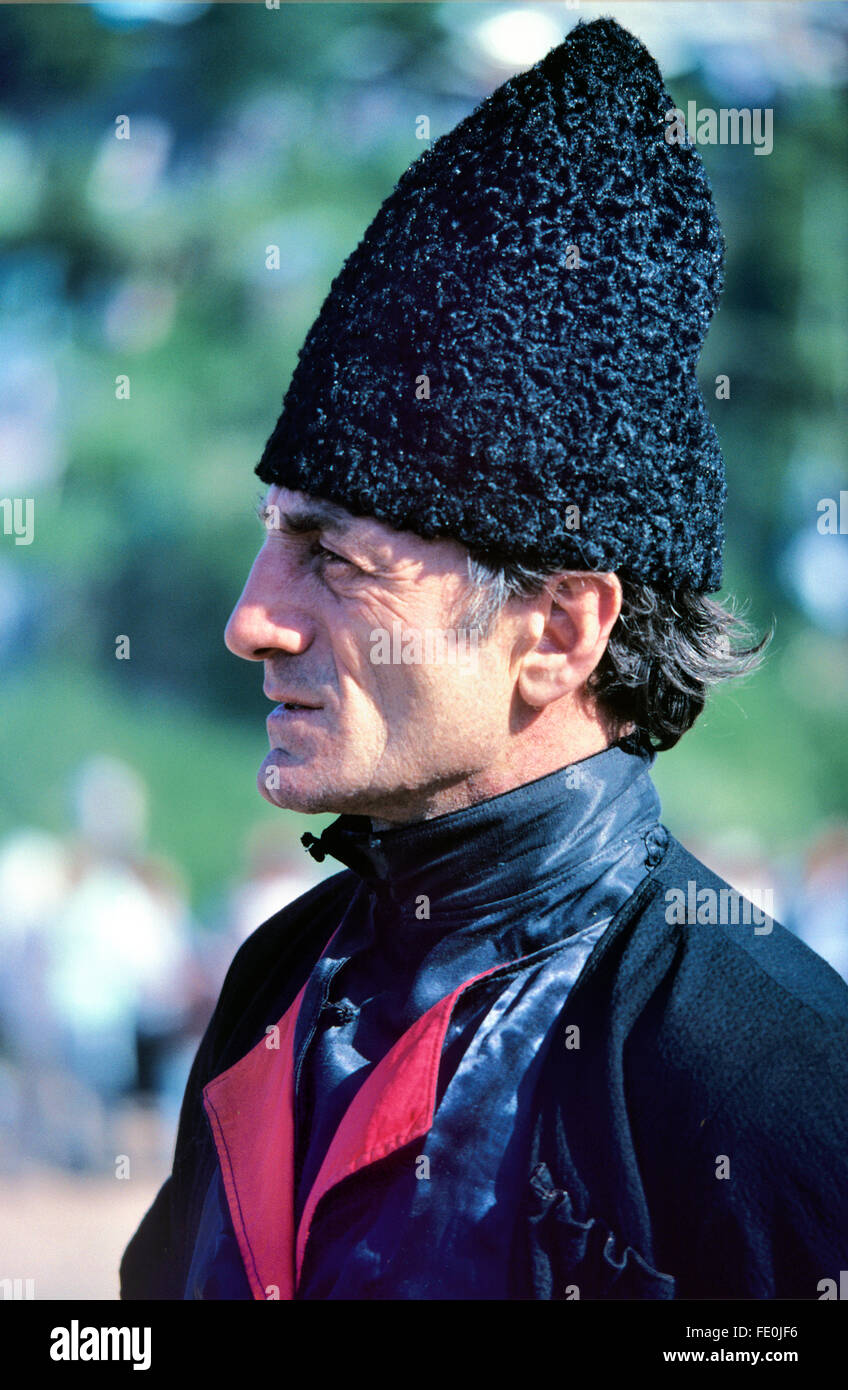
Perhaps pure CHG were Armenoid or Dinaric-like? If i remember correctly the Chalcolithic invaders that replaced EEF in Anatolia belonged to this type
 
Georgians and Abkhazians should be close to CHG.

Nose Bridge.

Mine%20invention%20inline1.jpg


794732_w2.jpg


PM_-_1.jpg


Anniversary_of_Georgian_armed_forces.jpg


portrait-of-a-georgian-man-in-traditional-georgian-costume-or-national-FE0JF6.jpg
 
What traits can be associated with EHG ? light hair ? weren't the first individuals with this trait EHG ? what about height ? the nose is also distinctive, it is slightly bulbous, a main difference from near eastern types to me is the chin, I can notice that :)

Lithuanians, Finns, and Russians are the closest to EHG.

137860_863448983582cdfe9a0c53_big.jpg


11gg2.jpg


16123275_1529175927109673_1600891957993799680_n.jpg

c6e1a3083551a6c6b0b49a4046b1d6ec.jpg
 
^^The original EHG samples had dark hair, dark eyes and fair skin.

I don't know about any others.
 
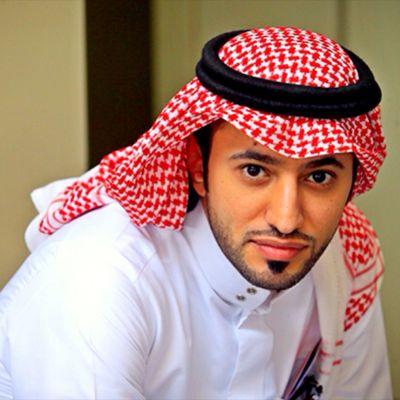
Modern Saudi Arabians and Gulf countries are the closest to Natufian hunter-gatherers, large eyes are definitely the main characterizing phenotype, a slightly curvy nose and full lips.

01314002151.jpg


%D9%8A%D8%A7%D8%B3%D8%B1-%D8%A7%D9%84%D8%AA%D9%88%D9%8A%D8%AC%D8%B1%D9%8A.jpg


043.jpg

280px-Fahad_Albutairi_at_the_2014_Abu_Dhabi_Film_Festival.jpeg


Kf57ZuU4_400x400.jpeg


DHSNFyNXYAAdaSA.jpg:small


sfjnrmnjdf.jpg


2012-07-07_00105.jpg


915599_1005154016191313_887817703_n.jpg
 
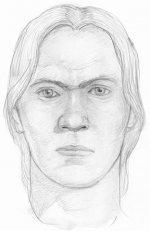
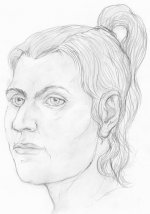
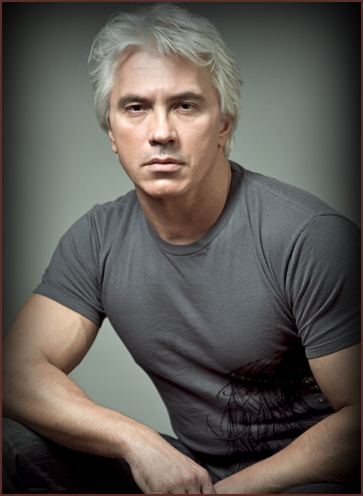
My guess for the first, unadmixed EHG, considering that they had a lot of ANE which also contributed much to the Amerindians, and also considering some of the reconstructed faces of EHG, which to my look slightly more Asian-like than present-day Northeastern Europeans (actually, maybe they resemble a bit modern Finns and some Northern Russians), also probably with darker features. So, could they perhaps be an intermediary phenotype with a major portion of typical Caucasoid and a bit of typical Siberian? The recently deceased baritone (one of my faves!) Dmitri Hvorostovsky, born in Krasnoyarsk (Siberia), had this phenotype:
9k=
2014-05-19-DmitriHvorostovsky.PhotoPavelAntonov-thumb.jpg
6a00d83451c83e69e20168ea977d7e970c-500wi
 
Modern Saudi Arabians and Gulf countries are the closest to Natufian hunter-gatherers, large eyes are definitely the main characterizing phenotype, a slightly curvy nose and full lips.

01314002151.jpg


%D9%8A%D8%A7%D8%B3%D8%B1-%D8%A7%D9%84%D8%AA%D9%88%D9%8A%D8%AC%D8%B1%D9%8A.jpg


043.jpg

280px-Fahad_Albutairi_at_the_2014_Abu_Dhabi_Film_Festival.jpeg


Kf57ZuU4_400x400.jpeg


DHSNFyNXYAAdaSA.jpg:small


sfjnrmnjdf.jpg


2012-07-07_00105.jpg


915599_1005154016191313_887817703_n.jpg

The Natufians didn't have "Dinaric" or "Armenoid" type noses, according to Moesan, if I'm remembering what he said correctly, or at least the early Levant Neolithic farmers didn't. He was basing that on the skulls. The same goes for EEF, and you can certainly see that in Sardinians, who are the closest modern population to them. I have a hunch that nose came from the Caucasus. You can see it in tons of Northwestern Indians, who have no ancient Levant like dna, but have a lot of Iran Neo. It probably went south with herders carrying J1 and J2.

These are all guesses, of course.

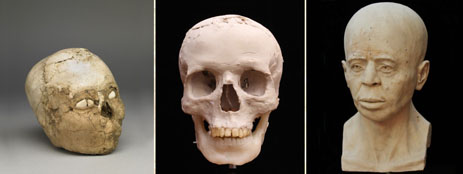
Jericho, 7500 BC
Natufian%20Skull%20Reconstruction.jpg


Maybe more like this?
1200px-Ramallah_woman_15029v.jpg


Some of them might even have been fairer than that going by the results from the ancient dna.

The paper on the Bronze Age Levant shows they were probably darker than the ones from the Neolithic, and most of that gene flow was from south of the Caucasus, I think.
 
@Angela my knowledge of blonde hair and EHG came from this post https://www.eupedia.com/forum/threa...athiesen-et-al?p=508123&viewfull=1#post508123

Blonde hair is from ANE:
"The derived allele of the KITLG SNP rs12821256 that is associated with – and likely causalfor – blond hair in Europeans4,5 is present in one hunter-gatherer from each of Samara, Motalaand Ukraine (I0124, I0014 and I1763), as well as several later individuals with Steppeancestry. Since the allele is found in populations with EHG but not WHG ancestry, it suggeststhat its origin is in the Ancient North Eurasian (ANE) population. Consistent with this, weobserve that earliest known individual with the derived allele is the ANE individual Afontova Gora."

As to Natufians, ah yea sure you could be right :) I was basing my whole point on PCA, Natufians cluster with Saudi Arabians so I thought their phenotypes would be similar.

Somali people are descended of Levantine farmers (before admixture from Iran?) and East African hunter gatherers, if we assume this "curvy nose" didn't come from hunter gatherers of Africa, then it must be Levantine farmers who brought it

tumblr_o2e7ifqcbi1v22j6lo1_500.jpg


tumblr_oslyse1exP1v22j6lo1_500.jpg
 
Back
Top