-
Don't want to see ads? Install an adblocker like uBlock Origin or use a Europe-based privacy-friendly browser like Vivaldi or Mullvad.
You are using an out of date browser. It may not display this or other websites correctly.
You should upgrade or use an alternative browser.
You should upgrade or use an alternative browser.
Maps of a Germanic ancestry
- Thread starter Maciamo
- Start date
HereToLearn
Regular Member
>25% Germanic ancestry in Friuli Venezia Giulia is too high. In general these maps look very arbitrary to me.

Pax Augusta
Elite member
I don't know who made these maps and based on which data but they appear to be correct.
View attachment 19604
View attachment 19605
The map of Italy is clearly an amateur creation, originating from an X account that appears to be connected to Northern Italian separatist circles. While the existence of a Germanic genetic component following a smooth North-South gradient is entirely plausible, the rest of the map relies on the usual flawed and incomplete datasets found online. For instance, historically, many coastal areas of Tuscany within the current province of Livorno (excluding the city of Livorno itself, which boasts a distinct demographic history dating back to the 1500s) were largely uninhabited and were repopulated from the 19th century onward by migrations from the Pisan hinterland. Consequently, coastal populations, when fully native and provided they do not have recent ancestors from other areas of Italy (which is now a widespread reality across Central and Northern Italy), should show no genetic divergence from those inland, meaning the sharp contrast displayed on the map is completely unjustified. This is just one of many possible examples. Today we know that geneticists, based on specific medieval samples plotting in the southernmost portion of the TSI (Tuscans) cluster, calculate up to a 20% Northern European admixture.
>25% Germanic ancestry in Friuli Venezia Giulia is too high. In general these maps look very arbitrary to me.
I agree. The data for Friuli-Venezia Giulia is likely based on the 'Northeastern Italy' samples in the G25 dataset, which originate from Raveane et al. (2019). The issue is that these samples include linguistic minorities (both Germanic and Slavic), which ultimately inflates the calculated percentage. A true regional average for Friuli-Venezia Giulia would be lower and certainly not identical to that of South Tyrol, where the vast majority of the population speaks an Austro-Bavarian dialect as their mother tongue.
While this map is obviously arbitrary, the percentages produced by amateur calculators can sometimes look even lower than what academic models suggest, though that does not make them accurate.
In my view, while the existence of Germanic admixture in Italy is undeniable, its actual extent remains very much an open question and involves far more historical complexity than these models imply.
Vallicanus
Regular Member
- Messages
- 1,523
- Reaction score
- 851
- Points
- 113
- Ethnic group
- Italian
- Y-DNA haplogroup
- R1b Z36
The map of (ancient?) Germanic ancestry in Italy is suspiciously like maps I've seen of Germanic Y-dna.
Throughout contemporary Italy, even in northern Italy, you have to search out individuals who resemble typical North Germans or Scandinavians.
Most blonds in Italy still look Italian, or at least they lack a characteristic Northern European physiognomy.
Throughout contemporary Italy, even in northern Italy, you have to search out individuals who resemble typical North Germans or Scandinavians.
Most blonds in Italy still look Italian, or at least they lack a characteristic Northern European physiognomy.
HereToLearn
Regular Member
I think this mixes up two different things: genetic admixture and phenotype.
A map showing “Germanic ancestry” or “Germanic admixture” is not claiming that Italians should look like North Germans or Scandinavians. It is usually measuring segments of DNA statistically associated with ancient or medieval Germanic-speaking populations, or sometimes with Y-DNA lineages historically frequent among them. That kind of signal can persist at low or moderate levels without producing a visibly “Northern European” appearance in most individuals.
Phenotype is polygenic, highly recombined, and strongly shaped by the total ancestry profile, not by one historical component. A person can carry some Germanic-related ancestry and still look entirely Italian, just as many people across Europe carry ancestry from multiple ancient sources without resembling the “typical” modern population most associated with one of those sources.
Also, Y-DNA is only one paternal line. It does not represent someone’s whole genome. A Germanic-associated Y haplogroup could enter a population through a small number of male lines and persist for centuries, while the autosomal genetic contribution becomes diluted and blended into the broader local population. So a map of Germanic Y-DNA and a map of Germanic autosomal admixture may resemble each other historically, but neither one implies that modern Italians should commonly have North German or Scandinavian facial features. My Y haplogroup is commonly associated to North Germanic peoples yet I don't stand out "visually" among people from my region.
A map showing “Germanic ancestry” or “Germanic admixture” is not claiming that Italians should look like North Germans or Scandinavians. It is usually measuring segments of DNA statistically associated with ancient or medieval Germanic-speaking populations, or sometimes with Y-DNA lineages historically frequent among them. That kind of signal can persist at low or moderate levels without producing a visibly “Northern European” appearance in most individuals.
Phenotype is polygenic, highly recombined, and strongly shaped by the total ancestry profile, not by one historical component. A person can carry some Germanic-related ancestry and still look entirely Italian, just as many people across Europe carry ancestry from multiple ancient sources without resembling the “typical” modern population most associated with one of those sources.
Also, Y-DNA is only one paternal line. It does not represent someone’s whole genome. A Germanic-associated Y haplogroup could enter a population through a small number of male lines and persist for centuries, while the autosomal genetic contribution becomes diluted and blended into the broader local population. So a map of Germanic Y-DNA and a map of Germanic autosomal admixture may resemble each other historically, but neither one implies that modern Italians should commonly have North German or Scandinavian facial features. My Y haplogroup is commonly associated to North Germanic peoples yet I don't stand out "visually" among people from my region.
Vallicanus
Regular Member
- Messages
- 1,523
- Reaction score
- 851
- Points
- 113
- Ethnic group
- Italian
- Y-DNA haplogroup
- R1b Z36
The map of (ancient?) Germanic ancestry in Italy is suspiciously like maps I've seen of Germanic Y-dna.
Throughout contemporary Italy, even in northern Italy, you have to search out individuals who resemble typical North Germans or Scandinavians.
Most blonds in Italy still look Italian, or at least they lack a characteristic Northern European physiognomy.
However do we really know the percentage of Germanic DNA segments across Italian regional populations? Maps are purely conjectural.
Throughout contemporary Italy, even in northern Italy, you have to search out individuals who resemble typical North Germans or Scandinavians.
Most blonds in Italy still look Italian, or at least they lack a characteristic Northern European physiognomy.
I agree with you especially since YDNA is only a tiny part of one's compltete ancestry.I think this mixes up two different things: genetic admixture and phenotype.
A map showing “Germanic ancestry” or “Germanic admixture” is not claiming that Italians should look like North Germans or Scandinavians. It is usually measuring segments of DNA statistically associated with ancient or medieval Germanic-speaking populations, or sometimes with Y-DNA lineages historically frequent among them. That kind of signal can persist at low or moderate levels without producing a visibly “Northern European” appearance in most individuals.
Phenotype is polygenic, highly recombined, and strongly shaped by the total ancestry profile, not by one historical component. A person can carry some Germanic-related ancestry and still look entirely Italian, just as many people across Europe carry ancestry from multiple ancient sources without resembling the “typical” modern population most associated with one of those sources.
Also, Y-DNA is only one paternal line. It does not represent someone’s whole genome. A Germanic-associated Y haplogroup could enter a population through a small number of male lines and persist for centuries, while the autosomal genetic contribution becomes diluted and blended into the broader local population. So a map of Germanic Y-DNA and a map of Germanic autosomal admixture may resemble each other historically, but neither one implies that modern Italians should commonly have North German or Scandinavian facial features. My Y haplogroup is commonly associated to North Germanic peoples yet I don't stand out "visually" among people from my region.
However do we really know the percentage of Germanic DNA segments across Italian regional populations? Maps are purely conjectural.
HereToLearn
Regular Member
Agreed.However do we really know the percentage of Germanic DNA segments across Italian regional populations? Maps are purely conjectural.

davef
Hornet
these maps being made by some nordicist rando on X throws them away completely. Curious as to how there’s even 5-10 pct Germanic in that patch of southern Italy and SicilyThe map of Italy is clearly an amateur creation, originating from an X account that appears to be connected to Northern Italian separatist circles. While the existence of a Germanic genetic component following a smooth North-South gradient is entirely plausible, the rest of the map relies on the usual flawed and incomplete datasets found online. For instance, historically, many coastal areas of Tuscany within the current province of Livorno (excluding the city of Livorno itself, which boasts a distinct demographic history dating back to the 1500s) were largely uninhabited and were repopulated from the 19th century onward by migrations from the Pisan hinterland. Consequently, coastal populations, when fully native and provided they do not have recent ancestors from other areas of Italy (which is now a widespread reality across Central and Northern Italy), should show no genetic divergence from those inland, meaning the sharp contrast displayed on the map is completely unjustified. This is just one of many possible examples. Today we know that geneticists, based on specific medieval samples plotting in the southernmost portion of the TSI (Tuscans) cluster, calculate up to a 20% Northern European admixture.
I agree. The data for Friuli-Venezia Giulia is likely based on the 'Northeastern Italy' samples in the G25 dataset, which originate from Raveane et al. (2019). The issue is that these samples include linguistic minorities (both Germanic and Slavic), which ultimately inflates the calculated percentage. A true regional average for Friuli-Venezia Giulia would be lower and certainly not identical to that of South Tyrol, where the vast majority of the population speaks an Austro-Bavarian dialect as their mother tongue.
While this map is obviously arbitrary, the percentages produced by amateur calculators can sometimes look even lower than what academic models suggest, though that does not make them accurate.
In my view, while the existence of Germanic admixture in Italy is undeniable, its actual extent remains very much an open question and involves far more historical complexity than these models imply.
Tomenable
Well-known member
- Messages
- 6,031
- Reaction score
- 1,754
- Points
- 113
- Location
- Poland
- Ethnic group
- Polish
- Y-DNA haplogroup
- R1b-L617
- mtDNA haplogroup
- W6a
Don't these two maps contradict each other? NE Italy more Germanic than, for example, Carinthia?
In reality there is a quite sharp genetic border between Italy and Austria.
That said, the Germany-Switzerland-Austria-Netherlands map looks broadly correct at first glance.
In reality there is a quite sharp genetic border between Italy and Austria.
That said, the Germany-Switzerland-Austria-Netherlands map looks broadly correct at first glance.
Last edited:
Absolutely. Carinthians have not such a low Germanic level and Swiss have, especially in some areas, quite high levels of Germanic too. A bit problematic is to sort Germanic vs. Celtic out in many of these regions IMHO.Don't these two maps contradict each other? NE Italy more Germanic than, for example, Carinthia?
In reality there is a quite sharp genetic border between Italy and Austria.
That said, the Germany-Switzerland-Austria-Netherlands map looks broadly correct at first glance.

Vitruvius
Well-known member
- Messages
- 647
- Reaction score
- 1,201
- Points
- 91
- Ethnic group
- Italian
- Y-DNA haplogroup
- I1
- mtDNA haplogroup
- H5a1
The principle problem is how "Germanic ancestry" is being defined. What era and group of populations are we using as a reference for what qualifies as Germanic and more importantly why do we assume we have the full scope of DNA evidence for what should be considered Germanic?
The Italian map is of course, absurd, given that we already have the Bardonecchia and Picene samples that average absolutely typical of modern northern Italians. Those who cling to the idea that the northern half of Italy owes its ancestry to Northern/Central European migrants in any significant portion today are little different than those who thought the same about the Romans and Etruscans of the Iron age/Republic nearly a decade ago.
The Italian map is of course, absurd, given that we already have the Bardonecchia and Picene samples that average absolutely typical of modern northern Italians. Those who cling to the idea that the northern half of Italy owes its ancestry to Northern/Central European migrants in any significant portion today are little different than those who thought the same about the Romans and Etruscans of the Iron age/Republic nearly a decade ago.
Last edited:
davef
Hornet
Don’t use common sense you’ll scare the basement dwellers who used Claude to make that map away.Don't these two maps contradict each other? NE Italy more Germanic than, for example, Carinthia?
In reality there is a quite sharp genetic border between Italy and Austria.
That said, the Germany-Switzerland-Austria-Netherlands map looks broadly correct at first glance.
Ofc they’ll use some weird overcomplicated fanfic to explain why those Germans are less Germanic than some Italian groups.

It's more likely that the maps are based on Germanic Y-DNA than autosomal DNA. It's much easier to identify Germanic DNA this way. Within German-speaking countries YDNA can be a relatively good proxy as ancient Germanic tribes moved together with their families, so the Germanic paternal and maternal lineages are relatively well balanced.
In Italy it is not necessarily the case. In fact, as the medieval nobility had a higher percentage of Germanic Y-DNA and as they tended to mary local women and have more surviving children than commoners, their Y-DNA would be over-represented compared to their autosomal DNA.
In Italy it is not necessarily the case. In fact, as the medieval nobility had a higher percentage of Germanic Y-DNA and as they tended to mary local women and have more surviving children than commoners, their Y-DNA would be over-represented compared to their autosomal DNA.
Tomenable
Well-known member
- Messages
- 6,031
- Reaction score
- 1,754
- Points
- 113
- Location
- Poland
- Ethnic group
- Polish
- Y-DNA haplogroup
- R1b-L617
- mtDNA haplogroup
- W6a
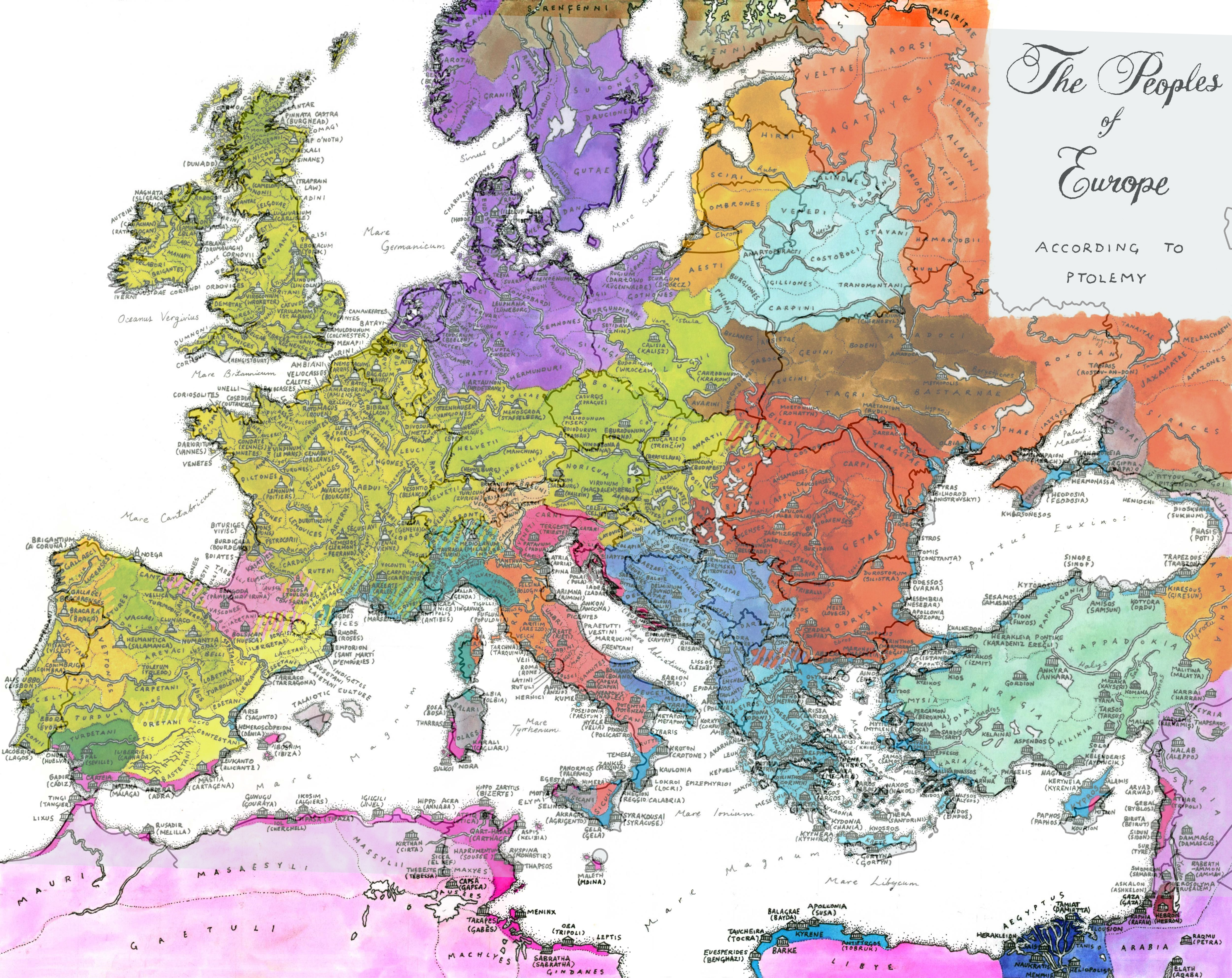
Germanic and Celtic tribes 2000 years ago:
(I added modern state borders to this map)
Compared to Germanic and Gaulish auDNA:
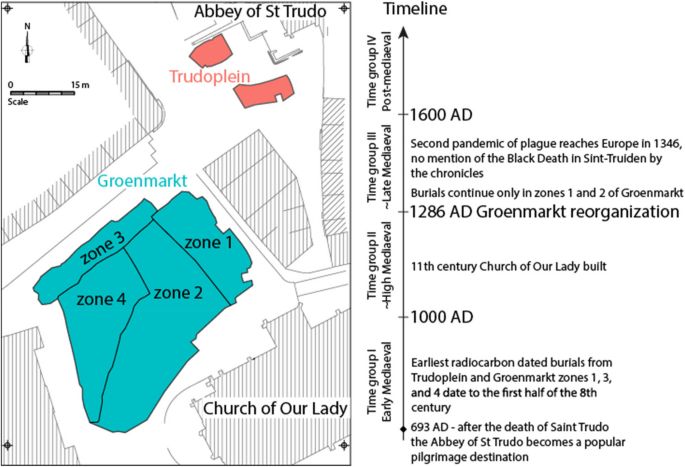
 link.springer.com
Orange = Germanic
Blue = Gaulish

(I added modern state borders to this map)
Compared to Germanic and Gaulish auDNA:
Urbanization and genetic homogenization in the medieval Low Countries revealed through a ten-century paleogenomic study of the city of Sint-Truiden - Genome Biology
Background Processes shaping the formation of the present-day population structure in highly urbanized Northern Europe are still poorly understood. Gaps remain in our understanding of when and how currently observable regional differences emerged and what impact city growth, migration, and...
link.springer.com
Orange = Germanic
Blue = Gaulish
Last edited: