• Don't want to see ads? Install an adblocker like uBlock Origin or use a Europe-based privacy-friendly browser like Vivaldi or Mullvad.

Ancient Bulgarian MtDna

Sile

Banned
Messages
5,099
Reaction score
582
Points
0
Location
Australia
Ethnic group
North Alpine Italian
Y-DNA haplogroup
T1a2 -Z19945..Jura
mtDNA haplogroup
H95a1 ..Pannoni
This work on ancient Bulgarian samples adds to the genetic picture of the past by presenting the first data on ancient mtDNA samples.Our results show that the haplogroups found in ancient samples are predominantly Western Eurasians. This finding supports the concept for the Western Eurasian matrilineal origins of the Proto-Bulgarians and is controversial to the Mongolo-Altaic and Hun-Tataric theories.

http://digitalcommons.wayne.edu/cgi/viewcontent.cgi?article=1069&context=humbiol_preprints
 
I think they're talking about the Bulgars, about whose ancestry there has been some controversy, with some claiming they originally came from Central Asia and were Turkic speaking and some claiming they were a totally West Eurasian, western steppe group.
http://en.wikipedia.org/wiki/Bulgars

All this testing reveals is that the Bulgars settled in Bulgaria were maternally West Eurasian (Neolithic and Steppe mtDna). We don't yet know their y markers or their autosomal signature. An analysis of those markers might show more "foreign" input.

This might be a predominantly male mediated migration and the women were authochthonous, or they might have picked up some of these uniparental markers during their long sojourns on the steppe.

So, I don't think they've proved that there was no "Turkic" input into the Bulgarian gene pool if that was their aim, although I think that more and more examples are showing up that this mantra that all migrations bring huge changes to the autosomal make up of the invaded country is just as inaccurate as the old pots are just pots, they're not people mantra of prior decades.
 
I agree no migration had dramatically changed all over genetic composition of a country but I think diverse migrations had different imputs according to number of migrants, population density in the reached lands, and presence or no presence of females with them: the most of what we have seen until then is the migrations seem very often having envolved more males than females (but it's true the males social dominance can have confused us sometimes concerning male first cohorts of migrants) - the Neolithic rather progressive migrations had nevertheless a strong impact autosomally, more as a whole than the fierce warriors ones -
 
one theory is that first Bulgars (in Steppes) were previous I-Ean Iranians turkicized - some slight 'mongoloid' traits can be observed among the today Balkans, at very very low level, so we cannot completely discard an altaic imput but it could be caused also by other steppic people and not by force by the only Bulgars -

&: french 'bougre' is the genuine word for 'bulgare': a pejorative word, as 'vandale'! these migrating people have not been welcomed at first contact!!!
 
I agree no migration had dramatically changed all over genetic composition of a country but I think diverse migrations had different imputs according to number of migrants, population density in the reached lands, and presence or no presence of females with them: the most of what we have seen until then is the migrations seem very often having envolved more males than females (but it's true the males social dominance can have confused us sometimes concerning male first cohorts of migrants) - the Neolithic rather progressive migrations had nevertheless a strong impact autosomally, more as a whole than the fierce warriors ones -

I think that's right; each situation has to be analyzed on its own merits.

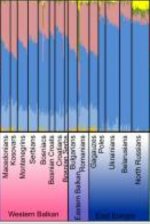
As to non-West Eurasian dna in Bulgarians, there does seem to be a bit, but even a bit more in the Romanians. This is from Kovacevek et al: Standing at the Gateway to Europe

Balkan autosomal variation.jpg

Ed. To correct spelling of author's name
 
Last edited:
one theory is that first Bulgars (in Steppes) were previous I-Ean Iranians turkicized - some slight 'mongoloid' traits can be observed among the today Balkans, at very very low level, so we cannot completely discard an altaic imput but it could be caused also by other steppic people and not by force by the only Bulgars -

&: french 'bougre' is the genuine word for 'bulgare': a pejorative word, as 'vandale'! these migrating people have not been welcomed at first contact!!!

The origin of the word "bougre" and the english "bugger" are connected not with invading Bulgars but with Bulgarian heretics called Bogomili (similar to the Cathari) who were spreading their heresy in the Middle Ages in Western Europe.

Speaking on the topic, I can't understand why they tested only mitochondrial DNA. These steppe ruling elites are male dominated after all.
 
The origin of the word "bougre" and the english "bugger" are connected not with invading Bulgars but with Bulgarian heretics called Bogomili (similar to the Cathari) who were spreading their heresy in the Middle Ages in Western Europe.

Speaking on the topic, I can't understand why they tested only mitochondrial DNA. These steppe ruling elites are male dominated after all.
MtDNA is the easiest to sequence. The rest is usually deteriorated making it more difficult and more expensive to sequence.
 
The origin of the word "bougre" and the english "bugger" are connected not with invading Bulgars but with Bulgarian heretics called Bogomili (similar to the Cathari) who were spreading their heresy in the Middle Ages in Western Europe.

Speaking on the topic, I can't understand why they tested only mitochondrial DNA. These steppe ruling elites are male dominated after all.

Thanks, you are right concerning the use of the world 'bougre' or 'bugger': etymologically I was right too but not concerning the historical explanation: I had not this explanation at hand but in my etymology book i red: BOUGRE, year 1172, "hérétique" "sodomite" (!) so confirming your version-
I think as you too much mtDNA to less aDNA and Y-DNA - I suppose ancient mt-DNA is easier to recover than Y-DNA, well conserved? because this occrus very often, helas!
 
Are the West Asian component the one in yellow?
If yes, it remains ver light in Bulgary
but Is the West Asian component which is in question, or the East asian one?
thanks all the way
 
Are the West Asian component the one in yellow?
If yes, it remains ver light in Bulgary
but Is the West Asian component which is in question, or the East asian one?
thanks all the way

I apologize for not providing the link to the paper. It's Kovacevic et al, 2014: Standing at the Gateway to Europe: The Genetic Structure of Balkan Populations:
http://journals.plos.org/plosone/article?id=10.1371/journal.pone.0105090

The bright yellow along the top is the East Asian "Han" type component in this paper.

The golden yellow along the bottom is the "Middle Eastern" component.
 
Thanks ANgela: in fact I had seen this work -
the question is different people don't use the same components basis for their surveys -
of topic but of general interest: in these aDNA anlysis, whatever the criteria to classify into components we can see the heterogeneity of some countries, either regionally, or at the individual level (as the Saudi by example): we lack regional aDNA samples, for i think, to separate regional from individual, because in a stable region, if we take only people having an ancient enough background locally (say four generations), we would find a great HOMOgeneity at autsomallevels - it is not always the case here -
good supper!
 
MtDNA is the easiest to sequence. The rest is usually deteriorated making it more difficult and more expensive to sequence.

Yes but they are trying to change the leading Turkic theory with an Iranian one and they need more to do so, 50% of the information is not enough. This "Iranian mania" is a great deal these days...
 
Thanks, you are right concerning the use of the world 'bougre' or 'bugger': etymologically I was right too but not concerning the historical explanation: I had not this explanation at hand but in my etymology book i red: BOUGRE, year 1172, "hérétique" "sodomite" (!) so confirming your version-
I think as you too much mtDNA to less aDNA and Y-DNA - I suppose ancient mt-DNA is easier to recover than Y-DNA, well conserved? because this occrus very often, helas!

The heretics were falsely accused for many amoral things (for the Middle Ages) such as homosexuality.
You are right about what you said, just in different way.
 
I apologize for not providing the link to the paper. It's Kovacevic et al, 2014: Standing at the Gateway to Europe: The Genetic Structure of Balkan Populations:
http://journals.plos.org/plosone/article?id=10.1371/journal.pone.0105090

The bright yellow along the top is the East Asian "Han" type component in this paper.

The golden yellow along the bottom is the "Middle Eastern" component.

Golden Yellow seems "SouthWest Asian" and the palid "pink/red" seems like "Caucasus" and the greenish component is "Gedrosia like".
 
Golden Yellow seems "SouthWest Asian" and the palid "pink/red" seems like "Caucasus" and the greenish component is "Gedrosia like".

The golden yellow seems to be most common among Saudis, found in the section labelled as "Middle East" on the chart.
 
The golden yellow seems to be most common among Saudis, found in the section labelled as "Middle East" on the chart.

Yes and therefore it is more equivalent to the "Southwest Asian" but the palid red/pink and greenish component is more common among the further North you go.
 
I apologize for not providing the link to the paper. It's Kovacevic et al, 2014: Standing at the Gateway to Europe: The Genetic Structure of Balkan Populations:
http://journals.plos.org/plosone/article?id=10.1371/journal.pone.0105090

The bright yellow along the top is the East Asian "Han" type component in this paper.

The golden yellow along the bottom is the "Middle Eastern" component.


Interesting study, i don't know about the sample but as for Kosovars, there is no such word as Kosovars, its Albanian, Gheg Albanian. And its Gheg Albanian language, Kosovo is a region inhabited mostly by Gheg Albanians. Am not also sure as of why from all the balkan inhabitantsin this study there is no Albanian.


Also, pretty different from Ralph and Koop study

http://journals.plos.org/plosbiology/article?id=10.1371/journal.pbio.1001555
 
[SIZE=+1]The language of the Asparukh and Kuber Bulgars, Vocabulary and grammar[/SIZE]
Words, preserved in the historical and archaeological monuments from the VI-X cc. AD:


[TABLE="width: 90%"]
[TR]
[TD="width: 31%"]Old Bulgar word[/TD]
[TD="width: 35%"]Closest analogies[/TD]
[TD="width: 35%"]Cluster_user's ottoman parallels[/TD]
[/TR]
[TR]
[TD="width: 31%"] [/TD]
[TD="width: 35%"] [/TD]
[TD="width: 35%"] [/TD]
[/TR]
[TR]
[TD="width: 31%"]ALEM (first) – the name of the first month[/TD]
[TD="width: 35%"]Alein – frontal, first (Talish)[/TD]
[TD="width: 35%"] [/TD]
[/TR]
[TR]
[TD="width: 31%"]ALTEM (last, back) – the name of the twelfth month[/TD]
[TD="width: 35%"]Alt – back, lower (Celtic)[/TD]
[TD="width: 35%"] [/TD]
[/TR]
[TR]
[TD="width: 31%"]ALKHASI KUPE (an armament, most probably – a siege tower)[/TD]
[TD="width: 35%"]Alkhasi – a siege engine (Georgian)[/TD]
[TD="width: 35%"]alkha is probably from `ar. Halqa(t) with a semitic H.[/TD]
[/TR]
[TR]
[TD="width: 31%"]AN (or EN) – in two inscriptions from Murfatlar[/TD]
[TD="width: 35%"]An, en – a heaven (Sumerian) Inish – God (Eastern Caucasian)
[/TD]
[TD="width: 35%"] [/TD]
[/TR]
[TR]
[TD="width: 31%"]AS (an ash, mortal remains) in the expression ZENTY ASO E[/TD]
[TD="width: 35%"]As – an ash (Kati, Pashto) Ase (Sogdian)
[/TD]
[TD="width: 35%"] [/TD]
[/TR]
[TR]
[TD="width: 31%"]AULI – the Greek name of the palace of Krum[/TD]
[TD="width: 35%"]Auli – a building with a high wall (Pamirian)[/TD]
[TD="width: 35%"] < turkic ag~ul, ag~Il (an enclosure, sheep or cattle pen, later village) hung. o'l (cattle pen), chuvash yal
[/TD]
[/TR]
[TR]
[TD="width: 31%"]BAGAIN – a military commander[/TD]
[TD="width: 35%"]Bakhoin – a military man (Eastern Caucasian)[/TD]
[TD="width: 35%"] [/TD]
[/TR]
[TR]
[TD="width: 31%"]BAGATUR – a heavily armed horseman[/TD]
[TD="width: 35%"]Bakhadur (North Indian) Bagatur (Georgian)
[/TD]
[TD="width: 35%"]turko-mongol < asiatic hunnic (clauson) > pers. baha:dur > ott. turk.[/TD]
[/TR]
[TR]
[TD="width: 31%"]BAN – a military deputy of a region[/TD]
[TD="width: 35%"]Ban – a military commander (Eastern Caucasian), from BO – an army[/TD]
[TD="width: 35%"] [/TD]
[/TR]
[TR]
[TD="width: 31%"]BELEG - a sign[/TD]
[TD="width: 35%"]Belek – a sign, a mark (Georgian), Belyeg (Hungarian)
[/TD]
[TD="width: 35%"]turkic belgu", mong. belge. "sign, mark" *bel signifies "to be
manifest"
bil= "to know" chuvash palla~[/TD]
[/TR]
[TR]
[TD="width: 31%"]BIRI-BAGAIN – a commander of lightly armed horsemen[/TD]
[TD="width: 35%"]from Bir – a cavalry band (Pamirian)[/TD]
[TD="width: 35%"] [/TD]
[/TR]
[TR]
[TD="width: 31%"]BISER – precious beads for a necklace[/TD]
[TD="width: 35%"]Bisjer – a multityde, many small things (Tadzhik)[/TD]
[TD="width: 35%"]biser seems to be of arabic origin, meaning "bead" or "false pearl". Some qychaq languages seem to have it (in arabic it more commonly means unripe date(s) - busra(t), busr). I attribute it to either pecheneg turkic or the meditaranean trade.[/TD]
[/TR]
[TR]
[TD="width: 31%"]BO KOLAB
ER.jpg
R
– an army priest[/TD]
[TD="width: 35%"]Kolob
ER.jpg
r
– a priest and Bo – an army (Eastern Caucasian)[/TD]
[TD="width: 35%"] [/TD]
[/TR]
[TR]
[TD="width: 31%"]BOILA – a noble, a lord[/TD]
[TD="width: 35%"]Bo’la – a master (Vejnakh) Boul (Persian)
[/TD]
[TD="width: 35%"] [/TD]
[/TR]
[TR]
[TD="width: 31%"]BORU – a stronghold, a town[/TD]
[TD="width: 35%"]Boru – a stronghold (Pamirian, Persian)[/TD]
[TD="width: 35%"] [/TD]
[/TR]
[/TABLE]
 
[TABLE="width: 90%"]
[TR]
[TD="width: 31%"]VER – the year of the Dragon[/TD]
[TD="width: 35%"]Berka – a big snake (Eastern Caucasian) Waran – a gigantic lizard, Warendak – long, snake-like[SIZE=-1][SRS, 186][/SIZE]
Vaireni – a dragon (Prakrit), Vaira – dangerous, Varuna – the god-protector of the water, "The Encompasser of the World"
Dobrev also had the Dardic Peren (dragon), Proto-indian (?)Peran (large, long), the Chuvash Verem (long), the Sumero-Accadian Ur, Jurnu (dragon), the wide spread of this and other calendar terms of the nominalia pointing to the ancient chartacter of the cyclic calendar.[/TD]
[TD="width: 35%"]veren < turkic evren "dragon", "firmament (i.e. sky, stars etc.), (also "oven") from evir= to turn around apparently ewren/evren was latter found as a volgabulghar name. either e/v reversal or evren > *o":ren > veren (o": > ve - found
in -r turkic.
iranian has avesta a*zh*i dahaka in a well known legend (later a half-serpent king, zohak, dahak in kurdish) for "dragon". new persian ejder, ejdeha (j=/zh/)[/TD]
[/TR]
[TR]
[TD="width: 31%"]VECHEM – the fifth month in the calendar[/TD]
[TD="width: 35%"]Wjuch – five (Dardic) Wjuchem – fifth[/TD]
[TD="width: 35%"][/TD]
[/TR]
[TR]
[TD="width: 31%"]VESH – a month, a part of the year in the expression ELMA VESH[/TD]
[TD="width: 35%"]Wesh – a part, a share (Pamirian) Vez (Va’z) – moon (Eastern Caucasian)[/TD]
[TD="width: 35%"][/TD]
[/TR]
[TR]
[TD="width: 31%"]VIKHTUN – to remove, to throw out (in the Nominalia)[/TD]
[TD="width: 35%"]Bikht – ‘thrown away’ in Al-Biruni’s "India"[/TD]
[TD="width: 35%"][/TD]
[/TR]
[TR]
[TD="width: 31%"]GILS –a burial pot in the expression OKHSI TZIT MA GILS[/TD]
[TD="width: 35%"]Gilos – a burial pot (Pamirian)[/TD]
[TD="width: 35%"][/TD]
[/TR]
[TR]
[TD="width: 31%"]DVAN – the year of the Hare[/TD]
[TD="width: 35%"]Dvand – fleet-footed (Pamirian)[/TD]
[TD="width: 35%"][/TD]
[/TR]
[TR]
[TD="width: 31%"]DZHUDZHE – small, tiny[/TD]
[TD="width: 35%"]Dzhudzhe – a small animal, a birdie, a chick (Eastern Caucasian)[/TD]
[TD="width: 35%"][/TD]
[/TR]
[TR]
[TD="width: 31%"]DILOM – the year of the Snake[/TD]
[TD="width: 35%"]Tilok – a big worm (Pamirian)[/TD]
[TD="width: 35%"]archaic turkic *dIlan > comm. turkic yIlan[/TD]
[/TR]
[TR]
[TD="width: 31%"]DOKHS – the year of the wild boar[/TD]
[TD="width: 35%"]Tokhs – bad, fierce (Persian)[/TD]
[TD="width: 35%"][/TD]
[/TR]
[TR]
[TD="width: 31%"]EALKH – in the expression OKHSI YOVOK EALKH[/TD]
[TD="width: 35%"]Jalkho – a servant, a slave (Eastern Caucasian)[/TD]
[TD="width: 35%"][/TD]
[/TR]
[TR]
[TD="width: 31%"]EVROPII MIZIJSK
ER.jpg
- ‘rulers of Moesia’ in Saint Kliment’s life[/TD]
[TD="width: 35%"]Euri – a master (Urartian)[/TD]
[TD="width: 35%"][/TD]
[/TR]
[TR]
[TD="width: 31%"]EPI – in the expression EPI ITIP BILO[/TD]
[TD="width: 35%"]Eb, emp – a wolf (Eastern Caicasian)[/TD]
[TD="width: 35%"][/TD]
[/TR]
[TR]
[TD="width: 31%"]ESTEK – eighteen, in the expression ESTEK KR
ER.jpg
NI I REZHET
ER.jpg
[/TD]
[TD="width: 35%"]Astais – eighteen (Dardic) Histdan – eighteen (Pamirian)[/TD]
[TD="width: 35%"][/TD]
[/TR]
[TR]
[TD="width: 31%"]ESTROGIN KUPE – a type of armour, most probably a mail armour[/TD]
[TD="width: 35%"]Jestrika – knitted (Pamirian)[/TD]
[TD="width: 35%"][/TD]
[/TR]
[TR]
[TD="width: 31%"]ETKH – the year of the Dog[/TD]
[TD="width: 35%"]Jettu – a pack of dogs (Eastern Caucasian) J
ER.jpg
jta
– a dog (Chuvash)[/TD]
[TD="width: 35%"][/TD]
[/TR]
[TR]
[TD="width: 31%"]EFE – an isolated word on the walls of the churches in Murfatlar[/TD]
[TD="width: 35%"]Efe – to excuse (Pamirian)[/TD]
[TD="width: 35%"][/TD]
[/TR]
[TR]
[TD="width: 31%"]EN – a heaven[/TD]
[TD="width: 35%"]See AN[/TD]
[TD="width: 35%"][/TD]
[/TR]
[TR]
[TD="width: 31%"]ZOAPAN – a court title[/TD]
[TD="width: 35%"]Zhoopan – an official (Eastern Caucasian) Chupan (Sogdian) from fsu-pana (Sanskrit)[/TD]
[TD="width: 35%"][/TD]
[/TR]
[TR]
[TD="width: 31%"]Z
ER.jpg
D
ER.jpg
CHII
– a builder, an architect[/TD]
[TD="width: 35%"]Zig – to rise, Zid – high (Sumerian), Sida (Urartian)[/TD]
[TD="width: 35%"][/TD]
[/TR]
[TR]
[TD="width: 31%"]ZERA – in the expressions ANZI ZERA, ZERA TARKANOS[/TD]
[TD="width: 35%"]Dz
ER.jpg
ra
– a supervisor (Pamirian) Zera – a courier (Pamirian)[/TD]
[TD="width: 35%"][/TD]
[/TR]
[TR]
[TD="width: 31%"]ITZI – in the expression ANZI ZERA ITZI AZO E[/TD]
[TD="width: 35%"]Ish – fair (Eastern Caucasian) Is – a world, God (Sanskrit)[/TD]
[TD="width: 35%"][/TD]
[/TR]
[TR]
[TD="width: 31%"]ITZIGI – holy[/TD]
[TD="width: 35%"]See ITZI[/TD]
[TD="width: 35%"][/TD]
[/TR]
[TR]
[TD="width: 31%"]ICHIRGU BAGAIN – a commander of the archer or of the palace guard[/TD]
[TD="width: 35%"]Ichirkho – an archer, a sentry (Eastern Caucasian) Isara – an arrow (Sanskrit)[/TD]
[TD="width: 35%"][/TD]
[/TR]
[TR]
[TD="width: 31%"]ICHURGU BOILA – the title of the commander of the garrison in the capital[/TD]
[TD="width: 35%"]See ICHURGU[/TD]
[TD="width: 35%"][/TD]
[/TR]
[TR]
[TD="width: 31%"]KAVKHAN – the second most senior title in Bulgaria[/TD]
[TD="width: 35%"]Kavkh
ER.jpg
a
– a chief of a town (Eastern Caucasian)[/TD]
[TD="width: 35%"][/TD]
[/TR]
[TR]
[TD="width: 31%"]KAZNACHII – a treasurer[/TD]
[TD="width: 35%"]Khazna – a treasure (Persian, Pamirian)[/TD]
[/TR]
[/TABLE]
 
[TABLE="width: 90%"]
[TR]
[TD="width: 31%"]KALU TARKAN – one of the participants in the wedding ceremony of Car Peter[/TD]
[TD="width: 35%"]Kalu – a type of priests (Accadian) K
ER.jpg
al
– an oath (Pamirian)
Kalum – to swear (Pamirian)
[/TD]
[TD="width: 35%"] [/TD]
[/TR]
[TR]
[TD="width: 31%"]CAMPSIS – the title of one of the Bulgarian representatives on the VIII. Ecumenical council – in the expression ZISUNAS CAPMSIS[/TD]
[TD="width: 35%"]The original word must have been KABSI Kabshi – an advisor (Georgian)
[/TD]
[TD="width: 35%"] [/TD]
[/TR]
[TR]
[TD="width: 31%"]KANA – the most senior Bulgar title. In expressions such as KANA SUBIGI, KANA BOILA KOLOB
ER.jpg
R, etc.[/TD]
[TD="width: 35%"]Kana – a chieftain (Eastern Caucasian) Kana – major, big (Pamirian)
[/TD]
[TD="width: 35%"] [/TD]
[/TR]
[TR]
[TD="width: 31%"]KANASUBIGI, KANESUBIGI – the official title of the Bulgar khans; from KANA (leader) and SUBIGI (divine)[/TD]
[TD="width: 35%"]Similar to KANIZAUCI – the highest Avar title[/TD]
[TD="width: 35%"] [/TD]
[/TR]
[TR]
[TD="width: 31%"]KANARTIKIN – the title of the heir to the throne[/TD]
[TD="width: 35%"]Tikin – a heir (Eastern Caucasian) + Kanar – ‘of the Kana’
[/TD]
[TD="width: 35%"] [/TD]
[/TR]
[TR]
[TD="width: 31%"]KAPISHTE – a pagan Bulgar temple[/TD]
[TD="width: 35%"]Kap – a prayer (Eastern Caucasian) Kapisha – a priest (Accadian)
[/TD]
[TD="width: 35%"]turkic ki:b - mould, model, later image, idol. ( -p ?)
chuvash pek < *kep, hung ke'p
yakut kieb , mong. keb[/TD]
[/TR]
[TR]
[TD="width: 31%"]KNIN – a title at the time of Car Simeon, mentioned together with MAGOTIN and IMNIK[/TD]
[TD="width: 35%"]No correspondences found[/TD]
[TD="width: 35%"] [/TD]
[/TR]
[TR]
[TD="width: 31%"]KR
ER.jpg
M
ER.jpg
CHII
– a steersman[/TD]
[TD="width: 35%"]Kr
ER.jpg
m
– to guide (Talish)[/TD]
[TD="width: 35%"] [/TD]
[/TR]
[TR]
[TD="width: 31%"]KOLOB
ER.jpg
R
– a priest[/TD]
[TD="width: 35%"]Kolobkhar – a cleric (Persian) Kulb
ER.jpg
r
(Pamirian)
[/TD]
[TD="width: 35%"] [/TD]
[/TR]
[TR]
[TD="width: 31%"]KORAB
ER.jpg
CHII
– a word translated in Greek as NAUTOS – sailor[/TD]
[TD="width: 35%"]From the Greek Korabos (ship) with the Bulgar suffix -CHII[/TD]
[TD="width: 35%"] [/TD]
[/TR]
[TR]
[TD="width: 31%"]KRAV
ER.jpg
CHII
– a servant in the court, who cut and served the roasted meat[/TD]
[TD="width: 35%"]Kravi – to cut meat (Sanskrit) Craf – to cut meat (Celtic)
[/TD]
[TD="width: 35%"] [/TD]
[/TR]
[TR]
[TD="width: 31%"]KR
ER.jpg
CHII
, K
ER.jpg
RCHII
– a mine-digger[/TD]
[TD="width: 35%"]Kherrch – a furnace (Eastern Caucasian)[/TD]
[TD="width: 35%"] [/TD]
[/TR]
[TR]
[TD="width: 31%"]KSISTON – a type of fish in Kubrat Bulgaria (in Southern Russia and the Caucasus)[/TD]
[TD="width: 35%"]Sischiani – a type of bream (Georgian)[/TD]
[TD="width: 35%"] [/TD]
[/TR]
[TR]
[TD="width: 31%"]KUVENTOS – the Bulgar people’s assembly ("The Bulgars gathered for a kuvent", in Theophanes)[/TD]
[TD="width: 35%"]Coveth – to gather (Celtic)[/TD]
[TD="width: 35%"] [/TD]
[/TR]
[TR]
[TD="width: 31%"]KUKUMIJ – a big metal vessel[/TD]
[TD="width: 35%"]Kukuba – a cauldron (Accadian) Gumguma – a cauldron (Persian)
Kumkum – a cauldron (Eastern Caucasian)
[/TD]
[TD="width: 35%"]byz. greek kukumi < lat. cucuma (nikos sarantakos) [/TD]
[/TR]
[TR]
[TD="width: 31%"]KUMIR – an idol[/TD]
[TD="width: 35%"]Kumirtu – holy (Accadian) Gumiri – an idol (Alanian)
[/TD]
[TD="width: 35%"] [/TD]
[/TR]
[TR]
[TD="width: 31%"]KJUBE (written KUPE in Greek) – the general name for the metal armour [/TD]
[TD="width: 35%"]Kupa – metal (noun) (Sanskrit) Kuba – an armour (Eastern Caucasian)
Kubachi – the master of armour (Eastern Caucasian)
[/TD]
[TD="width: 35%"] [/TD]
[/TR]
[TR]
[TD="width: 31%"]K
ER.jpg
NIGACHII
– a bookman[/TD]
[TD="width: 35%"]See K
ER.jpg
NIGA
[/TD]
[TD="width: 35%"] [/TD]
[/TR]
[TR]
[TD="width: 31%"]K
ER.jpg
NIGA
– a book[/TD]
[TD="width: 35%"]Kunukku – a royal inscription (Accadian) Knik – a seal (Armenian)
[/TD]
[TD="width: 35%"]turkic * ku"ynig < chinese k`u"en "roll"
hung. ko"nyv < oghur * ku"niv.
mordiv. ko*ny*ov < old chuvash * ka*ny*Iv
chuvash ke~neke < russian
old uyghur ku"in, ku"in bitig (bitig "book" < chinese also) + turkic c,i
[/TD]
[/TR]
[TR]
[TD="width: 31%"]IMAET – a trustee, in the expression ZHUPAN I IMAET GEORGE[/TD]
[TD="width: 35%"]Imaet – a trustee, a guardian (Pamirian)[/TD]
[TD="width: 35%"]imaet (pamirian) sounds like `ar. 'ama:na(t) (putting into trust) if so, the old bulgarian word must be something else.
[/TD]
[/TR]
[TR]
[TD="width: 31%"]IMENSHEGOR – a stallion. The other name for the year of the Horse[/TD]
[TD="width: 35%"]Imne – a horse (Mari) Imikhu – a donkey (Eastern Caucasian)
[/TD]
[TD="width: 35%"] [/TD]
[/TR]
[TR]
[TD="width: 31%"]IMNIK – the senior overseer in the palace stables[/TD]
[TD="width: 35%"]Derived from IMEN (horse)[/TD]
[TD="width: 35%"] [/TD]
[/TR]
[TR]
[TD="width: 31%"]LUR – a part of the dressing of Car Simeon, mentioned by John Exarch[/TD]
[TD="width: 35%"]Lor – a knitted decoration, a necklace (Pamirian)[/TD]
[TD="width: 35%"] [/TD]
[/TR]
[TR]
[TD="width: 31%"]MAGOTIN – a title at the time of Car Simeon[/TD]
[TD="width: 35%"]Moguti – a title in the former Kubrat Bulgaria[/TD]
[TD="width: 35%"] [/TD]
[/TR]
[TR]
[TD="width: 31%"]MIR – a court title, in the expression ZITKOI MIR from the Madara fortress[/TD]
[TD="width: 35%"]Mir – a master, a ruler (Pamirian) Mikhr – a noble (Persian)
[/TD]
[TD="width: 35%"]mi:r is short for `ar. 'ami:r (an amir, commander, prince). This was noticed by menges, byzantion vol. 28, p. 447-448. According to him, it is not a title at all, but the last' syllable of a slavic proper name. I don't know about persian "mikhr" (not in any persian or middle persian dictionary of mine), but I find it unlikely that *kh* would drop out.[/TD]
[/TR]
[TR]
[TD="width: 31%"]MURZULI – a type of fish, mentioned together with KSISTON by Theophanes (IX c. AD)[/TD]
[TD="width: 35%"]Murca – a barbel (Georgian) Murculi – of barbel (Georgian)
[/TD]
[TD="width: 35%"] [/TD]
[/TR]
[TR]
[TD="width: 31%"]OLKH – a word from a grave inscription[/TD]
[TD="width: 35%"]Ol – to leave in peace (Pamirian)[/TD]
[TD="width: 35%"] [/TD]
[/TR]
[TR]
[TD="width: 31%"]OLGU TARKAN – a court title[/TD]
[TD="width: 35%"]Olka – a district (Georgian)[/TD]
[TD="width: 35%"] [/TD]
[/TR]
[TR]
[TD="width: 31%"]PECHAT – a seal[/TD]
[TD="width: 35%"]Bechedi – a seal (Georgian)[/TD]
[TD="width: 35%"] [/TD]
[/TR]
[TR]
[TD="width: 31%"]PILE ZOPAN – in the expression TORTUNA PILE ZOPAN[/TD]
[TD="width: 35%"]Pile – senior (Talish)[/TD]
[TD="width: 35%"] [/TD]
[/TR]
[TR]
[TD="width: 31%"]SAM
ER.jpg
CHII
– a title, translated in Greek as ‘MEIZOTEPOS’ – an authorized person, an intermediary[/TD]
[TD="width: 35%"]Samadzh – communication, association (Sanskrit) Samo – a truce-envoy (Pamiro-Dardic)
Sabchi – a messenger (Georgian)
[/TD]
[TD="width: 35%"] [/TD]
[/TR]
[TR]
[TD="width: 31%"]SAMPSIS – a part of the title of one of the Bulgarian representatives at the VIII. Ecumenical council[/TD]
[TD="width: 35%"]Probably the same as SAM
ER.jpg
CHII
[/TD]
[TD="width: 35%"] [/TD]
[/TR]
[TR]
[TD="width: 31%"]SARAKT – a name of a border area at the time of Krum[/TD]
[TD="width: 35%"]Sarkh
ER.jpg
ad
– a border (Pamirian) Sarak – a guarded road
[/TD]
[TD="width: 35%"] [/TD]
[/TR]
[TR]
[TD="width: 31%"]SOKACHII – a word, translated in Greek as MAGEIROS – cook[/TD]
[TD="width: 35%"]Szacacs – a cook (Hungarian)[/TD]
[TD="width: 35%"] [/TD]
[/TR]
[TR]
[TD="width: 31%"]SOMOR – the year of the Mouse (or the Rat)[/TD]
[TD="width: 35%"]Smor – a sable (Parthian) Shupor – a flying mouse, a bat (Pamirian, Talish)
[/TD]
[TD="width: 35%"] [/TD]
[/TR]
[TR]
[TD="width: 31%"]SUKMAN – a Bulgarian woman’s dress (low-cut sleeveless dress)[/TD]
[TD="width: 35%"]Sukban – a dress, a gown (Eastern Caucasian) Cokman – a dressing gown (Pamirian)
[/TD]
[TD="width: 35%"] [/TD]
[/TR]
[TR]
[TD="width: 31%"]TAGROGI – a word from Nagy Saint Miklos’ treasure, referring to the fraternization of two zhupans[/TD]
[TD="width: 35%"]Tagarog – a reapproachment; becoming related by marriage (Persian)[/TD]
[TD="width: 35%"] [/TD]
[/TR]
[TR]
[TD="width: 31%"]TAGGRAN – a word, which most probably referred to God Tangra. It would represen tthe only mentioning of Tangra in Bulgar inscriptions.[/TD]
[TD="width: 35%"]Tanra – holy (Assyrian) Tandra – a thunder (Pamirian)
Dingir – God (Sumerian)
[/TD]
[TD="width: 35%"] [/TD]
[/TR]
[TR]
[TD="width: 31%"]TARKAN – a judge, a supervisor[/TD]
[TD="width: 35%"]Similar to the Alanian Tarkan (Ash takran) Tark – to judge (Sanskrit)
[/TD]
[TD="width: 35%"] [/TD]
[/TR]
[TR]
[TD="width: 31%"]TEKU (TAG) – the year of the Horse[/TD]
[TD="width: 35%"]Teky – a donkey (Caucasian) Tajku – a foal (Pamirian)
[/TD]
[TD="width: 35%"] [/TD]
[/TR]
[TR]
[TD="width: 31%"]TVIREM – the fourth month in the calendar[/TD]
[TD="width: 35%"]Tuirea – four (Sanskrit) Cfir, Twir – four (Pamirian)
[/TD]
[TD="width: 35%"] [/TD]
[/TR]
[TR]
[TD="width: 31%"]TES – a golden basin, a bowl, in the expression ‘BOILA ZOAPAN TEZI’[/TD]
[TD="width: 35%"]Tesh – a basin, a bowl (Pamirian) T’sh – a basin, a bowl (Talish, Persian)
Compare also to Tesh – gold (Eastern Caucasian)
[/TD]
[TD="width: 35%"] [/TD]
[/TR]
[TR]
[TD="width: 31%"]TORTUNA – a guard of a ford[/TD]
[TD="width: 35%"]Tortu – a ford (Pamirian)[/TD]
[TD="width: 35%"] [/TD]
[/TR]
[TR]
[TD="width: 31%"]TOKH – the year of the Cock[/TD]
[TD="width: 35%"]Tukh – a hen (Pamirian) Tokh – a hen (Ugric)
[/TD]
[TD="width: 35%"]hung. tyu'k < og~uric *tIvuq < turkic taq:ag~u, taquq etc.
(chuvash studies)[/TD]
[/TR]
[TR]
[TD="width: 31%"]TUBA – ‘a vow’ or ‘a holy gift’. In the expression "Tongan iz polou tuba obasa"[/TD]
[TD="width: 35%"]Tuba – a vow, a pledge (Pamirian, Eastern Caucasian) Or from Tuva – a gift (See below)
[/TD]
[TD="width: 35%"]I would discard tuba. `ar. tawba(t) - vow (of regret)[/TD]
[/TR]
[TR]
[TD="width: 31%"]TUVIN – in the Omurtag's expression "And the tuvin is famous, fine."[/TD]
[TD="width: 35%"]Tuva – a gift (Talish, Eastern Caucasian) TUVIN probably means ‘given as gift’
[/TD]
[TD="width: 35%"]if tuva is taken to be from "pashto" tuhfa - gift - this etymology is impossible since tuhfa is a later day loan from arabic tuHfa(t) "gift", with a /H/ i.e. /h./ pharyngeal unvoiced fricative which is not native to pashto and is generally afro-asiatic. see aslanov pashto-russian p. 218 (2nd col. - "podarok") for confirmation.[/TD]
[/TR]
[TR]
[TD="width: 31%"]TURNESI – ‘golden coins’ in one three-lingual passage, containing the Greek, the Slav and the Bulgar name of the golden coins[/TD]
[TD="width: 35%"]Turanshi – yellow, golden (Persian)[/TD]
[TD="width: 35%"]probably turan*dj*i:, turun*dj*i turun*dj*, turan*dj* means "an orange", turun*dj*i:, turan*dj*i: means "orange colored". the closest i found was a metaphorical name for the sun by steingass as turun*dj*i: zer (zar = gold, golden). asside from the fact that the -i: sufifx was i:k in middle persian, somehow I find this explanation as giving "too colloquial" a name for the coin.
[/TD]
[/TR]
[TR]
[TD="width: 31%"]TUTOM – the second month of the year[/TD]
[TD="width: 35%"]Tutam – second (Persian) Dutom – second (Pamiro-Dardic)
[/TD]
[TD="width: 35%"] [/TD]
[/TR]
[TR]
[TD="width: 31%"]KHLOBRIN – a type of armament. It was available in only one copy in the Preslav inscription.[/TD]
[TD="width: 35%"]Khulbure – a protective cover (Pamirian)[/TD]
[TD="width: 35%"] [/TD]
[/TR]
[TR]
[TD="width: 31%"]KHONSA – a thief. A word explained as being a Bulgar one in codex ‘Suidas’ (X c. AD), when speaking about the laws introduced by Krum.[/TD]
[TD="width: 35%"]Khonsa – a vicious person (Persian) Khonc – a plunder (Eastern Caucasian)
[/TD]
[TD="width: 35%"]can't find the persian word. the closest in new persian (in the
dictionary used by dobrev) is xu:n serd litt. "cold-blooded" in other places xu:nsa:z "murderer" - from xu:n = blood.
[/TD]
[/TR]
[TR]
[TD="width: 31%"]KHUMSHI KJUBE – a type of armour, most probably made of a single piece of metal[/TD]
[TD="width: 35%"]Hunzu – moulded, cast in metal piece (Accadian)[/TD]
[TD="width: 35%"] [/TD]
[/TR]
[TR]
[TD="width: 31%"]CHIGOT – a swordsman[/TD]
[TD="width: 35%"]Chiko – a big knife (Pamirian)[/TD]
[TD="width: 35%"] [/TD]
[/TR]
[TR]
[TD="width: 31%"]CHITEM – the third month of the year[/TD]
[TD="width: 35%"]Citiya – three (Sanskrit)[/TD]
[TD="width: 35%"] [/TD]
[/TR]
[TR]
[TD="width: 31%"]CH
ER.jpg
VAN
– cast iron[/TD]
[TD="width: 35%"]The only analog is the Dari Chawan[/TD]
[TD="width: 35%"] [/TD]
[/TR]
[TR]
[TD="width: 31%"]CH
ER.jpg
VANCHII
– an iron-smith[/TD]
[TD="width: 35%"]From CHAVAN with the suffix -CHII[/TD]
[TD="width: 35%"] [/TD]
[/TR]
[TR]
[TD="width: 31%"]SHAR – a paint, a dye[/TD]
[TD="width: 35%"]Shir – a paint (Eastern Caucasian) Sar – to paint (Sumerian)
[/TD]
[TD="width: 35%"]> tu"rku"t (?) sIr ("lacquer" - ka$gari) < middle chinese *ts`i@t (> ch`i) it is attributed to the tu"rku"t on the grounds of the phonetics of chinese. it appears that a middle chinese dialect in contact with tu"rku"t had -r < -t. there are some other examples in tu"rku"t to support this.
in bulgarian it would be a bulghar word acquired from common turkic before the migration to the danube.
uyghur sIrc,I (later "painter", with turkic suffix).
qazan tatar sIr "paint", chuvash sa~r (< tatar?)
NB oghur palatization $ < s + palatal
[/TD]
[/TR]
[TR]
[TD="width: 31%"]SHAR
ER.jpg
CHII
– a painter[/TD]
[TD="width: 35%"]Shirchi – a painter (Eastern Caucasian)[/TD]
[TD="width: 35%"] [/TD]
[/TR]
[TR]
[TD="width: 31%"]SHEGOR – the year of the Bull (Ox)[/TD]
[TD="width: 35%"]Sheg – a bull (Pamirian), Ceg (Eastern Caucasian)
Shegor – a deer-bull (zekhre)
[/TD]
[TD="width: 35%"]turkic sIg~Ir "cattle," large quadruped. [/TD]
[/TR]
[TR]
[TD="width: 31%"]SHEKHTEM – the sixth month[/TD]
[TD="width: 35%"]Shekh – six (Pamirian, Dardic)[/TD]
[TD="width: 35%"] [/TD]
[/TR]
[TR]
[TD="width: 31%"]SHILE – a (weaned) lamb[/TD]
[TD="width: 35%"]Sila – a lamb (Sumerian) Shile – the child of an animal (Kabarda dialects)
[/TD]
[/TR]
[/TABLE]

 
Back
Top