• Don't want to see ads? Install an adblocker like uBlock Origin or use a Europe-based privacy-friendly browser like Vivaldi or Mullvad.

Overview of Varna, its stratification, and its demise.

I have to disappoint you, I didn't agree with your WW2 hypothesis, that's why I didn't quote it. :) WW2 is no good example.
I'm not sure why not? Main aggressors were from north Europe. I don't have the exact figures but I would say that north Europe lost 20 million people and south 2 million. This points to much bigger intensity of fighting in the North.

I only agree that it's possible that Indo-Europeans might have been more specialized on raids and mobility like Mongols, and farmers more specialized on defense (like Chinese?), or something similar. But to which degree this is inherited is not certain.
Nothing certain indeed, just reading possible clues.

For example Spain and Portugal were once the biggest empires in the world.
Contr-argument would be that their conquest was not done by their big army but superior technology, money and canning.
 
The narrative of the flood is interesting for example,the oldest Greek oracle and location of the landing place of the ark in Greek mythology,Dodona was the oldest Hellenic oracle centre according to the fifth-century historian Herodotus. Archaeological excavations have recovered artefacts from as early as the Mycenaean era,and prehistoric sites at Dodona, have been shown to have been in existence since about 2,000 BC.Dodona is the Mythological landing place for Deucalion after the flood, while Ararat is known in Hebraic as the landing place of the Ark for Noah.
Some call it the oldest oracle hence Pelasgian,Aristotle say is the place where Hellenes originated etc..

But very hard anything from this can be established since is a myth only.
The biblical flood might as well be the Black Sea deluge. However the oldest texts about this come from Babylon, and Babylon is located in a valley of two big rivers prone to flood. It could have been local babylonian flood as well.
 
The biblical flood might as well be the Black Sea deluge. However the oldest texts about this come from Babylon, and Babylon is located in a valley of two big rivers prone to flood. It could have been local babylonian flood as well.
Yes just possibilities,the Danube was identified by some as Pishon river from the bible the four rivers of Eden,land described as rich in gold,cradle of gold but most trace this rivers to the middle east,since others Euphrates,Tigris,Nile were there,but Pishon is missing.
One is sure that this myths are related.
Qasr_libya_1_02d_pishon.jpg
 
Contr-argument would be that their conquest was not done by their big army but superior technology, money and canning.

Yes, money/gold in particular. They were at the right time at the right place. The influx of new gold from the new world triggered a "keynesian" effect which made further expansion possible. Deflation due to limited gold supply was a notorious problem in feudalsim with it's social immobility. Hence greed for gold was very rational and not only emotionally driven.
On the other hand, maybe Indo-European and BB metal workers enjoyed a similar effect like Spain and Portugal? Could be that their new settlements opened new sources of metal(~military) wealth for them. Did they also rob the gold from other Varna-like sites we don't know about? Very speculative I know.
 
Yes, money/gold in particular. They were at the right time at the right place. The influx of new gold from the new world triggered a "keynesian" effect which made further expansion possible. Deflation due to limited gold supply was a notorious problem in feudalsim with it's social immobility. Hence greed for gold was very rational and not only emotionally driven.
On the other hand, maybe Indo-European and BB metal workers enjoyed a similar effect like Spain and Portugal? Could be that their new settlements opened new sources of metal(~military) wealth for them. Did they also rob the gold from other Varna-like sites we don't know about? Very speculative I know.

I would say it was the portuguese jesuits priest who played the 20 in Pareto principle regarding portuguese colonization: they were the ones who made first contact with the tribes, converted them, and made them allies of the Portuguese Crown.

Also, Portuguese military tactics were more defensive than ofensive, with the feitorias at shore being the center of the expeditions.

So, I don't see a conditio sine qua non between metal and expansion, although of course it played it's part.
 
I would say it was the portuguese jesuits priest who played the 20 in Pareto principle regarding portuguese colonization: they were the ones who made first contact with the tribes, converted them, and made them allies of the Portuguese Crown.

Also, Portuguese military tactics were more defensive than ofensive, with the feitorias at shore being the center of the expeditions.

So, I don't see a conditio sine qua non between metal and expansion, although of course it played it's part.

I wasn't sure about Portugal, now that you say it. The described role of gold applies only to Spain then (El Dorado), where religion was only the official excuse.
 
Yes just possibilities,the Danube was identified by some as Pishon river from the bible the four rivers of Eden,land described as rich in gold,cradle of gold but most trace this rivers to the middle east,since others Euphrates,Tigris,Nile were there,but Pishon is missing.
One is sure that this myths are related.
Qasr_libya_1_02d_pishon.jpg


or we are talking about Phases river, the golden fleece, Φασης,
Phases Phasis river is the mythical river were people gather gold, by laying fleece at the bottom of the river, area Colchis.
Romans use to gather gold with Callicum which was made by skin,
the gold or Romania which even today is collected was not so known before few centuries, and I do not know if it was river gold ot mining gold,


the most known river of gold are Φασης and Πακτωλος Pactolus, and little bit less known is Εχεδωρος-Callicum river at Makedonia
 
"first evidence of social hierarchies in the historical record.r"

The archaeological site in which Karelia_HG was from had clear social hierarchy. I read a book, where an archaeologist made this very clear. There was also obvious religious symbolism. So, I don't know what they're talking about. Varna definitely isn't the oldest example of some individuals being more valued than others. Humans made valuable possessions before metals. You can see in stone age burials, some people get incredible grave goods while others not so much.
 
Well, we have a lot of EEF in us, but much as I would like to claim that my people fight only when there's a real need, I can't. Italy stupidly fought in World War I to get back territory many of whose people don't want to be part of the country anyway, and we bombed poor Ethiopians to get into the imperialist game. We went into Greece as well. I'm not proud of any of that, even if most of my relatives were anti-fascists of one sort or another.

The military aggression of a large country doesn't represent the aggression levels of the populous. America is a good example. It's a pretty aggressive country in terms of military, but the people are pretty peaceful.

We possibly could still see it during WW1 and WW2, where the most intense fighting took place throughout northern Europe, from England to Russia. Countries with prevailing ANE and WHG genes. Differences in behaviour could be partially explained by different genetic base. I have a feeling that genes influence culture a lot.

We better put Mexicans in camps before their blood lust ANE genes kick in :). Genes probably do have influence culture, but is there any field of study that looks at this in detail? Doubt it. IMO, we can't be making claims based on culture before someone does serious research on the topic.

The reason there's variation in human population's behavior is because we're learned creatures. Other species don't learn knowledge and behavior from each other, so there's hardly any variation between members of the same species from differnt continents.
 
We better put Mexicans in camps before their blood lust ANE genes kick in :). Genes probably do have influence culture, but is there any field of study that looks at this in detail? Doubt it. IMO, we can't be making claims based on culture before someone does serious research on the topic.
yes we can make claims, no harm in it, as long as we admit these are just hypothesis. I hope I was clear with this one.
If you go back to threads about Neanderthal from around 2009, I was making claims in them that Neanderthals had mated with humans. Guess what?...
All was based on circumstantial evidence. Perhaps I'm a good observer and detective?

Other species don't learn knowledge and behavior from each other, so there's hardly any variation between members of the same species from differnt continents.
Ok then. Cats on all continents are carnivores. Do you think it is cultural or genetic?
 
yes we can make claims, no harm in it, as long as we admit these are just hypothesis. I hope I was clear with this one.
If you go back to threads about Neanderthal from around 2009, I was making claims in them that Neanderthals had mated with humans. Guess what?...
All was based on circumstantial evidence. Perhaps I'm a good observer and detective?

Ok then. Cats on all continents are carnivores. Do you think it is cultural or genetic?

a bigger difference between north and south Europe is climate
north Europe has grey and wet winters with long and dark nights
it causes lots of winter depressions in Scandinavia
climate will explain more differences in behaviour than genes
looking for clues in the IE behaviour of 5000 years ago is very far fetched
 
The curator David Anthony at the exhibition in New York says "that this were the most advanced European civilization's of it's time,these were the first cultures to invent metallurgy in Europe,that's a major technological achievement,and all later civilizations depended on it including Greeks and Romans,history of making tools and weapons out of metal begin with this cultures of old Europe,culture that thrived across for centuries across present day Bulgaria,Romania,Serbia,Moldova,Macedonia and Ukraine".Now when we talk about "loot" or conquest of gold, what gold meant to steppe people at the time?in what level they were at that time? I personally believe more in culture exchange,just like it was with what gun powder for example,the loot doesn't bring anything,then intermingling,migration,well the fourth crusade melted the gold from Constantinople, meant what to them in middle ages?
 
Last edited:
a bigger difference between north and south Europe is climate
north Europe has grey and wet winters with long and dark nights
it causes lots of winter depressions in Scandinavia
climate will explain more differences in behaviour than genes
At the end of a day climate will show its dominance in genetic changes. If species stays in an area for many generations, they will genetically adapt to its environment. Arctic foxes have long white coat, good for camouflage and warmth. Even people staying in place for thousands of years will go through genetic changes to fit better into environment. For example northern Europeans have lighter skin and are more lactose persistent than south Europeans. Genes dictate that they can drink milk and they do. Cultural aspect of culinary tradition is secondary.

looking for clues in the IE behaviour of 5000 years ago is very far fetched
Making clues about Neanderthal was even more far fetched.
 
Indeed it seems that inequality is more stable than equality. I wonder if this is the core message of the Pareto Principle. Most systems in nature are more resilient against damage if they comply with the power law distribution.


It's possible.

The most stable however is a balance of equality and inequality.
As I have said it in the past many times, All people can't be 100% equal because you need some inequality for progress. This is why Communism as much as it sounds cool and great in theory will never and never worked well in reality. The same can be said about hardcore capitalism which brings out the most animalic instincts of the human and should not gain the upper hand in a progressive society. As always a balance middle way is the real deal.

You need competition, rewards to motivate the human being to become better and develop. Why else are competitive sports the most successful in the world? The same can be projected on our daily live. What makes a human work harder in his job and become better is the idea that he would be rewarded for it with something. At best this is something what not anybody has (Humans love rare things which they believe makes them special why else this hype about metals around their neck even in ancient times). However in an "equal" society there is not much motivation for the animalistic instinct of the human to become better. "Why should I study harder if at the end of the day I have the same as the person next door who didn't even go to college?".

That is what will go trough most peoples heads with the exception of some people who are idealistically motivated. We have an example too. Look at Cuba which still looks like it is in the 60-70-80s.
However in a progressive and healthy society we can't let our animalistic instinct gain the upper hand. Otherwise we will end up in killing each other for the tiniest stone. Which is the problem in hardcore capitalistic countries where the gap between rich and poor is huge.

So the goal should NEVER be the ultimative equality, but a, holding the gap between rich/successful and poor/less successful as small as possible (at best very minimal, guaranteeing a good live for the poorest) without actually killing the diversity and retaining still some sort of hierarchy.
 
Yes and i see that the researchers from United states are more interested in them then the one in Europe,for example the figurines and cultures from Danube valley were exhibited in New York,part of article;
A Lost European Culture, Pulled From Obscurity
By JOHN NOBLE WILFORDNOV. 30, 2009
Before the glory that was Greece and Rome, even before the first cities of Mesopotamia or temples along the Nile, there lived in the Lower Danube Valley and the Balkan foothills people who were ahead of their time in art, technology and long-distance trade.


For 1,500 years, starting earlier than 5000 B.C., they farmed and built sizable towns, a few with as many as 2,000 dwellings. They mastered large-scale copper smelting, the new technology of the age. Their graves held an impressive array of exquisite headdresses and necklaces and, in one cemetery, the earliest major assemblage of gold artifacts to be found anywhere in the world.
At the exhibition preview, Roger S. Bagnall, director of the institute, confessed that until now “a great many archaeologists had not heard of these Old Europe cultures.” Admiring the colorful ceramics, Dr. Bagnall, a specialist in Egyptian archaeology, remarked that at the time “Egyptians were certainly not making pottery like this.”
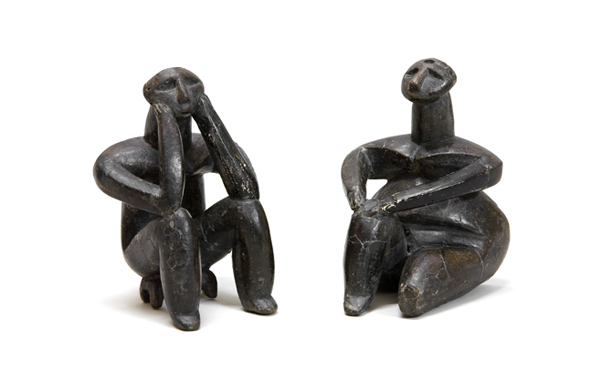
The Thinker
thinker.for_.main_.page_.jpg

http://isaw.nyu.edu/exhibitions/oldeurope/introduction.html
http://www.nytimes.com/2009/12/01/science/01arch.html

Then one of my favorite medievalists South-East Europe Florin Curta is likewise writing from United States,i have read in his articles that he is complaining that in Europe is hard to work whether archeology,history is subjected by some old ideas that are wrong,but are changing not talking about here IE'ans but medieval.
Balkan for some reason is avoided from many different studies despite the importance of this region in the Medieval times,downfall of Roman empire,emerging of new states etc and likewise as we see in much more ancient world.



You are confusing civilizations with cultures. Pottery is not a sign of a civilization but culture. Pottery was made in the Near East (Natufians, Halaf cultures) prior to ancient civilizations.
 
You are confusing civilizations with cultures. Pottery is not a sign of a civilization but culture. Pottery was made in the Near East (Natufians, Halaf cultures) prior to ancient civilizations.
Where did you saw i do that? i was merely quoting others most of the time about this "Old Europe" people,and yes some call them Danube valley civilizations and they had everything to be call civilization,economic systems,social stratification,settlement patterns and even sign of symbols/writings among first in the world,first gold assemblage in the world,all this should not be disregard and it was on European soil.
 
You are confusing civilizations with cultures. Pottery is not a sign of a civilization but culture. Pottery was made in the Near East (Natufians, Halaf cultures) prior to ancient civilizations.
No, he isn't. Did you read that?
http://www.nytimes.com/2009/12/01/science/01arch.html?_r=0

New research, archaeologists and historians say, has broadened understanding of this long overlooked culture, which seemed to have approached the threshold of “civilization” status.
At its peak, around 4500 B.C., said David W. Anthony, the exhibition’s guest curator, “Old Europe was among the most sophisticated and technologically advanced places in the world” and was developing “many of the political, technological and ideological signs of civilization.”

The things he said are consistent with the above statements. Either way, he used the term "cultures".
 
You are confusing civilizations with cultures. Pottery is not a sign of a civilization but culture. Pottery was made in the Near East (Natufians, Halaf cultures) prior to ancient civilizations.

from what found in Balkans the last decades, many things change in archaiology, and civilizations,
Varna is one of them, some of varna burial ritual is found thousands year before Pharaoh burial customs etc etc,
 
Where did you saw i do that? i was merely quoting others most of the time about this "Old Europe" people,and yes some call them Danube valley civilizations and they had everything to be call civilization,economic systems,social stratification,settlement patterns and even sign of symbols/writings among first in the world,first gold assemblage in the world,all this should not be disregard and it was on European soil.

you compared "Old European" pottery to ancient Mesopotamia and said say predate Sumerians as if anyone claimed that there was no pottery pre Sumerians. Do you see the mistake now? Sumer was a civilization and as far as I know there is no other civilization that predates Sumer, Elam, Egypt and Indus Valley Civilization. There are however dozens of cultures around the globe that predate these civilizations.

Before the glory that was Greece and Rome, even before the first cities of Mesopotamia or temples along the Nile, there lived in the Lower Danube Valley and the Balkan foothills people who were ahead of their time in art, technology and long-distance trade.


For 1,500 years, starting earlier than 5000 B.C., they farmed and built sizable towns, a few with as many as 2,000 dwellings. They mastered large-scale copper smelting, the new technology of the age. Their graves held an impressive array of exquisite headdresses and necklaces and, in one cemetery, the earliest major assemblage of gold artifacts to be found anywhere in the world.

And I just said that before Mesopotamian cities and Egypt there were cultures around the globe who were ahead of their times and pointed out that this nothing unique. Natufians and Halaf were just two examples. Civilizations are something slightly different than cultures.
 
Back
Top