• Don't want to see ads? Install an adblocker like uBlock Origin or use a Europe-based privacy-friendly browser like Vivaldi or Mullvad.

To burn or not to burn: LBA/EIA Balkan case

Status
Not open for further replies.
Some new paper from the fall team and a related news article.


wwKtwvT.png


In the LBA, Belegiš I ceramics emerge as a stylistic tradition ca. 1600 BC and were related to the Vatin and Maros traditions [5557]. The second phase, Belegiš II emerged in the late 15th century and is closely related to pre-Gava styles in Hungary [38, 56, 5861]. These ceramics were consumed throughout the lower Pannonian network, but also as far east as the foothills of the Transylvanian plateau and past the Sava-Drava confluence in the west. They are found less commonly south of the Danube prior to 1200 BC [62]. Notably, the co-occurrence of Belegiš I and SDŽB at TSG settlements, and the common use of incised and / or encrusted decoration, suggests our division between the two, based primarily on cemetery assemblages, is perhaps sharper than would have been viewed in prehistory. When the Belegiš II pottery style emerged, many features such as hanging garland decoration, cylindrical necks with everted rims and four equispaced protomes derived from the Belegiš I style. These features were shared also in a modified format on later SDŽB pottery, demonstrating entanglement of concepts even when broader decorative techniques were adhered to.

Beyond serving as typo-chronological markers, these trends show that the TSG communities were emerging when distinctive pottery styles of Belegiš, SDŽB and tumulus cultural traditions were consumed together. This demonstrated incorporation of the preceding Vatin and Maros traditions, of influences from the Danube and Mureș hinterlands, as well as of styles from non-adjacent areas from farther to the north. The image gained from earlier LBA craftwork / domestic wares is that communities were permeable enough to accommodate influences from varied networks. By the onset of the LBA 2 period ca. 1400 BC, there was increasingly widespread use of Belegiš II style, suggesting that material culture had become a vehicle for cultural integration, bucking a long-standing trend for it to be used to embody difference. Research in the Carpathian Basin and Balkans has often been dominated by culture history / typo-chronological frameworks. It is important to avoid slippage between speaking of ceramic groups as material culture categories with spatial and temporal relevance and the people who made the pots [63, 64]. Ceramic groups cannot viewed as direct proxies for ethnic or cultural identity and political boundaries, but represent expressions of choice and knowledge [65]. Nonetheless, ceramic traditions are linked to geographic spaces and between shape, decoration and function they structured the experiences / habitus of people using them. They were one among many features of daily life that embodied difference between groups. It is important because societies of the Carpathian Basin during the MBA and LBA produced a rich array of ceramic traditions. In aiming to explain, as well as describe, why distribution patterns change in temporal and geographic space we must account for choices and their implications for the materiality of communities. Pots may not equal people, but in this area they could and did express difference.

Vatin (Vatin Bela Bara) is an oddity as it should be documented as a tell-like settlement because it is largely flat in today’s landscape, but with over 2 metres of stratigraphy, it conforms to Gogâltan’s definition of a tell [66]. An original settlement plan associated with Vatin pottery was reconfigured at a time when later MBA Crvenka- Cornești (1850–1600 BC) pottery was adopted. This created complex stratigraphic relations, compounded by a coarse sandy geology which made phasing of occupation horizons difficult. Occasional finds of Chalcolithic pottery are known from the site, but the earliest architectural features identified were built ca. 1900 BC. The small excavation windows at Vatin indicate it was densely occupied and served as a central site for its immediate hinterland. The results of recent excavations are being prepared for publication by one of the present authors (DJ) and we can state here that the site was abandoned in the last decades of the 17th century calBC. After that, a cemetery of LBA date was established immediately above parts of the MBA settlement, with burial pits commonly dug into the ruins of houses. The earliest burial was an inhumation with metalwork including a sword, a miniature battle axe and a needle datable to the 15th century BC [103105]. A second LBA cemetery (Vatin-Selo) was created on the right bank of the river about 0.5 km to the northwest. Nonetheless, no LBA settlement has been located nearby. Finds from the cemetery reveal continued occupation of the hinterland, with vessels of both SDŽB and Belegiš I-II styles recovered.
 
Last edited:
Very nice piece. This is a crucial part of the information:

The tell was abandoned before the end of the 16th century BC and intensive pedestrian survey shows that settlement thereafter spread across the 8,197ha Titel plateau. This reveals a shift from intensive to extensive patterns of settlement and land-use. The pottery used changes only then, when SDŽB and Belegiš families are adopted. A cemetery on the plateau at Stubarlija was established and remained in use until ca. 1200 BC. The tell at Mošorin-Feudvar was reoccupied in the 12th century BC, based on absolute dates from the excavation and dating of pottery styles by Tasić and Falkenstein which are alternatively termed Belegiš IIb, Belegiš II-Gava or Belegiš III [56, 94].
There were at least 2 shifts, one in the 16th, and one in the 12th century BC. Two important dates for the region (Tell culture collapse and Tumulus culture expansion, and expansion of Channelled Ware/Gáva respectively).

They try to argue around it, but that's the smoking gun for the invasion:

Following the abandonment of the central site, the dominant ceramic types switched and new settlements and a new cemetery were established. Falkenstein et al. [70] argue for a complete change of population during this upheaval. An argument for changes in hegemonic practices and elite lineages might well be seen in these marked changes in pottery the communities found it socially appropriate to use, with new rulers being more receptive to immigration and / or accommodating some social conventions of neighbouring groups.

And its not restricted to just one of the major sites, like Židovar:

This relates to both local pottery production and the use of exogenous styles in community dynamics at Židovar. Following the MBA phase, the next stratigraphic horizon skips several centuries and is characterised by black-burnished pottery of the Belegiš II-Gava tradition, dated after 1200 BC [57]. This is the same gap as recognised at Mošorin-Feudvar. The chronology of the lower settlement is unclear beyond a general contemporaneity, partly because of disturbance by Early Iron Age pits. Some Belegiš II-Gava ceramics were also recovered. As with Mošorin-Feudvar, the final MBA phases were disturbed by natural and later activity, but there is currently no published evidence to confirm re-occupation of the tell after 1500 BC and prior to 1200 BC when Belegiš II-Gava pottery was introduced.
 
I looked into the paper they were quoting and found this, which I consider quite interesting as well, concerning the change from Vatin to Belegis I:

At the same time, immediately south of the Danube the Middle Bronze Age Belegiš group (Belegiš Ia)emerged without a cultural break, but as a distinct phenomenon, from the cultural substratum of theSyrmian-Slavonic group of the Vatin culture, the ceramic characteristics of the Belegiš group diferingclearly from those of the settlement of Feudvar. he conspicuous absence of imported vessels of the earlyBelegiš group in Feudvar indicates that relations across the Danube with the Syrmian cultural area wereinterrupted62.At the beginning of the Middle Bronze Age we therefore observe a socio-cultural separation of the Tiszaestuary area from the Syrmian-Slavonic group of the Vatin culture, and at the same time an incorporationof the settlement complex of Feudvar with its important transport connections into the cultural area ofthe Tisza-Moriš region63.

he handing down of ceramic styles from the Early Bronze Age, and the continuity of the buildingstructure indicate a conservative attitude of the inhabitants of Feudvar in the early Middle Bronze Age.Whilst neighbouring regions saw processes of cultural transformation that were partly brought about bysevere changes, such as the abandonment of a number of multilayered settlements and the introductionof the canonical urn grave custom, the Tisza estuary area, similarly to the Moriš region, adhered to theEarly Bronze Age cultural system of central settlements scattered like islands in the landscape.

The inhumation burial being a total outlier in this period:

here, next to the above mentioned single inhumation of the Vatin culture, a vast Middle Bronze Age cemetery with urn graves of the Belegiš and Szeremlegroup has been recorded68.

3 groups in a region:
1) Fading, dying Vatin
2) Encrusted Pottery which came down from the Middle Danube
3) Belegis I

This is important if talking about this region, because these were clearly distinct people, most likely ethnolinguistically and genetically different.

The ceramic finds from the settlements and cemeteries of the Titel Plateau and the adjacent part ofŠajkaška show characteristics of two diff erent pottery stiles. h us, ornamented ceramic shapes of thedeveloped early Belegiš group (Belegiš Ib) and the late Szeremle group appear side by side. h e incrustedlate Szeremle pottery according to the studies of Ch. Reich represents the most recent occurrence ofMiddle Bronze Age Incrusted Pottery along the Danube. Besides the Drava estuary and the Iron Gatesregion, a micro-regional agglomeration of settlements and cemeteries with Incrusted Pottery is evidentalso in the area at the conl uence of the Tisza and Danube69. In addition, anthropomorphic clay i gurineswith incrusted ornamentations that are also characteristic of the Late Szeremle group were frequently encountered70. Thus, a discontinuity of the Vatin-Moriš culture of the early Middle Bronze Age at Feudvarcan be observed both in the settlement pattern and in the development of the pottery, and on this basis itis possible to postulate a population change in the micro-region at about 1500 BC71.

The settlement pattern that was installed in a short time and perhaps in the course of systematic colonisationby population groups from the Danube-Sava region (Belegiš group) and from the conluence of the Danubeand Drava (Szeremle group) remains virtually unchanged from the Middle to the Late Bronze Age (15th–13thcentury BC) (horizon 14–15).

That was the break from Vatin to Belegis I, now we can look at the break from Belegis I to Belegis II-Gáva:

he time of the greatest possible continuity of settlement is however characterised by a drastic change inpottery decoration from the incised, stamped and incrusted pottery of Middle Bronze Age type (BelegišIb, Late Szeremle) to a black-polished and luted ware of the Late Bronze Age Belegiš group (Belegiš IIa),whilst the shapes of the vessels continued without a break73.he subsequent settlement phase (horizon 16) of the latest Belegiš group (Belegiš IIb) of the 12th–11thcentury BC is a transitional phase that shows signs of disintegration of the traditional settlement structure.hus, at the beginning of the phase all earlier sites were abandoned, and new settlements were built atdistances of a few hundred meters to two kilometers. Also, in the urn grave cemetery of Stubarlija which isunfortunately only partly excavated the burial activities seem to cease at the beginning of Belegiš IIb phase.

The transition to the Bosut group/Stamped pottery elements was by comparison much more fluent:

Whilst the shapes of the pottery gradually changed, the black polished surfaces and the luted decoration of the later Belegiš group continued. In addition, coarsely made vessels with incised and stampeddecoration appear in a still small, but already regular proportion and thus mark the beginnings of theEarly Iron Age Bosut group75

The main change was the decrease (not absence) of channelling and especially the retreat to higher ground and more fortified places, like mentioned in the earlier piece as well, mainly because of the Cimmerian pastoralists incursions and the spread of the Mezocsat group on the plains, which seem to have started to regularly raid the people along the rivers.

It also explains why we find an R-Z93 and E-V13 with Caucasian autosomal profile in Himera, since that was likely the backflow from the Carpatho-Balkan region, which brought those haplogroups to the Caucasus region:

The resettlement and reinforcement measures take place at a time when a complex cultural change canbe discerned in the Carpathian basin. In the zone of the Great Hungarian plain, the cultural break hasespecially dramatic efects. hus, the settlements and urnields of the Csorva, Kyjatice and Gáva groupsin the middle and upper Tisza basin were in the course of 10th–9th century BC replaced by the burial sitesof the Füzesabony-Mezőcsát group. he metal inds from the graves and depots represent a repertoire offorms of Pontic-Caucasian origin. At the same time it can be assumed, especially due to the lack of settlement remains, that the population groups in the Alföld were of nomadic steppe character81. he presenceof a nomadic steppe population in the geographically adjacent lowlands is in perfect agreement with theresettlement and reinforcement activities of the early Bosut group, for such measures would be expectedin the case of threat from steppe nomadic attacks.

There was however a large shrinkage of the population and this is particularly noteworthy:

Depopulation phenomena with such dramatic efects are noticeable throughout almost the entire areaof the Bosut group at the end of the Kalakača period, and they are probably the relection of a crisis periodwhich inds visible expression in, among other aspects, the mass grave II in the settlement of the Kalakačaperiod of Gomolava in Srem90.

At the end of Bosut-Basarabi, fluted decorations became particularly common once again, kind of a revival of their older tradition.

Link: https://www.academia.edu/26716106/Feudvar_near_Mošorin_Serbia_Excavations_and_Research_in_a_Micro_region_at_the_Confluence_of_the_Danube_and_Tisza_a_recapitulation_after_thirty_years&nav_from=bc41e1f3-bbed-4c73-b64e-1c39167f1635&rw_pos=0
 
Last edited:
I looked into the paper they were quoting and found this, which I consider quite interesting as well, concerning the change from Vatin to Belegis I:


The inhumation burial being a total outlier in this period:


3 groups in a region:
1) Fading, dying Vatin
2) Encrusted Pottery which came down from the Middle Danube
3) Belegis I

This is important if talking about this region, because these were clearly distinct people, most likely ethnolinguistically and genetically different.


That was the break from Vatin to Belegis I, not we can look at the break from Belegis I to Belegis II-Gáva:


The transition to the Bosut group/Stamped pottery elements was by comparison much more fluent:


The main change was the decrease (not absence) of channelling and especially the retreat to higher ground and more fortified places, like mentioned in the earlier piece as well, mainly because of the Cimmerian pastoralists incursions and the spread of the Mezocsat group on the plains, which seem to have started to regularly raid the people along the rivers.

It also explains why we find an R-Z93 and E-V13 with Caucasian autosomal profile in Himera, since that was likely the backflow from the Carpatho-Balkan region, which brought those haplogroups to the Caucasus region:


There was however a large shrinkage of the population and this is particularly noteworthy:


At the end of Bosut-Basarabi, fluted decorations became particularly common once again, kind of a revival of their older tradition.

Link: https://www.academia.edu/26716106/Feudvar_near_Mošorin_Serbia_Excavations_and_Research_in_a_Micro_region_at_the_Confluence_of_the_Danube_and_Tisza_a_recapitulation_after_thirty_years&nav_from=bc41e1f3-bbed-4c73-b64e-1c39167f1635&rw_pos=0

Isn't the Vatin culture similar to Mycenae? Did they even cremate in urns? Vatin culture ended 13th century BC, around the time Urnfield became the superpower of Europe - it is obvious why Vatin ceased to exist at that point in time
 
Isn't the Vatin culture similar to Mycenae? Did they even cremate in urns? Vatin culture ended 13th century BC, around the time Urnfield became the superpower of Europe - it is obvious why Vatin ceased to exist at that point in time

Vatin had Mycenaean connections, but so had other Tell cultures from the Carpathian basin and later even Suciu de Sus and Gáva to some degree.
But yes, Vatin met its final end with the expansion of Belegis and Gáva.
 
The main carrier of any sort of language, and such old reconstructed words are harldy solid evidence, the E-L618 people spoke, was G2. I don't see any sort of special E-L618 group roaming around, so either all EEF or at least the Impresso-Cardial people were AA speakers, or none of them. Its not specific to E-L618 vs. other haplogroups of the EEF communities.

It's a hypothesis, but i wouldn't be surprised in a single bit if Old-Balkanic or part of it like Rasmus labels it was Afro-Asiatic speaking and hence E-L618 carriers. Now, he could easily be wrong as well.
 
It's a hypothesis, but i wouldn't be surprised in a single bit if Old-Balkanic or part of it like Rasmus labels it was Afro-Asiatic speaking and hence E-L618 carriers. Now, he could easily be wrong as well.

It is possible, but I would rather go by how the EEF populations (especially LBK and ICW) came up, rather than some speculative linguistic explorations. Like we still haven't seen the how G2 became dominant ANF-EEF haplogroup in Anatolia. How much of it was cultural vs. demic diffusion in Anatolia. Were the G2 clans taking over like the steppe foragers in the PPIE context, or was it a different process etc. I think some E-L618 was just part of the Levantine element, with which they came into contact and mixed with, which survived in Anatolia and spread with EEF into Europe.
The ANF genesis with G2 on top is what might be the most reliable signal for an AA relationship, even though I doubt that can be proven. Because in the end, the markers have no fixed ethnolinguistic label and just E-V13 did switch to IE Proto-Thracian, so could G2 have either kept a different language or switched to AA.
 
Isn't the Vatin culture similar to Mycenae? Did they even cremate in urns? Vatin culture ended 13th century BC, around the time Urnfield became the superpower of Europe - it is obvious why Vatin ceased to exist at that point in time

Vatin is not similar to Mycenae, rather it had some trade connections, the authors mention Vatin as something similar to Maros but that's quite a surprise because Vatin to my knowledge was never considered something similar to Maros.

Vatin Culture mostly used cremation burials in urns, but they had inhumation in the Western Serbian variant.

Would be interesting to see the outcome.
 
I am not sure if they claimed Vatin and Maros were the same, they did conclude Belegis I was a hybrid culture of both, and a very short lived one. Belegis I was a last hurrah of non-Gava cultures that made an effort to hold on.
 
I am not sure if they claimed Vatin and Maros were the same, they did conclude Belegis I was a hybrid culture of both, and a very short lived one. Belegis I was a last hurrah of non-Gava cultures that made an effort to hold on.

Perhaps they know something since they mentioned, IDK.

But, for me the Gava-like cultures were quite likely E-V13, i know that conventional logic dictates that the South Thracians then need to have had more WHG like the other Carpathian people, but conventional logic dictates also that if WHG and I2a was so common in Bronze Age Carpathian Basin then it should have been even more common the more West you go which was not the case, rather an insurgence of these people in a particular place, i see no issue if a specific people with more Neolithic autosomal saw a resurgence during LBA somewhere in Carpathian, archaeologically that what happened with Gava as well.

Personally i have three possible options for initial spread of E-V13: Gava/Channeled-Ware and Stamped-Ware, Haemus Mountains (nowadays Rhodope and Stara Planina), Danubian Delta.
 
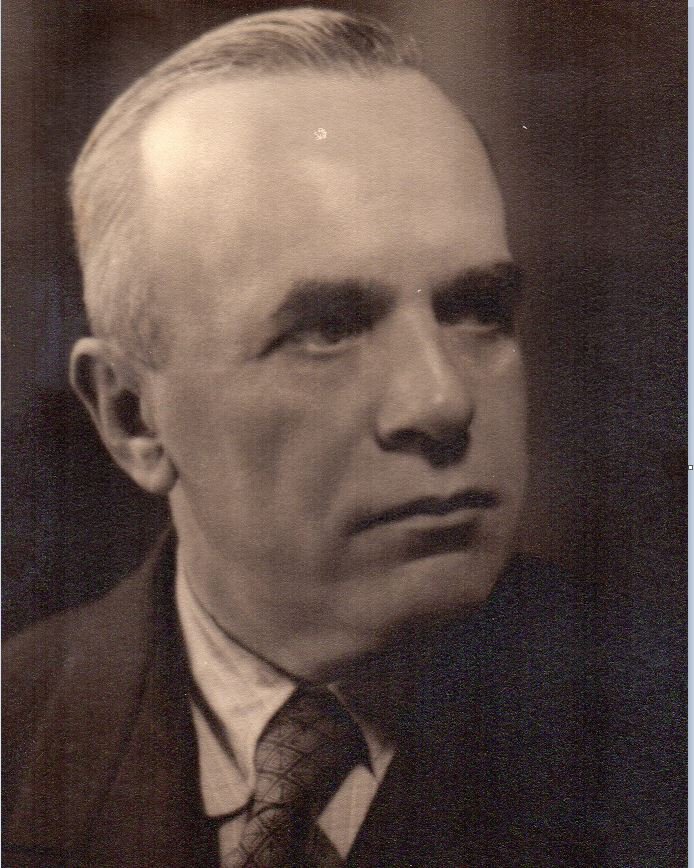
@PaleoRevenge, i am surprised reading the writing of Mustafa Kruja from 1938 how reflective he was (note that his writings are more of a reflections than theories/hypothesis, he looks open-minded on possibilites).

Sidoqi të jetë, edhe autoktoníja, si shumë gjâna tjera të ksaj bote, âsht relative. Po t’a marrim autoktonín në kuptimin absolut, duhet të quejmë autokton vetëm nji popull qi, mbas teorís poligjeniste, të parët e tij origjinarë të jenë krijue në vênd ! E atëherë asnji nga popujt indevropjanë, për me folun vetëm për këta, nuk do të quhesh dot autokton në krahasim me popujt e mâparshëm të Ballkanit të cilve kanë ardhë e u zânë vêndin. E në qoftë se popujt pararjanë të Ballkanit, si edhe ata t’Evropës mbarë, qi janë zhdukun tue u shkrimë etnikisht me Arjanët qi u ranë mbi shpinë, në qoftë se ata nuk hŷjnë mâ në numër dhe do të quhen këta autoktonë, të këtillë janë atbotë në Ballkan Grekët, bijt e Helenvet, e të këtillë edhe Shqiptarët, bijt e Thrako-Ilirvet.


His writing latter on was considered as sort of blasphemy from Communist regime but Eqrem Cabej respected him. It looks like Mustafa Kruja had an interest on Albanian language.
 
The issue with alternatives to Gáva-like Channelled Ware is, that they are in no way better and in the end all worse, if taking everything into account which might matter. However, we can't even say for sure that Gáva was one block to begin with, since there were clearly different ethnicities, at least kind of tribes, within Gáva in the narrower sense, let alone in the broader sense. Whether they were all the same is hard to tell, but what strikes me is that the Channelled Ware and the Daco-Thracians which grew out of it were such a large and numerous people, which surely left a legacy behind.
If these people had high numbers of other haplogroups within their population, where did they survive? Why are the all, at least largely, gone? And they were gone even in the earlier periods, what we can see in the Iron Age and Antiquity samples. Its primarily Tumulus culture-Celtic R-L2 and E-V13 in the local populations from that macro-region. Everything else can be assigned to different people or was going extinct or drastically reduced.

We got Noua-Coslogeni, but then the only group which might have contributed E-V13 was Wietenberg in this sphere and so far all samples are clearly steppe-heavy and mostly R-Z93 (Iranian), like expected from Sabatinovka people which were related to Srubna.
And Wietenberg on its own won't cut it without being part of a wider Carpatho-Balkan block of cremating people to which later Gáva belonged as well.
 
Perhaps they know something since they mentioned, IDK.

But, for me the Gava-like cultures were quite likely E-V13, i know that conventional logic dictates that the South Thracians then need to have had more WHG like the other Carpathian people, but conventional logic dictates also that if WHG and I2a was so common in Bronze Age Carpathian Basin then it should have been even more common the more West you go which was not the case, rather an insurgence of these people in a particular place, i see no issue if a specific people with more Neolithic autosomal saw a resurgence during LBA somewhere in Carpathian, archaeologically that what happened with Gava as well.

Personally i have three possible options for initial spread of E-V13: Gava/Channeled-Ware and Stamped-Ware, Haemus Mountains (nowadays Rhodope and Stara Planina), Danubian Delta.

South Thracians are something along the lines of 56% Minoan in autosomal DNA, quite watered down from the original profile. I think the LBA E-V13s plotted like Cinamak Illyrians. Some WHG but not excessive, the Himera samples have a Slavic-like pull, and their WHG component has increased because of it, but it is not Italian like WHG as is seen among the Illyrians, their WHG is of different source.

E-V13 has to come from a culture that was a winner, the clear obvious candidate is Gava and it's derivatives. It cannot be some insignificant culture or geographical area that was on the receiving end. It is also inconceivable that E-V13 was only along the Tizsa while the uplands to the east were inhabited by other haplogroups, that would mean their backs were exposed to non-E-V13 groups and not a recipe for success. So E-V13 was not just in the Pannonian plain, but controlled Transalvanya as well, by consolidating this large area they were able to expand further. Ancient samples are needed to validat it all.
 
Last edited:
@PaleoRevenge, i am surprised reading the writing of Mustafa Kruja from 1938 how reflective he was (note that his writings are more of a reflections than theories/hypothesis, he looks open-minded on possibilites).


His writing latter on was considered as sort of blasphemy from Communist regime but Eqrem Cabej respected him. It looks like Mustafa Kruja had an interest on Albanian language.

It was a freer world and a freer time. Zog's period is the only time Albanians were truly free, ecomically, culturally and what not. Mustafa's conclusions are valid, nothing is static. You can see it in all ancient DNA, once haplgroup C ruled Europe, they were the forerunners of R1, as they both expanded from the steppe. Then haplgroup I came from the caucacus and Anatolia, a position later taken by the Js and Gs. R1s become the new steppe intruders, and so on and so on. Things have accelerated in the last 6,000 years do to an unusual warm climate that allows agriculture - based civilizations to develop. During Ice Ages, these turnovers take a lot longer.
WIVuSqN.png
 
Last edited:
It was a freer world and a freer time. Zog's period is the only time Albanians were truly free, ecomically, culturally and what not. Mustafa's conclusions are valid, nothing is static. You can see it in all ancient DNA, once haplgroup C ruled Europe, they were the forerunners of R1, as they both expanded from the steppe. Then haplgroup I came from the caucacus and Anatolia, a position later taken by the Js and Gs. R1s become the new steppe intruders, and so on and so on. Things have accelerated in the last 6,000 years do to an usual warm climate that allows agriculture - based civilaztions to develop. During Ice Ages, these turnovers take alot longer.

Makes sense, looking at his writing is just so interesting someone almost 100 years ago, was so self-reflective in his writing. Anyway, not that people today are smarter, just we have access to more information, period.
 
Makes sense, looking at his writing is just so interesting someone almost 100 years ago, was so self-reflective in his writing. Anyway, not that people today are smarter, just we have access to more information, period.

We can also say the same of the European historians from that time period as well, they did a good job reconstructing the past through the examination of pots. Their conclusions became obsolete too under illiberal democracy but now ancient DNA validates them.

I will not go further on this, but there is an obvious force that always wants to obscure and reconstruct the past with falsehood. There are moments of freedom when the system is rearranging itself, such as when Christianity was replaced, or the internet first became public. But the censorship and restrictions always comes back.
 
It was a freer world and a freer time. Zog's period is the only time Albanians were truly free, ecomically, culturally and what not. Mustafa's conclusions are valid, nothing is static. You can see it in all ancient DNA, once haplgroup C ruled Europe, they were the forerunners of R1, as they both expanded from the steppe. Then haplgroup I came from the caucacus and Anatolia, a position later taken by the Js and Gs. R1s become the new steppe intruders, and so on and so on. Things have accelerated in the last 6,000 years do to an unusual warm climate that allows agriculture - based civilizations to develop. During Ice Ages, these turnovers take a lot longer.
WIVuSqN.png
Kruja was pro Italian, he was banned by
 
He is sound in the head. You still worshiping communism labi?
Kruja was pro Italian, he was banned twice once 1920 for opposing the congres of Lushnje and supporting congress of Durres and second for supporting Noli Revolution.
From communist was the third time. Not sure how the extensive freedom under Zoge monarchy relates to Kruja. Zogu banned him. Do you understand?
 
Kruja was pro Italian, he was banned twice once 1920 for opposing the congres of Lushnje and supporting congress of Durres and second for supporting Noli Revolution.
From communist was the third time. Not sure how the extensive freedom under Zoge monarchy relates to Kruja. Zogu banned him. Do you understand?

Zogu himself ended up being pro-Italian and dependent on Italy. Kruja was ahead of his time. Albania can't stand on its own two legs so it needed to ally with a nearby power that has no genocidal aspirations.
 
Status
Not open for further replies.
Back
Top