• Don't want to see ads? Install an adblocker like uBlock Origin or use a Europe-based privacy-friendly browser like Vivaldi or Mullvad.

Iosif Lazaridis: Proto-Indo-Europeans had dark hair, brown eyes, and an intermed‌iate skin tone

Had a few Iranian friends that I worked with. One had blue eyes and sandy blond hair and taller than the average Iranian. Another one was short with brown hair and eyes good looking guy and could pass for Greek, Italian, Spanish or Southern French. Then we had the guy from Southern Iran possibly Saudi Arabian in ethnicity who had black hair very brown complexion and black air (whatever was left that is, he was bald by 30. It does not prove anything. There is variation in all mixed populations and most counties have mixed populations. Hell within a family you can have different looking people. For example my older sister and I look like my mother. Our younger sister is blonde, blue eyed and so was our father. My mother's side had quite a lot of blondes and red headed people, it's just that my mother turned out brown hair and brown eyes.
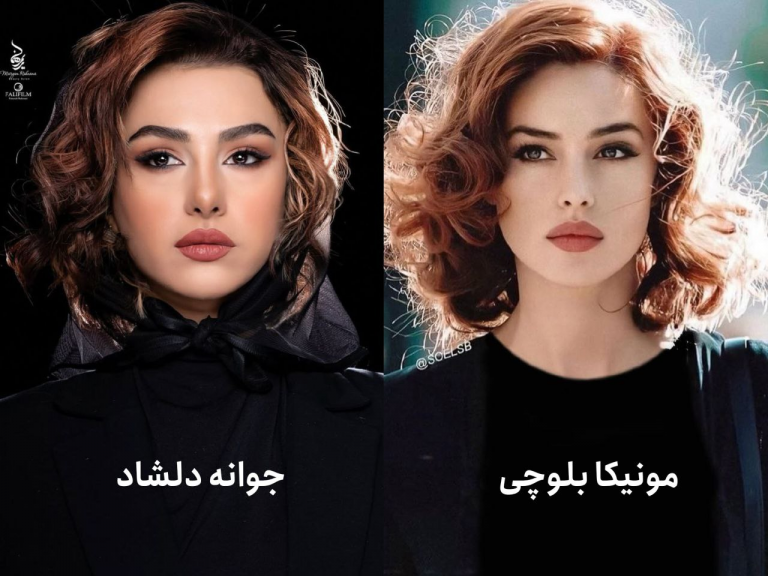
 
I actually played in your game about the importance of pigmentation, this is just your imagination that there is a big difference between Iranians and Italians, the famous Italian actress Monica Bellucci played as an Iranian woman in a movie and now the majority Iranians think she is an Iranian who lives in Italy. In some Iranian websites she has been compared to some Iranian actresses to prove this thing!

image-63-768x576.png
Take out the make up and they are nothing alike. Give me a break you desperate wannabe.
 
Are there big genetic differences between Italy and Iran?
Let's put it this way, they are bigger than those between Italy and the farthest European population to Italy in terms of genetics. So yeah, in the big scheme of things I'd say they are pretty huge.
 
OP: What's your point with all of this? Is well known that Italians and Iranians are distant genetically something alreaady proven by genetics and history.

You should read studies about genetics and history, like this recent one:
The arrival of the Near Eastern ancestry in Central Italy predates the onset of the Roman Empire https://www.biorxiv.org/content/10.1101/2024.10.07.617003v1.full

"Italian genetic history was profoundly shaped by Romans. While the Iron Age was comparable to contemporary European regions, the gene pool of Central Italy underwent significant influence from Near Eastern ancestry during the Imperial age."

"These results suggest that IA/Republican oNE and Imperial groups form a homogeneous genetic cluster in their affinity to Iran_N when they are compared to the IA/Republican main cluster."
 
"Italian genetic history was profoundly shaped by Romans. While the Iron Age was comparable to contemporary European regions, the gene pool of Central Italy underwent significant influence from Near Eastern ancestry during the Imperial age."
1. Iran is Middle East, not Near East which in this study is a by-word for Eastern Mediterranean. 2. "significant influence" is very subjective: some people may consider 80% to be "very significant", others 2-5%... It all depends on the context.

On the other hand I see why these researchers keep using expressions such as this one, as they are trying to manipulate reality (in accordance with their progressive and immigrationist political agenda) by the use of loose, unspecific and unscientific terminology, so that dumb people reading only summaries might come to wrong conclusions. Which nonetheless serves as a support for the above mentioned agenda.

"These results suggest that IA/Republican oNE and Imperial groups form a homogeneous genetic cluster in their affinity to Iran_N when they are compared to the IA/Republican main cluster."
Are you able to understand what you read? It's in relative terms.

Consistently with your logic, I might as well state that the Southern Germans form a homogeneous genetic cluster in their affinity to (Neolithic) Iran_N when they are compared to the Northern Germans. From this descends that the Southern Germans are genetically close to the modern Iranians. :ROFLMAO:
 
Last edited:
1. Iran is Middle East, not Near East which in this study is a by-word for Eastern Mediterranean. 2. "significant influence" is very subjective: some people may consider 80% to be "very significant", others 2-5%... It all depends on the context.

On the other hand I see why these researchers keep using expressions such as this one, as they are trying to manipulate reality (in accordance with their progressive and immigrationist political agenda) by the use of loose, unspecific and unscientific terminology, so that dumb people reading only summaries might come to wrong conclusions. Which nonetheless serves as a support for the above mentioned agenda.


Are you able to understand what you read? It's in relative terms.

Consistently with your logic, I might as well state that the Southern Germans form a homogeneous genetic cluster in their affinity to (Neolithic) Iran_N when they are compared to the Northern Germans. From this descends that the Southern Germans are genetically close to the modern Iranians.

Please don't play with words, Near East: https://en.wikipedia.org/wiki/Near_East

"The Near East (Arabic: الشرق الأدنى) is a transcontinental region around the Eastern Mediterranean broadly synonymous with the modern Middle East, encompassing the historical Fertile Crescent, the Levant, Anatolia, Egypt, Mesopotamia, the Iranian Plateau, and coastal areas of the Arabian Peninsula."

It is really clear that this study refers which one of these regions:

"For example, the first genome ever retrieved from the archaeological site of Pompeii (Scorrano et al. 2022) (which, due to the eruption that destroyed the city, is precisely dated to the 79 CE) clusters with other Imperial individuals of the subsequent centuries and it has a high proportion of Iran Neolithic genetic component (usually a good proxy for Near Eastern ancestry in Europe)"

What is the meaning of "high proportion"? 2-5%?!! Why do you want to fool yourself?
 
If Iran is not Middle East I really don't know what Middle East is supposed to be, maybe Nepal? :ROFLMAO: Those playing with words here are the researchers, for the reasons I've explained above, and you probably for self-delusion.

Georgia, Armenia, Azerbaijan and Turkey are European countries and Iran and Nepal are in another part of the world!

Europe.jpg


I don't know what you mean by "immigrationist political agenda", the same problem exists in Iran but these things certainly don't relate to scientific studies.

Iran Faces Birth Rate Crisis: https://www.newsweek.com/iran-birth-rate-crisis-2030668 (Iranian Deputy Health Minister Alireza Raisi: "If the situation persists, in 100 years, there will be no country called Iran.")

The Afghan Immigrant Crisis in Iran and the Rise of Afghanophobia: https://www.stimson.org/2023/the-afghan-immigrant-crisis-in-iran-and-the-rise-of-afghanophobia/ (The conservative newspaper Jomhuri-e-Eslami newspaper has warned about the immigrants’ high birth rate and called that a threat to national security.)
 
Last edited:
You should read studies about genetics and history, like this recent one:
The arrival of the Near Eastern ancestry in Central Italy predates the onset of the Roman Empire https://www.biorxiv.org/content/10.1101/2024.10.07.617003v1.full

"Italian genetic history was profoundly shaped by Romans. While the Iron Age was comparable to contemporary European regions, the gene pool of Central Italy underwent significant influence from Near Eastern ancestry during the Imperial age."

"These results suggest that IA/Republican oNE and Imperial groups form a homogeneous genetic cluster in their affinity to Iran_N when they are compared to the IA/Republican main cluster."
Not only Iranian Neolithic was very distant and different regarding modern iranians, but the whole term Near East is extremely broad and doesn't explicitly specify that it comes from Iran! For not saying that Iran N ancestry can be found in many other parts of Near East.

Captura de pantalla 2025-02-27 151220.png
(As it can be shown here, Iran neolithic is extremely different from modern iranians)


"Although not impossible, it seems unlikely that in just a few generations since the onset of the Empire, migrations bringing the Near Eastern ancestry already had an impact on the Italian gene pool, regardless of the geographic origin of the sample. On these bases, it is important to note that the Near Eastern genetic component may have arrived in Central-Northern Italy as a result of internal migrations after the conquest of genetically understudied Southern Italy and Sicily IA. Indeed, we are still lacking an extensive genomic characterization of Magna Graecia and Punic Sicily individuals, who probably had a Near Eastern ancestry since they arrived in Italy from the Eastern Mediterranean. Finally, among the few analyzed individuals dated to the latest period of the Roman Republic (the last two centuries of the 1st millennium BCE) there are several ones interpreted as “genetic outliers” with a Levantine or Eastern Mediterranean putative origin (Antonio et al. 2019; Posth et al. 2021; Moots et al. 2023). These individuals may be the direct representatives of the ongoing arrival of Near Eastern ancestry which later characterized the genomic landscape of the Imperial period."


I'm gonna ask the same question again and i hope you won't avoid it.

What's your point with all of this?
 
Last edited:
Not only Iranian Neolithic was very distant and different regarding modern iranians, but the whole term Near East is extremely broad and doesn't explicitly specify that it comes from Iran! For not saying that Iran N ancestry can be found in many other parts of Near East.

View attachment 17873 (As it can be shown here, Iran neolithic is extremely different from modern iranians)


"Although not impossible, it seems unlikely that in just a few generations since the onset of the Empire, migrations bringing the Near Eastern ancestry already had an impact on the Italian gene pool, regardless of the geographic origin of the sample. On these bases, it is important to note that the Near Eastern genetic component may have arrived in Central-Northern Italy as a result of internal migrations after the conquest of genetically understudied Southern Italy and Sicily IA. Indeed, we are still lacking an extensive genomic characterization of Magna Graecia and Punic Sicily individuals, who probably had a Near Eastern ancestry since they arrived in Italy from the Eastern Mediterranean. Finally, among the few analyzed individuals dated to the latest period of the Roman Republic (the last two centuries of the 1st millennium BCE) there are several ones interpreted as “genetic outliers” with a Levantine or Eastern Mediterranean putative origin (Antonio et al. 2019; Posth et al. 2021; Moots et al. 2023). These individuals may be the direct representatives of the ongoing arrival of Near Eastern ancestry which later characterized the genomic landscape of the Imperial period."


I'm gonna ask the same question again and i hope you won't avoid it.

What's your point with all of this?

I doubt you yourself know what you want to say! You refer to an image which shows Kurdish_Persian: Iranian are the closest population to Iran Neolithic and then say "As it can be shown here, Iran neolithic is extremely different from modern iranians"!!

The main point is that both Iranians and Italians are Indo-Euroepans and genetically they are close to each other, especially because what Iosif Lazaridis said about Proto-Indo-Europeans.
 
I doubt you yourself know what you want to say! You refer to an image which shows Kurdish_Persian: Iranian are the closest population to Iran Neolithic and then say "As it can be shown here, Iran neolithic is extremely different from modern iranians"!!

The main point is that both Iranians and Italians are Indo-Euroepans and genetically they are close to each other, especially because what Iosif Lazaridis said about Proto-Indo-Europeans.
Do you know how to read distances?!

So this is your point? Have you ever checked a PCA? Genuine question
 
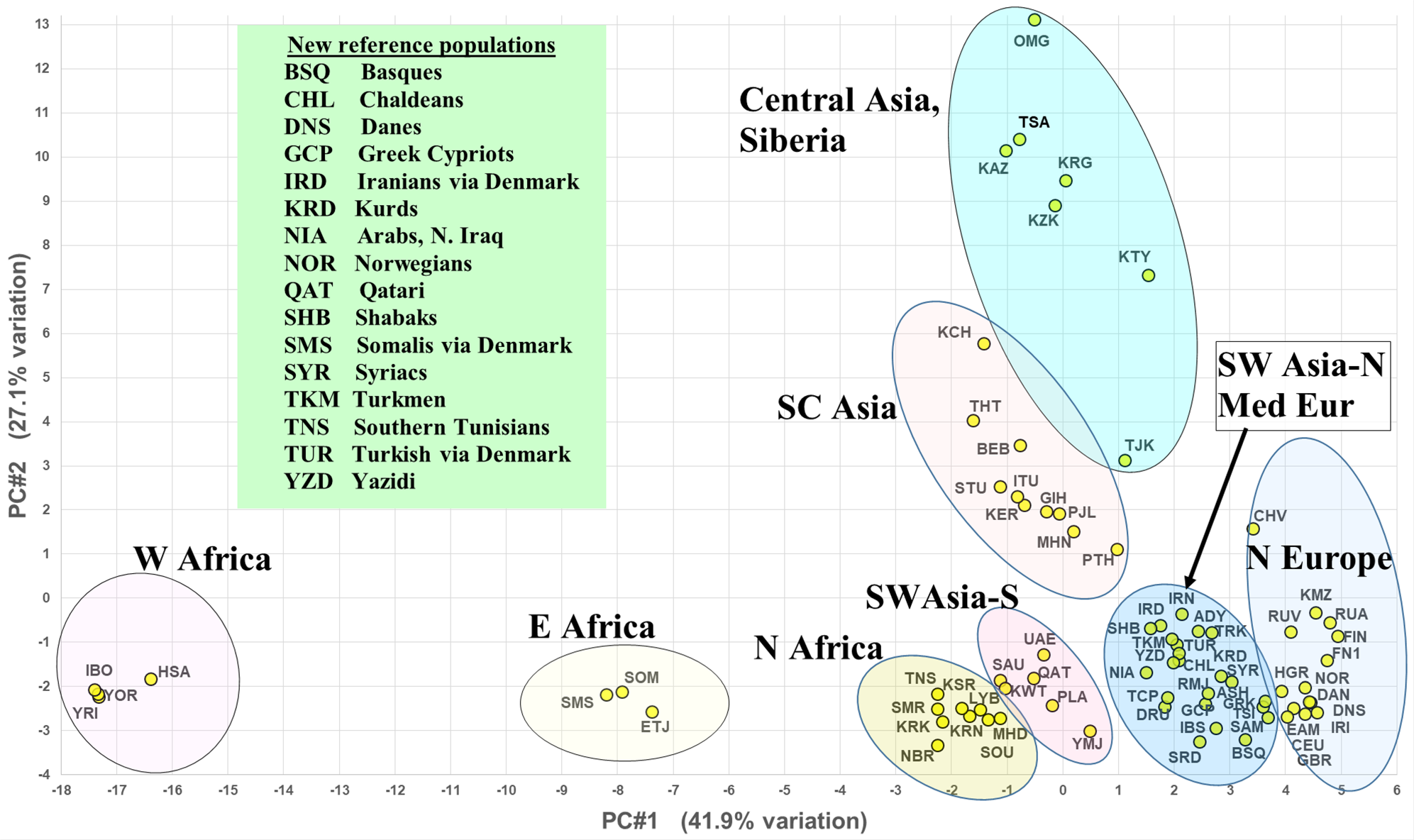
No, wrong unless you mean they are geneticall close compared to their respective distance to Koreans or Bantus.

Genetic relationships of European, Mediterranean, and SW Asian populations using a panel of 55 AISNPs: https://www.nature.com/articles/s41431-019-0466-6

41431_2019_466_Fig1_HTML.png


Of course you believe that all of these studies are based on political agenda, Italians are an unique people who can't be compared to other ones!
 
The main point is that both Iranians and Italians are Indo-Euroepans and genetically they are close to each other, especially because what Iosif Lazaridis said about Proto-Indo-Europeans.

Indo-European is a language family, Indo-Europeans have never been a people in the ethnic sense with self-consciousness of all belonging to the same ethnicity or people. The idea of the Indo-European people is a nineteenth-century romantic idea, which unfortunately still survives today, but it is wrong.

At most, the ancestors of the Indo-European languages were at one point a prehistoric human group, but not an ethnic group in the modern sense of the term, and as we see not even all Indo-European languages are descended from the Yamnaya culture, and this human group diversified quite a lot, both culturally and biologically, from the very beginning, and it is by diversifying itself that it spread the Indo-European languages to Europe and Asia. In the Iron Age, when ethnic groups were first formed in Europe, an ancient Greek could not understand a Persian, a Celt could not understand one who spoke Luwian.

Of course you believe that all of these studies are based on political agenda, Italians are an unique people who can't be compared to other ones!

You accuse others of Euro-centrism but the truth is that you would like Iranians to be considered European. Is that not the case?
 
Back
Top