• Don't want to see ads? Install an adblocker like uBlock Origin or use a Europe-based privacy-friendly browser like Vivaldi or Mullvad.

Cephalic index of ancient populations and reconstructions

I was talking about North Africa and Middle Eastern Arabic-speaking countries, not about West Asia in general.

The shortening (and widening) process is the general trend seen in most parts of the world.

The lengthening process of skulls (dolichocephalization) is less frequently observed than brachycephalization.
 
The Eskimos and Inuits I have seen are as broad faced as possible.

Time and again I am repeating, that face shape and skull shape are two very different things.

You posted short-faced individuals claiming that they are short-skulled. But these are different things - see e.g. these pictures, a long-faced (measured from chin to top of the head) but short-skulled Japanese vs. a short-faced but longer-skulled Caucasoid:

Fig.1.jpg


The map from Wikipedia shows Eskimos as dolichocephalic (see the link above), I don't know how credible is that map, but certainly posting opinions or pictures of several individual faces like you are doing now will not contribute to a statistical analysis.

Some numerical data would be nice, I don't have anything at hand, but I wrote what I recall.

If you have some solid data on CIs of various prehistoric populations, I will gladly take a look.
 
Posting some random pictures is un-scientific.

:thinking:haven't you actually started posting images?

Those are professional reconstructions not some simple "random pictures".
 
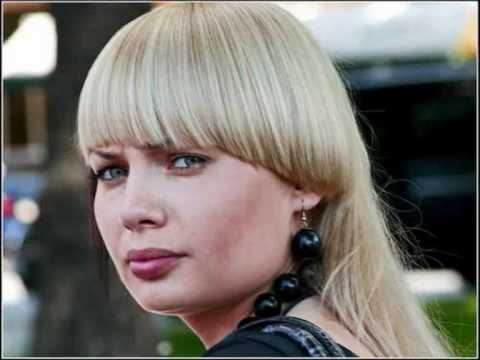
@Tomenable I give up on this, you are simply in denial and confuse or deliberately mix up any of my arguments. The woman I posted was not only short faced for the sake of god. She was round/broud faced this was what old school racialists called "Alpinoid" or "Baltid" type and this type is described as brachycephalic by any means.

Here is another of those short faced individuals who is brachycephalic because his head is broad/round and all his mass goes into the width of his head.
http://www.nordish.org/bilder/gl-alpinid.jpg
https://upload.wikimedia.org/wikipe....PNG/360px-Alpinoid_Race_Caucasoid_Ripley.PNG

Nevermind I need some rest.
 
Alan, as I wrote, you are confusing face shape with skull shape.

Or at least I don't know when are you referring to face, and when to skull.

You claimed (after posting a short-faced individual):

"someone with this kind of facial structure can no way be anything else but brachycephalic."

But of course this claim of yours is not true at all.

Someone with a short face can be dolichocephalic, and someone with a long face can be brachycephalic.

Example:

Fig.1.jpg


It seems that you are one of many people, who are confusing face shape with skull shape.

I used to confuse these two things some time ago as well.

=================================================

What you have been showing, is that WHGs were usually short-faced.

But you have not proven so far, that they were not dolichocephalic.
 
I haven't yet gone over all of the pictures that have been posted in this thread, but I personally don't have any confidence that even forensic artists can give us a good sense of the appearance of these ancient peoples, much less people just posting sketches on the internet.

This is the first reconstruction of Oetzi. In my opinion, it obviously owes a lot to a perception, conscious or not, that he would have looked like modern Central Europeans.
248-6-oetzi-archeologie-museum-bozen.jpg


This is the second reconstruction. I have some familiarity with these areas, and I think that his time, as well as correcting the pigmentation based on the snp analysis, they looked at phenotypes common in the Tyrol.
iceman-oetzi-otzi-reconstructed-new_32525_600x450.jpg


A reconstruction for La Brana was recently done. Yet prior reconstructions of European hunter-gatherers looked slightly different. Which ones are more correct?
44397-004-D45BC527.jpg


http://www.britannica.com/topic/Cro-Magnon

Where does this Les Elyzies sample fit?

411559023_4d7e42d34f.jpg
 
Angela said:
much less people just posting sketches on the internet.

But those are not that random guy's own sketches but some professional reconstructions as well.

He just scanned them or something, and posted on the internet.

What I like about those sketches is that authors didn't pretend that they know pigmentation. :)


Yamna people can be modelled genetically as a mix of EHG and either "Teal" or CHG. This also applies already to Khvalynsk people, even though in slightly different proportions. In anthropological terms I'm not sure how things looked like in Yamna culture (maybe the population was already so intermixed that it comprised a single anthropological type), but a morphological duality of Khvalynsk population can be observed.

Let's quote Mathieson's study:

"The unusually large cemetery at Khvalynsk contained southern Europeoid and northern Europeoid cranio-facial types, consistent with the possibility that people from the northern and southern steppes mingled and were buried here."

I guess that originally (before they merged into one population) EHG = northern types and "Teal" or CHG = southern types.

I wonder which cranio-facial type or types can be attributed to males SVP35 with R1b (grave 12) and SVP46 with R1a (grave 1) ???

Were both of them of northern Europeoid cranio-facial type, or was one or both of them of southern Europeoid type?

Everything in the region after Dnieper Donets/Samara is a mix of "Southern" and "Northern". But of course with no evidence for contact with Caucuses until darn close to Yamnaya this was assumed to be a result of contact with the Balkans, at least prior to ancient genetic revelations. I was trying to match the individual Khvalynsk samples with some of these other characteristics as well but I couldnt dig it up. I don't know that it's all been curated together, or at least it's not readily available.

Stredny Stog was clearly a mix of Balkan(WHG+EEF)+Steppe(EHG+(dash of Teal at this stage?)), and it seems to be implied by one of these research groups that this is the source of EEF/WHG in Sintashta rather than requiring a Corded War migratiion back to the East Pontic after penetration into Northern Europe.
 
Currently available Ancient samples of R1b haplogroup (in total 45+ samples) and R1a haplogroup (in total 71+ samples) suggest, that both R1b-M269/L23 and R1a-M198/M417 could initially increase in numbers (demographic expansion) in the Volga steppe. If not counting R1b-V88 Iberians, the oldest known samples of R1a and R1b come from exactly the same prehistoric peoples and cultures - from EHGs and from Khvalynsk culture (= the best candidate for the earliest PIE culture according to M. Gimbutas).

Roughly from that area, they could later expand territorially, roughly at the same time, but along distinct routes.

I've made two maps showing possible early expansion routes & ranges, based on available samples and their chronology:

http://www.eupedia.com/forum/thread...f-R1a-M198-M417-in-the-light-of-aDNA-evidence

R1a M198/M417:

http://s1.postimg.org/di5tzku0d/Early_expansion_of_R1a_M198.png

Early_expansion_of_R1a_M198.png


R1b M269/L23:

http://s1.postimg.org/r1lbqot7h/Early_R1b_expansion.png

Early_R1b_M269_L23_expansion.png
 
Alan, as I wrote, you are confusing face shape with skull shape.

Or at least I don't know when are you referring to face, and when to skull.

You claimed (after posting a short-faced individual):


"someone with this kind of facial structure can no way be anything else but brachycephalic."

But of course this claim of yours is not true at all.

Someone with a short face can be dolichocephalic, and someone with a long face can be brachycephalic.

Example:

Fig.1.jpg


It seems that you are one of many people, who are confusing face shape with skull shape.

I used to confuse these two things some time ago as well.

=================================================

What you have been showing, is that WHGs were usually short-faced.

But you have not proven so far, that they were not dolichocephalic.


@Tomenable
don't worry about me humble present remarks: you are one of the most serious posters here, and I enjoy your habitual documentation and reasonings; but physical anthropology, even when seriousley made, is an unsure ground - spite it can provide some clues - the examples you show us are rubbish anthropology, oversimplification: some typical details can statistically distinguish Caucasians from other great phoenetypical divisions of Humanity, but there is not something as ONE 'caucasian' unique type, nor ONE 'negroid' or 'subsaharian' typical type and so on;
bit I agree someones confuse skull and face, and think there is always "harmony" between them in the same man or even ligneages; and Japanses present more than a type too!

and NO, all WHG were not shortfaced if short faces were very common, with variations in shapes; for I red - with measures, absolute and proportional, WHG were yet a mix of diverse Paleo-Mesolithic ligneages, 2 principal at least (because I don't believe we can create a "subrace" everytime we find partly new features!)
I repeat, Tomenable, this doesn't contradict the observation you do in your post. Dobra noc, Nos vad deoc'h


But those are not that random guy's own sketches but some professional reconstructions as well.

He just scanned them or something, and posted on the internet.


What I like about those sketches is that authors didn't pretend that they know pigmentation. :)


some unverifiable traits in facIal reconstruction BASED ON SKELETONS:
pigmentation form and implantation of head hairs, facial pillosity: moustaches, beard, eyebrows, fleshy form of nose tip, eyelids, thickness and form of lips, and so on: AnD ALL THESE FEATURES ARE OF THE GREATER IMPORTANCE CONCERNING EXTERNAL LOOK AND PROFANS JUDGEMENT AND FEELINGS.
it's why I don't accord too much weight to these artistic reconstitutions

 
MOESAN, thank you for your comments.

I think we should just leave physical anthropology alone, at least for now.

What do you think about my R1b and R1a expansion maps posted above?

Many people pursue a "South of Caucasus" agenda for the origin of either just R1b M269 or both M269 and R1a M198.

Considering that both M269 and M198 formed ca. 14 - 13 thousand years ago, I think it is probable that either one or both of them originally came from south of the Caucasus. But they most likely came as hunters, not as farmers (because it was too early for farming). And I think that L23 and M417 arose already in the steppe, most likely within the Samara & Khvalynsk cultures. There is solid evidence that demographic expansion of those lineages took place already in the steppe, and we also found aDNA samples of both R1b and R1a at first in EHGs, then in Khvalynsk culture. I think the "Southern Agenda" pursued by some users - which seems to be their substitute for the old Anatolian Hypothesis (which is now totally dead) - can't be sustained in the light of new findings.

Another nail to the coffin of this "Southern Agenda" was the discovery that "Teal people" could in fact be... hunters from Caucasus. Every supporter of the "Southern Agenda" was expecting them to be already farmers or herders, not still hunter-gatherers.

So this is a huge unpleasant surprise for them as well.

I think supporters of this "Southern Agenda" want to claim, that Proto-IE language first evolved south of the Caucasus, then went to the steppe. But this is impossible to claim if we assume that the migration from the south took place in Mesolithic times.

Because we know from linguists, that PIE language is not so old.

So even if some R1b or R1a came from the Middle East to the north in Mesolithic times, they were not yet PIE-speakers.

It seems increasingly more probable, that Marija Gimbutas was right not just in general outline, but also in many details - it seems that Samara culture (the first guys ever who domesticated horses) and Khvalynsk culture were the earliest PIE speakers.


I'm not sure why do you consider Yamnaya as the "original Indoeuropeans". That culture was not the first stage of PIE, but the last one:

According to linguist Robert Stephen Paul Beekes: "There seems to be no doubt that the Yamnaya culture represents the LAST phase of an Indo-European linguistic unity, although there were probably already significant dialectal differences within it."

Marija Gimbutas who was the original author of the Kurgan Hypothesis also didn't consider Yamna as the earliest PIE, but a later stage.

Gimbutas saw early stages of PIE in Chalcolithic steppe cultures which preceded Yamna - Samara and Khvalynsk cultures.

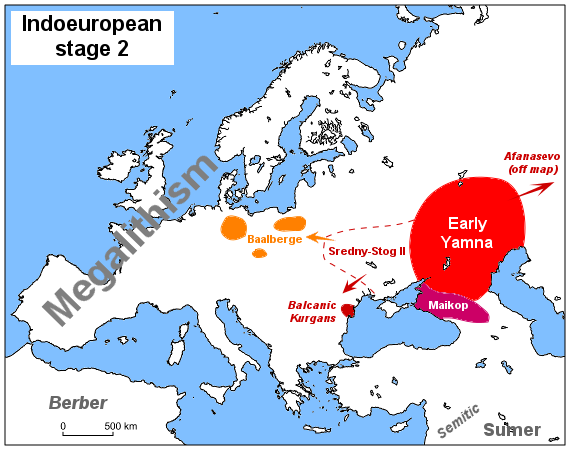
According to Mayu's blog, Corded Ware was descended from PIE groups which emigrated from the steppe during Early Yamna phase:

http://forwhattheywereweare.blogspot.com/p/blog-page.html

AFAIK, all Yamna samples collected so far are from later phases of Yamna culture, so they are people who stayed in that part of the steppe after several other groups had already emigrated in various directions before. Which may be the reason why all that we can see there is ht35.

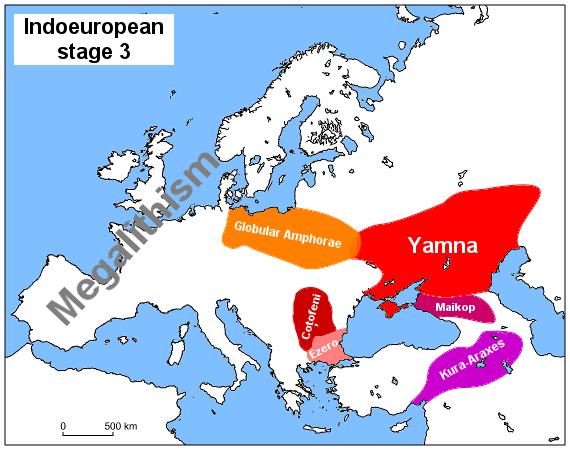
All Yamna samples tested so far, are from period called by Mayu "Indoeuropean stage 3", not from "stage 2":

Stage 2:

IE2.png


Stage 3:

IE3.png


By the time of Stage 3 some haplogroups and subclades - such as R1b-L51 - could already be outside of the steppe zone.

Maybe R1b-L51 - which is absent from Yamna samples known to date - was in Coţofeni culture or in Ezero culture ???

Yep, the archaeology is in strong support of everything radiating from Samara(Possibly Dnieper Donets as well because they clearly share ancestors). For this reason many call Samara the actual PIE's. Yamnaya is used simply because it's the last layer exhibiting cultural homogeneity across the region before we see historically attested, already differentiated, IE's. Therefore, as a result it also clearly displays all of the characteristics we would expect based on the reconstructed lexicon. In other words, it's the safest bet, where linguists and archaeologists are in agreement and other pre-genetics data is also aligned. Just like the sources you reference, many claim that Hittites, if not Tocharians as well, probably left before Yamnaya as we define it existed.

The Volga also shows evidence of an unbelievably early Neolithic for the region, which the Samara and related cultures are a direct result of. Considering this, one shouldnt be surprised at hegemony.

The genetics are actually already in support of a Samara as PIE hypothesis, but people like to ignore this for various reasons.
 
why is it that every paper that comes out gets distorted by fabrication about ydna R1 ??

the paper has 2x J and 1 x I ydna
lets not have R1 fantasy dreams as per usual

when you find CHG in a per with R1 .........then we can talk about it

Both CHG males, who are presumed to be "Teal people", had haplogroup J - not R1.

On the other hand, both R1a and R1b were present among EHGs, already before they acquired "Teal admixture".

The lack of R1 in CHGs seems to confirm what has been suggested time and again before - namely, that their "Teal admixture" perhaps came exclusively from women.

In wartime, prehistoric people used to capture enemy women. After conquering enemy settlements, they used to kill all men, but to take possession of their women. So a group of EHGs could either raid a group of CHGs (capturing a lot of their women in the process), or they could even entirely conquer a group of CHGs, thus acquiring their autosomal DNA, but not their Y-DNA.

There is of course also a more peaceful possibility - namely, exchanging brides between EHGs and "Teals" or CHGs, which led to the dillution of "Teal admixture" in EHGs.
 
I haven't yet gone over all of the pictures that have been posted in this thread, but I personally don't have any confidence that even forensic artists can give us a good sense of the appearance of these ancient peoples, much less people just posting sketches on the internet.

This is the first reconstruction of Oetzi. In my opinion, it obviously owes a lot to a perception, conscious or not, that he would have looked like modern Central Europeans.
248-6-oetzi-archeologie-museum-bozen.jpg


This is the second reconstruction. I have some familiarity with these areas, and I think that his time, as well as correcting the pigmentation based on the snp analysis, they looked at phenotypes common in the Tyrol.
iceman-oetzi-otzi-reconstructed-new_32525_600x450.jpg


A reconstruction for La Brana was recently done. Yet prior reconstructions of European hunter-gatherers looked slightly different. Which ones are more correct?
44397-004-D45BC527.jpg


http://www.britannica.com/topic/Cro-Magnon

Where does this Les Elyzies sample fit?

411559023_4d7e42d34f.jpg


Angela the point is the cranial features and not the facial features per se. Depending on the artists own opinion facial features can vary but as seen on both Oetzi reconstruction (by the way one seems to display a slightly younger Oetzi while the other an older aged one), they are Robust Dolicho-meso(younger Oetzi) to mesocephalic(older Oetzi) cranially.

And the La Brana reconstruction again looks broad headed This is the point Tomenable doesn't seem to understand.

All scientists consider and describe the WHG(Cromagnon human) as broad headed. And honstly all the WHG reconstruction I have seen so far were extremely broad or round headed. This alone makes it impossible for them to have very long heads. I have yet to see very broad heads which are at the same time very long.

From what I have seen most WHG samples are mesocephalic (middle long headed) to sometimes brachycephalic (short headed) but always broad headed.
 
Last edited:
Alan said:
both Oetzi reconstruction (...) are Robust Dolicho to mesocephalic cranially.

As I wrote before, he wasn't dolichocephalic. Maciamo wrote that Ötzi had a brachycephalic skull:

http://www.eupedia.com/forum/thread...-various-genes?p=380254&viewfull=1#post380254

Maciamo said:
unless there was a significant amount of E1b1b blended with the G2a, but I doubt that considering Ötzi's brachycephalic skull.

Quick googling of "
Ötzi's skull" gives me such answers, that he was brachycephalic to mesocephalic.


But those are not that random guy's own sketches but some professional reconstructions as well.

He just scanned them or something, and posted on the internet.

What I like about those sketches is that authors didn't pretend that they know pigmentation. :)


I scanned them and than posted them? These accusations are laughable.

One of the samples (La Brana) is the same reconstruction you posted.
https://mathildasanthropologyblog.files.wordpress.com/2008/08/mw-cromag.jpg

the second reconstruction is an up to date made by forensic scientists using DNA.

http://www.revolution-jungsteinzeit...4-das-gesicht-einer-jaeger-und-sammlerin.html

The other female is a reconstruction of an upper paleolithic individual from Southern France.
http://www.bbc.com/news/science-environment-29940694


So where did you got your sketches from? Forumbiodiversity??
 
This female is what racialists of the 19th to 20th century called the Baltic/Alpinoid type.

Blaetterhoehlenfrau_Halbprofil_links__440pix.jpg
FTj9F.jpg
hqdefault.jpg


This type is by definition brachycephalic yet you refuse to accept that a considerable portion of WHG are brachycephalic too. I am not even saying all are brachycephalic.

I am saying the majority is mesocephalic(middle longheaded), followed by brachycephalic (shortheaded) as second strongest and only a minority having real dolichocephalic cranial features.

In comparison to EEF who are (mostly Robust) Dolichocephalic by majority, followed by mesocephalic at second place and only a minority of brachycephalic.

While CHG are (mostly Robust) mesocephalic by majority, followed by dolichocephalic at second most frequenty and brachycephalic only at third place.
 
Tomenable said:
Alan said:
both Oetzi reconstruction (...) are Robust Dolicho to mesocephalic cranially.

As I wrote before, he wasn't dolichocephalic. Maciamo wrote that Ötzi had a brachycephalic skull:

http://www.eupedia.com/forum/threads/26782-Who-was-really-Ötzi-Your-guesses-about-various-genes?p=380254&viewfull=1#post380254

Maciamo said:
unless there was a significant amount of E1b1b blended with the G2a, but I doubt that considering Ötzi's brachycephalic skull.

Quick googling of "
Ötzi's skull" gives me such answers, that he was brachycephalic to mesocephalic.
And another quote about Ötzi:

http://s1.zetaboards.com/anthroscape/topic/4146614/1/

He looks kind of Pamirid, very brachycephalic.
 

As I wrote before, he wasn't dolichocephalic. Maciamo wrote that Ötzi had a brachycephalic skull:

http://www.eupedia.com/forum/thread...-various-genes?p=380254&viewfull=1#post380254


Quick googling of "
Ötzi's skull" gives me such answers, that he was brachycephalic to mesocephalic.


Thats Maciamos opinion. I who has been in contact to racialist German dudes as Agrippa for over 8 years, who was consider like a "king among anthropologist" in anthropology forums, tell you the modern Oetzi reconstruction of older age (cranial with age becomes often rounder) IS mesocephalic, while his old reconstruction of younger Oetzi seems Dolicho to mesocephalic.

Considering that Oetzi is one of the less pure EEF individuals (he had something around 15-20% real WHG admixture, that is pretty longheaded.
But than as I said even among EEF there should have been few brachycephalic individuals but a small minority.
The point is that archeologists who did analys the skeletal remains of Anatolian farmers say, all of them had Robust Dolichocephalic cranials.

By the way Pamirid can be mesocephalic or brachycephalic. It is a reduced form of the classical Iranic-Mediterranean type.
 
Back
Top