• Don't want to see ads? Install an adblocker like uBlock Origin or use a Europe-based privacy-friendly browser like Vivaldi or Mullvad.

Correlation between Paleo-Siberia and Monumentale pyramids.

halfalp

Regular Member
Messages
1,499
Reaction score
223
Points
0
Ethnic group
Swiss
Y-DNA haplogroup
R-L2
mtDNA haplogroup
J1c5a
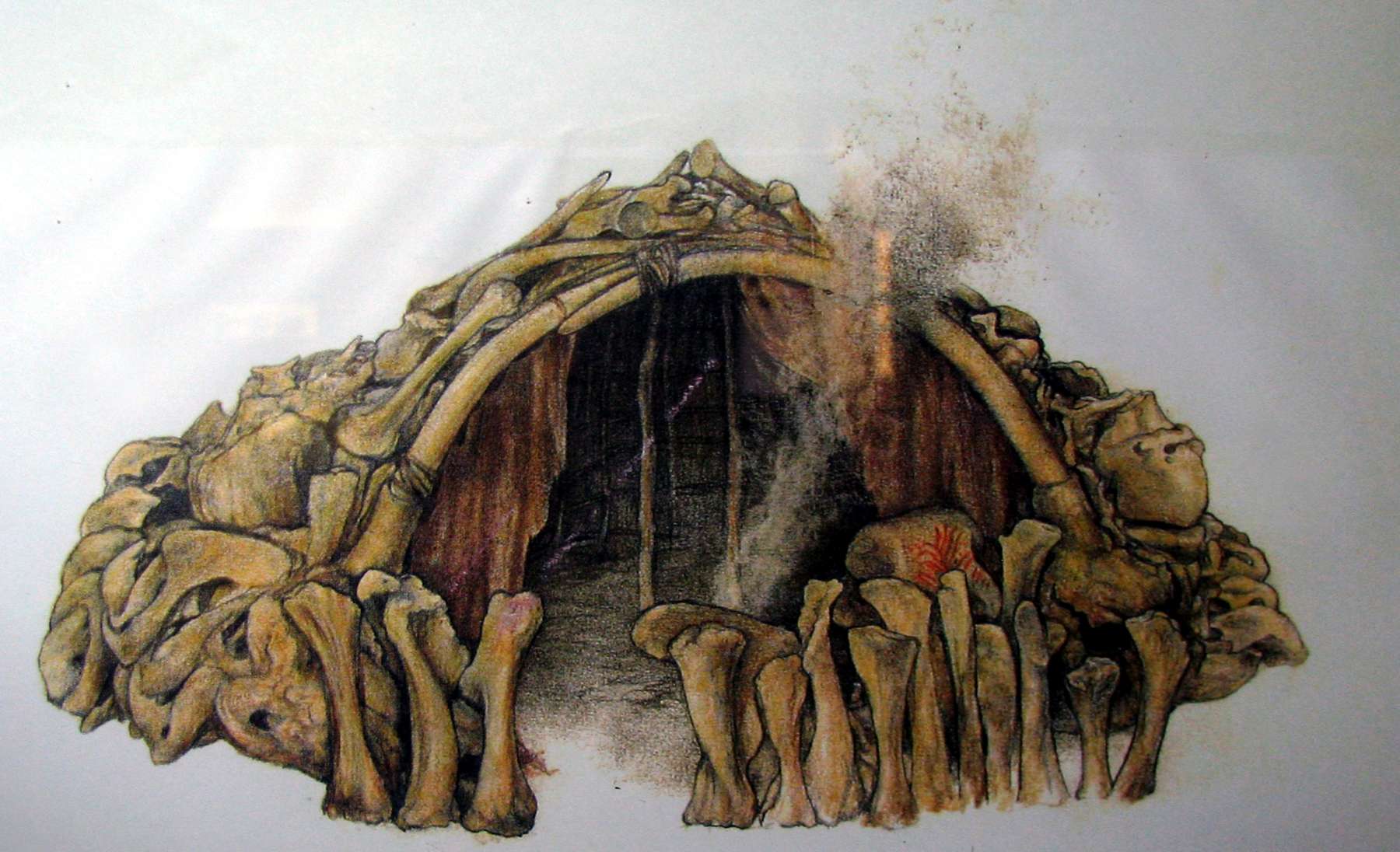
Hi everyone, i would to discuss about a theory that i think very interesting, the correlation between tumuli or kurgan, cairn etc and monumental pyramids. If we go back in time, like, Mal'ta in siberia a new kind of cultural trait is arrived. The half buried house, construct with mammoth bones those population like you know were discovered to appartain to the R* haplogroup-y and U mtdna. R eurasians paléo people are correlate to Q paléo americans. And in the two horizon cultural of the descendants of those people we found... tumuli ! or much more. If we can admit a certain cult of life and death its easy to think that a people who lived in a buried house can die in a buried tomb. If we follow population movement back in time, we can see that everywhere ther his Tumulis or Pyramids, Q and R people are passed. Q for mesoamericans pyramids and Q for north americans mound ( mound builders ). And in eurasian iranic-middle-eastian ziggurat are correlate with R1b migration from central asia or iranian plateau to middle-east. Even egyptian pyramids can be correlate with R1b-V88 if we consider that tumulis is a very archaic cultural trait of those population, look the difference of the Gizeh pyramides and more ancient Djeser pyramid, we can easily admit that an pastoral people arrived in egypt with the tumulis culture and then, egyptians developed with time and a great civilization become the Gizeh complexe. And of course indo-europeans cultural continuum kurgans. Plus, i know that some people like to think that an lonely population can develop an magnificient thing like pyramids but come on, pyramids in a desert or less an savannah, thats for kids. Its more explicable that a siberian paleo people develop for survive those buried house and tomb and then by cultural gift to the world, others humans develop cultural thing apparented. So that first message is not very developed but i hope that some of you, gonna found the subject interresting to develope more. :)

Sorry for my frenglish.
 
I think it is a bit of a stretch to compare mammoth tusk tent to kurgans. Do you have any archaeological information of these tents being buried in the ground? To my knowledge the base/foundation of it was made of rocks not dirt. Which make sens if tent is set in place where ground is frozen for most of a year.
 
Well like the pit-grave name, its call pit-house and found in russian-ukraine region since paleolithic, and if i'm right its actually found in all the eurasian steppe. Of course ther is a little of conjecture because i assimilate an human culture, with an hypothetic ethno-cultural link and haplogroups, i just extrapolate of cultural origin in south-siberia / central asia in paleolithic and follow Q and R haplogroups. The pit-house is make with mammoth bones in the eurasian steppe ( R* ) and only with wood in north america ( Q*).

Do you actually are doubtful because the ground of an pit-grave and pit-house are not of the same material ? Forgive my misunderstanding if i did not understand your reply.
 
Well like the pit-grave name, its call pit-house and found in russian-ukraine region since paleolithic, and if i'm right its actually found in all the eurasian steppe. Of course ther is a little of conjecture because i assimilate an human culture, with an hypothetic ethno-cultural link and haplogroups, i just extrapolate of cultural origin in south-siberia / central asia in paleolithic and follow Q and R haplogroups. The pit-house is make with mammoth bones in the eurasian steppe ( R* ) and only with wood in north america ( Q*).

Do you actually are doubtful because the ground of an pit-grave and pit-house are not of the same material ? Forgive my misunderstanding if i did not understand your reply.
Can you give us an example of picture of drawing of such house? I have only seen pit houses with wood structure above ground.
 
I think it is a bit of a stretch to compare mammoth tusk tent to kurgans. Do you have any archaeological information of these tents being buried in the ground? To my knowledge the base/foundation of it was made of rocks not dirt. Which make sens if tent is set in place where ground is frozen for most of a year.

So, WTH was a neg for?!
 
Here is a pit house.
pithouse.jpg


Here is a mammoth tusk tent:
dolniIMG_1893.jpg
 
Neg, as a minus for your post. Bssides that it is being abused a lot, but this was really random :)
For some loophole in this Bulletin Board Kardu, though banned, can still log in. He gives me few negative ratings every day since he was banned. Talking about obsession, lol.
 
Well no, i can't because i'm talk about paleolithic not modern use, modern use like Burdeis in ukraine. But the wikipedia article of pit-house makes Mezhyrich, Ukraine paleolithic mammoth bones house an pit-house also in Malt'a-burets. Plus mammoth bones house, deflects on the initial idea of correspondance of pit-house and pit-grave association in paleo siberia. But i can easily imagine that in a cold steppe of ice age those houses where semi-buried.
 
Back
Top