
-
Don't want to see ads? Install an adblocker like uBlock Origin or use a Europe-based privacy-friendly browser like Vivaldi or Mullvad.
You are using an out of date browser. It may not display this or other websites correctly.
You should upgrade or use an alternative browser.
You should upgrade or use an alternative browser.
Languages, haplogroups, and tribes
- Thread starter how yes no 2
- Start date
how yes no 2
Junior Member
- Messages
- 863
- Reaction score
- 3
- Points
- 0
A nitpick there. The German word for lead (the element) is "Blei". "Führen" means "to lead".
yes, well blame Google translate...
and for me not noticing, blame my teacher of German in high school that was very mild person and thus not able to press us to actually learn the language... though looking at word it is obviously verb and not noun...probably related to fahren - to drive, and of course to Führer which probably means leader...

willy
Junior Member
- Messages
- 231
- Reaction score
- 0
- Points
- 0
- Location
- Palais de l'Elysée
- Ethnic group
- Schwaben
- Y-DNA haplogroup
- N-Tat
I have updated the iron-silver-gold map to include the Romance languages, as well as Thracian.
In the attachment, there is the (promised) list for the words copper, tin and bronze.
Languages I used are:
Celtic languages:
- Irish
- Welsh
- Breton
- Gaulish (note that the word "Cassos" may have been used interchangably for tin and bronze, also the word for copper is reconstructed)
Romance/Italic languages:
- Portuguese
- Asturian (I would normally not have included, but see below)
- Spanish
- Catalonian
- French
- Latin (inside the mini bracket)
- Italian
- Romanian
Germanic languages:
- English
- Dutch
- German
- Danish
- Norwegian
- Swedish
- Gothic (note that the words for tin and bronze are unattested)
Slavic languages:
- Czech
- Polish
- Croat
- Bulgarian
- Russian
- Ukrainian
Other IE:
- Albanian
- Greek
- Latvian
- Lithuanian
- (unfortunately, all these words appear unattested in Hittite)
Non-IE:
- Basque
- Finnish
Generally said, in Antiquity the usage of "copper" and "bronze" (or even "bronze" and "tin") was not well-defined, and, as far as I can tell, the usage of the word "bronze" for a specific alloy is relatively new.
- There's an unexpected amount of variety for "bronze" in the Celtic languages.
- Gothic "Aiz" (copper) appears to be a cognate with Latin "Aes" (bronze, but also "ore").
- The reason I included Asturian in this list is because it's word for copper is obviously a cognate with Breton word for bronze. This suggests that the Asturian word may be a borrowing from Celtiberian.
- Against the previous homogenity of the Slavic languages, there's a variety within the Slavic family in regard for the word for "tin": West Slavic (like Czech and Slovak) use cognates with Germanic (which may be the result of Germanic substrate), East Slavic use a cognate with Baltic, and Bulgarian uses a cognate with Albanian.
And the Indo Iranian (Indo European language also) Ossetians from Caucasus !
how yes no 2
Junior Member
- Messages
- 863
- Reaction score
- 3
- Points
- 0
I was wondering whether there are words who were tribal names that later became everyday speaking words with meaning that reflects some characteristic observed as typical for member of that tribe.......
hm, the following is just list of wild guesses...
1. Sardonic
cynicism and skeptical humor are so very typical for Serbs...
2. ancient times in Slavic = antika...
perhaps reminder on distant period of Eneti/Veneti tribal name
english word 'antic' however
- clown, clown around, act in a funny or teasing way, fantastic, fantastical, grotesque, strange, unusual
thus, Slavic and english words would respectively be reflections of self-designation in past times, and of view on some foreign (thus strange/funny) people
3. Taurus as bull
due to Taurisci tribe (Rasena in own language of Etruscan who are by Greeks called Tyrsenians and who origin from part of Lydia or near it, probably from Taurus area...)...
could it be that Taurisci had helmets with horns....
reason to propose is that sea people such as Sherdana and others from roughly same areas did carry horns on helmets...
another clue is that alternative name of Serbs is Rascians, which is identical in origin as Rasena of Etruscan, and is tribal name that perhaps also origin from Taurus area, probably via Thrace that is derivation of same tribal name.... relation is that Sherdana who wear horned helmet left toponyms Serbonian bog/Serbonis/Sirbonis in Egypt...
the way I imagine it is that Rasena people with horned helmets were by ancient proto-Greeks called
TiR(a)sen-ians in times before bull was domesticated in Greece.... than in Greek language bull got name as reminding on those people...
similarly, Slavic word 'Bik' (bull) might origin from horned helmets of ancient Vikings...
4. word 'germ' as derived from barbarians bordering Roman empire, thus Germans or German dominated people of Europe being considered not hygienic compared to Romans...
5. Angli tribal name given due to blond features resembling mythical mention of angelic beings...or other way around
6. words "servant" and "slave" in english due to Serbs and Slavs being enemy of Germanic people and thus origin for their stock of slaves... according to Strabo, similarly in Greece slaves were named based on tribal names like Dacians, Getae... note that usage of tribal names Serbs and Sclaveni as related to words for slaves in Germanic languages also indicate living in close proximity...
7. dutch 'Wenden' ..to move in a different direction.
dutch 'Wandelen' - to wonder around... due to Wends/Venedi/Veneti people being nomads.. also Wind in Germanic, and Venti italian name for Greek wind gods....as wind is moving in different direction
8. Serbo-Croat word 'skitnica' - person who spends life walking around
as based on Scythians being nomads....
this with previous indicates that to Germanic people Slavic people (who are of Veneti race and also named Venedi and Wends by late Germanic people) living east of them were synonim for nomads, but that to Slavic people Scythians living east of them were synonym for nomads...
9. Croat word "kuna" used for marten can be based on tribal name of Huns...
Croats used marten skin as money, same as Huns did... today Croatian money is called "kuna" (marten)
10. word "kilt" as Celtic heritage and derived from word Celt
http://en.wikipedia.org/wiki/Kilt
11. word 'frankly' - in truth, in direct, honest way... due to Franks?
12. (south-)Slavic word "fin" - polite, honest, fine - due to Finish?
13. Slavic "Nemci" for Germans
derived from Slavic "Nem" = mute
14. Greek name Illyrians for people north of them perhaps due to 'Lyre'- like music instrument e.g. gusle http://en.wikipedia.org/wiki/Gusle that are used througout Illyrian area of influence (south Slavs + Albanians) and used while singing epic songs... or other way around - instrument 'Lyre' named after Illyrians...
interestingly, alike instrument in Kazakhs is named Kobyz, which sounds as derived from Serbs tribal name...
Bulgarian word is Gadulka perhaps related to Goths or Getae...Russian Gudok might also be related to Goths or Getae....
another string instrument thus similar to Lyre is Harp, which might be related to H(a)rvat (Croat tribal name) and thus also to gusle/lyra...
Albanian name "lahuta" is a borrowing from the Romanian lute - lauta.... lute may come from Slavic tribe Lutici or from Baltic Latvia (Lettonia in Romanian)...
south Slavic 'gusle' is not related to any tribal name which indicates it was not imported from some other nation... closest word alike 'gusle' is guska = goose...perhaps sound of instrument can be seen as somewhat resembling sound of goose...
interestingly Romanian name is same as south Slavic - guzlă, which taken together with different words used in Russian and Bulgarian indicates 'gusle' being original name of the instrument...
related Czech word 'housle' means violin, thus again string instrument...
this indicates that I2a2 dominant Slavic people (remember that Slavic people are of Veneti origin) are more related to Illyrians than E-V13 dominant Albanians... in addition, Slavic words are much better match in meaning to those words preserved from Illyrian whose meaning is known, than Albanian words are...
early Slavs as Venetic tribe are Illyrian related.... language of Albanians shows relation to Romanians and might be Dacian derived... which is explainable with Dacians according to Strabo depopulating Illyria in their wars with Celtic people....
http://www.perseus.tufts.edu/hopper/text?doc=Perseus:text:1999.01.0239:book=7:chapter=5&highlight=
Strabo (63/64 BC – ca. AD 24) - Geographica
this historical record clearly shows that Illyria was depopulated but not by Slavs (as erroneously claimed by politically motivated ideologists of Albanian nationalism), but by Dacians much much before arrival of Slavs (if such arrival was ever massive)
hm, the following is just list of wild guesses...
1. Sardonic
expression of derision, cynicism or skeptical humor variously through comment, gesture or writing.[1][2]
cynicism and skeptical humor are so very typical for Serbs...
2. ancient times in Slavic = antika...
perhaps reminder on distant period of Eneti/Veneti tribal name
english word 'antic' however
- clown, clown around, act in a funny or teasing way, fantastic, fantastical, grotesque, strange, unusual
thus, Slavic and english words would respectively be reflections of self-designation in past times, and of view on some foreign (thus strange/funny) people
3. Taurus as bull
due to Taurisci tribe (Rasena in own language of Etruscan who are by Greeks called Tyrsenians and who origin from part of Lydia or near it, probably from Taurus area...)...
could it be that Taurisci had helmets with horns....
reason to propose is that sea people such as Sherdana and others from roughly same areas did carry horns on helmets...
another clue is that alternative name of Serbs is Rascians, which is identical in origin as Rasena of Etruscan, and is tribal name that perhaps also origin from Taurus area, probably via Thrace that is derivation of same tribal name.... relation is that Sherdana who wear horned helmet left toponyms Serbonian bog/Serbonis/Sirbonis in Egypt...
the way I imagine it is that Rasena people with horned helmets were by ancient proto-Greeks called
TiR(a)sen-ians in times before bull was domesticated in Greece.... than in Greek language bull got name as reminding on those people...
similarly, Slavic word 'Bik' (bull) might origin from horned helmets of ancient Vikings...
4. word 'germ' as derived from barbarians bordering Roman empire, thus Germans or German dominated people of Europe being considered not hygienic compared to Romans...
5. Angli tribal name given due to blond features resembling mythical mention of angelic beings...or other way around
6. words "servant" and "slave" in english due to Serbs and Slavs being enemy of Germanic people and thus origin for their stock of slaves... according to Strabo, similarly in Greece slaves were named based on tribal names like Dacians, Getae... note that usage of tribal names Serbs and Sclaveni as related to words for slaves in Germanic languages also indicate living in close proximity...
7. dutch 'Wenden' ..to move in a different direction.
dutch 'Wandelen' - to wonder around... due to Wends/Venedi/Veneti people being nomads.. also Wind in Germanic, and Venti italian name for Greek wind gods....as wind is moving in different direction
8. Serbo-Croat word 'skitnica' - person who spends life walking around
as based on Scythians being nomads....
this with previous indicates that to Germanic people Slavic people (who are of Veneti race and also named Venedi and Wends by late Germanic people) living east of them were synonim for nomads, but that to Slavic people Scythians living east of them were synonym for nomads...
9. Croat word "kuna" used for marten can be based on tribal name of Huns...
Croats used marten skin as money, same as Huns did... today Croatian money is called "kuna" (marten)
10. word "kilt" as Celtic heritage and derived from word Celt
http://en.wikipedia.org/wiki/Kilt
11. word 'frankly' - in truth, in direct, honest way... due to Franks?
12. (south-)Slavic word "fin" - polite, honest, fine - due to Finish?
13. Slavic "Nemci" for Germans
derived from Slavic "Nem" = mute
14. Greek name Illyrians for people north of them perhaps due to 'Lyre'- like music instrument e.g. gusle http://en.wikipedia.org/wiki/Gusle that are used througout Illyrian area of influence (south Slavs + Albanians) and used while singing epic songs... or other way around - instrument 'Lyre' named after Illyrians...
interestingly, alike instrument in Kazakhs is named Kobyz, which sounds as derived from Serbs tribal name...
Bulgarian word is Gadulka perhaps related to Goths or Getae...Russian Gudok might also be related to Goths or Getae....
another string instrument thus similar to Lyre is Harp, which might be related to H(a)rvat (Croat tribal name) and thus also to gusle/lyra...
Albanian name "lahuta" is a borrowing from the Romanian lute - lauta.... lute may come from Slavic tribe Lutici or from Baltic Latvia (Lettonia in Romanian)...
south Slavic 'gusle' is not related to any tribal name which indicates it was not imported from some other nation... closest word alike 'gusle' is guska = goose...perhaps sound of instrument can be seen as somewhat resembling sound of goose...
interestingly Romanian name is same as south Slavic - guzlă, which taken together with different words used in Russian and Bulgarian indicates 'gusle' being original name of the instrument...
related Czech word 'housle' means violin, thus again string instrument...
this indicates that I2a2 dominant Slavic people (remember that Slavic people are of Veneti origin) are more related to Illyrians than E-V13 dominant Albanians... in addition, Slavic words are much better match in meaning to those words preserved from Illyrian whose meaning is known, than Albanian words are...
early Slavs as Venetic tribe are Illyrian related.... language of Albanians shows relation to Romanians and might be Dacian derived... which is explainable with Dacians according to Strabo depopulating Illyria in their wars with Celtic people....
Quote:
I shall first describe Illyria, which approaches close to the Danube, and to the Alps which lie between Italy and Germany, taking their commencement from the lake in the territory of the Vindelici, Rhæti, and Helvetii.7 [2]
The Daci depopulated a part of this country in their wars with the Boii and Taurisci, Keltic tribes whose chief was Critasirus. The Daci claimed the country, although it was separated from them by the river Parisus,8 which flows from the mountains to the Danube, near the Galatæ Scordisci, a people who lived intermixed with the Illyrian and the Thracian tribes. The Illyrians were destroyed by the Daci, while the Scordisci were frequently their allies.
The rest of the country as far as Segestica,9 and the Danube, towards the north and east, is occupied by Pannonii, but they extend farther in an opposite direction.
http://www.perseus.tufts.edu/hopper/text?doc=Perseus:text:1999.01.0239:book=7:chapter=5&highlight=
Strabo (63/64 BC – ca. AD 24) - Geographica
this historical record clearly shows that Illyria was depopulated but not by Slavs (as erroneously claimed by politically motivated ideologists of Albanian nationalism), but by Dacians much much before arrival of Slavs (if such arrival was ever massive)
Last edited:
how yes no 2
Junior Member
- Messages
- 863
- Reaction score
- 3
- Points
- 0
14. Greek name Illyrians for people north of them perhaps due to 'Lyre'- like music instrument e.g. gusle http://en.wikipedia.org/wiki/Gusle that are used througout Illyrian area of influence (south Slavs + Albanians) and used while singing epic songs... or other way around - instrument 'Lyre' named after Illyrians...
interestingly, alike instrument in Kazakhs is named Kobyz, which sounds as derived from Serbs tribal name...
Bulgarian word is Gadulka perhaps related to Goths or Getae...Russian Gudok might also be related to Goths or Getae....
another string instrument thus similar to Lyre is Harp, which might be related to H(a)rvat (Croat tribal name) and thus also to gusle/lyra...
Albanian name "lahuta" is a borrowing from the Romanian lute - lauta.... lute may come from Slavic tribe Lutici or from Baltic Latvia (Lettonia in Romanian)...
south Slavic 'gusle' is not related to any tribal name which indicates it was not imported from some other nation... closest word alike 'gusle' is guska = goose...perhaps sound of instrument can be seen as somewhat resembling sound of goose...
interestingly Romanian name is same as south Slavic - guzlă, which taken together with different words used in Russian and Bulgarian indicates 'gusle' being original name of the instrument...
related Czech word 'housle' means violin, thus again string instrument...
this indicates that I2a2 dominant Slavic people (remember that Slavic people are of Veneti origin) are more related to Illyrians than E-V13 dominant Albanians... in addition, Slavic words are much better match in meaning to those words preserved from Illyrian whose meaning is known, than Albanian words are...
early Slavs as Venetic tribe are Illyrian related.... language of Albanians shows relation to Romanians and might be Dacian derived... which is explainable with Dacians according to Strabo depopulating Illyria in their wars with Celtic people....
http://www.perseus.tufts.edu/hopper/text?doc=Perseus:text:1999.01.0239:book=7:chapter=5&highlight=
Strabo (63/64 BC – ca. AD 24) - Geographica
this historical record clearly shows that Illyria was depopulated but not by Slavs (as erroneously claimed by politically motivated ideologists of Albanian nationalism), but by Dacians much much before arrival of Slavs (if such arrival was ever massive)
actually, I was probably somewhat wrong in text above
as I have shown in http://www.eupedia.com/forum/showpost.php?p=367956&postcount=40
Illyrians were probably E-V13 and they lived in albania and part of Montenegro...north of them were Venetic I2a2 people from whom proto-Slavs origin...... however, south Slavic 'gusle' is in proper place as proto-Slavic people are Veneti and Veneti lived in Roman province of Illyria, above real Illyria (Albania + part of Macedonia) and Serb and Croat tribal names are probably same as previous people on same locations Autoriatae and Scordisci/Serdi... they did partly go to north when Romans took over area...
and returned when Roman empire declined....
this is also in correspondence with story told in Russian primary chronicle...
http://www.utoronto.ca/elul/English/218/PVL-selections.pdfAfter the destruction of the tower and the division of the nations, the sons of Shem occupied the eastern regions, and sons of Ham those of the south, and the sons of Japheth the western and the northern lands. Among these seventy-two nations, the Slavic race is derived from the line of
Japheth, since they are the Noricians, who are identical with the Slavs.
Over a long period the Slavs settled beside the Danube, where the Hungarian and Bulgarian lands now lie. From among these Slavs, parties scattered throughout the country and were known by appropriate names, according to the places where they settled. Thus some came and settled by
the river Morava, and were named Moravians, while others were called Czechs. Among these same Slavs are included the White Croats, the Serbs, and the Carinthians. For when the Vlakhs attacked the Danubian Slavs, settled among them, and did them violence, the latter came and made their homes by the Vistula, and were then called Lyakhs. Of these same Lyakhs some were called Polyanians, some Lutichians, some Mazovians, and still others Pomorians.
spread from ex-Yugoslavia to north (Bohemia from where Serbs came back) is also visible in Czech 'housle' used for another string instrument - violin...
while east Slavs (including Bulgarians) have completely unrelated words for 'gusle'
and Romanian word 'guzlă' being identical to south Slavic (and different from Russian and Bulgarian) is proof of older origin of word...

iapetoc
Junior Member

1 http://en.wikipedia.org/wiki/Chersonesus_Taurica
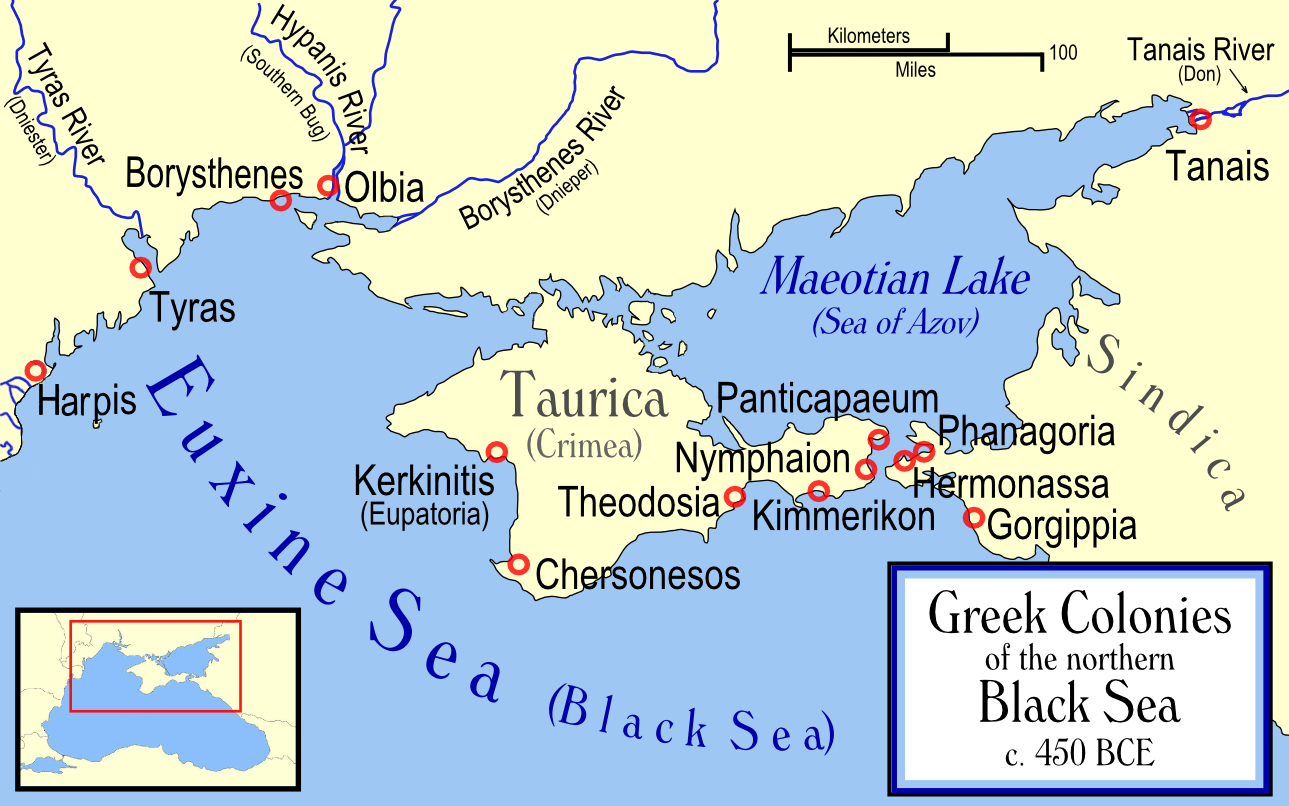
they are tauriski people
ΤΑΥΡΙΑ -> ΤΑΥΡΙΣΚΟΙ
for ancient Greeks they were simmilar and consider Thracians
the name tauriski is from Pelasgic-Etrurian Tauros = Bull and is not IE
In Cretan vocabulary word Bull does not exist
the Greeks name them tauriski cause they worship red bulls,
and decorate them
from pelasgic tauros etrurian etc
the pre pelasgic Greeks use the word Bolos
Lyre instrument is name from pelasgic not IE
The lyre is a stringed musical instrument well known for its use in Greek classical antiquity and later. The word comes from the Greek "λύρα" (lyra)[1] and the earliest reference to the word is the Mycenaean Greek ru-ra-ta-e, meaning "lyrists", written in Linear B syllabic script.[2] The earliest picture of a lyre with seven strings appears in the famous sarcophagus of Hagia Triada (a Minoan settlement in Crete).
http://en.wikipedia.org/wiki/Lyre
find how in Bible the Hebrew name their Lyras
is clear pelasgic words simmilar semitic Keliy-a or Reliy-a-> Lyra
if you read there is no connection with Illyria but with Thrace north Egypt, Phillistines Pontic Greeks and Magna Grecani and cretans, as also with ancient Hebrew
5 types
no connection with Illyria cause they took myceanean culture of aylos Flutes
Hell-enes peoples of sun in pelasgic
Hel-lanes people of stone in pelasgic
Hellios is son
Ill means sun also
Ill- y -ra means either egyptian Ra god of Sun
either Ill-ura sun and sky
Ill-reo Sun light stream, sun light flux
virb ρεω noune ροη means flux, stream, river, move of liquids and Fields (magnetic etc)
Illyrii Proprie Dicti[118] were the Illyrians proper, so called by Pliny (23–79 AD) in his Natural History. They later formed the Docleatae. They were the Taulantii, the Pleraei or Pyraei, the Endirudini, Sasaei, Grabaei, Labeatae
there is no connection with lyre
which is pelasgic as Formyx etc
in fact Lyre was founded by orpheus a Pierian one surely not Illyrian
The laouto (Greek: λαούτο) is a long-neck fretted instrument of the lute family, found in Greece, and similar in appearance to the oud. It is played in most respects like the oud (plucked with a long plectrum).
http://en.wikipedia.org/wiki/Laouto
Perhaps you sould read
http://dienekes.blogspot.com/2008/07/expansion-of-e-v13-explained.html
you find E-V13 came from Cyprus at 2000 BC by sea to balkans at copper fever times
it explains very well genetically the spread of E-V13 and all its mutations
you must read it, and find with what is more connected,
Ancient Illyrians were J2 simmilar pelasgic cretans, etrurians, phillistines Ionic and aeolic Greeks, E-V13 entered Illyria after Illyrus invasion,
an existance of I people were there since I were before J2 and E-v13 in Balkans

zanipolo
Banned
- Messages
- 2,066
- Reaction score
- 65
- Points
- 48
- Ethnic group
- Down Under
- Y-DNA haplogroup
- T1a2 - Z19945
- mtDNA haplogroup
- K1a4o
In the venetian language , in the Northern parts silver is called ardhent, while in the southern parts its arzento
ardhent is used because venetian is a cousin of the occitan language which is cousin to the catalan. Then again drinking glass in venetian is goto same as catalan and cow is vaca same as catalan .
This brings me to a point in that,........ was there any significant migrations running from northern Spain , through southern France into northern Italy
ardhent is used because venetian is a cousin of the occitan language which is cousin to the catalan. Then again drinking glass in venetian is goto same as catalan and cow is vaca same as catalan .
This brings me to a point in that,........ was there any significant migrations running from northern Spain , through southern France into northern Italy
Last edited:
zanipolo
Banned
- Messages
- 2,066
- Reaction score
- 65
- Points
- 48
- Ethnic group
- Down Under
- Y-DNA haplogroup
- T1a2 - Z19945
- mtDNA haplogroup
- K1a4o
Since the Catalans originated in Provence France , and moved westwards along the coast to where they are a present, is it not feasible that they moved eastwards into northern Italy!
Franco-provencal language is related to catalan, occitan, ligurian, piemontese, venetian.
Has anyone mapped this migratory pattern ?
Franco-provencal language is related to catalan, occitan, ligurian, piemontese, venetian.
Has anyone mapped this migratory pattern ?
how yes no 2
Junior Member
- Messages
- 863
- Reaction score
- 3
- Points
- 0
Then again drinking glass in venetian is goto same as catalan and cow is vaca same as catalan .
This brings me to a point in that,........ was there any significant migrations running from northern Spain , through southern France into northern Italy
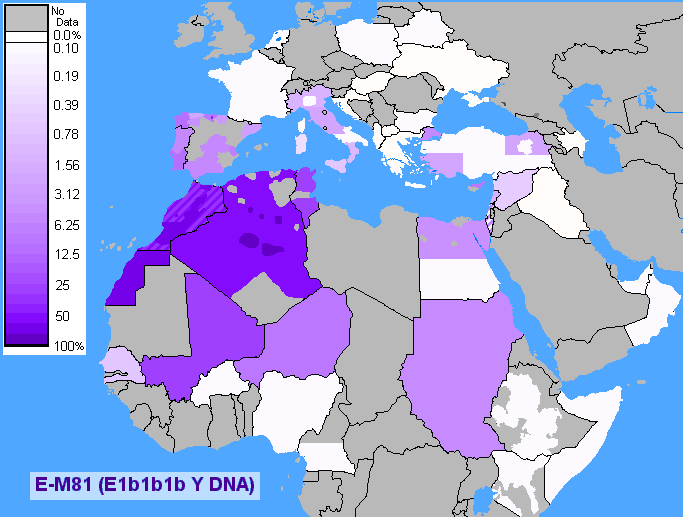
Goths went other way around in recent history... I think also earlier migration waves usually went towards Spain and not from Spain.... if it was other way around we would see much of E-M81 in south France... we see it in Spain and in Italy... but the presence in Italy is probably brought by Etruscans from Asia minor... and during Roman empire from north African colonies...
zanipolo
Banned
- Messages
- 2,066
- Reaction score
- 65
- Points
- 48
- Ethnic group
- Down Under
- Y-DNA haplogroup
- T1a2 - Z19945
- mtDNA haplogroup
- K1a4o
Goths went other way around in recent history... I think also earlier migration waves usually went towards Spain and not from Spain.... if it was other way around we would see much of E-M81 in south France... we see it in Spain and in Italy... but the presence in Italy is probably brought by Etruscans from Asia minor... and during Roman empire from north African colonies...
The major consensus now is that their was also a migration from catalan spain towards northern italy due to the fact that they where linguisticly similar
http://en.wikipedia.org/wiki/Occitan_language
also , the major isobar which joins northern italy to southern france and spain is known
http://en.wikipedia.org/wiki/La_Spezia-Rimini_Line
Even I stated above the words are identical for some Venetian (known as venet ) and catalan. Also venet has Pomo for apple , and the french have Pom ( In italain its Mela) .
how yes no 2
Junior Member
- Messages
- 863
- Reaction score
- 3
- Points
- 0
perhaps, there was...The major consensus now is that their was also a migration from catalan spain towards northern italy due to the fact that they where linguisticly similar
http://en.wikipedia.org/wiki/Occitan_language
those are near areas...especially by sea it's quite possible that people from one place make colony at other...
but I am curious why assuming direction from Spain to Italy and not opposite...
what is hidden agenda behind that direction...
also , the major isobar which joins northern italy to southern france and spain is known
http://en.wikipedia.org/wiki/La_Spezia-Rimini_Line
Even I stated above the words are identical for some Venetian (known as venet ) and catalan. Also venet has Pomo for apple , and the french have Pom ( In italain its Mela) .
don't you think differnce between north and south of the line is perhaps due to Celtic remains bellow latin language imposed by Roman empire...

zanipolo
Banned
- Messages
- 2,066
- Reaction score
- 65
- Points
- 48
- Ethnic group
- Down Under
- Y-DNA haplogroup
- T1a2 - Z19945
- mtDNA haplogroup
- K1a4o
Vayse meu corach�n de mib.ya Rab, �si me tornar�d?�Tan mal meu doler li-l-habib!Enfermo yed, �cu�nd sanar�d?
let me try to understand thi sentence through venet lingoa
if my courage ????????????? if I returned even with all the ills I have from the inferno ????????
thats it .....yours ? are an issue

Carlitos
Junior Member
- Messages
- 845
- Reaction score
- 5
- Points
- 0
- Location
- Occident.
- Ethnic group
- Ethnic group of those who are going to die.
- Y-DNA haplogroup
- E1b1b1a3 V22+
- mtDNA haplogroup
- J1c
^^
My heart's love is gone from me.
Dear Lord, will he perhaps return?
My yearning for the beloved is so great!
He (o: it, sc. my heart) is ill, when will he (it) recover?
My heart's love is gone from me.
Dear Lord, will he perhaps return?
My yearning for the beloved is so great!
He (o: it, sc. my heart) is ill, when will he (it) recover?

Catchabus
Regular Member
- Messages
- 39
- Reaction score
- 1
- Points
- 0
- Ethnic group
- Sicilian
- Y-DNA haplogroup
- I2b1
- mtDNA haplogroup
- H
I have no background in linguistics, but I’m fairly fluent in standard Italian, and I have studied French and Spanish, but my first “language” was Sicilian, and I’ve always found it odd how some words are closer to French or Spanish than they are to Italian.
For example, “to work” in Italian is lavorare while it’s travailler in French and trabajar in Spanish. In Sicilian it’s travagghiari. This is just anecdotal but it fits with the historical record. During the time the vulgar languages developed, Sicily was controlled by France and more so Spain (many people named Catalano in NW Sicily).
For example, “to work” in Italian is lavorare while it’s travailler in French and trabajar in Spanish. In Sicilian it’s travagghiari. This is just anecdotal but it fits with the historical record. During the time the vulgar languages developed, Sicily was controlled by France and more so Spain (many people named Catalano in NW Sicily).

bud
Australian Member
- Messages
- 56
- Reaction score
- 0
- Points
- 0
- Location
- Adelaide
- Ethnic group
- Celtic/Germanic
- Y-DNA haplogroup
- I2b1c
- mtDNA haplogroup
- J
This isn't getting anywhere.
English is a rather young language, and has many words from other languages.
Another point is the English speaking people lack a lot of knowledge of other languages.
So that's the reason for a lot of gobbledegook.
Just take the primitive words. Those who existed first.
A primitive house was built by weaving twigs between wooden poles.
In Dutch.. Weven.. In English weaving.
But also in Dutch: Wenden .. Means to move in a different direction.
It has a word as: "Wand" as a product. A wooden wall..
In German that is also the case.. "Die Wand" and also the word for woven cloth.. "Gewand"
In Dutch a stone brick wall is a "muur" and that is from Latin.
I think you are correct, English has a lot of "modern" words which recently were added to the language many of which based on latin and greek words. But like you said the primitive English words are very similar to the other Germanic languages.
Anybody know much about the Scots language?

sparkey
Great Adventurer
- Messages
- 2,238
- Reaction score
- 358
- Points
- 83
- Location
- California
- Ethnic group
- 3/4 Colonial American, 1/8 Cornish, 1/8 Welsh
- Y-DNA haplogroup
- I2c1 PF3892+ (Swiss)
- mtDNA haplogroup
- U4a (Cornish)
Anybody know much about the Scots language?
It's a Germanic language spoken in Scotland, generally mutually intelligible with English, with which it shares a close history.
Reading through the Scots Wikipedia can be funny to English speakers. You can't help but read it with a heavy Scottish accent in your head. I imagine that it's similar for German speakers with the Allemanic Wikipedia, and for other similar closely-related languages.

Antigone
Elite member
- Messages
- 441
- Reaction score
- 21
- Points
- 0
Doesn't it depend on what part of Scotland as to the language?
I thought that Scottish Gaelic was introduced by Irish settlers around the 4thC and is/was spoken in Western and Northern Scotland and the Isle of Man? But I could be wrong.
There has been some grumbling in Scotland as (apparently) road signs etc are now being introduced in both Gaelic and English, and Gaelic was never spoken in the Lowlands.
I thought that Scottish Gaelic was introduced by Irish settlers around the 4thC and is/was spoken in Western and Northern Scotland and the Isle of Man? But I could be wrong.
There has been some grumbling in Scotland as (apparently) road signs etc are now being introduced in both Gaelic and English, and Gaelic was never spoken in the Lowlands.
sparkey
Great Adventurer
- Messages
- 2,238
- Reaction score
- 358
- Points
- 83
- Location
- California
- Ethnic group
- 3/4 Colonial American, 1/8 Cornish, 1/8 Welsh
- Y-DNA haplogroup
- I2c1 PF3892+ (Swiss)
- mtDNA haplogroup
- U4a (Cornish)
Doesn't it depend on what part of Scotland as to the language?
I thought that Scottish Gaelic was introduced by Irish settlers around the 4thC and is/was spoken in Western and Northern Scotland and the Isle of Man? But I could be wrong.
There has been some grumbling in Scotland as (apparently) road signs etc are now being introduced in both Gaelic and English, and Gaelic was never spoken in the Lowlands.
Language in Scotland has a complicated history that involves several migrations since the Classical Age, which is why Scotland is usually thought of in a nuanced manner as having evolved culturally from multiple sources. Immediately pre-4th century, those living in Scotland were mostly Picts, except some Britons in modern-day southern Scotland. Then the Gaels came over, then the Germanic migrations happened, then Gaelic expanded, then Gaelic retracted, and isolation in the English-speaking areas developed into Scots, which is itself retracting... and so forth.
Although, Scottish Gaelic, at its peak, did cover some of the Lowlands (blue is Gaelic).