

When you have the power to limit someone else’s options, do you leave them room to choose?
That tiny moment is what the authors call “social mindfulness”: a form of everyday, low-cost kindness that involves taking the other person’s perspective and deliberately leaving them choice. An international study explores how this kind of subtle, interpersonal benevolence varies across the globe and what it reveals about societies and individuals.
Unlike classic measures of prosociality, which often focus on dramatic acts like donating money or helping in emergencies, social mindfulness lives in the mundane. It is about whether people spontaneously consider others’ autonomy—and how this impulse is shaped by culture, institutions, and broader societal traits.
Key features of their design included:
From these tasks, each person received a score indexing how often they chose in a socially mindful way—leaving unique options for others rather than taking them for themselves.
The authors then linked these social mindfulness scores to broader indicators of prosociality and societal functioning at the country level. They examined relationships with:
The interpretation is not that taking the muffin instead of the croissant directly causes climate change. Rather, social mindfulness may tap into a deeper prosocial orientation—one that extends beyond immediate interpersonal interactions toward collective goods like environmental protection. When people habitually attend to others’ options and future consequences, they may be more willing to support policies and norms that protect shared resources.
This line of thinking links micro-level social cognition—small acts of perspective-taking—to macro-level issues like climate governance and sustainable development.
A small choice, a big signal
Imagine walking into a café with a friend and seeing three identical muffins and one croissant left in the display. You order first. Do you take the croissant—the unique option—or one of the muffins, leaving your friend both categories to choose from?That tiny moment is what the authors call “social mindfulness”: a form of everyday, low-cost kindness that involves taking the other person’s perspective and deliberately leaving them choice. An international study explores how this kind of subtle, interpersonal benevolence varies across the globe and what it reveals about societies and individuals.
Unlike classic measures of prosociality, which often focus on dramatic acts like donating money or helping in emergencies, social mindfulness lives in the mundane. It is about whether people spontaneously consider others’ autonomy—and how this impulse is shaped by culture, institutions, and broader societal traits.
Measuring social mindfulness worldwide
The researchers conducted a large, cross-national study, recruiting participants from many countries across different continents, income levels, and cultural traditions. In a standardized task, participants repeatedly made choices in scenarios similar to the muffin–croissant example: one unique item, several identical ones, and another person who would choose after them.Key features of their design included:
- Controlled, hypothetical scenarios that isolated the choice to leave or restrict another’s options
- Multiple trials per person to capture consistent tendencies rather than one-off decisions
- Aggregation at both individual and national levels to examine patterns within and across societies
From these tasks, each person received a score indexing how often they chose in a socially mindful way—leaving unique options for others rather than taking them for themselves.
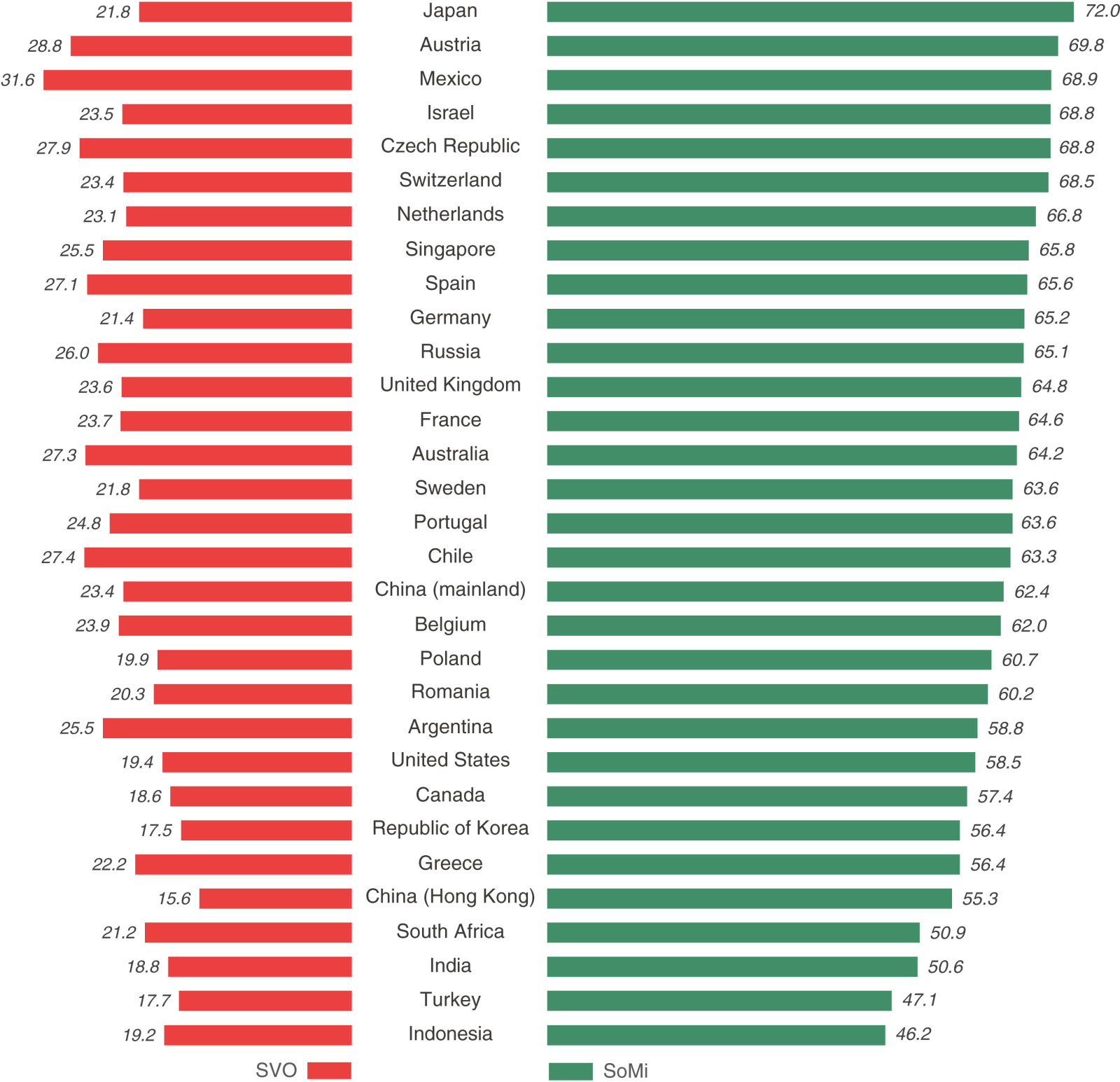
Distribution of means for Social Mindfulness (SoMi - Right, ranked low to high) and Social Value Orientation (SVO - Left) per country/region
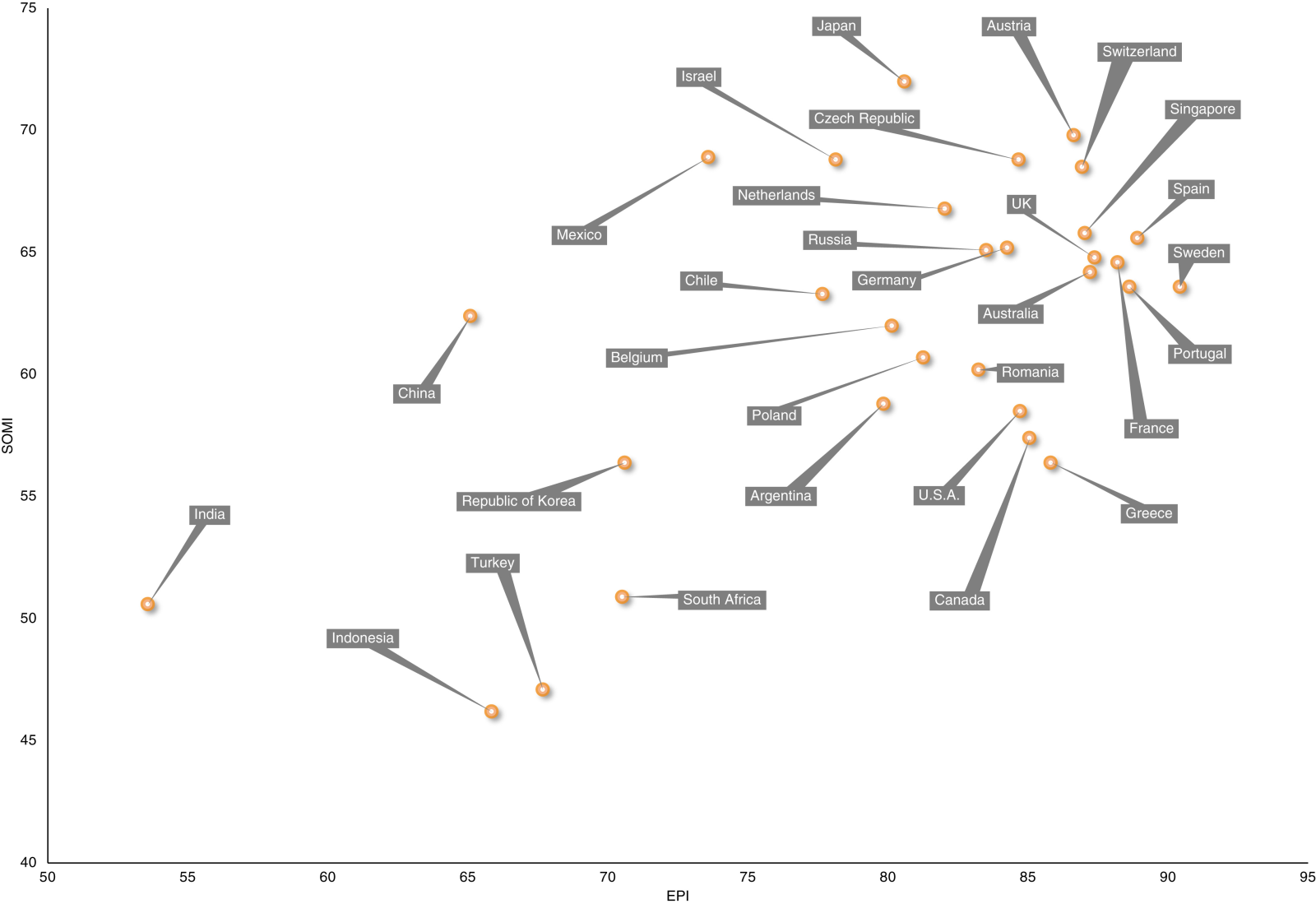
Scatterplot of SOMI and EPI per country/region
Prosociality, perspective-taking, and institutions
The central conceptual claim is that social mindfulness reflects a blend of basic perspective-taking (thinking “what does the other person get?”) and prosocial intent (“I want to preserve their freedom to choose”). It is a kind of micro-level benevolence: low-cost acts that don’t require major sacrifice but still show consideration.The authors then linked these social mindfulness scores to broader indicators of prosociality and societal functioning at the country level. They examined relationships with:
- Generalized trust and cooperation
- Broader measures of prosocial behavior
- Indicators of institutional quality and societal performance
Social mindfulness and environmental sustainability
A follow-up discussion in the literature points to an intriguing connection between social mindfulness and global environmental sustainability. Countries with higher average social mindfulness scores were reported to show better environmental outcomes, as indexed by composite metrics of environmental performance.The interpretation is not that taking the muffin instead of the croissant directly causes climate change. Rather, social mindfulness may tap into a deeper prosocial orientation—one that extends beyond immediate interpersonal interactions toward collective goods like environmental protection. When people habitually attend to others’ options and future consequences, they may be more willing to support policies and norms that protect shared resources.
This line of thinking links micro-level social cognition—small acts of perspective-taking—to macro-level issues like climate governance and sustainable development.
Last edited: