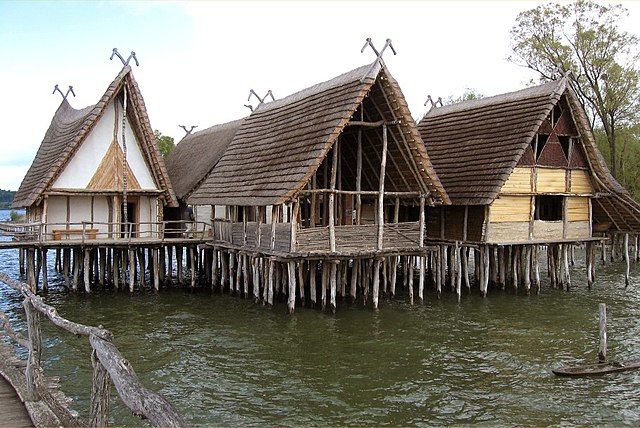
AFAIK there are indications that the Terramare remnants spread to Central Italy and even South Italy. A dramatic socioeconomic collapse doesn't need to mean the complete disappearance of the people itself. It certainly involved population losses, but full extinction of a very large population is unlikely as opposed to its wide dispersal in much more sparsely distributed and smaller groups (the Terramare had an absurdly high population density for a BA culture in a small territory anyway, that was probably unsustainable on the long term especially in periods of crisis). This would be a bit like those claims about the "disappearance of the Maya peoples" when in fact they are still there. They just had a demographic and socioeconomic collapse and dispersed adopting a much more extensive way of life, with lower population density and a much lower long-term "archaeological print".
Though of course I don't bet much on it, it wouldn't surprise me if the Terramare were the natives spread to Central Italy and South Italy (didn't an ancient author claim that the Etruscans lived "in towers"? The Terramare lived in elevated houses), then the Urnfield people brought not just new customs, but also Proto-Italic to parts of Italy, but adopted the local well established language family, too, in some places (just like Germans and Slavs did not impose their language successfully eveywhere they went, or even tried to). So, in the end, the Tyrsenian and the Italic peoples might not have been much different genetically nor even culturally (maybe kind of initially, but not after centuries of close contacts and of exogamy), but speaking different languages and belonging to distinct ethnicities. I don't think we should assume, as you seem to be doing, that because 1960s scientists were wrong to assume pots, not people each and every time, then the new consensus should be people, not just pots all the time now.