• Don't want to see ads? Install an adblocker like uBlock Origin or use a Europe-based privacy-friendly browser like Vivaldi or Mullvad.

Really good DNA Evidence that the Scandinavian migration to Germany never happened

R1b-U106 is quite young in Scandinavia, so it looks like it got there later than I1 and R1a, the same might be true for R1b-P312.

i think it is obvious i1a2 settled Scandinavia over 10,000ybp because I1a2 which is the I1 subclade in Scandinavia does not match any recent bronze age or Neolithic migrations but hg N1c1 which is uralic matches the Comb ceramic culture from 7,000-8,000ybp R1a in Scandinavia matches the Corded ware culture 5,000ybp R1b U106 matches the Nordic bronze age 4,000-3,500ybp but I1a2 for some reason is everywhere in Scandinavia it does not matter if the people group is Urlaic or Germanic they still have mainly I1a2 and the Uralic language has dominated northeastern Europe for 7,000-8,000 years so the fact that they also are dominated by I1a2 actulley by the I1a2c subclade which is very rare everywhere away from Finland shows that I1a2 is the original Scandinavian Y DNA haplogroup i thought everyone assumed that to me there is no evidence any I1 in Scandinavia was spread by bronze age or Neolithic migrations I1a2 probably was the first human migration into Scandinavia about 10,000-12,000ybp

also Scandinavian people are unque because they have over 60% blonde hair and over 70% light eyes that is higher than any area in Europe and the more I1a2 the more blonde hair and light eyes to me it is obvious that Scandinavia people period are different from other Europeans they are their own ethnic group even Finnish who have spoken a Uralic language for 7,000-8,000 years they have I1a2c unlike other Scandinavians and rally have been genetically isolated for at least 8,000 years also have the same hair color and eye color percentages as Norway and Sweden so to me it seems that scandnavia was founded by a group of people who had Y DNA I1a2 and over 70% light eyes and 60% blonde hair about 10,000-12,000ybp they most likely came from somewhere in Spain or France because mtDNA H1, H3 V, and U5b1 are so popular in Scandinavia and all of them are from the Iberian refuge http://genome.cshlp.org/content/15/1/19.full
 
I can assure you that hg. I and the initial haplogroup R members would have been able to identify who belonged to what tribe.

For example after the Berlin Wall fell... the West Germans could identify the East Germans with ease and vice versa. This concept would also apply to North and South Koreans of today. Both sets of these peoples were and are virtually identical genetically, so group membership detection can be illustrated by even differences in dress, speech, and other subtle cultural mores. Now factor in that there would have been ENORMOUS autosomal differences seperating hg. I and the first waves of steppe-dwelling hg. R and tribal identities would have been completely obvious.

And now you have G2a ousting/conquering all of the I hg's? Oh boy.

By the way... what happened to the periods and commas we talked about?
 
Last edited:
I notice that you like pointing out that various I hg's. were constantly, in your opinion, "conquered" by either R1b, R1a, or even N1c1 and G2a. A fraction of that may even be true very early on. But when the nordic hg. I branches learned of modern warfare techniques and weaponry... let's say they kicked a few teeth in. Payback can be rather um, ... problematic if you're on the receiving end.

So my firey hg. R cousin, please don't attempt to sow dissension in the hg. I ranks... it's unseemly. Maybe I should start a thread on why R1b and R1a don't mix well, or why the Nat. Geo./Stanford guys decided to force both into one giant, unweildy alphabetic "R" mega-family rather than dividing them neatly into two (say Hg. R and Hg. S) like most reasonable folks would have done... kinda makes you think, hmmm? I bet I can guess where Spencer would have placed his R1b clan! :)


Honestly, my spidey sense is going off here.

How could someone have a decent working knowledge of advanced concepts like paternal and maternal haplogroup historical movements... yet not be able to spell very simple words?

A great way to avoid detection of writing style (which every single writer has) would be to eliminate all punctuation rules. You don't even use accepted capitalization practices. I hope for all of us on Eupedia that you aren't playing games with the dear readers.
 
Last edited:
I can assure you the hg. I and the initial haplogroup R members would have been able to identify who belonged to what tribe.

For example after the Berlin Wall fell... the West Germans could identify the East Germans easily and vice versa. This concept would also apply to North and South Koreans today. These are peoples are virtually identical genetically, so the detection abilities illustrate importance of dress, speech, and other subtle cultural mores. Now factor in the fact that there would have been enormous autosomal differences seperating hg. I and the first waves of hg. R and group membership would have been completely obvious.

I think i agree with u on that what i was going on was their was no racial difference like we know Otzie a 5,300 year old G2a farmer in Alps Italy had white skin because we have his genome we know that early Indo Europeans 6,000ybp in Russia had white skin because we have their DNA. I guess I was making assumptions i was just going off of major racial differences. U are probably right that their would have been cultural differences where they could tell the difference but i dont think they would always be able to tell the difference. There are alot of Yugoslavian immigrants around my area and alot of times when i see them i think they are white Americans even though they grew up in such a different culture and speak a different language. and back when the hg R1 indo Europeans would have worn the same basic woven clothing and animal skins as the hg G2a people so if they saw a Indo European in the middle of the woods i doubt they would know he was from another people group. I think u are mostly right they could tell the difference or else R1b L11 and its subclades would not take up 50% of modern western European Y DNA but i think it was alot more complicated than that sometimes maybe they could not tell teh differnce and i dont think it was that simple. The Indo Europeans where not like we are the Indo Europeans we are superior we will conquer u they had no idea they had a different type of DNA or that their language family was spreading around Europe and Asia. They just went by their culture since the Indo European culture was a warrior culture lead by the strongest men they naturaly tried to conquer and kill any one around them. I think the ancient Celts that the Romans wrote about still had that Indo European warrior culture i remember reading a long book that a ancient Roman wrote about Brennus the Gaulic chief whoo was conquering non indo European Estrucans and sacked Rome he said that his people will kill any neighbors that are weaker than them and if his people want land and that land is owned by a weak group of people who don't deserve it it is not wrong for them to take that land. That is probably the spirit that allowed Indo Europeans to conquer so many people. The Celts where migrating and conquering so many places even just 2,300ybp it was probably because they still had that part of Indo European culture if Rome never conquered them the Celts probably would have expanded and conquered alot of eastern Europe.

And now you have G2a ousting/conquering all of the I hg's? Oh boy.
The G2a people did conquer the I2a1a and I2a2 people in western Europe they also conquered the I2a1b people in eastern Europe. That is why 26 of 31 y DNA samples we have of pre Indo European western Europe (7,000-4,700ybp) 26 had G2a and only 4 had I2a1a the G2a people where invading farmers from probably Anatolia or Caucus mountains all hg I people where the native European hunter gathers. Also in Austomnal DNA the native hg I hunter gathers where almost only north European other tests call it Atlantic Baltic the farmers where mainly Mediterranean other tests call it Atlantic med. I can prove this because we already have austomnal DNA from two farmers (Otzie the iceman alps Italy 5,300ybp, Gok farmer southern Swedan 5,000ybp) and we have austomnal DNA from three hunter gathers ( La Brana northern Spain 7,000ybp, Ajv70 southern swedan 5,000ybp, Ajv52 southern Swedan 5,000ybp) we know for a fact farming did not just spread in western Europe the farmers literally intentionally killed off hunter gathers just like what the Indo Europeans did to them. The farmers where a ethnic group i thought u would know this stuff about G2a and early farmers in Europe. So when the R1b L11 Indo Europeans (proto Italo Celt Germanic speakers) came to western Europe first about 5,000ybp the western Europeans where not mainly hg I they where mainly hg G2a.
By the way... what happened to the periods and commas we talked about?[/QUOTE]
 
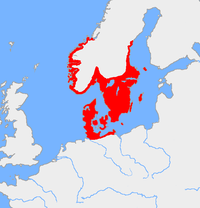
I do agree that there is some correlation between R1b rate and the presence of red hair. But I think the original Germanic population that arose from the admixture of Paleolithic Europeans and Indo-europeans (during the Nordic Bronze Age), was mostly I1 and R1a. The R1b component I think was incorporated once they expanded further south.

200px-Nordic_Bronze_Age.png

where are u getting the R1a from it is obvious R1b s21 is in Germanic territory Germany, England, lowlands scotland, southern Scandinavia. I know R1a is popular in non traditional Germanic areas of Scandinavia but that is because about 5,000ybp southern and central Scandinavia was ruled by R1a proto Balto Slavic Corded ware culture so it got there about 1,000 years before Germanic language did. So the Germanic's could have conquered people in Scandinavia who spoke a related language to Baltic and Slavic but i dont if they would have started to speak the language because the Uralics in south Scandinavia would have been the ones who where conquered by Corded ware culture but then why do south Finnish still speak a Uralic language
 
I do know all about G2a and farming.

What you aren't considering though is basic lifestyle patterns and burial practices. If G2a lived and farmed on interior lands it would only make sense that they would be found at higher numbers there.

Now if more mobile hg. I hunter-gatherer members centered their existence around boats (like we see with both the hg. I heavy Vikings and early Anglo-Saxons) then it would be more difficult to find their remains today. Sea-level change and river erosion are real factors to consider here.

Also the hg. R members are famous for introducing their more elaborate burial practices (ie. Kurgan)... but the native European hg. I members-- not so much. And of course burial practices will have an impact on body preservation.

**EDIT**

Also, the initial hg. I and hg R differences would have indeed been "racial". Too much geography over too much time seperated these groups and external variations would have been glaring. It's fun to imagine what each group would have looked like, but I don't think we will ever truly know.
 
Last edited:
...The farmers where a ethnic group i thought u would know this stuff about G2a and early farmers in Europe. So when the R1b L11 Indo Europeans (proto Italo Celt Germanic speakers) came to western Europe first about 5,000ybp the western Europeans where not mainly hg I they where mainly hg G2a
[/QUOTE]

Duplicate post. Sorry about the goof.
 
I do know all about G2a and farming.

What you aren't considering though is basic lifestyle patterns and burial practices. If G2a lived and farmed on interior lands it would only make sense that they would be found at higher numbers there.
I think we need to ask a archaeologist or a expert on this ur ideas make sense but i don't think it is that simple. and almost all Europeans about 6,000-7,000ybp where farmers the hunter gathers where inferior because they had less technology. You could not stop the spread of farming the hunter gathers had to either die or become farmers that is why no native american tribes really survived and where able to keep their traditional lifestyle. I think u need to remember the hg I people did not think of themselves as one group they had no idea they all had Y DNA I the hg I2a1b people in eastern Europe had a very different culture than the hg I2a1a people in western Europe. hg I2a1b still stayed as teh main Y DNA haplogroup in eastern Europe and it still is today in alot of eastern Europe even after R1a1a and R1b Indo European invasion. I made a thread that shows probably what the Y DNA of people in europe 6,000-8,000ybp probably was all i did was take out all Indo European and mid eastern y DNA that came in Greco Roman age here is a link http://www.eupedia.com/forum/thread...-pre-Indo-European-Europe?p=411136#post411136. The I2a1a, I2a2, I1a1, I1a3, I1a4, and I1b people in western and central Europe did not survive so well they avenutlley did become farmers but where mostly killed off by the G2a farmers so G2a became the main Y DNA haplogroup and Mediterranean became the main austomnal DNA group but like i said we have found 4 Y DNA I2a1a samples in France from 5,000 and 4,700ybp so it was there, I dont think u can say the reason we have mainly G2a from Neolithic Europe is because the farmers preserved better it is because teh scientists intentionalley went to burail sites because they knew those people where farmers and by 7,000ybp almost all Europeans where farmers. But in a little bit we will get y DNA from Mesolithic hunter gathers from over 7,000ybp there are already some projects like the rise who say that there will be tons and tons of new ancient DNA in the next few years

Now if more mobile hg. I hunter-gatherer members centered their existence around boats (like we see with both the hg. I heavy Vikings and early Anglo-Saxons) then it would be more difficult to find their remains. Sea-level change and river erosion are real factors to consider here.

Also the hg. R members are famous for introducing their more elaborate burial practices (ie. Kurgan)... but the native hg. I members-- not so much. And of course burial practices will have an impact on body preservation.[/QUOTE]

**EDIT**

And the initial hg. I and hg R differences would have indeed been "racial". Too much geography over too much time separated these groups and external variations would have been glaring. It's fun to imagine what each group would have looked like, but I don't think we will ever truly know.
we know otzie a farmer in alps Italy who had Y DNA G2a4 and died 5,300ybp had white skin , brown eyes, and brown hair. German scientists who say they have alot of new mtDNA, Y DNA, and austomnal DNA from some of the earliest Indo European Kurgen people in Russia from 6,000 and 5,000ybp say they had white skin and by far mainly brown eyes. Just like non Slavic people in that area today which could mean they directly descend from some early indo European ethnic groups. We also have DNA that can tell skin color, hair color, and eye color from early Kurgen Indo European Indo Iranians in south Siberia from 3,800ybp they had Y DNA R1a1a1a most had light eyes and light hair. Overall Indo Iranian pigmentation genes from 4,000-2,000ybp 60% had light hair and 70% had light eyes some had red hair to so i guess that puts the light hair percentage up a little bit. These light hair color percentages only found in modern Scandinavians, Baltic, and far northwest Russians. Also the German scientists said Sythien Indo Iranians in tagar Russia who where buried in kurgens 2,800-2,000ybp where very unrelated to the kurgen Indo Europeans around the same area of Russia from 6,000 and 5,000ybp. Since the Indo Iranians descended from the same Indo European cultures 6,000ybp but they had light eyes not brown eyes and where unrelated to the Brown eyed people this means that the early Indo Europeans 6,000-5,000ybp where a mix of different European ethnic groups who descended form hunter gathers who lived around Ukraine and Russia over 8,000ybp.

Even though orignalley Europeans in austomnal DNA would only have a group most tests call north European and austomnal DNA we have so far from European hunter gathers they where dominated by north European a percentage only found in mdoern Finnish and Sami. the Farmers though had 20% or less north European they where dominated by Mediterranean at such a high amount only found in modern Sardine's and Iberian so i guess this means those farmers where less than 20% European but they still had white skin and so did the Indo Europeans so the hg G2a farmers in western Europe who where conquered by hg R1b 5,000ybp indo Europeans both would have looked European they where not different races. since it seems the hg R1b L11 Indo Europeans that conquered western Europe 5,000-4,000ybp spread red hair that probably means they also had more light hair than the farmers they conquered but the farmers in central Europe and France probably had just as much light hair and eyes the only racial difference that would have been obvious is red hair the original R1b L11 proto Germanic Italo Celtic speakers probably had 20% red hair so if someone had red hair that was a dead give away they where from a Indo European tribe but besides that there was very little racial difference only the farmers in Spain and Italy would be easier to identify because they would have almost only dark hair and eyes. and it seems hat orignalley all of eastern Europe including Greece about 8,000-6,000ybp had about 40-50% ight hair and eys it is hard to say what Indo European ethnic group was the proto Balto Slavic speakers and proto Greek speakers if it was the dark eyed people i guess they could see a little racial difference. But u have to look at it this way can Germans recognize a Yugoslavian by how they look maybe he can but it is hard the G2a farmers and different Indo European groups maybe had little differences but they where little the way they identified each other was probably culture

 
Also the hg. R members are famous for introducing their more elaborate burial practices (ie. Kurgan)... but the native hg. I members-- not so much. And of course burial practices will have an impact on body preservation.
That's true, our discovery of ancient DNA is skewed somewhat because of this. If a culture practiced cremation, their DNA will be hard to find.
One of best chances recovering DNA is if people died in caves or got frozen in block of ice.
 
...The I2a1a, I2a2, I1a1, I1a3, I1a4, and I1b people in western and central Europe did not survive so well they avenutlley did become farmers but where mostly killed off by the G2a farmers so G2a became the main Y DNA haplogroup...
This simply isn't what the DNA maps of today indicate. My model would fully explain what we see now.
 
This simply isn't what the DNA maps of today indicate. My model would fully explain what we see now.

what do u mean that it is not what DNA maps of today indicate. can u explain that more. and i dont think u can show exactley what certain y dna groups did over 5,000 years ago. Do u really know how they thought or what their situation was. Ur explanations do kind off make sense but it cant be that simple. and the anglo saxons and vikings are not good examples to how hg I hunter gathers over 6,000ybp traveled both vikings and the anglo Saxons where farmers and iron workers and anglo saxons had manly hg R1b s21 that is why it is 30-40% in England today. the Vikings did have mainly hg I1a2 but they where far from hunter gathers. and unlike the hg I hunter gathers over 6,000ybp who where hiding from farmers the vikings where invading people i don't think the way vikings used water and sailing alot is related to hunter gathers who lived over 5,000 years before them maybe that lifestyle in hg i Scandinavians 6,000ybp could have survived into the viking age.
 
And regarding the outward appearances of early I and R groups (and for that matter G groups as well)... eye color, skin color, and hair color are but a fraction of what needs to be considered. For example, I could show you a native of Japan and a native of Belgium. Both could have brown eyes, the same skin tone, and dark hair... but I bet you could tell the birth country of each individual. We don't know what all of the potential autosomal differences were back then, but physical size, head shape, jaw line, hair coarseness, nose structure... all these could make a big impact.
 
...and the anglo saxons and vikings are not good examples to how hg I hunter gathers over 6,000ybp traveled...
I'm glad you brought that up. I selected these two tribes because they are well known historically and both have a strong contingent of hg. I members. Yes they are much more recent than the time frame we've discussed, but remember that Neanderthal was sailing tens of thousands of years before all these groups even existed. The boat/mobility scenario is not a stretch at all. Water travel was how paleo/meso Europe "rolled".
 
And regarding the outward appearances of early I and R groups (and for that matter G groups as well)... eye color, skin color, and hair color are a fraction of what needs to be considered. For example, I could show you a native of Japan and a native of Belgium. Both could have brown eyes, the same skin tone, and dark hair, but I bet you could tell the difference. We don't know what the differences were back then, but physical size, head shape, jaw line, hair coarseness, nose structure... all these could make an impact.

ur right but both the G2a farmers hg I hunter gathers and hg R1 Indo Europeans where what u call European ethnic groups basically they looked white i dont think they would have big differences in facial features and stuff like that because Europeans are in the Caucasian racehttp://en.wikipedia.org/wiki/Caucasian_race which is based on facial features but i think u have a point i can normally tell if someone is eastern European by their facial features. I think the main way they could tell the difference was either hair and eye color, defintley language, the way they act and their facial expressions, and clothing.
 
I'm glad you brought that up. I selected those two tribes because they are well known historically and both have a strong contingent of hg. I members. Yes they are much more recent than the time frame we've discussed, but remember that Neanderthal was sailing tens of thousands of years before all these groups even existed. The boat/mobility scenario is not a stretch at all. Water travel was how paleo/meso Europe rolled.

i still dont think water travel in anglo Saxons and vikings is connected to water travel in hg I hunter gathers. Maybe they did it for a similar reason but the water traveling was not passed down to vikings and anglo Saxons. and most of the hunter gathers would have lived inland then maybe they migrated to the borders of Europe. I dont think sailing is the complete answer what probably happened is most hg I people where killed off or and the G2a people became the hierarchy i dont think all of the hg I just ran away. in eastern Europe though hg I was still over 60% in the Neolithic age that is why in south and central eastern Europe it is still over 30%. and is their any evidence of alot of water travel in the Neolithic age i know it must of happened but did it happen alot and does it have to do with hg I.
 
O.K. We're going to have to agree to disagree.
 
Great posts,but I think im going to go with Nordic quarreler on this thread,but awesome posts by fire haired as well.
 
Back
Top