

Tautalus
Regular Member
- Messages
- 579
- Reaction score
- 1,473
- Points
- 93
- Ethnic group
- Portuguese
- Y-DNA haplogroup
- I2-M223 / I-FTB15368
- mtDNA haplogroup
- H6a1b2y
Rome's rise was not inevitable. At numerous moments in its history, exceptional enemies came close to halting, or even destroying, Roman expansion. Although Rome ultimately defeated most of them, these struggles transformed both Rome and its enemies. Ironically, Rome often became stronger by overcoming its greatest challenges, but some enemies, especially in late antiquity, helped bring about its eventual collapse.

Hannibal - Wikipedia
The greatest military genius Rome ever faced.
• Invaded Italy by crossing the Alps with elephants.
• Destroyed Roman armies at the Trebia, Lake Trasimene, and especially Cannae.
• Nearly broke Rome's alliance system.
• Failed to receive sufficient support from Carthage.
• Eventually defeated by Scipio Africanus at Zama.
Importance: Hannibal forced Rome to rethink its military strategy and proved Rome could suffer catastrophic defeats without surrendering.

Philip V of Macedon - Wikipedia
• Allied with Hannibal.
• Attempted to preserve Macedonian influence in Greece.
• Defeated during the Macedonian Wars.
Importance: Opened the door for permanent Roman intervention in the Greek world.

Viriathus - Wikipedia
• Shepherd turned guerrilla commander.
• United Lusitanian tribes.
• Defeated Roman armies repeatedly through ambushes.
• Murdered after Roman bribery of his companions.
Importance: Demonstrated that irregular warfare could seriously challenge Roman legions.

Jugurtha - Wikipedia
• Exploited corruption within the Roman Senate.
• Bought Roman politicians.
• Forced Rome into a long and embarrassing war.
• Captured by Sulla after betrayal.
Importance: Revealed that Rome's greatest weakness was often political corruption rather than military weakness.

Mithridates VI Eupator - Wikipedia
• Built a powerful kingdom in Asia Minor.
• Ordered the massacre of tens of thousands of Romans in the "Asiatic Vespers."
• Fought three long wars against Rome.
• Inspired fierce resistance among his subjects.
Importance: One of Rome's most determined eastern rivals.

Spartacus - Wikipedia
• Escaped gladiator.
• Led the Third Servile War.
• Defeated Roman armies repeatedly.
• Finally crushed by Crassus.
Importance: Exposed Rome's dependence on slavery and the weaknesses of its military leadership.

Vercingetorix - Wikipedia
• United many Gallic tribes.
• Used scorched-earth tactics.
• Nearly defeated Julius Caesar.
• Surrendered after the siege of Alesia.
Importance: Became the symbol of Gallic resistance and national unity.
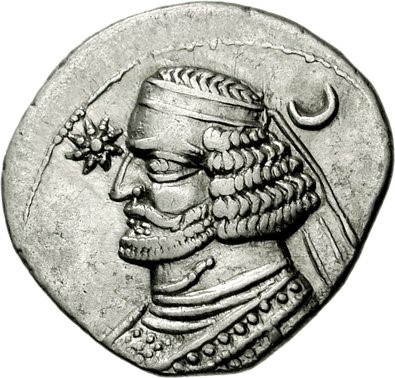
Orodes II - Wikipedia
• Defeated Crassus at Carrhae.
• Demonstrated the superiority of Parthian cavalry over Roman infantry in open terrain.
• Humiliated Rome.
Importance: Showed that Rome could not easily conquer the East.
9. Cleopatra VII
• Allied first with Julius Caesar and later Mark Antony.
• Attempted to preserve Egyptian independence.
• Defeated by Octavian after Actium.
• Committed suicide.
Importance: Her defeat marked the end of Hellenistic independence and the birth of the Roman Empire.

Arminius - Wikipedia
• Roman-trained Germanic noble.
• Ambushed three Roman legions in the Teutoburg Forest.
• Destroyed Varus' army.
Importance: Prevented the Roman conquest of Germany east of the Rhine.

Boudica - Wikipedia
• Rebelled after Roman abuses.
• Destroyed several Roman cities.
• Nearly expelled Rome from Britain.
• Eventually defeated.
Importance: Became Britain's enduring symbol of resistance against oppression.

Josephus - Wikipedia
• Initially fought against Rome during the First Jewish Revolt.
• Captured and later entered Roman service.
• Wrote invaluable histories of the Jewish War.
Importance: His writings provide the principal account of Rome's conquest of Judea.

Decebalus - Wikipedia
• Created a strong Dacian kingdom north of the Danube.
• Forced Rome into costly wars.
• Defeated by Trajan.
• Committed suicide rather than surrender.
Importance: His defeat brought Rome immense gold resources but at enormous cost.

Zenobia - Wikipedia
• Took advantage of Rome's Third Century Crisis.
• Conquered Egypt and much of the East.
• Created an independent eastern empire.
• Defeated by Aurelian.
Importance: Came closest to permanently dividing the Roman Empire.

Shapur I - Wikipedia
• Rebuilt Persian power.
• Captured Emperor Valerian alive.
• Humiliated Rome unlike any previous enemy.
Importance: Marked the emergence of Persia as Rome's greatest eastern rival.

Alaric I - Wikipedia
• Served Rome before rebelling.
• Sacked Rome in AD 410.
• Exposed Rome's military and political weakness.
Importance: The first sack of Rome in nearly 800 years shocked the Roman world.

Attila - Wikipedia
• United many steppe peoples.
• Invaded Gaul and Italy.
• Forced both Eastern and Western Empires to pay tribute.
• Died suddenly before creating a lasting empire.
Importance: Became the embodiment of the "Barbarian Threat" and accelerated the collapse of the Western Roman Empire.
