The Albanian branches have on FTDNA no earlier diversification start than E-FT151956. I don't see any Albanian samples downstream of it? Where do you have that information from and are they NGS tested? If so it would make it a more completely Albanian branch of course, starting in Late Antiquity.Bro, just by looking at the block tree you can clearly see that there are four Alb parallel branches to FT151956. And there are also FT151956 Alb Clans from North Albania.

-
Don't want to see ads? Install an adblocker like uBlock Origin or use a Europe-based privacy-friendly browser like Vivaldi or Mullvad.
You are using an out of date browser. It may not display this or other websites correctly.
You should upgrade or use an alternative browser.
You should upgrade or use an alternative browser.
To burn or not to burn: LBA/EIA Balkan case
- Thread starter Southpaw
- Start date
- Status
- Not open for further replies.
That’s irrelevant considering how many parallel branches FT151956 has. From where I am looking at, it definitely doesn’t look like a clear Vlach linage.The Albanian branches have on FTDNA no earlier diversification start than E-FT151956. I don't see any Albanian samples downstream of it? Where do you have that information from and are they NGS tested? If so it would make it a more completely Albanian branch of course, starting in Late Antiquity.
Albs should be under PH1954 along with Ser-26. They should be NGS/WGS tests, done by Rrenet - but they do odd acrobatics and hide samples so you can’t confirm them. They should be there though if you do some research.
Last edited:
That’s irrelevant considering how many parallel branches FT151956 has. From where I am looking at, it definitely doesn’t look like a clear Vlach linage.
Albs should be under PH1954 along with Ser-26. They should be NGS/WGS tests, done by Rrenet - but they do odd acrobatics and hide samples so you can’t confirm them. They should be there though if you do some research.
As far as I see it, there are 2 lineages which look Vlach and a third one which should belong to them too. So we have 3 lineages related to Romanian/Vlachs - Northern Serbs which split 500 AD, before the ethnogenesis of Albanians. I don't doubt that at this time (around 500 AD) the bulk of the haplogroup was Albanian, but you can see how close the Vlach branch is to the root, they could have been within a century.
Which two look Vlah?As far as I see it, there are 2 lineages which look Vlach and a third one which should belong to them too. So we have 3 lineages related to Romanian/Vlachs - Northern Serbs which split 500 AD, before the ethnogenesis of Albanians. I don't doubt that at this time (around 500 AD) the bulk of the haplogroup was Albanian, but you can see how close the Vlach branch is to the root, they could have been within a century.
There is only one Romanian sample there and the two under PH1954 (one of them is hidden and the other one from Serbia should be the Ser-26). As I said there are Alb samples intertwined there too, and they are not that closely related to each other. One of the samples is closer to the Ser-26 fella than to other Albs for example.
It’s not to the root but they are parallel bro. Currently you have 5 brothers on the block tree to make it more simple for you so you understand it. Under all five you have Albs. It’s as simple as that.
Concerning Gáva and Basarabi, in the Gáva core zone, in the site of Teleac, we might deal with a mixed layer and continuation:
The peak was in Late Gáva - I think that a large portion of the population left the region, presumably to the South, afterwards, and that the Basarabi culture settlers were kind of back migrants to some degree:
During late Gáva 1.200 - 3.000 people, depending on estimate, lived in the settlement - the lower number comes from the newest one, but 1.200 people for a fortification would have been still a sizeable population in the LBA of Central Europe.
The upcoming paper on the Carpathian Basin Sarmatians might be interesting as well, since the abstract already tells us that the majority were of local origin, which might very well mean that the early E-V13 Sarmatian from Transtisza area will be no exception.
Mixed Basarabi and Gáva pottery were found
in the top-soil, and in the upper 0.10 m of several
features belonging to the first level. The latter
situation is probably due to ploughing, although
it should be noted that the Gruşet Plateau has not
been tilled in modern times. Every feature below
this mixed horizon, except A20, contains material
of the Gáva culture. Much of the Gáva ceramics are
of the emblematic type with a black exterior and a
reddish or brownish interior. The majority of the
sherds have polished exterior surfaces, sometimes
with graphite added to the fabric to make the sur-
face shiny. The shapes identified are biconical pots
(Fig. 6,1–2. 4–5; 7,6. 9. 19. 23), bag-shaped vessels
(Fig. 7,12), dishes with an everted rim (Fig. 6,3),
and dishes and bowls with an inverted rim (Fig.
6,4–5. 10–11). The ornaments are of three types:
grooves, incisions and plastic decorations.
There are several similar traits between Basarabi and Gáva
ceramics in Teleac, including the fabric with a black
exterior and a red/orange/brownish interior.
The peak was in Late Gáva - I think that a large portion of the population left the region, presumably to the South, afterwards, and that the Basarabi culture settlers were kind of back migrants to some degree:
Judging from the settlement pattern (Fig. 18),
there was a marked shift from Cugir-Band to the
Gáva period. Only the Micești-Cigașe site has
Cugir-Band and Gáva occupation, and there was a
marked increase in settlement density from seven
Cugir-Band sites to fifteen open Gáva settlements,
of which eight also were settled during the Ba-
sarabi phase. The densely occupied landscape and
the in part continued use of the same settlements
over at least a couple hundred years indicate that
the local economic and political relationships, in
which the hillfort must have played a principal
role were quite stable.
During late Gáva 1.200 - 3.000 people, depending on estimate, lived in the settlement - the lower number comes from the newest one, but 1.200 people for a fortification would have been still a sizeable population in the LBA of Central Europe.
The upcoming paper on the Carpathian Basin Sarmatians might be interesting as well, since the abstract already tells us that the majority were of local origin, which might very well mean that the early E-V13 Sarmatian from Transtisza area will be no exception.
The unknown has a South Slavic surname which is most common in Northern Serbia (Backa region), therefore fairly close to the Romanian from the Romanian-Serbian borderzone.Which two look Vlah?
There is only one Romanian sample there and the two under PH1954 (one of them is hidden and the other one from Serbia should be the Ser-26). As I said there are Alb samples intertwined there too, and they are not that closely related to each other. One of the samples is closer to the Ser-26 fella than to other Albs for example.
It’s not to the root but they are parallel bro. Currently you have 5 brothers on the block tree to make it more simple for you so you understand it. Under all five you have Albs. It’s as simple as that.
We therefore have 3 non-Albanians. The Romanian split from the Serbs about 500 AD, the Serbs/Vlachs from each other 850 AD. Therefore if, to say it in your words, we look at the 6 known cousins, sibling lineages, of which 5 are Albanian. So the bulk migrated to/stayed in Albania, whatever. But, even though there are on FTDNA and YFull more Albanian samples, the diversification started later. The first is E-FT176420 with a branching event around 660 AD.
650 AD is also what https://www.yfull.com/tree/E-PH2180/ gives for the Albanians.
As long as there is no NGS tested/confirmed close match to the Romanian-Serbian group from the Albanian community, I don't see them falling into the Albanian group, witha split for them around 500 AD!
If they aren't really close by STR-values (like distance 2 at 37), you can't trust it, you need an SNP/NGS confirmation. I highly doubt that there are Albanians which are that close to the Romanian-Serb branch, because this would suggest a modern era common descent.
Lol, doesn’t actually matter how they fall in within that lone branch with other Alb samples because they also have four other parallel branches that seem to be exclusively Alb, dude. And the expansion periods within other branches, are irrelevant. Plus, what you are seeing is only what has been profiled.
What I am more curious to know about is who’s that FT113707 sample.
What I am more curious to know about is who’s that FT113707 sample.
Last edited:
You said there are Albanians in the Romanian-Serbian/Vlach branch, but there aren't, am I right? There are no NGS tested ones up to this point. The sample you are asking for is German.Lol, doesn’t actually matter how they fall in within that lone branch with other Alb samples because they also have four other parallel branches that seem to be exclusively Alb, dude. And the expansion periods within other branches, are irrelevant. Plus, what you are seeing is only what has been profiled.
What I am more curious to know about is who’s that FT113707 sample.
Edit: Ok, it looks like there is an Albanian in the branch as well.
Last edited:
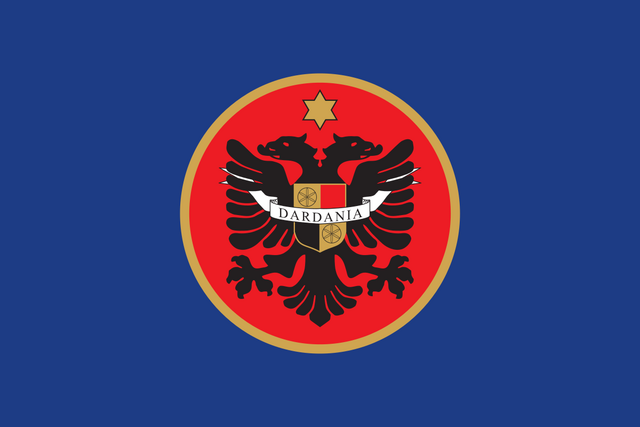
Have vaguely read the last posts on this thread but I have read similar stuff (with regards to alb. lineages under E1b-V13, R1b-Z2103) on another occasion by Rrenjet when asked about ancient origins of Albanian R1b-PF7562 branches, context of the conversation was the Shala tribe. Not really surprising as Dardania and its prehistoric landscape is the perfect merging centre of major archeological complexes and the most noteworthy Paleo-Balkan lineages that make modern Albanians. Rugova knew what he was doing with our Republic's flag 
Last edited:

PaleoRevenge
Well-known member
- Messages
- 1,531
- Reaction score
- 1,344
- Points
- 113
In Anthrogenica, one of rrenjets obtuse members pointed out that there is one yet to be revealed R-Z2103 sample in Mycenean elite burial, as proof the proto-Greeks could be R-Z2103. Right away I had flashback of Argolis. I looked it up today, and the unpublished sample is from Argolis.
At the time I was getting initiated into Brnjica culture. And Argolis is the only Mycenean site I remember readin about that has strong connections with Brnjica culture. This is pre BA collapse event, when Brnjica was it's peak and expanded into Struma and Vardar river valleys, and it even established an outpost in Mycenea probably through marriages from the allied city state.


I am pretty certain this R-Z2103 sample is part of the Fall 1,200 BCE project that is attempting to put the migration theory to the test. Also part of the Fall 1,200 BC project are the samples from Gradište-Mali Iđoš mentioned in GenArchivist forum. Gomolava samples will likely be released first, than the Greek ones, and the rest later.
At the time I was getting initiated into Brnjica culture. And Argolis is the only Mycenean site I remember readin about that has strong connections with Brnjica culture. This is pre BA collapse event, when Brnjica was it's peak and expanded into Struma and Vardar river valleys, and it even established an outpost in Mycenea probably through marriages from the allied city state.
Cremation Burials in Greece from the Late Bronze Age to the Early Iron Age. Continuity or Change?, in: M. Lochner - F. Ruppenstein (eds.), Brandbestattungen von der mittleren Donau bis zur Ägäis zwischen 1300 und 750 v. Chr. (Wien 2013)
The evidence for cremation burials in the LH/LM IIIC period is re-evaluated. It can be concluded that the widely held view, according to which the custom of cremation was introduced to the Aegean from Asia Minor, no longer applies. It is necessary to
www.academia.edu
I am pretty certain this R-Z2103 sample is part of the Fall 1,200 BCE project that is attempting to put the migration theory to the test. Also part of the Fall 1,200 BC project are the samples from Gradište-Mali Iđoš mentioned in GenArchivist forum. Gomolava samples will likely be released first, than the Greek ones, and the rest later.
They are just guessing, and are jumping to conclusions prematurely me thinks. Noticed their flawed conclusion about the Y30588 for those families in Drenice? Playing the politically correct game so they cover their ass if there is any backlash. By doing so, they also are disregarding the family tradition of many of those families. But anyway, even the blind folk can see that not just Y30588 but most PH2180 branches ultimately expanded out of Kukes/Puke/Malesi e Madhe/Malesi e Gjakoves triangle. Where it originated earlier, that's another matter.On rrenjets new topic about Drenica, someone asked rrenjet to defeine the haplogroups that stem from Dardania.


Projekti Rrenjet
Projekti Rrenjet. 13,355 likes · 65 talking about this. Projekti Rrënjët - Këtu mblidhen rezultatet gjenetike të shqiptarëve. Web: www.rrenjet.com WhatsApp: +355 69 468 0648 // +355 69 605 1111www.facebook.com
Rrenjet is not too sure when this expansion or migration occurred of E-V13 and R-Z2705, and gave it a huge time window. They have insider information to have excluded 500 AD for good, and they must have Kruja-Komani samples too, for them to extend the range date all the way to 1,000 AD.
Last edited:
PaleoRevenge
Well-known member
- Messages
- 1,531
- Reaction score
- 1,344
- Points
- 113
The rrenjet team has access to unpublished results. None of them have been to enthusiastic for the inland hypothesis yet they are forced to adjust their views, they got insider information that rules out present day Albania. Their Dardania hypothesis is not a given, that's where they are hoping Alb specific E-V13 and R-Z2705 come from. But it could very well turn out it's a little further east Nish-Shtip-Sofia.
Matzinger claimed one of the Greek dialects showed influence/contact with early Albanoid language. Johane relayed this to us after Matzinger's presentation, but I don't recall which ancient Greek dialect, and does it correspond to the region of Argolis?
Matzinger claimed one of the Greek dialects showed influence/contact with early Albanoid language. Johane relayed this to us after Matzinger's presentation, but I don't recall which ancient Greek dialect, and does it correspond to the region of Argolis?
peloponnesian
Regular Member
- Messages
- 97
- Reaction score
- 88
- Points
- 18
The rumour about "elite Mycenaean R-Z2103" comes from a comment made by Davidski a few years ago and he referred to the site of Mycenae itself, not the Argolid in general. There's no other source about this sample (that I'm aware of), so haplotree.info added this based on Davidski's comment.In Anthrogenica, one of rrenjets obtuse members pointed out that there is one yet to be revealed R-Z2103 sample in Mycenean elite burial, as proof the proto-Greeks could be R-Z2103. Right away I had flashback of Argolis. I looked it up today, and the unpublished sample is from Argolis.
At the time I was getting initiated into Brnjica culture. And Argolis is the only Mycenean site I remember readin about that has strong connections with Brnjica culture. This is pre BA collapse event, when Brnjica was it's peak and expanded into Struma and Vardar river valleys, and it even established an outpost in Mycenea probably through marriages from the allied city state.
Cremation Burials in Greece from the Late Bronze Age to the Early Iron Age. Continuity or Change?, in: M. Lochner - F. Ruppenstein (eds.), Brandbestattungen von der mittleren Donau bis zur Ägäis zwischen 1300 und 750 v. Chr. (Wien 2013)
The evidence for cremation burials in the LH/LM IIIC period is re-evaluated. It can be concluded that the widely held view, according to which the custom of cremation was introduced to the Aegean from Asia Minor, no longer applies. It is necessary towww.academia.edu
I am pretty certain this R-Z2103 sample is part of the Fall 1,200 BCE project that is attempting to put the migration theory to the test. Also part of the Fall 1,200 BC project are the samples from Gradište-Mali Iđoš mentioned in GenArchivist forum. Gomolava samples will likely be released first, than the Greek ones, and the rest later.
Now, there's a project that plans to sample bones from Mycenae and other sites https://cordis.europa.eu/project/id/101001951
But this project runs from 2022-2026 so it's impossible Davidski had info about results from this project years ago. Of course, if anyone has solid new information that they're willing to share, please do

PaleoRevenge
Well-known member
- Messages
- 1,531
- Reaction score
- 1,344
- Points
- 113
The website posted has a progress report for the Fall Project:
The importance of this for society lies in the exploration of how identity, mobility and social change were interwoven in different communities experiencing social tensions and unrest. Through such case studies, we can explore the human experiences of new forms and intensities of mobility and interaction during social transitions with a view to better understanding long-term perspectives on how these may be negotiated in different cultural environments.
WP 1 (and WP 2 thus far) During the first month both project bioarchaeologists agreed a recording protocol for all human skeletal remains to be analysed for The Fall. Most of the first year has been taken up with establishing contact with institutions holding human skeletal collections and consequent visits for skeletal analysis, data collection and sampling for biomolecular analysis. The latter was preceded by sampling training, which was facilitated by a researcher from the Centre for Geogenetics, University of Copenhagen. Overall, a total of 212 individuals plus a quantity of disarticulated remains have been analysed to date and 54 samples have been taken and sent for biomolecular analysis.
The work in the Balkans has progressed well, with excellent cooperation from museums and heritage authorities with regard to both, analysis and sampling of human skeletal collections. Many of the collections accessed and analysed have previously undergone some form of anthropological analysis before, but the current project work has already demonstrated that targeted analytical protocols as well as changes and progress in recording techniques can result in important new bioarchaeological results. This is exemplified by the important site of Gomolava in Serbia, a well preserved mass grave dating to the last millennium BC that during previous analyses (the last one in the 1990s) was interpreted as the result of disease-related deaths. It can now be stated that a large proportion of individuals, including women and children, died as the result of severe trauma to the head and body, indicating a violence-related origin for the site and changing the interpretation of this important site completely. Other collections, such as the assemblage of cremated human remains from Idjos, have undergone anthropological analysis for the first time as part of The Fall, in this case highlighting that the number of individuals actually present far exceeds the number of urns, with a number of double and triple burials that include men, women and even very young children. These results provide important new insights on demography, age and gender-related mortuary patterns in the region. It is expected that at least 300 individuals from four countries in the Balkan region will have been analysed by the end of the project, providing a unique bioarchaeological regional record which will be matched by both, isotopic and aDNA data.
Resolution of suitable remains for the osteological investigation of prehistoric Greek skeletal collections was completed in 2018 and fourteen applications sent to the Greek Ministry of Culture and Sports for permission to study these. Osteological work has been completed on several key collections, including palaeopathological assessment, recording cranial and dental non metric traits and choosing suitable elements for future laboratory analyses (aDNA, isotopes, 14C), permits pending. In particular, osteological investigation at Ioannina provided novel anthropological information as the associated assemblages had never been examined by a trained osteologist before. In this way important data regarding health status, age, sex and number of individuals was obtained. This revealed that in specific cases “single” burials thought to consist of only one individual, actually included more. It is expected that overall 250-300 individuals will have been examined osteologically by the end of the project. The anthropological data combined with laboratory results (aDNA, strontium, carbon and nitrogen isotopes, 14C) are expected to shed light to our understanding of this turbulent period and the reasons behind The Fall.
Initial work on WP 3 has focused on the Northern Balkans in tandem with fieldwork there. WP 3 has expanded since September 2019 with the employment of our dedicated Research Scientist for 2 years. Thus far, a pilot dataset of 23 objects has been characterised for Pb isotopes and trace elements using Neptune MC-ICP-MS and Quadropole ICP-MS at UCD in collaboration with Stephen Daly. The compilation of a database of relevant published datasets, with critical evaluation of data quality, has also been initiated and is over 70% complete. Sites sampled have included hoard, settlement and cemetery contexts and careful consideration of the biography of objects studied has been undertaken.
Our sampling strategy for isotopic and elemental characterisation of metalwork targets c. 200 samples of metalwork. By incorporating object biographies and different site types, the project will position our methodology between two dominant camps in copper-alloy characterisation studies – those that explore material flow and those that explore absolute provenance. This has high potential to enable our dataset to provide a nuanced perspective on our regional study while contributing to ongoing methodological debates.
For WP4 has included Desktop Survey of sites in the Balkans using textual sources and aerial imagery. Ground truthing of sites has been initiated and will be completed in 2019. Survey, limited-scale excavation and remote sensing research of fortified sites in the northern Balkans is ongoing. This provides material for relative and absolute dating. Most of these sites are previously unknown and the density of their spacing and design indicates that there are intentional elements to settlement network design. This is crucially important as it is coeval with the spread of a new pottery tradition that extends throughout much of the Carpathian Basin. This research is in early stages, but promises to be high impact.
Periodic Reporting for period 3 - THE FALL (The Fall of 1200BC: The role of migration and conflict in social crises at end of the Bronze Age in South-eastern Europe
The project explores the roles of migration, cultural mobility, conflict, changes in lifeways, settlement system changes and the overall context of social change associated with the collapse of urban groups in the Aegean and Balkan regions between 1400 and 1000 BC, with a key focus on the rapid changes around 1200 BC. The Mycenaean civilisation of Greece is one of the clearest cases of rapid social change / collapse in the prehistoric world. A recently discovered complex of massive fortified sites in the southeast Carpathian Basin follows a very similar timeline of growth and collapse to the Aegean case.Taking these as two parallel case studies that share some linkages and are situated in directly neighbouring geographic spaces, the project explores how mobility within and potentially between these regions was can be documented during this period of change. The overall objective is to understand how cultural change, conflict and the movement of people were factors in the rapid social changes of the end of the Bronze Age in both regions.The importance of this for society lies in the exploration of how identity, mobility and social change were interwoven in different communities experiencing social tensions and unrest. Through such case studies, we can explore the human experiences of new forms and intensities of mobility and interaction during social transitions with a view to better understanding long-term perspectives on how these may be negotiated in different cultural environments.
WP 1 (and WP 2 thus far) During the first month both project bioarchaeologists agreed a recording protocol for all human skeletal remains to be analysed for The Fall. Most of the first year has been taken up with establishing contact with institutions holding human skeletal collections and consequent visits for skeletal analysis, data collection and sampling for biomolecular analysis. The latter was preceded by sampling training, which was facilitated by a researcher from the Centre for Geogenetics, University of Copenhagen. Overall, a total of 212 individuals plus a quantity of disarticulated remains have been analysed to date and 54 samples have been taken and sent for biomolecular analysis.
The work in the Balkans has progressed well, with excellent cooperation from museums and heritage authorities with regard to both, analysis and sampling of human skeletal collections. Many of the collections accessed and analysed have previously undergone some form of anthropological analysis before, but the current project work has already demonstrated that targeted analytical protocols as well as changes and progress in recording techniques can result in important new bioarchaeological results. This is exemplified by the important site of Gomolava in Serbia, a well preserved mass grave dating to the last millennium BC that during previous analyses (the last one in the 1990s) was interpreted as the result of disease-related deaths. It can now be stated that a large proportion of individuals, including women and children, died as the result of severe trauma to the head and body, indicating a violence-related origin for the site and changing the interpretation of this important site completely. Other collections, such as the assemblage of cremated human remains from Idjos, have undergone anthropological analysis for the first time as part of The Fall, in this case highlighting that the number of individuals actually present far exceeds the number of urns, with a number of double and triple burials that include men, women and even very young children. These results provide important new insights on demography, age and gender-related mortuary patterns in the region. It is expected that at least 300 individuals from four countries in the Balkan region will have been analysed by the end of the project, providing a unique bioarchaeological regional record which will be matched by both, isotopic and aDNA data.
Resolution of suitable remains for the osteological investigation of prehistoric Greek skeletal collections was completed in 2018 and fourteen applications sent to the Greek Ministry of Culture and Sports for permission to study these. Osteological work has been completed on several key collections, including palaeopathological assessment, recording cranial and dental non metric traits and choosing suitable elements for future laboratory analyses (aDNA, isotopes, 14C), permits pending. In particular, osteological investigation at Ioannina provided novel anthropological information as the associated assemblages had never been examined by a trained osteologist before. In this way important data regarding health status, age, sex and number of individuals was obtained. This revealed that in specific cases “single” burials thought to consist of only one individual, actually included more. It is expected that overall 250-300 individuals will have been examined osteologically by the end of the project. The anthropological data combined with laboratory results (aDNA, strontium, carbon and nitrogen isotopes, 14C) are expected to shed light to our understanding of this turbulent period and the reasons behind The Fall.
Initial work on WP 3 has focused on the Northern Balkans in tandem with fieldwork there. WP 3 has expanded since September 2019 with the employment of our dedicated Research Scientist for 2 years. Thus far, a pilot dataset of 23 objects has been characterised for Pb isotopes and trace elements using Neptune MC-ICP-MS and Quadropole ICP-MS at UCD in collaboration with Stephen Daly. The compilation of a database of relevant published datasets, with critical evaluation of data quality, has also been initiated and is over 70% complete. Sites sampled have included hoard, settlement and cemetery contexts and careful consideration of the biography of objects studied has been undertaken.
Our sampling strategy for isotopic and elemental characterisation of metalwork targets c. 200 samples of metalwork. By incorporating object biographies and different site types, the project will position our methodology between two dominant camps in copper-alloy characterisation studies – those that explore material flow and those that explore absolute provenance. This has high potential to enable our dataset to provide a nuanced perspective on our regional study while contributing to ongoing methodological debates.
For WP4 has included Desktop Survey of sites in the Balkans using textual sources and aerial imagery. Ground truthing of sites has been initiated and will be completed in 2019. Survey, limited-scale excavation and remote sensing research of fortified sites in the northern Balkans is ongoing. This provides material for relative and absolute dating. Most of these sites are previously unknown and the density of their spacing and design indicates that there are intentional elements to settlement network design. This is crucially important as it is coeval with the spread of a new pottery tradition that extends throughout much of the Carpathian Basin. This research is in early stages, but promises to be high impact.
PaleoRevenge
Well-known member
- Messages
- 1,531
- Reaction score
- 1,344
- Points
- 113
I would assume the four countries would be Romania, Serbia, North Macedonia and Greece. It is the logical pick since they are focused on two axis, the Carpathian basin mega forts and the effects that reached Greece.t is expected that at least 300 individuals from four countries in the Balkan region will have been analysed by the end of the project, providing a unique bioarchaeological regional record which will be matched by both, isotopic and aDNA data.
That's the Eastern Urnfielders expansion from Gava-Holigrady to Belegis II-Gáva and the Morava-Vardar valleys down to Greece.South-East Carpathian Basin to Greece, that sounds like a candidate scenario for E-V13.
There must be some E-V13 in this movements, the question is just about cremations and sampling.
There is a difference between the initial decrease in the Upper Tisza region and what happened South.
At the Upper Tisza region people moved out, moved South and erected Mega-forts in the regions they conquered.
They caused a chain event which reached the Southern Balkans and Greece, which was already under pressure from Western Urnfielders coming by sea and internal upheavals.
The real miracle is how the Greeks survived that storm as an ethnos pretty well, even if some of their states collapsed.
Last edited:
Are those samples from that 2018 lecture on Youtube (Amvrakia?) perhaps part of this study? Also, is Gomolava now an independent paper or are they holding it back for a "bigger" one?The website posted has a progress report for the Fall Project:
Periodic Reporting for period 3 - THE FALL (The Fall of 1200BC: The role of migration and conflict in social crises at end of the Bronze Age in South-eastern Europe
The project explores the roles of migration, cultural mobility, conflict, changes in lifeways, settlement system changes and the overall context of social change associated with the collapse of urban groups in the Aegean and Balkan regions between 1400 and 1000 BC, with a key focus on the rapid changes around 1200 BC. The Mycenaean civilisation of Greece is one of the clearest cases of rapid social change / collapse in the prehistoric world. A recently discovered complex of massive fortified sites in the southeast Carpathian Basin follows a very similar timeline of growth and collapse to the Aegean case.Taking these as two parallel case studies that share some linkages and are situated in directly neighbouring geographic spaces, the project explores how mobility within and potentially between these regions was can be documented during this period of change. The overall objective is to understand how cultural change, conflict and the movement of people were factors in the rapid social changes of the end of the Bronze Age in both regions.
- Status
- Not open for further replies.