Summary
Denisovans are an extinct group of humans whose morphology remains unknown. Here, we present a method for reconstructing skeletal morphology using DNA methylation patterns. Our method is based on linking unidirectional methylation changes to loss-of-function phenotypes. We tested performance by reconstructing Neanderthal and chimpanzee skeletal morphologies and obtained >85% precision in identifying divergent traits. We then applied this method to the Denisovan and offer a putative morphological profile. We suggest that Denisovans likely shared with Neanderthals traits such as an elongated face and a wide pelvis. We also identify Denisovan-derived changes, such as an increased dental arch and lateral cranial expansion. Our predictions match the only morphologically informative Denisovan bone to date, as well as the Xuchang skull, which was suggested by some to be a Denisovan. We conclude that DNA methylation can be used to reconstruct anatomical features, including some that do not survive in the fossil record.
Discussion
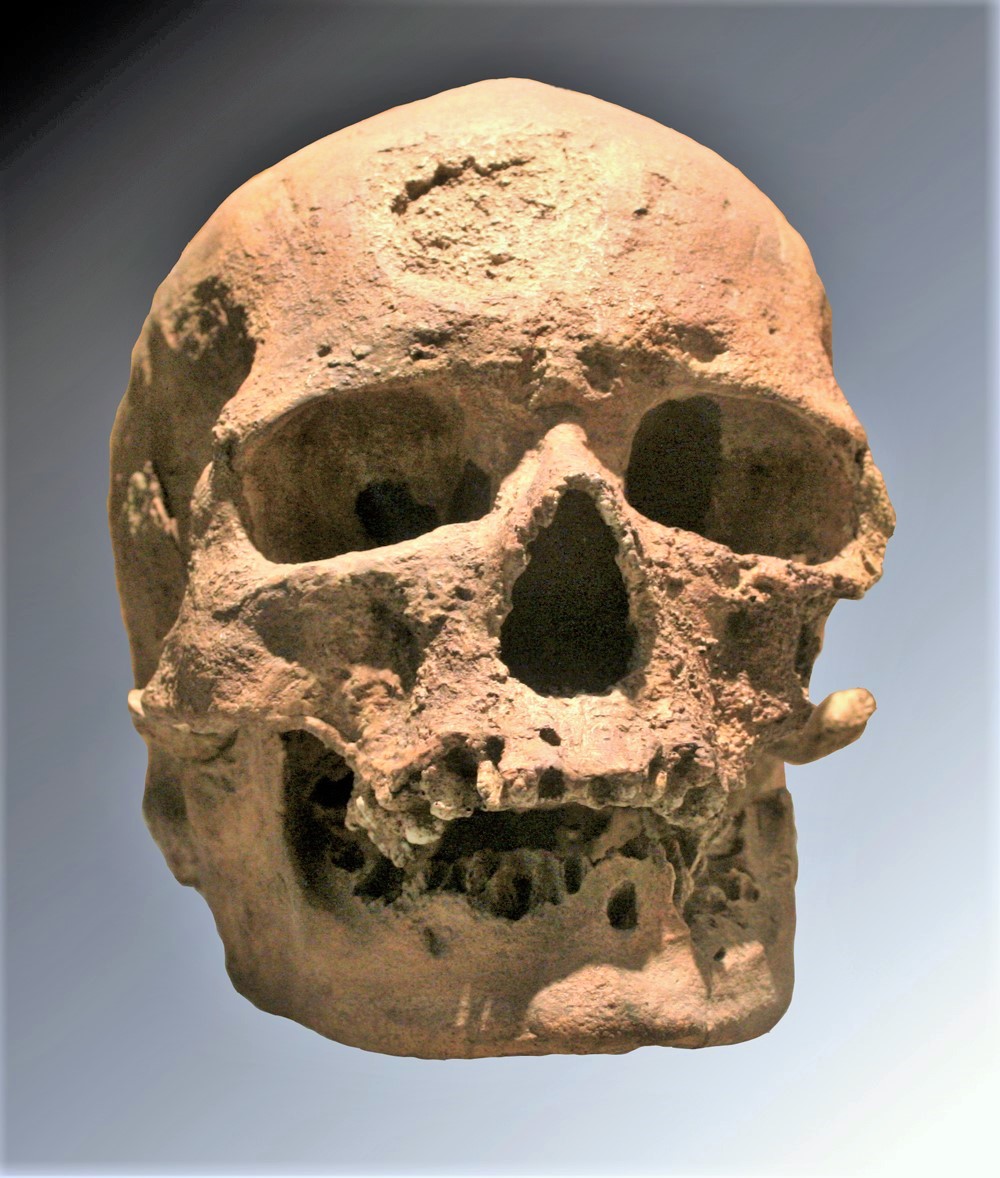
Interestingly, many of the Denisovan traits we reconstruct were identified in Middle and Late Pleistocene fossils from China. These fossils display various Neanderthal-like characteristics, but their phylogenetic classification remains undetermined (Bae, 2010, Li et al., 2017). Probably the most Neanderthal-like are the 100,000- to 130,000-year-old crania from Xuchang, eastern China. The similarity of these crania to those of Neanderthals, together with their eastern geographical location, raise the possibility that they might belong to Denisovans. However, without DNA, this could not be confirmed. The bones include the skull cap and base, but not the face or the jaws, and exhibit the following ten directional morphologies: (1) lateral expansion of the temporal bones; (2) low cranial vault; (3) lateral expansion of the parietal bones, outside the range of Neanderthals and MHs (Suzuki and Takai, 1970); (4) wide cranial base; (5) cranial gracility; (6) prominent supraorbital tori; (7) reduced thickening (restricted nuchal torus) of the occipital bone; (8) sagittal flatness; (9) short inward-sloping mastoid process; and (10) small anterior semicircular canal radii and more superior lateral versus posterior canals. Traits 1–8 have equivalent phenotypes on HPO and could thus be examined against our reconstructed profile. Strikingly, seven of them were identified as divergent traits in our reconstructed Denisovan profile (Figure 4; Table S7).
https://www.cell.com/cell/pdf/S0092-8674(19)30954-7.pdf