
-
Don't want to see ads? Install an adblocker like uBlock Origin or use a Europe-based privacy-friendly browser like Vivaldi or Mullvad.
You are using an out of date browser. It may not display this or other websites correctly.
You should upgrade or use an alternative browser.
You should upgrade or use an alternative browser.
When Y-DNA E replaced Y-DNA A and Y-DNA B in Africa?
- Thread starter kmak
- Start date
Yes, this is what Shum Laka and the dominance of A and B in non-Niger-Kordofanian Subsaharan hunter gatherers suggests.
However, we should qualify that its about Subsaharan Africa, because in North Africa, E was either dominant before the Mesolithic or became dominant in the Mesolithic the latest. Iberomaurisians were already E1b1b/E-M35, therefore other, today Niger-Kordofanians/Bantu E-branches shoudl have been already more Southern than coastal Northern Africa by that time (17.000 BC).
However, we should qualify that its about Subsaharan Africa, because in North Africa, E was either dominant before the Mesolithic or became dominant in the Mesolithic the latest. Iberomaurisians were already E1b1b/E-M35, therefore other, today Niger-Kordofanians/Bantu E-branches shoudl have been already more Southern than coastal Northern Africa by that time (17.000 BC).

Khopesh_Wielder
Regular Member
- Messages
- 24
- Reaction score
- 12
- Points
- 3
- Ethnic group
- Southern Levantine Arab (+Southern European on maternal side)
- Y-DNA haplogroup
- E-M84
Based off the current samples we have from sub-Saharan Africa, it appears that haplogroup E arrived there during the Neolithic, either from North Africa or Southwest Asia, as a part of some type of Ancestral North African-Basal Eurasian cline/population that is not well understood yet.
However what we can conclude is a somewhat young presence in sub-Saharan Africa, but maybe not in terms of Africa as a whole continent, when you include North Africa.
Also, these Ancestral North Africans were genetically different from the Paleo sub-Saharan Africans, which explains why DE is closer to Main Eurasian haplogroup CF than to the aboriginal SSA A & B.
(I also want to point out all of this may change in the future if new studies find older samples with Y-DNA)
However what we can conclude is a somewhat young presence in sub-Saharan Africa, but maybe not in terms of Africa as a whole continent, when you include North Africa.
Also, these Ancestral North Africans were genetically different from the Paleo sub-Saharan Africans, which explains why DE is closer to Main Eurasian haplogroup CF than to the aboriginal SSA A & B.
(I also want to point out all of this may change in the future if new studies find older samples with Y-DNA)
Attachments
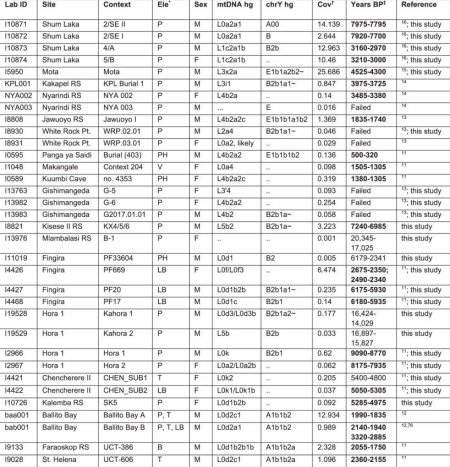
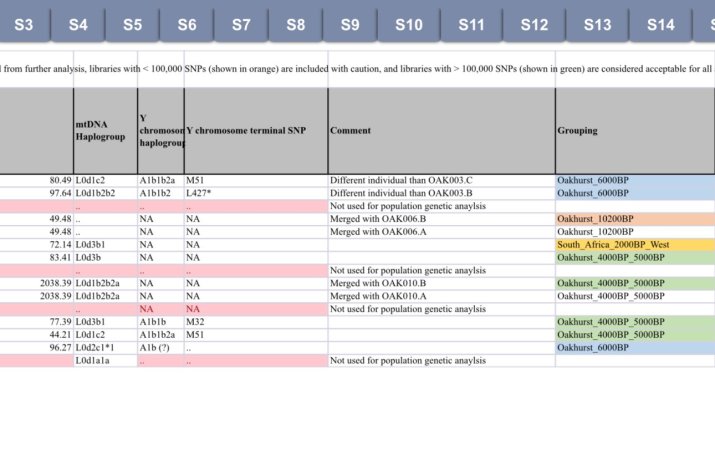
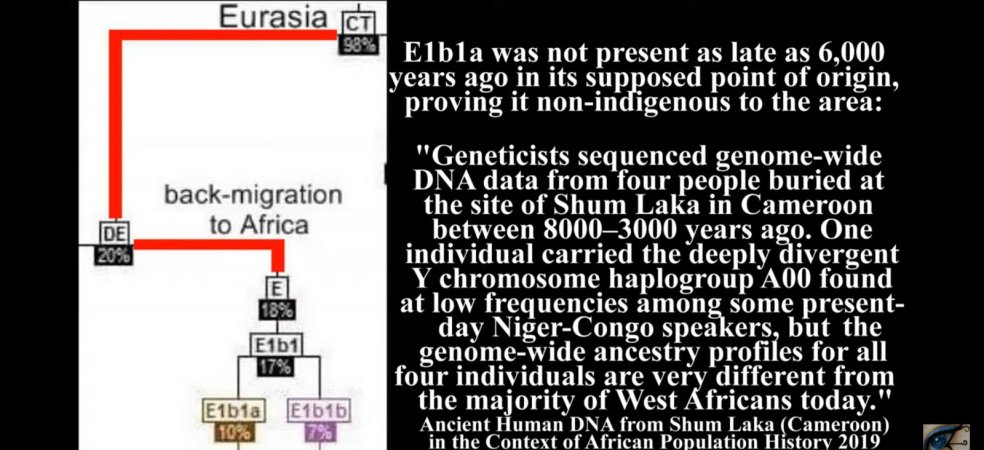
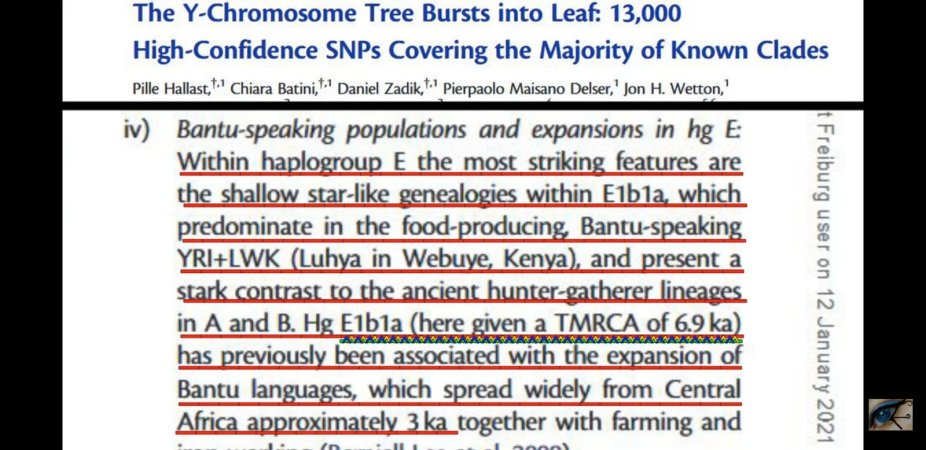
I think what's going to happen in the future is the corroboration of Eurasian origins of haplogroup E. We don't have to rehash the same old common knowledge that its sibling is the (predominantly) East Asian haplogroup D and that both, as CF did, emerged from the principal out-of-Africa macro-haplogroup CT. There have been multiple back-to-Africa migrations by bearers of haplogroup E since the mesolithic, if not even earlier. I concur with the opinion that the spread of E into SSA is a more "recent" event, dating back to the neolithic. So what you basically had was men from the Middle East replacing A and B men on a large scale. The spread of E into Africa was caused by both migration and flight and displacement. I think there is enough reason to assume that E once dominated on the Arabian peninsula and in the Levant for sure until it was pretty much replaced by J men. That may have been the last great wave of E migration into East and North Africa.

Southpaw
Regular Member
- Messages
- 2,618
- Reaction score
- 1,424
- Points
- 113
- Ethnic group
- Albanian
- Y-DNA haplogroup
- E-V13
I think what's going to happen in the future is the corroboration of Eurasian origins of haplogroup E. We don't have to rehash the same old common knowledge that its sibling is the (predominantly) East Asian haplogroup D and that both, as CF did, emerged from the principal out-of-Africa macro-haplogroup CT. There have been multiple back-to-Africa migrations by bearers of haplogroup E since the mesolithic, if not even earlier. I concur with the opinion that the spread of E into SSA is a more "recent" event, dating back to the neolithic. So what you basically had was men from the Middle East replacing A and B men on a large scale. The spread of E into Africa was caused by both migration and flight and displacement. I think there is enough reason to assume that E once dominated on the Arabian peninsula and in the Levant for sure until it was pretty much replaced by J men. That may have been the last great wave of E migration into East and North Africa.
Hmmm, no. The only culture in Middle East resembling Y-DNA E-M35 cultures was Natufian in Levant. They came from North Africa ultimately.
I think North/East Africa is the ultimate origin of Y-dna E on general. For many reasons.
Geographically it is African, but you can say SSA was a result of heavy admixture between Shum-Laka, Nilotic and ultimately the autosomal brought by Y-DNA E, likely ANA/Takarkori-like.
We don't really know either way, since we don't have pre-IBM/Natufian samples from both sides of the Sinai/Red Sea. Going by physical anthropology, there was no big shift between Pre-Natufian and Natufian in the Levante and the Natufians are on the opposite end of the physical spectrum compared to IBM/older North Africans.Hmmm, no. The only culture in Middle East resembling Y-DNA E-M35 cultures was Natufian in Levant. They came from North Africa ultimately.
I think North/East Africa is the ultimate origin of Y-dna E on general. For many reasons.
Geographically it is African, but you can say SSA was a result of heavy admixture between Shum-Laka, Nilotic and ultimately the autosomal brought by Y-DNA E, likely ANA/Takarkori-like.
But nothing of this can give us the certainty we need, until we get actual sampling.
Southpaw
Regular Member
- Messages
- 2,618
- Reaction score
- 1,424
- Points
- 113
- Ethnic group
- Albanian
- Y-DNA haplogroup
- E-V13
We don't really know either way, since we don't have pre-IBM/Natufian samples from both sides of the Sinai/Red Sea. Going by physical anthropology, there was no big shift between Pre-Natufian and Natufian in the Levante and the Natufians are on the opposite end of the physical spectrum compared to IBM/older North Africans.
But nothing of this can give us the certainty we need, until we get actual sampling.
I think it’s reasonable to apply deductive logic here, even while we wait for more ancient DNA. Natufians show Dzudzuana-related ancestry that overlaps significantly with Anatolian, Caucasus, and Iranian hunter-gatherers. Meanwhile, their other admixture pattern which is ANA-like and seen on Taforalt/Takarkori samples appears quite distinct, and interestingly, it correlates with high levels of autosomal E-M35 ancestry. Now the interesting stuff, Takarkori-like admixture is distinct from both SSA and Eurasian, but on general overview it is slightly more related to Eurasian, that perfectly fits Y-DNA E/E-M35.
Given this, Paleolithic Egypt seems like a more realistic candidate for the early presence of E-M35, if you dwell downstream of E-M35 -> E-M215 possibly even further south in the Ethiopian Highlands. From an ecological perspective, North and East Africa offered far more favorable conditions for human populations than the Arabian Peninsula, especially during Paleolithic green phases. Several studies suggest that parts of Egypt were periodically much greener and more habitable during interglacial periods, possibly acting as key refugia or migration corridors. It is very likely that the ancestors of Natufians migrated into Levant when the desertification of Sahara became more serious. I just don't know whether they migrated earlier than Mushabians or they were Mushabian themselves. It could very well be that Mushabians were instead E-M78.
The main ancestral component in Natufians is a high level of Basal Eurasian, the actual more basal ancestry to that is negligible. I think that Basal Eurasian itself was dominated by E, but that's a bit speculative at this point. In any case, I agree with Norbert that whatever the case the Near East was E before J (E minority) Afro-Asiatics/Semits conquered the region. Therefore I also think that the diversity and spread of E was much bigger in Pre-Semitic times than it is now.
I think there are many options, one of which is that there was a constant flow between Egypt and the Levante, not just one pulse migration.
I think there are many options, one of which is that there was a constant flow between Egypt and the Levante, not just one pulse migration.
Southpaw
Regular Member
- Messages
- 2,618
- Reaction score
- 1,424
- Points
- 113
- Ethnic group
- Albanian
- Y-DNA haplogroup
- E-V13
The main ancestral component in Natufians is a high level of Basal Eurasian, the actual more basal ancestry to that is negligible. I think that Basal Eurasian itself was dominated by E, but that's a bit speculative at this point. In any case, I agree with Norbert that whatever the case the Near East was E before J (E minority) Afro-Asiatics/Semits conquered the region. Therefore I also think that the diversity and spread of E was much bigger in Pre-Semitic times than it is now.
I think there are many options, one of which is that there was a constant flow between Egypt and the Levante, not just one pulse migration.
I’d push back a bit on that, the Natufian genetic profile seems to align more with a mix of Dzudzuana-related ancestry and ANA/Taforalt-like components. That ANA-like component is where E-M35 likely enters the picture.
As for Y-DNA J1, it’s very possible early on they likely came as pastoralist goat herders who later adopted Proto-Semitic and expanded demographically. The language shift could have followed the demographic rise, not preceded it. Otherwise, if they came as conquerors they should have come with full package which includes language, from the start.
We already know that the pre-IBM component in North Africa is different and this ANA component is very low in Natufians. So low, it could be caused by minor gene flow which is unrelated to the Basal Eurasian and E. Again, only more samples can solve that.
As for J1, it is pretty obvious to me that E-M35 is the Proto-Afro-Asiatic marker, it migrated North (Natufians?) and met the J1 Caucasian people. Therefore they brought the language, but in a secondary step, the J1 became dominant in the Proto-Semitic subgroup. Apparently, it looks like E wasn't fully replaced in these Proto-Semites, but J1 became dominant. Therefore when the Semites expanded South, they replaced all local lineages (mainly E) with a predominance of J1 and specific E lineages. This is very apparent if looking at the respective phylogenies of J1 and E-M34.
The role of J1 in Semites is therefore comparable to that of I-M253 in Proto-Germanics, J-L283 in Illyrians, E-V13 in Proto-Thracians etc. They were first converted and then they multiplied more successful than the original E carriers within Semitic groups.
Both J1 and E-M34 have mostly fairly recent TMRCAs for their founder lineages, even in Yemen. This points to a clear cut replacement event. We don't know what was there before, but we can assume a high diversity of E lineages.
As for J1, it is pretty obvious to me that E-M35 is the Proto-Afro-Asiatic marker, it migrated North (Natufians?) and met the J1 Caucasian people. Therefore they brought the language, but in a secondary step, the J1 became dominant in the Proto-Semitic subgroup. Apparently, it looks like E wasn't fully replaced in these Proto-Semites, but J1 became dominant. Therefore when the Semites expanded South, they replaced all local lineages (mainly E) with a predominance of J1 and specific E lineages. This is very apparent if looking at the respective phylogenies of J1 and E-M34.
The role of J1 in Semites is therefore comparable to that of I-M253 in Proto-Germanics, J-L283 in Illyrians, E-V13 in Proto-Thracians etc. They were first converted and then they multiplied more successful than the original E carriers within Semitic groups.
Both J1 and E-M34 have mostly fairly recent TMRCAs for their founder lineages, even in Yemen. This points to a clear cut replacement event. We don't know what was there before, but we can assume a high diversity of E lineages.
Southpaw
Regular Member
- Messages
- 2,618
- Reaction score
- 1,424
- Points
- 113
- Ethnic group
- Albanian
- Y-DNA haplogroup
- E-V13
I know a pattern when i see it, to me it is undeniable ANA is a very deep North African autosomal with the strongest relation to Y-DNA E/E-M35.
Basal Eurasian cannot be related to Y-DNA E-M35 when Iranian Farmer has more percentage of it than Natufian one, Basal Eurasian is a vague term as well, whichever calculator method u fold/unfold, Dzudzuana/Basal Eurasian.
I think the majority of people strongly believe that Takarkori/ANA is strongly correlated with Y-DNA E-M215.
Basal Eurasian cannot be related to Y-DNA E-M35 when Iranian Farmer has more percentage of it than Natufian one, Basal Eurasian is a vague term as well, whichever calculator method u fold/unfold, Dzudzuana/Basal Eurasian.
I think the majority of people strongly believe that Takarkori/ANA is strongly correlated with Y-DNA E-M215.
The Natufians have more of the Dzudzuana-like admixture, that's why they got less than the Iranian samples. The strictly ANA admixture in Natufians is very, very low. But again, we won't solve it until we get more samples.I know a pattern when i see it, to me it is undeniable ANA is a very deep North African autosomal with the strongest relation to Y-DNA E/E-M35.
Basal Eurasian cannot be related to Y-DNA E-M35 when Iranian Farmer has more percentage of it than Natufian one, Basal Eurasian is a vague term as well, whichever calculator method u fold/unfold, Dzudzuana/Basal Eurasian.
I think the majority of people strongly believe that Takarkori/ANA is strongly correlated with Y-DNA E-M215.

I think it’s reasonable to apply deductive logic here, even while we wait for more ancient DNA. Natufians show Dzudzuana-related ancestry that overlaps significantly with Anatolian, Caucasus, and Iranian hunter-gatherers. Meanwhile, their other admixture pattern which is ANA-like and seen on Taforalt/Takarkori samples appears quite distinct, and interestingly, it correlates with high levels of autosomal E-M35 ancestry. Now the interesting stuff, Takarkori-like admixture is distinct from both SSA and Eurasian, but on general overview it is slightly more related to Eurasian, that perfectly fits Y-DNA E/E-M35.
Given this, Paleolithic Egypt seems like a more realistic candidate for the early presence of E-M35, if you dwell downstream of E-M35 -> E-M215 possibly even further south in the Ethiopian Highlands. From an ecological perspective, North and East Africa offered far more favorable conditions for human populations than the Arabian Peninsula, especially during Paleolithic green phases. Several studies suggest that parts of Egypt were periodically much greener and more habitable during interglacial periods, possibly acting as key refugia or migration corridors. It is very likely that the ancestors of Natufians migrated into Levant when the desertification of Sahara became more serious. I just don't know whether they migrated earlier than Mushabians or they were Mushabian themselves. It could very well be that Mushabians were instead E-M78.
I can follow your reasoning and think it's important that you brought in the climatic factor which has been the main reason for large human migrations throughout history. But the green periods in North and East Africa started at the end of the Pleistocene, around 14,500 years ago and lasted until the Neolithic. Anatomically modern humans had left Africa 100,000+ years ago. It is CT that went into Eurasia and DE, along with CF, is one of its descendants. The age of DE is estimated at around 75,000 years. E itself is said to be 65,000 years old. That's completely irrelevant for ANA, a much later ghost population. Haplogroup DE is so old, it arose among what were still early modern humans and it happened in West Asia. The Arabian peninsula had its green period, too, way before than N/EA. It was covered with lush vegetation during the middle Pleistocene. Who knows what treasures archeologists would uncover that have been long buried by the desert. You can actually argue that bearers of E migrated into Africa as a consequence of the desertification of the Arabian peninsula and Levant which which would have consituted the first such back-to-Africa migration. As you probably know, E is YAP+, an insertion that most definitely occured in Asia. The question is: where did DE split into D and E? There are claims that it happened around Tibet but that sounds less plausible to me. I'd say it happened in West Asia just like haplogroup C emerged in West Asia but is primarily found in East Eurasia today.
Riverman is definitely right: we need a whole lot more samples to get a better picture. Regarding DE/D/E, I think their secrets are buried in the Middle Eastern deserts and will be gradually uncovered with the advent of better technologies hopefully a more stable and open political and cultural situation in that part of the world where scientists will be able to work safely and without restrictions.

kingdavid
Regular Member
- Messages
- 2,505
- Reaction score
- 1,564
- Points
- 113
- Y-DNA haplogroup
- Rare E-m84>y60961
- mtDNA haplogroup
- H3+12192
kebaran culture dude facial construction(the culture that was before the natufian)
Facial reconstruction of Ohalo 2, a 19,000-year-old Levantine hunter-gatherer belonging to the Kebaran culture.
The Kebaran culture preceded the Natufian culture and is possibly ancestral to both the Natufians and the Iberomaurusians.
The man was robust and stood 173.5 cm tall

p.s
it is likely he belonged to some type of y haplogroup C
so i do believe E was older than J in the levant ( natufians)
but before E came to the levant in the late mesolithic there was in the levant some presence of rare branches under y haplogroup CF
Facial reconstruction of Ohalo 2, a 19,000-year-old Levantine hunter-gatherer belonging to the Kebaran culture.
The Kebaran culture preceded the Natufian culture and is possibly ancestral to both the Natufians and the Iberomaurusians.
The man was robust and stood 173.5 cm tall
p.s
it is likely he belonged to some type of y haplogroup C
so i do believe E was older than J in the levant ( natufians)
but before E came to the levant in the late mesolithic there was in the levant some presence of rare branches under y haplogroup CF
There is a general lack of Pre-Natufian well-preserved physical remains, but one might consider e.g. these samples as potenital testing objects:
Compare him with a Natufian:
vs
But he is still markedly different from Natufians on the one hand, while being less different than North African specimen (including and especially IBM).
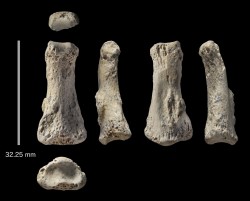
I would also like to get Al Wusta tested, but that's something I hoped for years ago, with no success:
 cordis.europa.eu
Ideally for the Basal Eurasian/E debate such human samples, from this archaeological context, would be great to have:
Its not just bad preservation, sometimes there are no samples to work with at all, even for basic protain analyses.
In the morphology of the postcrania and skull,
the F-81 skeleton increases the range of variability
known from the periods that predate the Natufian
in the Levant. The morphological similarities and
differences among the remains from Ohalo II,
Nahal Ein Gev, Ein Gev, Qasr Kharaneh, and Wadi
Mataha suggest: 1) considerable morphological
variability prior to the Natufian; 2) continuity
between the pre-Natufian and Natufian popula-
tions; and 3) a general reduction in intensity of
habitual behavior between these periods. More
detailed analyses of UP and Epipaleolithic remains
from the Levant will shed light on the biological
and behavioral relationships between these and
subsequent Natufian populations
Compare him with a Natufian:
vs
But he is still markedly different from Natufians on the one hand, while being less different than North African specimen (including and especially IBM).
I would also like to get Al Wusta tested, but that's something I hoped for years ago, with no success:
A new research reports the discovery of a fossil human finger bone at the site of Al Wusta, an ancient fresh-water lake located in what is now the hyper-arid Nefud Desert, in Saudi Arabia. The fossil has been directly dated to approximately 90,000 years ago, which makes it among the oldest modern human remains found outside Africa and the Levant.
The oldest directly dated modern human fossil found outside of Africa and the Levant
A new research reports the discovery of a fossil human finger bone at the site of Al Wusta, an ancient fresh-water lake located in what...
Ideally for the Basal Eurasian/E debate such human samples, from this archaeological context, would be great to have:
Inland human settlement in southern Arabia 55,000 years ago. New evidence from the Wadi Surdud Middle Paleolithic site complex, western Yemen
A set of recently investigated archaeological sites or complexes of sites in stratified contexts bring new insights to this debate. It suggests that a major phase of human expansion into Arabia occurred much earlier than 60 ka BP, during MIS 5. Related assemblages have been found at Jebel Faya in the United Arab Emirates (Armitage et al., 2011), in the Dhofar region of Oman (Rose et al., 2011), in the Nefud desert of Saudi Arabia (Petraglia et al., 2011). They date to the beginning of MIS 5 (Jebel Faya, assemblage C and Nubian complex sites from the Dhofar region) or MIS 5a (Jubbah basin sites in the Nefud desert). Both periods correspond to humid phases that were favorable to faunal and human range expansion (Fernandes, 2009; Petraglia, 2011). These assemblages have been assigned to an Middle Stone Age (MSA) – like industry (Jebel Faya, assemblage C), the Nubian Complex (Dhofar region) or to the Arabian Middle Paleolithic (Jubbah basin). The assemblages from the Dhofar region, as well as those from Jebel Faya (C), seem to reflect connections between Arabia and Africa during early MIS 5. While no human fossils have yet been recovered from any of these contexts, it has been proposed that the groups responsible for these industries were modern humans, having dispersed into Arabia much earlier than previously assumed, between 120 and 80 ka (Armitage et al., 2011; Rose et al., 2011).
Its not just bad preservation, sometimes there are no samples to work with at all, even for basic protain analyses.
Last edited:
kingdavid
Regular Member
- Messages
- 2,505
- Reaction score
- 1,564
- Points
- 113
- Y-DNA haplogroup
- Rare E-m84>y60961
- mtDNA haplogroup
- H3+12192
But he is still markedly different from Natufians on the one hand, while being less different than North African specimen (including and especially IBM).
the IBM remains doesn't even look E
no broad nose no full lips
he is different from the natufian facial reconstruction indeed
so even though we share the e-m35 common ancestor 30,000 years ago
it seem e-v68 and e-z827>z830 looked different
Facial reconstruction of a hunter-gatherer from Afalou, Algeria, belonging to the Iberomaurusian culture.
In line with the customs of Iberomaurusian males, and several other peoples of MENA during that period, the man had his incisors removed as part of an initiation rite.

the IBM remains doesn't even look E
no broad nose no full lips
he is different from the natufian facial reconstruction indeed
so even though we share the e-m35 common ancestor 30,000 years ago
it seem e-v68 and e-z827>z830 looked different
Facial reconstruction of a hunter-gatherer from Afalou, Algeria, belonging to the Iberomaurusian culture.
In line with the customs of Iberomaurusian males, and several other peoples of MENA during that period, the man had his incisors removed as part of an initiation rite.
IBM must have had a recent ancestor with E-M78 though, because they have their own branch of it. This means they had a common ancestor with other E-M78 around 13000 BC:
 discover.familytreedna.com
This suggests to me, that these patrilineage of IBM split from the main E-M78 group, which likely lived in Egypt or the Southern Levante-Arabia, around that time or a bit latter (not earlier than 14000 BC if the estimates are correct). They show zero diversity, which suggests to me that these specific group tested was just dominated by this one newly arrived lineage.
Welcome to FamilyTreeDNA Discover
Discover more about your paternal ancestry and join in on the research!
This suggests to me, that these patrilineage of IBM split from the main E-M78 group, which likely lived in Egypt or the Southern Levante-Arabia, around that time or a bit latter (not earlier than 14000 BC if the estimates are correct). They show zero diversity, which suggests to me that these specific group tested was just dominated by this one newly arrived lineage.
Southpaw
Regular Member
- Messages
- 2,618
- Reaction score
- 1,424
- Points
- 113
- Ethnic group
- Albanian
- Y-DNA haplogroup
- E-V13
kebaran culture dude facial construction(the culture that was before the natufian)
Facial reconstruction of Ohalo 2, a 19,000-year-old Levantine hunter-gatherer belonging to the Kebaran culture.
The Kebaran culture preceded the Natufian culture and is possibly ancestral to both the Natufians and the Iberomaurusians.
The man was robust and stood 173.5 cm tall
View attachment 18473
p.s
it is likely he belonged to some type of y haplogroup C
so i do believe E was older than J in the levant ( natufians)
but before E came to the levant in the late mesolithic there was in the levant some presence of rare branches under y haplogroup CF
I definitely agree with you, Y-DNA E-M35 was likely in Paleolithic or Mesolithic in Levant. It was an expansion from North Africa, it mimicks the spread of the so called microburin stone tool revolution made by ANA people, stones carved with microburin technique were like a swiss knife of stone tools, it gave them quite the technological advantage over other people of their time.