

ZZZZ1111
Regular Member
- Messages
- 106
- Reaction score
- 29
- Points
- 28
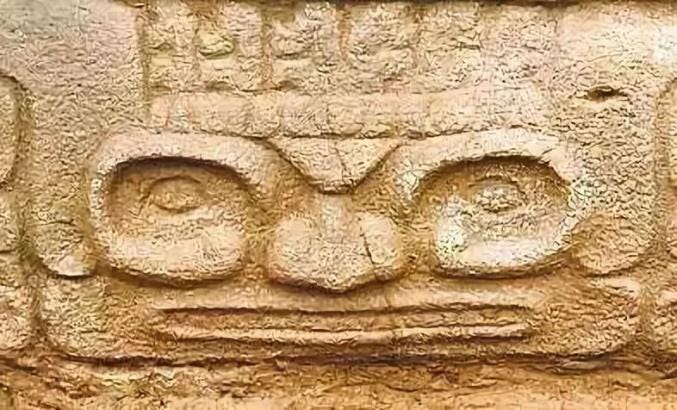
The stone face has found its owners
'Shanhaijing Archaeology'
In legend the Xia dynasty’s founder Yu was born at a place of “stone center”,and his father Gun was the first city builder,the “stone center” was located in North west,where Yu begin his legend,Shimao City has always been a focus of interest for archaeologists because it is the only stone city before the Shang Dynasty that meets the description.( Locating some legendary cities through place names and descriptions in ancient Chinese books and myths, similar to biblical archaeology),Continuous excavation and ancient records have even narrowed it down to this area. The legend is near.Recently released ancient DNA from Shimao, along with previously released DNA from sites like Wangchenggang, Erlitou, and Wadian, has formed a complete chain linking the Xia Dynasty.
The absence of Q-M120 and N-F710 is expected. Q-M120, representing the slabgraves culture, did not appear in China until the middle Shang dynasty, and F710 even laterBecause no evidence was found in the previous sites, nor was there any foreign autosomal,These armed invaders obviously complicated the struggle during the Shang and Zhou period, but this was not the case at Erlitou.
Nature of 'Xia'
The legend of Xia did not arrive with the Zhou people; rather, it first appears in the "SuiGong Hu," a Dongyi people bronze vessel. The legendary Xia is actually very likely a state in Shanxi Province, called Tufang土方 like record of “禹敷下土方“,, a country that once existed in the western part of Shanxi Shaanxi Province according to oracle bone inscriptions.legends like 禹居石纽,禹都阳城 Connected the Xia Dynasty with the culture of Shaanxi and Shanxi before the Shang Dynasty. If it existed, it would be Shimao, Wangchenggang, Erlitou, etc cultures. Xia may represent a distant memory for the Central Plains people after the indigenous dynasty overthrew by the Shang dynasty.One of the clues is Yu and his father Gun's names have sources in Austroasiatic and Sino-Tibetan languages, and their close proximity suggests antiquity.It is possible that this contact led to the monosyllabicization of Proto-Sino (which is lacking in some other Tibeto-Burman languages)In summary, this dynasty, predating the Shang dynasty, consisted of a series of highland Longshan sites, including Shimao, Wangchenggang, Wadian, and Erlitou. It contained strong indigenous elements, with only a few simple bronze artifacts, likely imported from the Seima Turbino.These sites also have something in common with earlier southern cultures, such as stone statues, which are actually part of the same system as the beast-human face in the south like shijiahe.
Ancient DNA
.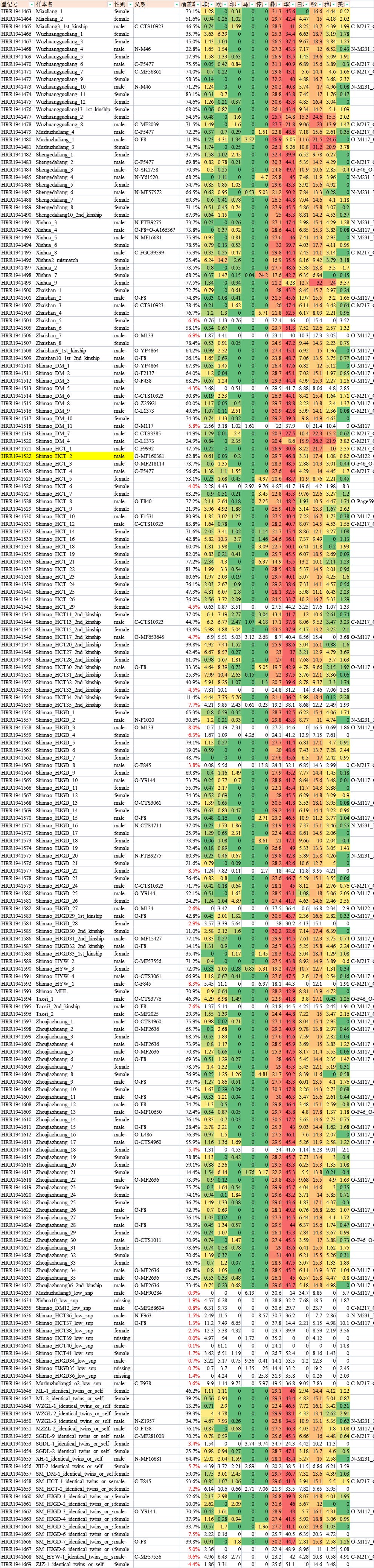
Shimao ancient DNA result
Tests of these sites revealed a Y haplogroup composition of O-F8, C-F845, and N-M1819, typical of early Sino-Tibetan peoples, with O-F8 being the most abundant. The earliest rulers of Shimao Castle, Wangchenggang, and other sites shared an F402 subclade.
Especially the Wangchenggang site, which was excavated exactly according to the description in ancient documents. The early Zhou pottery shard unearthed at the same location a little later by carbon dating proved that the site belonged to the early capital of Yu the Great, "Yangcheng".
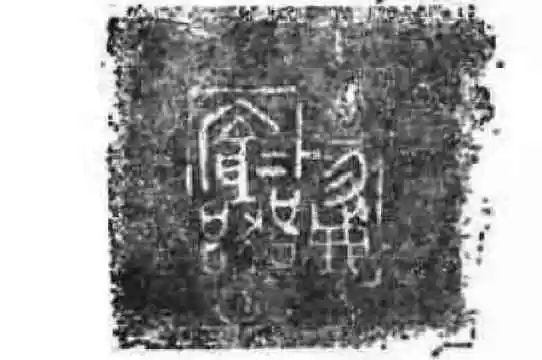
“阳城仓器” pottery shard inscription
In the legend of Xia, Shangdi gave Yu jade gui, and the subjects of Xia Dynasty all possessed jade. During this time, a kind of jade zhang culture spread with the Xia Dynasty. The burial form of Xia people was also quite special. A square circle was built around the coffin to surround it, which is also consistent with these sites.
At the same time, the legends of Yu and Gun are similar to those of the story of flood control of early rulers of the ancient Shu Kingdom(early sichuan sino-Tibetans), Duyu, Bieling, and Kaiming, and follow the same story structure, which once again confirms the authenticity of O-F8. The early branches of F8 may have developed in different directions, bringing similar myths, and the one that reached the Central Plains was F402.
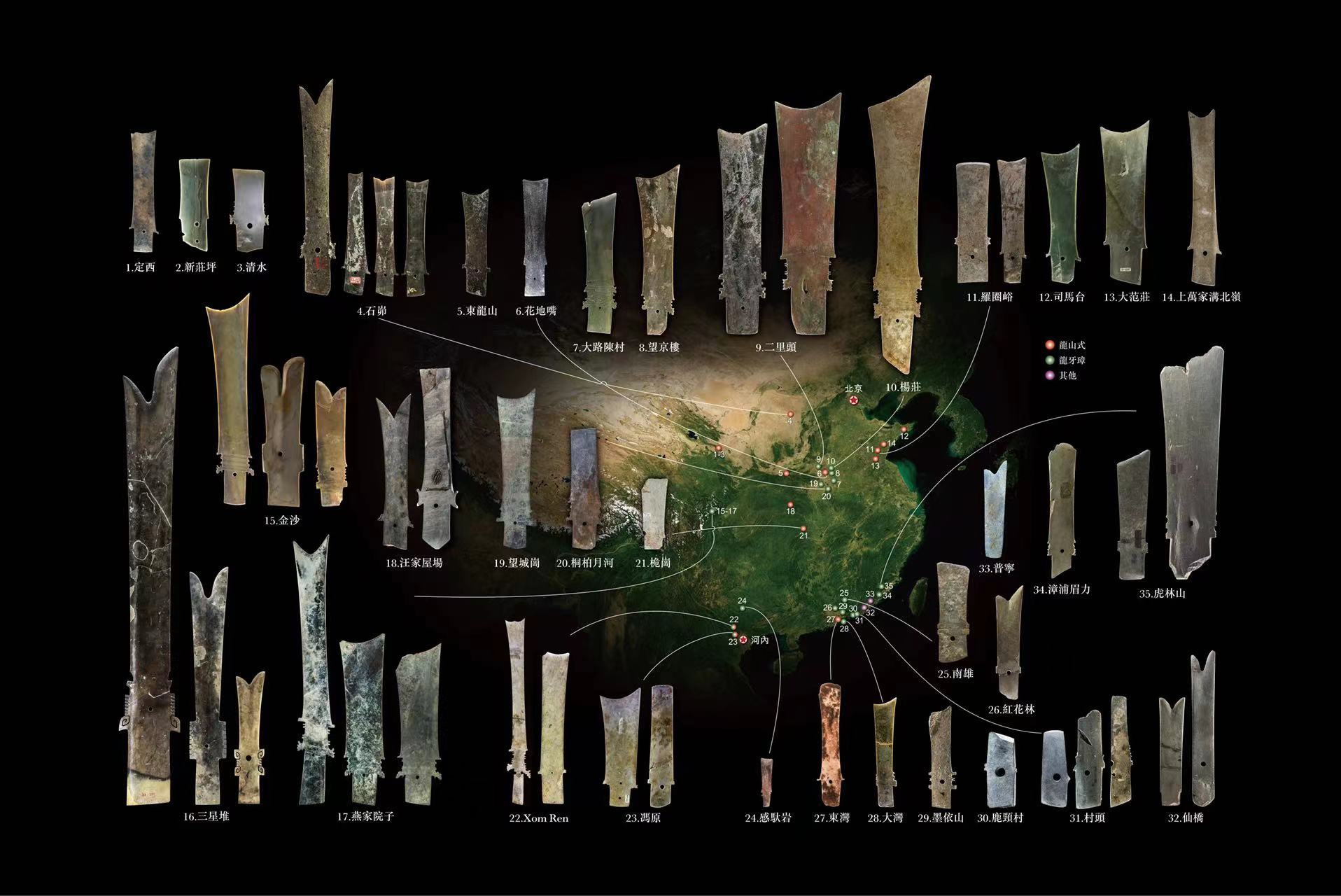
Map of “zhang”expansion
'Expansion and Overthrown'
The F402 lineage appears to have played the role of supreme ruler of North China in 4300 BC,The group expanded from Shimao from west to east, all the way to Shandong, then defeated various tribes and ruled North China for hundreds of years. This is consistent with the ancient records that Yu came from western qiang and his route.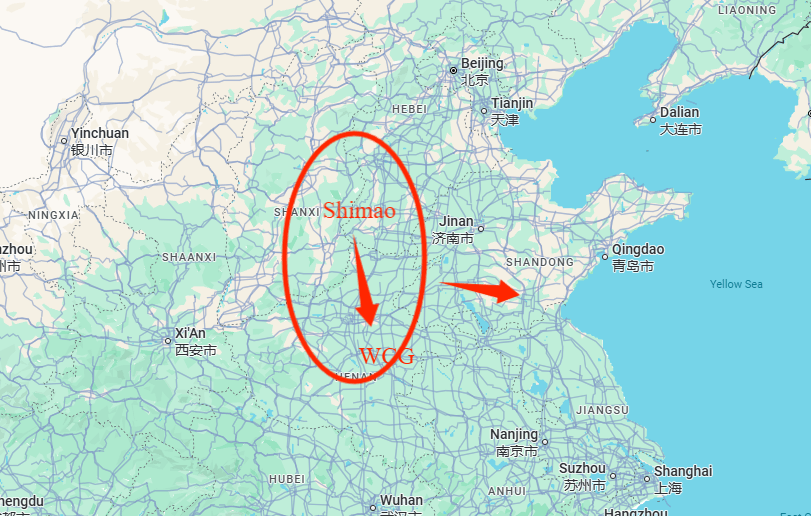
Xia’s core ruling zone(red circle) and expansion
Later, Xia’s rule was overthrown, and Jie was reportedly exiled to Chao Lake (South China). The remaining Xia royal family migrated to Shandong and merged with Dongyi to form a small state, Qi杞.This is also proven by the specific distribution of F402 in these regions.
As for the Zhou Dynasty, according to ZuoZhuan, 三代之姓,于今为庶,Yao, Shu,Yu’s descendants are now merely commoners.
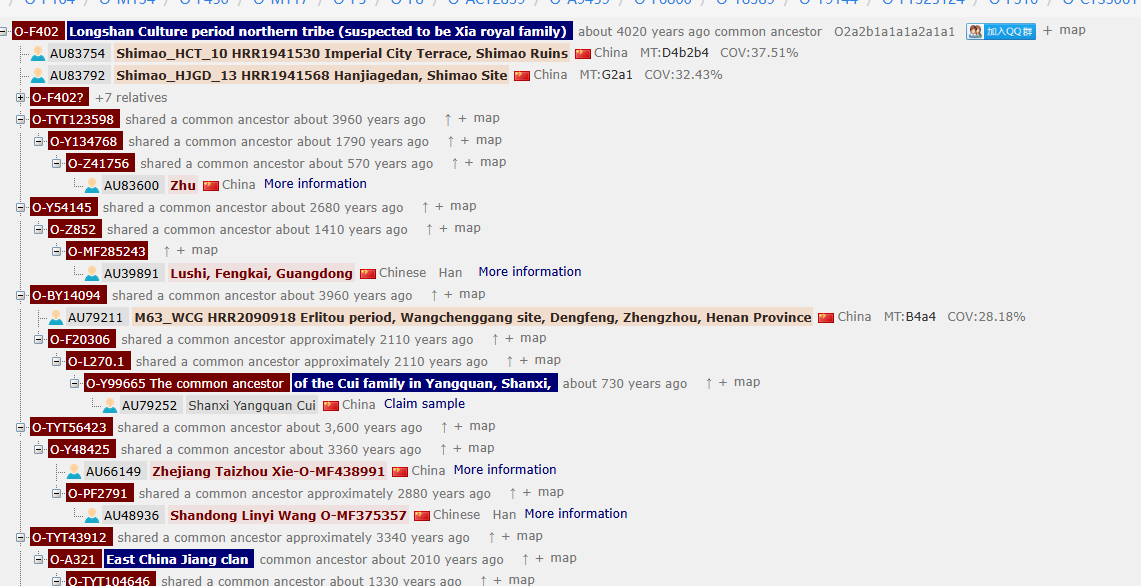
O-F402 tree
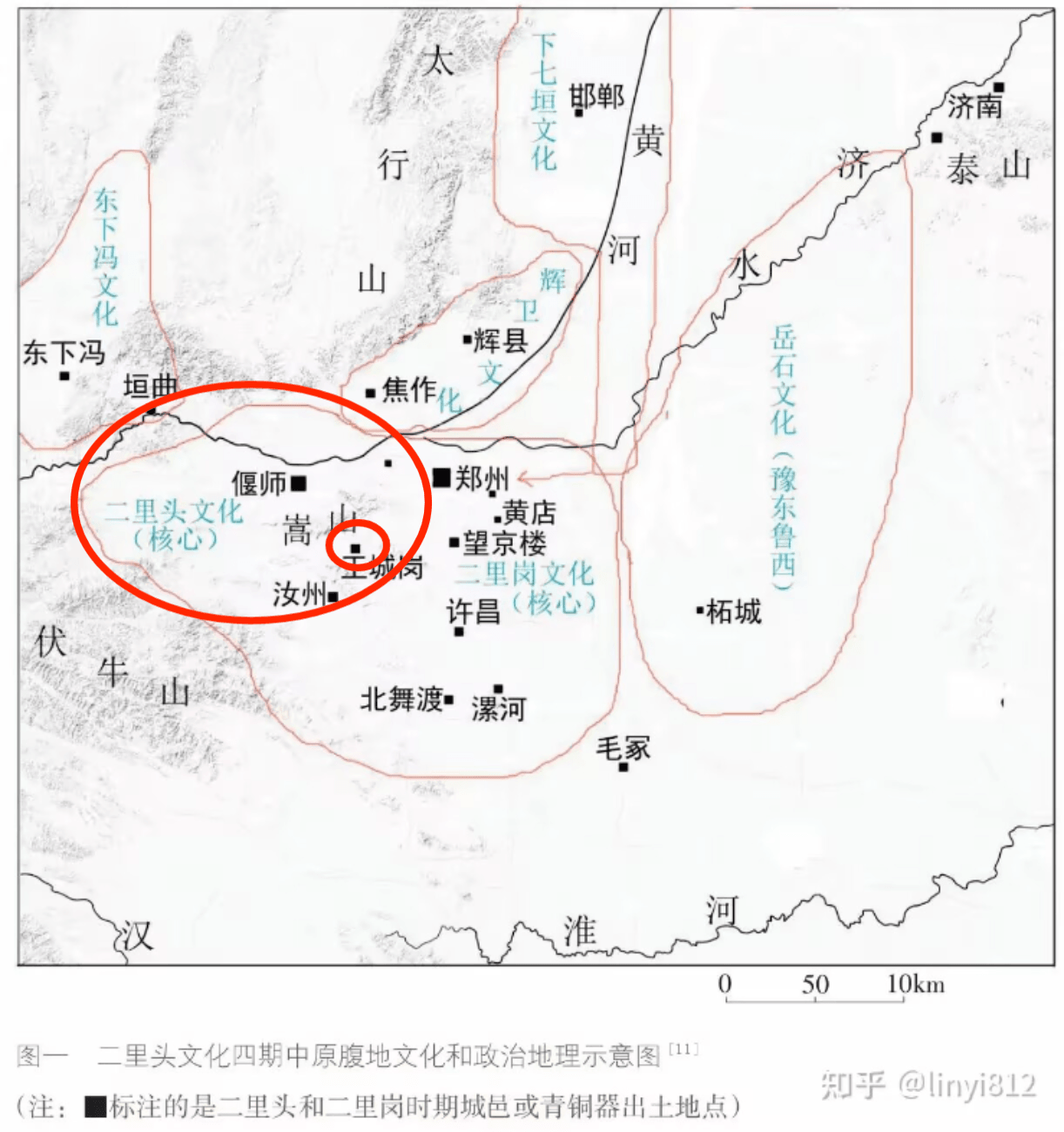
Xia dynasty realm(red circle)
With the progress of ancient DNA, a less glorious and more primitive "dynasty" has fully emerged. Due to the lack of written records, we may never know what Yu was like, but since this era was immediately followed by the Shang Dynasty, F402 certainly be one of the prototypes of Yu the great, Or one of unknown leader in history whose inspired Yu's story. otherwise the Xia Dynasty did not exist at all.
references:
1.Dynamic history of the Central Plain and Haidai region inferred from late Neolithic to Iron Age ancient human genomes PMID:39893638
2.Ancient DNA records the emergence of social hierarchies in Neolithic China PRJCA028402
- different kinds of semi- mythology texts.