• Don't want to see ads? Install an adblocker like uBlock Origin or use a Europe-based privacy-friendly browser like Vivaldi or Mullvad.

New migration map of haplogroup R1b

I've been doing a little more research and thinking and I still believe this map is not entirely accurate. Evidence points to the Bell Beakers being R1B. Evidence also points to Bell Beakers expanding from Iberia circa 2900-2500 bc. Evidence also points to the Bell Beakers being a maritime culture, at least initially. There should be some sort of remanent signal of this West to East r1B expansion, if it indeed occurred.


I believe L51 is the culprit.


There is a map of L51 floating around the internet and in fact there was a thread dealing with this on Eupedia here:

eupedia.com/forum/threads/27564-Where-did-R1b-L51-originate. (You have to put the html tag in front, Eupedia won't let me post links with only 4 posts to my name)

(or google "L51 Bell Beaker")

Basically, this map shows L51 is concentrated in the highlands of Southern France with hotspots in Portugal and Ireland. I believe this is a genetic signal of the Bell Beakers.


It is clear L23 was in Balkans. There is no firm evidence L51 moved up the Danube into Central Europe. Based on L51 distribution, it's more likely L51 (or maybe even L23) went to Iberia/Southern France via boat and founded the Bell Beaker culture. From there they moved to Central Europe. L11 is the Northern limit of this migration. From Central Europe they then back-migrated Westward as P312, L21, DF27, etc.

This scenario seems to fit better, in humblest of opinions.

I think you are talking about the frequency map that Richard Rocca drew for L51xL11 that showed Southern France, the Rhine Valley and NW Italy as being the highest frequency.

This is fine, but frequency is not a good indicator of origin. L51xL11, as we know it, does not look more diverse than L11, or if so, barely. All the L51xL11 that we know of is DYS426=13 while L11 is dominantly DYS426=12 with some 13. Also, at the earlier branching L23xL51 is dominantly DYS426=12. 426 is very slow. All of the L51xL11 so far is Z2113+.
https://dl.dropboxusercontent.com/u/17907527/R1b_Descendency_Tree.jpg

The net is that the L51xL11 is a single brother to L11, not a diverse paragroup. Still, I think understanding it is important and may provide clues....

but then there is the new information from the Austrian DNA study that came after Richard drew the map. The highest frequencies yet for L51xL11 (probably Z2113). It's in Austria near the Danube.

Take a look at the Lucotte study that came out this year on R1b-h35 haplotypes... they call it the Armenian Haplotype sometimes. They draw a distribution map that shows the distribution through the Balkans, the very southern tip of Italy and also in the Caucasus and Anatolia. Those haplotypes in the study look almost all like L23xL51, which is probably Z2103/Z2105. It is probably not a paragroup, but there is a difference. L23xL51 (probable Z2103/Z2105) has significantly higher STR diversity. East R1b is older than west R1b. It doesn't really look like a Central Europe to SW Asia/Caucasus migration.

I think the red herrings may actually be
1) the dating of Beaker pottery in Portugal... pots aren't people
2) R1b was not the only player in our Kromdorf Germany Beaker ancient DNA.
 
...
Why did they go to Iberia (and Southern France, and Italy, and Ireland)? Why is there no material link between Bell Beakers and the Balkans? I don't know. This is pure conjecture, but early r1B clades were probably metal workers. Iberia and Ireland are prime targets to exploit for metals. Just like with more recent boat migrations, Iberia at the time could have offered cheap land, easily conquerable natives, abundant resources, and opportunity for trade. As for why there is no link between the Bell Beakers and the Balkans, I can only offer that Bell Beaker culture was something new, and could have developed in Iberia from an isolated people who immigrated from the Balkans hundreds of years earlier and had no ties anymore. But this is all conjecture. I'm just trying to think outside the box and offer alternatives for solving the puzzle.

And for me, the Bell Beakers are a puzzle. :)

I don't think he signs on this forum very often, but there is an archaeologist digging into this stuff in a very passionate way. All I can figure is he retired and loves to read. He does have his opinions, but as far as I can tell, he is very objective and will change his opinions as new information comes in.

He's dug up several papers on metal working and they seem pertinent. This is all new to me, but I've just learned that the early European Chalcolithic (copper) working was based on a set of technologies and practices that are classified as the Carpo-Balkans Metallurgy Province, CBMP for short.

A distinct early copper working zone involved Eastern Anatolia, Northern Iran and had connections the Southern Levant was called the Circumpontic Metallurgy Province, CMP for short. The Maykops were CMP practioners. One of the scientists, Amzallag if I remember correctly, believes the CMP had the advantage of the first furnace technologies whereas the CBMP did not use furnaces for smelting. I'm not sure if it was climate related or what, but the CBMP collapsed and the CMP took over and quickly expanded through Western Europe from the East. Amzallag says the Beakers used CMP technologies. His "Synthesis Theory" says that copper in and of itself did not dramatically change Europe, but when the furnace smelting practices came in the dramatic culture changes took place.
 
Last edited:
tone u know R1b came to Iberia just 2,700ybp with Celtic migrations so when u are talking about Indo Europeans in Iberia it is in historcal times.
 
Great bottom line and good explanatory post, thanks.
And thank you.


I think you are talking about the frequency map that Richard Rocca drew for L51xL11 that showed Southern France, the Rhine Valley and NW Italy as being the highest frequency.


This is fine, but frequency is not a good indicator of origin.


…..
I think the red herrings may actually be
1) the dating of Beaker pottery in Portugal... pots aren't people
2) R1b was not the only player in our Kromdorf Germany Beaker ancient DNA.
Good points and a lot of information to digest. :) I agree with your red herrings, but I kinda' think pots are people, or at least the same people used the same pots. We'll see how it all plays out once more Bell Beaker DNA is analyzed.


Amzallag says the Beakers used CMP technologies. His "Synthesis Theory" says that copper in and of itself did not dramatically change Europe, but when the furnace smelting practices came in the dramatic culture changes took place.
Very interesting post, thanks. It seems there was some sort of technical revolution going on in Europe around 2900 bc. And I'd also hazard a guess that the Corded Ware folk also had an advantage in furnace smelting.


tone u know R1b came to Iberia just 2,700ybp with Celtic migrations so when u are talking about Indo Europeans in Iberia it is in historcal times.
It all comes back to this, right? Was R1B in Iberia before the Celts? I don't know. But L51 is there. The Bell Beakers expanded out of there. R1B has been connected to the Bell Beakers. One could hypothesize that R1B Bell Beakers were in Iberia a almost 1500 years before the Celts arrived from Central Europe.


If (and this is a big "if") this hypothesis were true, then you are right that Indo-Europeans arrived in Iberia 2700 years before present because the Bell Beakers were probably not Indo-European. They could have been R1B but probably not Indo-European.


Maybe older R1B did not speak an Indo-European language at all. Maybe R1B picked up Indo-European language in Central Europe where they interacted with the Corded Ware folk. Maybe. We are talking about a time period of over a thousand years.


And again, I'm just wondering and throwing stuff out there for discussion. Please feel free to poke holes in my stupid theories. :)
 
...But farming still spread there so the hunter gathers cant run for long.

I think u need to remember the farmers also had boats and found there way into those islands or whatever eventulley everyone became a farmer so hg I did not hide forever.
I have G2a as herders more than farmers. G2a definitely made population gains in the Neolithic, but if one group was centered around rivers/ sea-shores and the other was geared more toward hilly/mountainous terrain for their animals, I don't see major conflict brewing from these arrangements. I do see trading opportunities though. Whatever the case, it appears both had to proceed to pockets of safety when R1b showed up.
 
based on what evidence ? What indo-european culture appeared in southern france before central europe ?

the celtic one.
 
tone u know R1b came to Iberia just 2,700ybp with Celtic migrations so when u are talking about Indo Europeans in Iberia it is in historcal times.

I'm not sure how you are defining Celtics but there may have been R1b types, at least some, in Iberia before Proto-Celtic was spoken.

How do you know Indo-European speaking people did not reach Iberia before 1700 BC?

How do you know some R1b types did not reach Iberia before 1700 BC? As was also noted, even if they were, we don't know what they spoke.

We know we have R1b found in the Kromsdorf, Germany Bell Beaker site at 2500-2600 BC so R1b existed in West/Central Europe much earlier than 1700 BC. That does not mean they were in Iberia then, but how do we know they weren't?
 
Last edited:
... I agree with your red herrings, but I kinda' think pots are people, or at least the same people used the same pots. ...
Not so.

Even pots are not pots. In other words, not all forms of Bell Beaker pottery were the same across Europe. This is a pretty large area and they didn't have the internet or TV to keep up on the latest styles in pottery or what have you.

... but we are talking about people anyway. All Bell Beaker folks were not alike. That is proven. Read Desideri's studies on the dental traits of Bell Beaker people. Also Heyd, and Harrison and Heyd describe the different regional groups of Bell Beaker folks. There were some conflicts, too, between the groups. I think one the papers is titled "When East meets West". In another paper, Desideri has a reflux theory where Beaker folks from the Iberian area met up with those from the east, in the Corded Ware interaction zone, and then there was a bounce back of new people from Central Europe westward.

Not sure if I can figure out what that means related to R1b types, if anything... but pots are not people and all Bell Beaker people were not the same.
 
the celtic one.

The phasing from PIE to PIE dialects to IE derivatives and dialects and derivatives of those is not a series of big, singular steps.

It's more of a continuum of language developments, cultural ebbs and flows, expansions, absorptions and the like. Celtic as we think of it (which may be different perspectives) does not really stand alone.... It is really IE version 1.7a or something like that. There were a series of developments prior to it leading back to PIE. We can probably think of Germanic as 1.2.9 or something like that. I'm just saying these things didn't parachute in from nowhere. The evolved from one another and also borrowed from one another.
 
Indo-Europeans in Iberia ~1700BC and
Bell Beaker culture being Indo-European...................

popcorn_jon_stewart.gif


.....................doesnt get any better than this
 
... but we are talking about people anyway. All Bell Beaker folks were not alike. That is proven. Read Desideri's studies on the dental traits of Bell Beaker people. Also Heyd, and Harrison and Heyd describe the different regional groups of Bell Beaker folks. There were some conflicts, too, between the groups. I think one the papers is titled "When East meets West". In another paper, Desideri has a reflux theory where Beaker folks from the Iberian area met up with those from the east, in the Corded Ware interaction zone, and then there was a bounce back of new people from Central Europe westward.

Not sure if I can figure out what that means related to R1b types, if anything... but pots are not people and all Bell Beaker people were not the same.
Point taken. :)

The reflux theory you mentioned by Desideri interests me. I've heard something similar to this before in a recent genetic study of the Iberian peninsula (sorry I can't seem to be able to dig up where I read that right now).
 
It seems there was some sort of technical revolution going on in Europe around 2900 bc. And I'd also hazard a guess that the Corded Ware folk also had an advantage in furnace smelting....

I have read elsewhere (not in the below) that the Hungarian-Cspel Bell Beaker folks and the Corded Ware folks near them used the same metallurgy processes. I don't know how that ties into Amzallag's theories.

Amzallag is the one pushing the "Synthesis" theory and importance of furnace smelting.

"From Metallurgy to Bronze Age Civilizations: The Synthetic Theory" by Nissim Amzallag

He has received strong disagreement from Thornton and Roberts, but he rebutted their rebuttal pretty effectively in my opinion.

I consider this with a grain of salt. It is a theory and just like pots aren't people, metals aren't people either, but you do need the blacksmiths. Furnace smelting does appear to be a dramatic enhancement and where it went, societies changed.

Amzallag wrote,
"Crucible smelting is considered the earliest mode of copper production. Its replacement by furnace smelting everywhere (except in pre-Columbian metallurgy) is justified by the improvements introduced.
...
[along with furnace metallurgy] Other innovations are attested during the course of the Chalcolithic period in the southern Levant.
...
Outside of the southern Levant, furnace smelting is fairly common in the late fifth millennium B.C.E. in the northern Euphrates area, a region where copper was already produced by crucible smelting. Many furnaces have been identified around Derirmentep [in Anatolia]".
....
Furnace metallurgy is found in the southern Caucasus from the early fourth millennium B.C.E. It appears a few centuries later in the northern Caucasus, at the earliest stage of development of the Maikup (Kurgan) culture."
...
Communication between the Levant and the Caucasus is evident during the Chalcolithic period.
...
The presence of furnace metallurgy has been acknowledged in southeastern Europe from the end of the fourth millennium. Its sudden occurrence at a mature stage follows a long period of cultural regression, the so-called Balkan Dark Age characterized by the decline of copper product (crucible smelting) and the abandonment of many settlements.
...
The spread of furnace metallurgy in Central Asia is related to the expansion of the northern Caucasian Maikop culture from the early third millennium B.C.E.
...
In Crete, furnace smelting also appears suddenly in the third millennium B.C.E. at an advanced stage of development.
...
Furnace metallurgy was progressively expanding in the western part of the Mediterranean basin (Sardinia, Italy, southern France, and North Africa) through a pattern that parallels the spread of the Bell Beaker culture. Also on continental Europe, furnace metallurgy was diffusing concurrently with the spread of the Bell Beaker culture.
...
During the second millennium B.C.E. furnace metallurgy spread toward the limits of the ancient world: it reached the British Isles, and two distinct paths (the Baltic Sea and rivers from central Europe) led to Scandinavia and Finland.
...
The Dynamic Expansion of Furnace Metallurgy...
In Europe, this dynamic is related to slow and multidirectional pattern of Bell Beaker people, suggesting it is not directly motivated by the search for new mining resources. Rather the expansion of a metallurgical domain looks like a combination of the desire of populations to join the metallurgical domain and the need, for the smiths, to migrate to new horizons. It is defined here as a centrifugal process of expansion.
...
(the introduction of furnace metallurgy) brought about profound changes that deeply influenced the emergence of Bronze Age societies."

In the quotes above, the brackets are mine but the words in parentheses are Amzallag's.
 
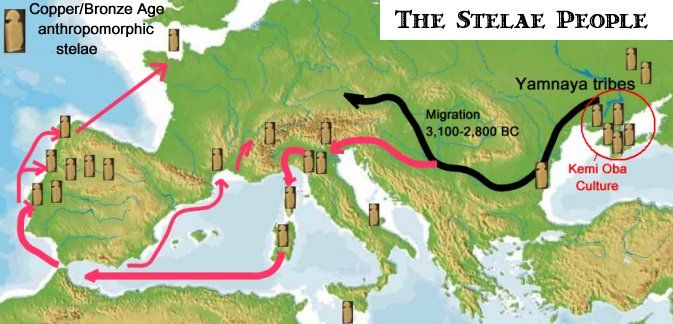
You got it Zanipolo. In fact that area probably was very important indeed:

StelaePeople_zps24790e03.jpg


I think this thread would be helpful: http://www.eupedia.com/forum/threads/28544-Question-about-R1b-and-IE-languages-in-Iberia

I asked Jean, the author of that map, what happened to the black line of Stelae going through continental Europe. She said the Stelae trail in that direction went cold, but she thinks the people kept going towards the Low Countries and ultimately resulted in the Rhenish Bell Beakers and finally the Beakers in Britain... the Amesbury Archer and such. I can't find those posts, so that is just by memory. She has a book coming this fall so we'll see how specific she is about this.

There is something to be said for that, since the R1b-P312 folks in Iberia are very heavily DF27+ while the P312 type in Northern France and particularly the Isles is dominated by L21+ (S145).
 
I asked Jean, the author of that map, what happened to the black line of Stelae going through continental Europe. She said the Stelae trail in that direction went cold, but she thinks the people kept going towards the Low Countries and ultimately resulted in the Rhenish Bell Beakers and finally the Beakers in Britain... the Amesbury Archer and such. I can't find those posts, so that is just by memory. She has a book coming this fall so we'll see how specific she is about this.

There is something to be said for that, since the R1b-P312 folks in Iberia are very heavily DF27+ while the P312 type in Northern France and particularly the Isles is dominated by L21+ (S145).

How do you know that the "Stelae People" carried R1b into Europe when the only known remains from such a culture Remedello I
was G2a [Ötzi 3300 BC]; doesnt seem to fit .... or does it;

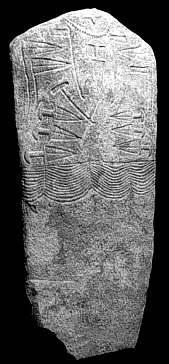
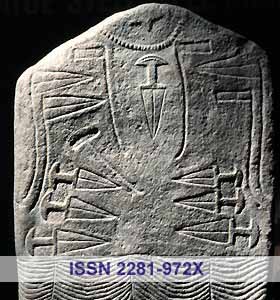
Arco Stele - 3rd Mil. BC - Remedello II
(decorated with Copper Daggers/Halberds/Axes) compare with Kurgan steles
arco1.jpg
cropped-arco_stele_I.jpg
 
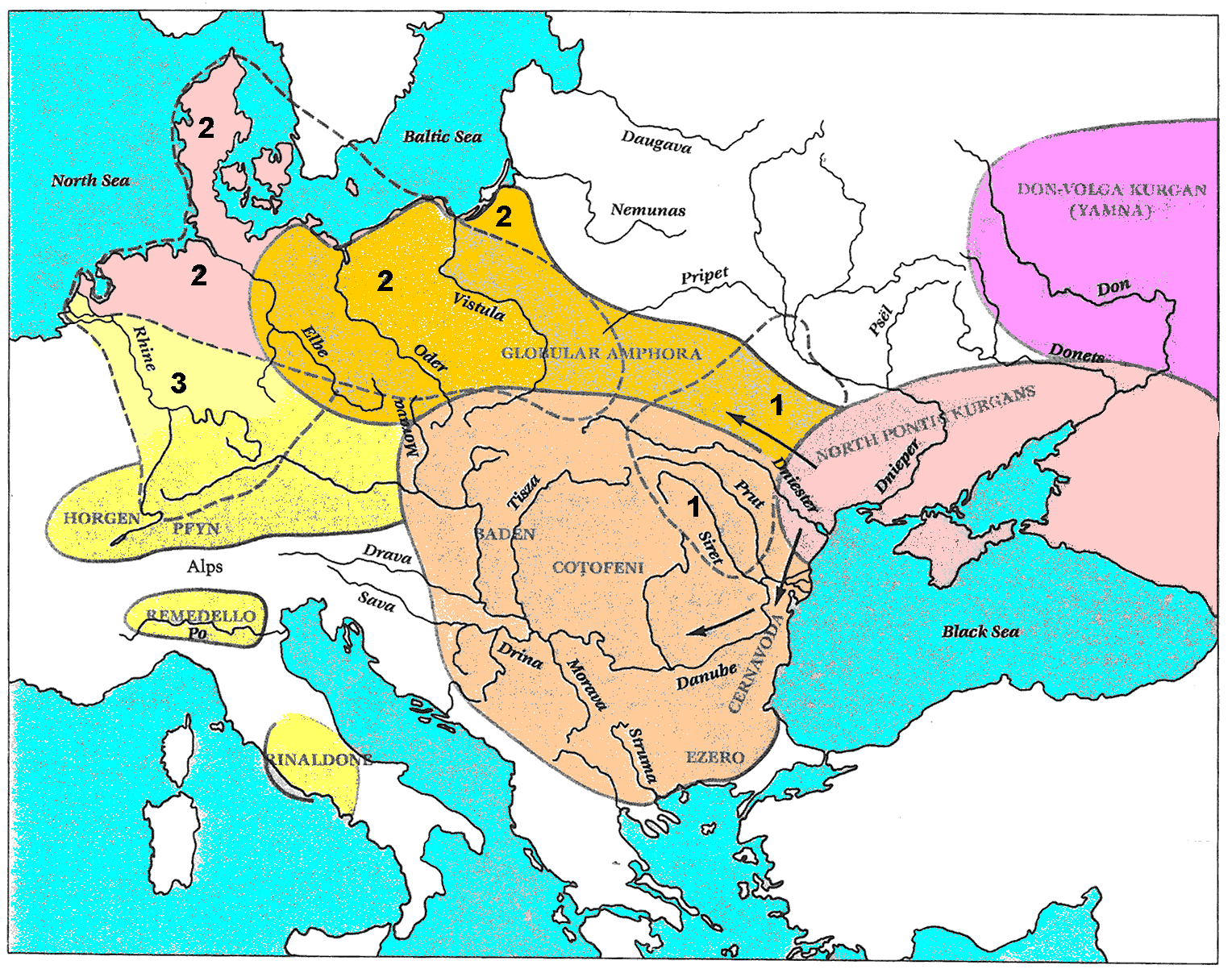
Doesnt look as scientific as the other map, and Gimbutas surely doesnt reach the likes of jean;
But thats the Indo-European (first wave) Chalcolithic culture spread;

BC3500GimbutasMKurganFig10-13.gif
 
Amzallag is the one pushing the "Synthesis" theory and importance of furnace smelting.

"From Metallurgy to Bronze Age Civilizations: The Synthetic Theory" by Nissim Amzallag


Great stuff. It obviously makes sense that some sort of technical advantage is behind the expansion of empire and peoples. We've seen that in historical times with the advent of industrialization It seems metal-smithing is suspect #1 in the expansion of the Bell Beakers (and maybe R1B in general into Europe either through the South West or through the Danubian plain).
 
I asked Jean, the author of that map, what happened to the black line of Stelae going through continental Europe. She said the Stelae trail in that direction went cold, but she thinks the people kept going towards the Low Countries and ultimately resulted in the Rhenish Bell Beakers and finally the Beakers in Britain... the Amesbury Archer and such. I can't find those posts, so that is just by memory. She has a book coming this fall so we'll see how specific she is about this.

There is something to be said for that, since the R1b-P312 folks in Iberia are very heavily DF27+ while the P312 type in Northern France and particularly the Isles is dominated by L21+ (S145).

I have to admit that the overall distribution pattern of R1b (well, broadly L51 and it's subclades) seems to match up with the overall extend of the Beaker-Bell Culture. However, as I noted in the past, the distribution pattern of the subclades inside Western Europe doesn't add up with the expansion pattern of the Beaker-Bell Culture. If Beaker-Bell really migrated - by some maritime route - more or less straight to Portugal and radiated across Europe from there, I'd expect the oldest subclades of R1b (L51, basically) to cluster in Iberia, and frankly, that doesn't seem to be the case. So in my opinion, there must be a solution for this, and I can see three possibilities:

1) the chronology / dating of Beaker-Bell is off, and the oldest sites really are at the western edge of the Alps, not in Portugal.

2) Beaker-Bell has multiple origins, so that Beaker-Bell metalware indeed originated in Portugal but the demic movement occured from Central Europe.

3) the expansion of R1b did not actually follow the expansion of Beaker-Bell, but it's disappearance.

(I will not make any statement on the ethnic or lingustic association for the Beaker-Bell people, as frankly, I am tired of getting a beating from the experts for that type of speculation :rolleyes2: )

How do you know that the "Stelae People" carried R1b into Europe when the only known remains from such a culture Remedello I
was G2a [Ötzi 3300 BC]; doesnt seem to fit .... or does it;

Arco Stele - 3rd Mil. BC - Remedello II
(decorated with Daggers/Halberds/Axes) compare with Kurgan steles

You bring up a good topic with Ötzi. Something that always bugged me about that 'Stelae People' map and the association with R1b is Sardinia: autosomally Ötzi is closest with modern Sardinians, and modern Sardinians are also heavy in the Y-haplogroups G2a and I2, which were found in Neolithic sites. If Beaker-Bell started with the demic movement of these 'Stelae People', and this migration went through Sardinia early on, then why are Sardinians most representative of the pre-Beaker situation?

With Maciamo's map, I (mostly) agree on his spread patterns, but I can't agree on some of the dates. In particular the timing, as that seems to somewhat contradict the Kromsdorf site.

 
Back
Top