Well, I guess we don't actually have the end of the story yet.
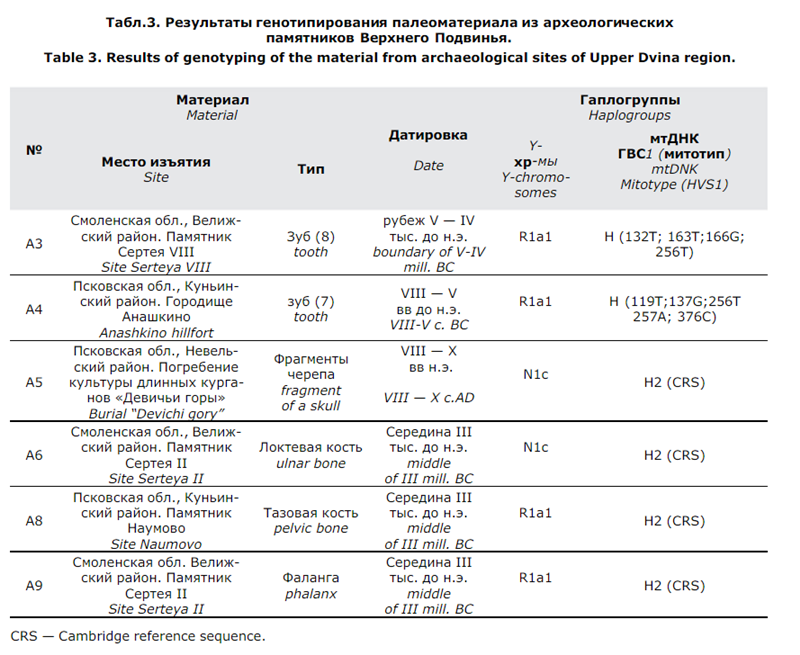
Let's assume, for the moment, that these samples are retested and they are indeed mtDna "H" and furthermore that these samples are also found to be 100% "EHG" whatever that turns out to be, exactly.
We know that mtDna "H" seems to have a star burst expansion from the general area of the Caucasus. So, could some of it have moved north with people who remained hunter-gatherers, while some remained further south and became caught up in the development of agriculture? That's possible, it seems to me, but then how did mtDna bearers become "southern" autosomally? Was it from bearers of other mtDna and y dna lineages? (I don't see how it's helpful to call mtDna "H" mesolithic. ALL our lineages were mesolithic before some of them created agriculture.)
That doesn't, however, totally answer the question of how and with whom the "Near Eastern" half of their ancestry entered the steppe.
Perhaps it was indeed the mtDna "H", but I think there are some problems with the proposed pathways. Although I've seen a lot of talk about a movement of farmers into the Pontic-Caspian steppe from the Caucasus or from Turkmenistan north onto the steppe, I've yet to see a study posted which documents it. Nor have I been able to find one on my own. So, did the bride exchange/bride kidnapping take place with Caucasus populations? It seems a long way to go.
Also, I think the theory is that it is by this method that the steppe hunter gatherers learned pastoralism, farming etc. However, if they were still hunter gatherers what could they offer that was so valuable in terms of bride price? I suppose furs or something? There is the bride kidnapping to consider, but from what I know of pre-history this usually happened with neighboring cultures, and as I said before, I don't see much documentation for a farming culture on the steppe that derived from the Caucasus or Turkmenistan, and it's a long way to go up into the mountains or clear to the South Caucasus to get women. This to some satisfying image of eastern European he men with horses and large harems of women seems to me, even if it occurred, to belong to a much later period than the one under discussion. I find that this is a problem with all discussions of the "Indo-Europeans". People take the culture of the first millennium BC or even later and back project that culture onto much earlier steppe periods. It seems to me we have to talk about the culture of the people 5,000 to 4,000 BC perhaps, or a bit earlier?
The scale of the bride exchange or kidnapping that would be required is also worrying. Does anyone know off hand what percentage of Yamnaya mtDna was "U" versus the rest? Anyway, the autosomal impact was very large. Maybe someone can do the math and see if it's plausible that if you have a numerically small group of hunter-gatherers and and they mate with X percent of "Near Eastern" women (in larger percentages than their own?) for Y years this could be the result in the necessary time frame.
All of this would make much more sense in terms of interactions with the Neolithic communities to the west. According to Anthony, domesticated animals, rudimentary farming, metallurgy, all of it came onto the steppe from those communities. However, that is a different component from the "Near Eastern" component is it not?
The only other possibility is that some R1b "EHG" people, from whatever direction they reached the steppe then went south, acquired "Near Eastern" autosomal admixture, and back migrated.
I'm not totally persuaded by any of these scenarios. Perhaps there is some aDna or some archaeological study in the pipeline that will illuminate matters.
If the samples are not mtDna "H", then at least some of the complexity is removed.