• Don't want to see ads? Install an adblocker like uBlock Origin or use a Europe-based privacy-friendly browser like Vivaldi or Mullvad.

Isolating WHG, EEF, EHG, CHG Traits

Natufians (end)
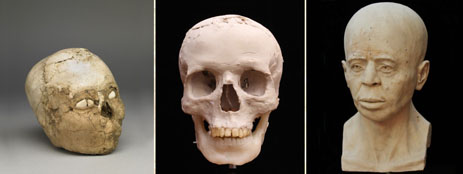
I agree (with modesty) to the author conclusions stating the first Natufians sites showed a rather well shared culture but more than one ancestral pop biologically speaking (some of the features could be the result of introgressions from Anatolia horizons (higher skull, lower frontal angle, narrower face, aspect more marked in H and N-O, less in A-M site) -
& but :
Natufians separated first groups were between Maghreb HG’s and Ancient Levant : M-HG’s had low skulls, A-L high skulls – all of them had rather broad faces but as Natufians taken as a mean
A-L had high skulls and low frontal angles, M-HG’s had a high frontal angles -
spite the Natufians mean was rather closer to A-L compared to M-HG’s, they already showed they were not only on the straight way between both -
Recent Levant, whatever the part of lifestyle attached to Neolithicization (which could distord the straight way), show tendancies which cannot be explained by an osmosis between both : their only (relatively) homogenous trait is the narrower faces, but they show great heterogeneity concerning breadth/lenght of skulls, frontal angle and skull height, what is for me the evidence they received other pops inputs after Natufian’s times because I doubt it could be only the result of a drift based upon pure hazard in a rather short time and out of isolation – in some way they show kind of a regression (only at first sight) for some features compared to late Natufian means : I see here a ‘west-asian’ or ‘Zagros’ input, with something recalling the ‘cappadocian med’ type mean, with a bit lower skull and higher frontal angle ; I regreat I cannot compare the shapes ; ATW these last tendencies can have the same remote origin than among the M-HG’s : old traits can be shared for some peculiar details even when pops have diverged since some time and the allover auDNA has strongly drifted meanwhile.
I don’t refute (!) the authors global conclusions about neolithicization and morphology (progressive sedentism) but I find it’s a bit simplistic to input the whole transformation having given us the Recent Levant pop of Palestine to this unique change of culture ; I know we cannot explain every modif by newcomers introgressions, mutations and selection exist - here we have to explain the birth of new long faced or narrow faced types - as for a part among Anatolian farmers - but we had already some Paleo and Meso HG’s of Europe with longer faces than say our beloved ‘croma’. It’s a pity we don’t have in this study a craniologic survey of Jericho Neolithic pop, before recent Levant ; what we have is only a discret traits survey showing Jericho people lacked some of the most common peculiarities of Natufians (founder effect traits absent in other sites? Small sample of Natufians?)

 
last try:
I agree (with modesty) to the author conclusions stating the first Natufians sites showed a rather well shared culture but more than one ancestral pop biologically speaking (some of the features could be the result of introgressions from Anatolia horizons (higher skull, lower frontal angle, narrower face, aspect more marked in H and N-O, less in A-M site) -​
& but :​
Natufians separated first groups were between Maghreb HG’s and Ancient Levant : M-HG’s had low skulls, A-L high skulls – all of them had rather broad faces but as Natufians taken as a mean​
A-L had high skulls and low frontal angles, M-HG’s had a high frontal angles -​
spite the Natufians mean was rather closer to A-L compared to M-HG’s, they already showed they were not only on the straight way between both -​
Recent Levant, whatever the part of lifestyle attached to Neolithicization (which could distord the straight way), show tendancies which cannot be explained by an osmosis between both : their only (relatively) homogenous trait is the narrower faces, but they show great heterogeneity concerning breadth/lenght of skulls, frontal angle and skull height, what is for me the evidence they received other pops inputs after Natufian’s times because I doubt it could be only the result of a drift based upon pure hazard in a rather short time and out of isolation – in some way they show kind of a regression (only at first sight) for some features compared to late Natufian means : I see here a ‘west-asian’ or ‘Zagros’ input, with something recalling the ‘cappadocian med’ type mean, with a bit lower skull and higher frontal angle ; I regreat I cannot compare the shapes ; ATW these last tendencies can have the same remote origin than among the M-HG’s : old traits can be shared for some peculiar details even when pops have diverged since some time and the allover auDNA has strongly drifted meanwhile.​
I don’t refute (!) the authors global conclusions about neolithicization and morphology (progressive sedentism) but I find it’s a bit simplistic to input the whole transformation having given us the Recent Levant pop of Palestine to this unique change of culture ; I know we cannot explain every modif by newcomers introgressions, mutations and selection exist - here we have to explain the birth of new long faced or narrow faced types - as for a part among Anatolian farmers - but we had already some Paleo and Meso HG’s of Europe with longer faces than say our beloved ‘croma’. It’s a pity we don’t have in this study a craniologic survey of Jericho Neolithic pop, before recent Levant ; what we have is only a discret traits survey showing Jericho people lacked some of the most common peculiarities of Natufians (founder effect traits absent in other sites? Small sample of Natufians?)​

a reproach to some of these modern metric surveys : they compare often close enough pop’s, exaggerating their differences, without we could have a whole variation scale including farther pops to put them in perspective ;​
 
Sorry, my copy and paste did not make it here for the second half when the first half has worked well, I've no explanation - I 'll have to write it word after word a bit later...
 
The Natufians didn't have "Dinaric" or "Armenoid" type noses, according to Moesan, if I'm remembering what he said correctly, or at least the early Levant Neolithic farmers didn't. He was basing that on the skulls. The same goes for EEF, and you can certainly see that in Sardinians, who are the closest modern population to them. I have a hunch that nose came from the Caucasus. You can see it in tons of Northwestern Indians, who have no ancient Levant like dna, but have a lot of Iran Neo. It probably went south with herders carrying J1 and J2.

These are all guesses, of course.

Jericho, 7500 BC
Natufian%20Skull%20Reconstruction.jpg


Maybe more like this?
1200px-Ramallah_woman_15029v.jpg


Some of them might even have been fairer than that going by the results from the ancient dna.

The paper on the Bronze Age Levant shows they were probably darker than the ones from the Neolithic, and most of that gene flow was from south of the Caucasus, I think.

I change my mind Angela and I agree with you, this Armenoid or Dinaric type in Saudis or all Levantines for that matter is most likely from the Bronze and Iron ages migrations of J1 and J2, and the acompanying Iran/Caucasus admixture.

Saudis aren't closer to Natufians than they are to the Iranian Neolithic, judging by Fst values:

Saudi : Iran_N = 0.053
Saudi : Natufian = 0.073
Saudi : EHG = 0.081
Saudi : WHG = 0.095

Saudi : modern West Eurasian <= 0.025

source: The genetic structure of the world's first farmers supplementary data table 3
 
I change my mind Angela and I agree with you, this Armenoid or Dinaric type in Saudis or all Levantines for that matter is most likely from the Bronze and Iron ages migrations of J1 and J2, and the acompanying Iran/Caucasus admixture.

Saudis aren't closer to Natufians than they are to the Iranian Neolithic, judging by Fst values:

Saudi : Iran_N = 0.053
Saudi : Natufian = 0.073
Saudi : EHG = 0.081
Saudi : WHG = 0.095

Saudi : modern West Eurasian <= 0.025

source: The genetic structure of the world's first farmers supplementary data table 3

In such highly patriarchal cultures it might be a huge founder effect as well.

I quite like big noses on men. Well, within reason. A lot depends on the shape, how it fits the face. Not that women had any say in whom they had to marry up until very recently, and even then only in some parts of the world, so I don't think they're driving selection. Men often wouldn't have been choosing on features either. It's most often been about family alliances and property unless you were very poor.

Much as I think he's charming and smart, I think Adrian Brody would be a lot more attractive if he'd altered his nose. Someone like David Gandy, on the other hand, is gorgeous, and his nose absolutely suits him.

Adrien+Brody+NBC+Universal+68th+Annual+Golden+OKl9kPjs5rUl.jpg


tumblr_ns5o2ckGVw1thfeako1_1280.jpg
 
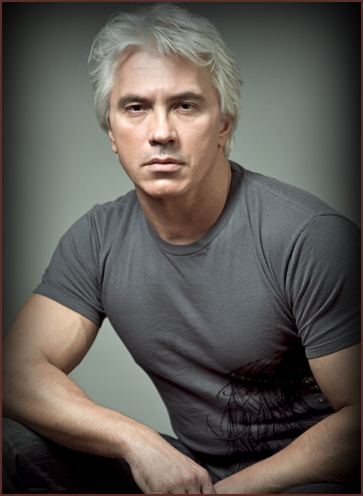
My guess for the first, unadmixed EHG, considering that they had a lot of ANE which also contributed much to the Amerindians, and also considering some of the reconstructed faces of EHG, which to my look slightly more Asian-like than present-day Northeastern Europeans (actually, maybe they resemble a bit modern Finns and some Northern Russians), also probably with darker features. So, could they perhaps be an intermediary phenotype with a major portion of typical Caucasoid and a bit of typical Siberian? The recently deceased baritone (one of my faves!) Dmitri Hvorostovsky, born in Krasnoyarsk (Siberia), had this phenotype:
9k=
2014-05-19-DmitriHvorostovsky.PhotoPavelAntonov-thumb.jpg
6a00d83451c83e69e20168ea977d7e970c-500wi

And I also agree with this, Finns and Russians cant be a good fit to how the EHG looked like, their ANE levels are low 20's, while the EHG are 75-80%.
 
And I also agree with this, Finns and Russians cant be a good fit to how the EHG looked like, their ANE levels are low 20's, while the EHG are 75-80%.

I'm not sure about that. Look at Estonians, someone like Mait Metspalu, for instance. If anything it would be WHG leaning in the Northeast I think.

10-1500-800x533.jpg


Some Finns have SAMI ancestry, but that's late arriving, and different, isn't it?
 
Back
Top