Ashton Schottler has just released another great video comparing how sex education is taught in the United States and Germany. Completely different worlds!
The first shocking revelation is that sex education is only mandatory in half of US states.
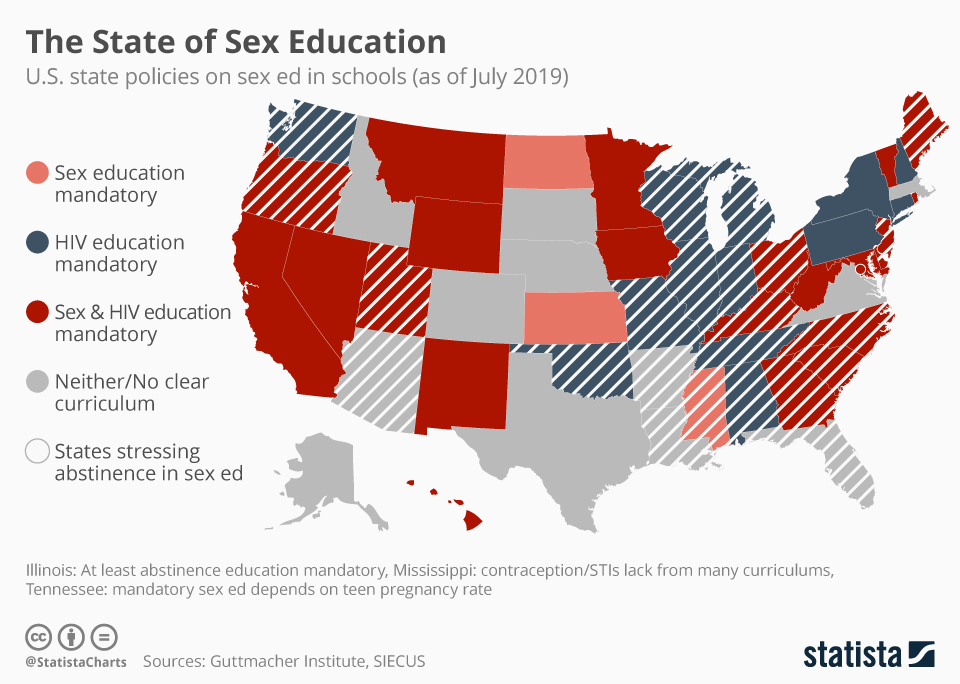
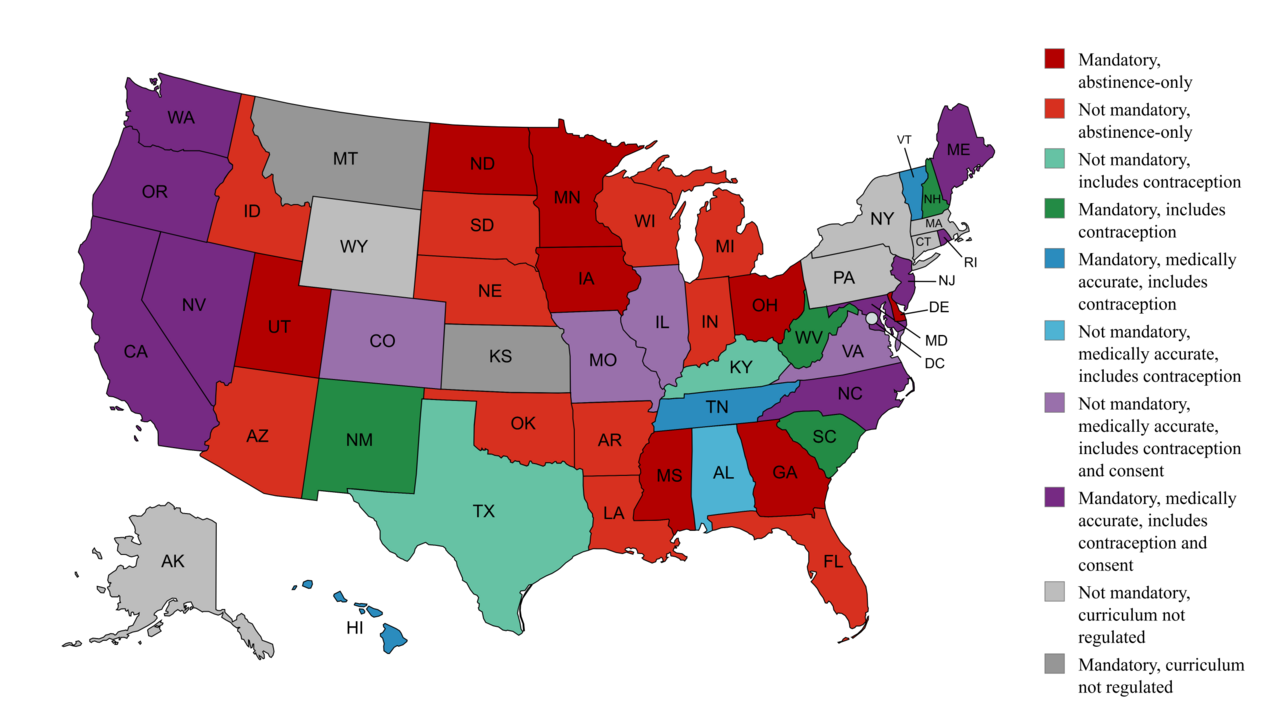
But even in states where sex education is taught, the official policy may be to teach abstinence as the only form of contraception (7 states). In some states sex education is mandatory but does not have to be medically or scientifically accurate (New Hampshire, West Virginia, South Carolina and New Mexico). In six states (including New York, Pensylvania and Massachussetts), sex education is not mandatory and not regulated at all. Only 10 states have mandatory sex education that should be medically accurate and teach about contraception and consent.
It's not surprising therefore that teen pregnancies is a major problem in the United States - far more so than in other rich countries. The teenage pregnancy rate in the US stood at 13.1 per thousand births, according to the latest data. This is considerably higher than in other developed countries: South Korea (0.5), Denmark (1.1), Norway (1.4), Switzerland (1.5), Japan (1.7), Sweden (1.8), Netherlands (1.9), Italy (2.9), Finland (3.1), France (3.5), Belgium (3.7), Austria (3.8), Ireland (4.1), Canada (4.8), Spain (4.8), China (5.2), Germany (5.5), Poland (6.2), Australia (6.7)... In fact the US has a higher teen pregnancy rate than in Muslim countries like Libya (5.9), Oman (6.2), Algeria (8.7), or Saudi Arabia (11.1). With a rate of 13.1, the United States is exactly in between Turkey (12.1) and India (14.1).
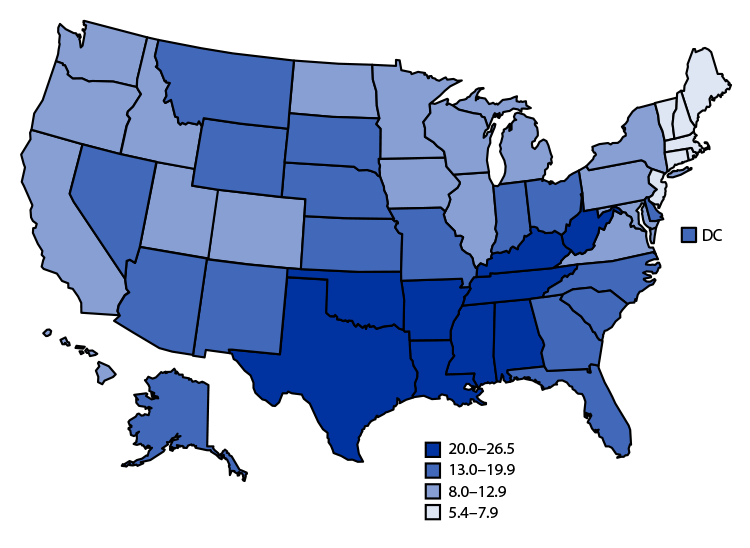
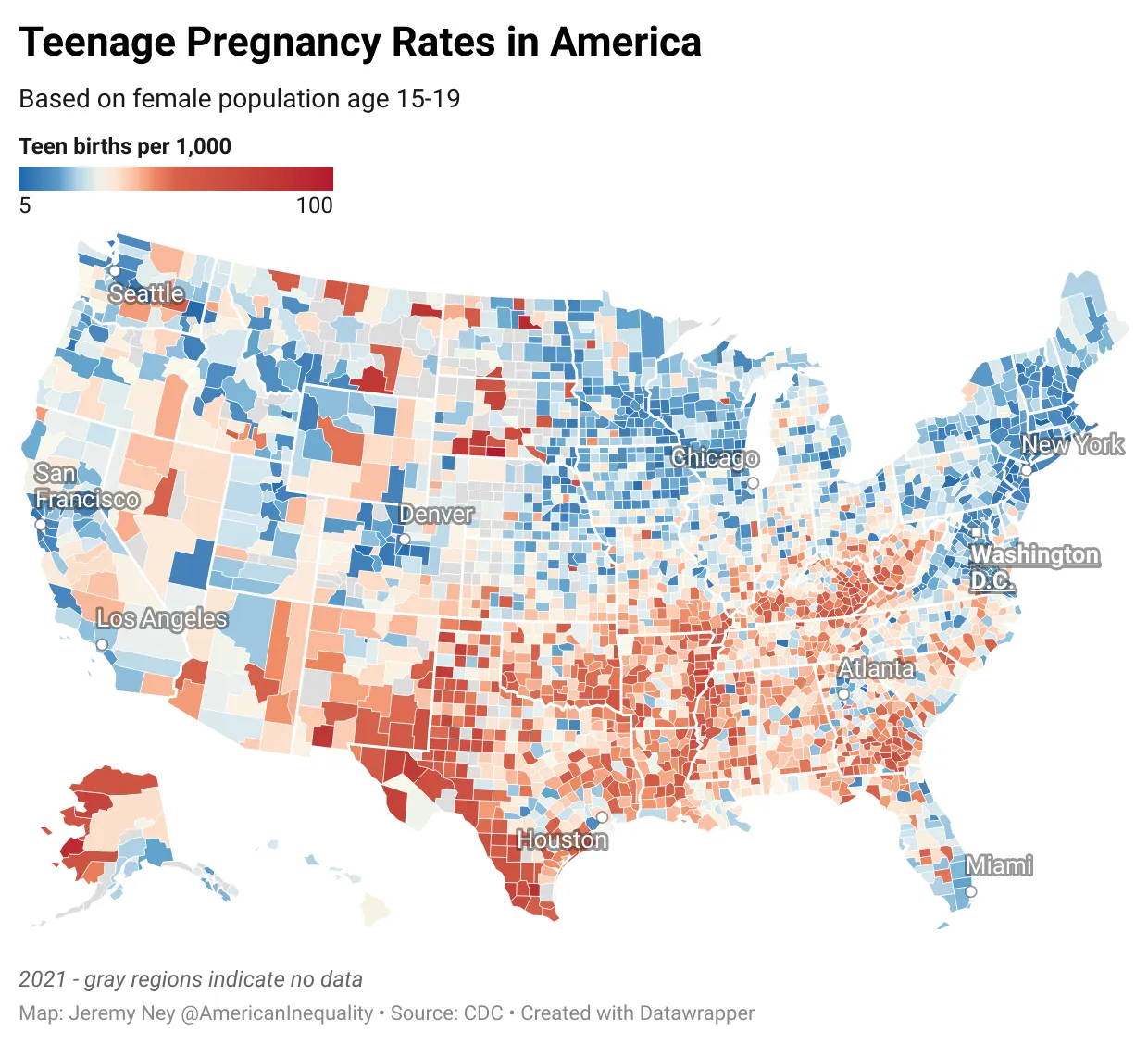
Of course there are, as always in the US, huge regional variations. The lowest rates are found in New England, where adolescent birth rates are similar to those in Canada or Germany. In contrast, in the Bible Belt, where people are most reluctant to discuss sex education, and where schools are the least likely to teach teenagers about it, the adolescent pregnancy rate is over 20 per thousand. Some counties have rates between 80 and 100! That's higher than Afghanistan (64) and many Sub-Saharan countries (e.g. 51 in South Africa, 56 in Kenya, 66 in Sudan, 70 in Ethiopia, and 86 in Nigeria).
Here are CDC maps showing the teenage pregnancy rates by state. This first one (source) is from 2021.
This second map shows the finer county-wide variations in 2021 (source). You can see the actual rate in each county on this interactive map on the CDC website.
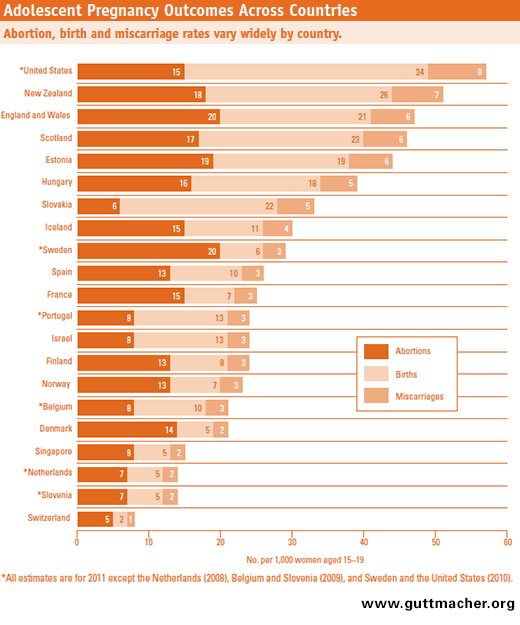
It might look bad but the reality is worse. This is because these rates only show the teenage births, not the actual teenage pregnancy rates. Even though the US is the country where the highest percentage of the population opposes abortion in the developed world (on a par with Poland), it is also the country with the highest teenage abortion rate. In the following chart we see that back in 2011 the teenage birth rate was 15 per 1000, but the actual pregnancy rate was 57 per thousand, i.e. 3.5 times more. The US also has a suspiciously high percentage of teenage miscarriage (3 or 4 times higher than in other developed countries). I wouldn't be surprised if these were abortions in disguise in religious families that "officially" reject abortion. In any case, only about a quarter of all US teen pregnancies resulted in live births.
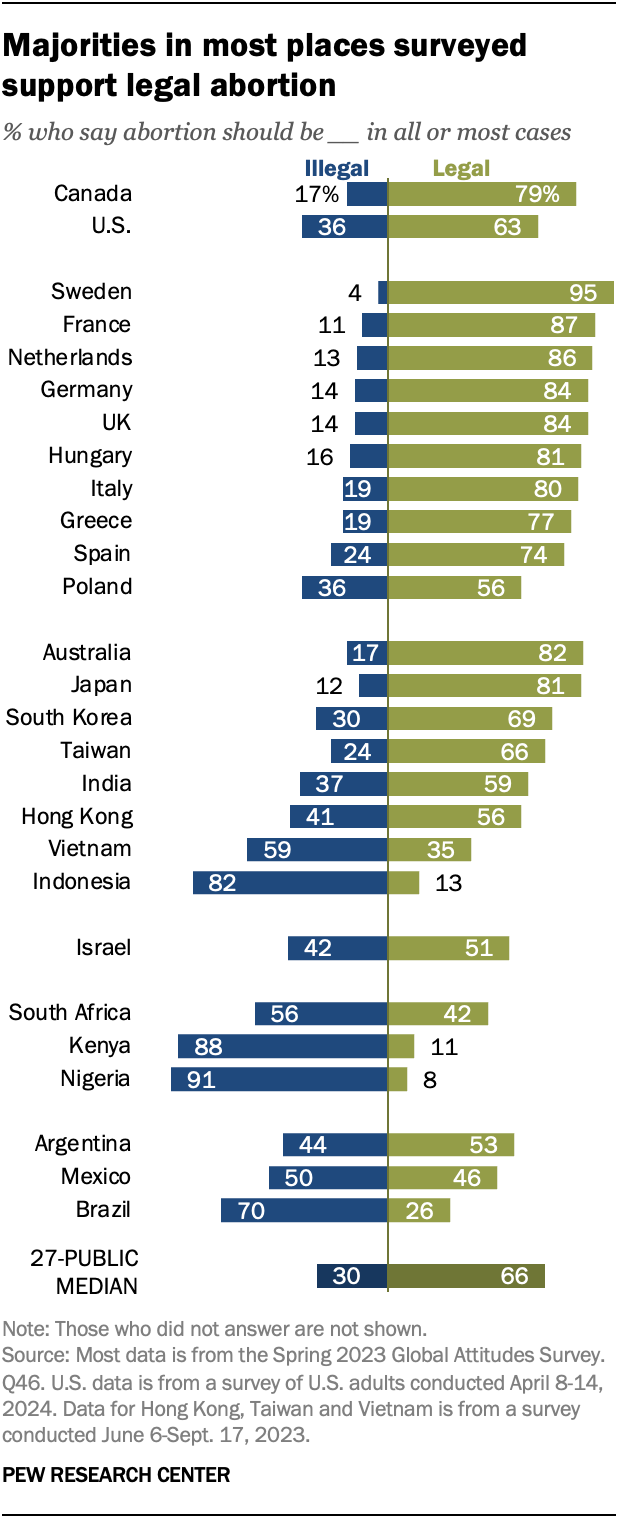
We can clearly see that the percentage of support for abortion in a country is not correlated with the actual percentage of abortions. Countries where the vast majority of people support abortion, like Sweden or the Netherlands, actually have some of the lowest abortion rates in the Western world.
The first shocking revelation is that sex education is only mandatory in half of US states.
But even in states where sex education is taught, the official policy may be to teach abstinence as the only form of contraception (7 states). In some states sex education is mandatory but does not have to be medically or scientifically accurate (New Hampshire, West Virginia, South Carolina and New Mexico). In six states (including New York, Pensylvania and Massachussetts), sex education is not mandatory and not regulated at all. Only 10 states have mandatory sex education that should be medically accurate and teach about contraception and consent.
It's not surprising therefore that teen pregnancies is a major problem in the United States - far more so than in other rich countries. The teenage pregnancy rate in the US stood at 13.1 per thousand births, according to the latest data. This is considerably higher than in other developed countries: South Korea (0.5), Denmark (1.1), Norway (1.4), Switzerland (1.5), Japan (1.7), Sweden (1.8), Netherlands (1.9), Italy (2.9), Finland (3.1), France (3.5), Belgium (3.7), Austria (3.8), Ireland (4.1), Canada (4.8), Spain (4.8), China (5.2), Germany (5.5), Poland (6.2), Australia (6.7)... In fact the US has a higher teen pregnancy rate than in Muslim countries like Libya (5.9), Oman (6.2), Algeria (8.7), or Saudi Arabia (11.1). With a rate of 13.1, the United States is exactly in between Turkey (12.1) and India (14.1).
Of course there are, as always in the US, huge regional variations. The lowest rates are found in New England, where adolescent birth rates are similar to those in Canada or Germany. In contrast, in the Bible Belt, where people are most reluctant to discuss sex education, and where schools are the least likely to teach teenagers about it, the adolescent pregnancy rate is over 20 per thousand. Some counties have rates between 80 and 100! That's higher than Afghanistan (64) and many Sub-Saharan countries (e.g. 51 in South Africa, 56 in Kenya, 66 in Sudan, 70 in Ethiopia, and 86 in Nigeria).
Here are CDC maps showing the teenage pregnancy rates by state. This first one (source) is from 2021.
This second map shows the finer county-wide variations in 2021 (source). You can see the actual rate in each county on this interactive map on the CDC website.
It might look bad but the reality is worse. This is because these rates only show the teenage births, not the actual teenage pregnancy rates. Even though the US is the country where the highest percentage of the population opposes abortion in the developed world (on a par with Poland), it is also the country with the highest teenage abortion rate. In the following chart we see that back in 2011 the teenage birth rate was 15 per 1000, but the actual pregnancy rate was 57 per thousand, i.e. 3.5 times more. The US also has a suspiciously high percentage of teenage miscarriage (3 or 4 times higher than in other developed countries). I wouldn't be surprised if these were abortions in disguise in religious families that "officially" reject abortion. In any case, only about a quarter of all US teen pregnancies resulted in live births.
We can clearly see that the percentage of support for abortion in a country is not correlated with the actual percentage of abortions. Countries where the vast majority of people support abortion, like Sweden or the Netherlands, actually have some of the lowest abortion rates in the Western world.
Last edited: