• Don't want to see ads? Install an adblocker like uBlock Origin or use a Europe-based privacy-friendly browser like Vivaldi or Mullvad.

Genetic borders in Europe

Angela, you are messing a good chunk, I was pointing out that ecosystem was the main reason for the divide, I'm not deniying the impact of historical migrations but by sure the ecosystem had the last answer as invaders finding more or less peopled areas and/or zones fitting better their way of life can thrive more or less. I was giving as example the lack of Cardial in Slovenia, but you come with a Paint map, Otzi Iceman (Copper Age right?), and promenades by Istrians, but even with no data about Cardial examples in Slovenia. I realy would like to have scientific debate but you are not for it today.

You are talking generalities. I am talking about the specifics of the migrations, genetics, and cultures of Europe (except some far northern locations) after the arrival of the farmers from the Near East. I have already said that the early Neolithic farmers at first preferred certain soils, loess, to be precise, and that they were stalled in southern Europe until they adapted their agricultural package. That doesn't mean that the "farmers" in Italy versus the farmers in Slovenia in the Middle Neolithic were substantially different from one another. There is no substantial difference between the Cardial farmers and the Balkan farmers, at least not that any academics have yet found. If you don't have specific data to show otherwise, that's where it stands.

The point I was trying to make with the Otzi reference is that if genetically EEF people could live in the high Alps in Italy, why wouldn't they live in Slovenia.

And there were Neolithic farmers in Slovenia. Did you think it was empty? What evidence do you have that they were any different from the Neolithic farmers in the rest of the Balkans, or in Austria or southern Germany?

See: The Neolithic of Northeastern Slovenia seems to be an offshoot of Lengyel.
https://www.academia.edu/10013524/T...fifth_millennium_BC_in_north-eastern_Slovenia

Late Neolithic pile dwelling community, similar to the ones in Italy, btw, at the time of Otzi:
https://www.academia.edu/7835239/Pl..._in_Slovenia_at_the_time_of_the_Alpine_Iceman

Again, unless you can provide data showing that Neolithic people in Slovenia were substantially different than Neolithic people in northeastern Italy, I won't be responding. It's all just speculation.
 
https://goo.gl/images/QFnqDT
you may detect some interesting frontier there?
you are who might deliver DNA or archaeological proofs about continuity between the coast + Italy and the core center or between the core and the Pannonian plains, not the contrary, argumenti ad ignorantiam are not accepted.
 
@Pax Augusta, one or two Rhaeto-Romance languages are survivals but not all, Ladin and Friulan are south of Alps but Rumansh is in the north, difficult so to imagine an ancient extended unity... broken by Venetian.

Rumantsch speakers live close to the Italian border, not north of the Alps.
 
judging by the PCA of mathieson et al (balkan_ba) and amorim et al (ema_pannonians) plotting with modern north/central italians i think the slovenians are a signal of an entire new people of that region as the tyroleans seem to intermixed more with the pre-existing people; the neolithic zones of northern italy greatly changed in the 5thmil in VBQ with transalpine-trade (rivoli/isola) and a more hunting red-deer based economy (mezzocorona/molino casarotto) than kilinc et al explaining that ötzi/remedello share more alleles with CHG than other EEFs and derives them from a kumtepe[<tepecik] type 4thmil add wave/migration which also coincides with an emerging copper industry/network in tuscany (to which ötzi/remedello belong) and in sardinia; but i dont think the rift between slovenians and north italians is all neolithic based given the balkan_ba/hungary_ba and ema_pannonian samples;
 
judging by the PCA of mathieson et al (balkan_ba) and amorim et al (ema_pannonians) plotting with modern north/central italians i think the slovenians are a signal of an entire new people of that region as the tyroleans seem to intermixed more with the pre-existing people; the neolithic zones of northern italy greatly changed in the 5thmil in VBQ with transalpine-trade (rivoli/isola) and a more hunting red-deer based economy (mezzocorona/molino casarotto) than kilinc et al explaining that ötzi/remedello share more alleles with CHG than other EEFs and derives them from a kumtepe[<tepecik] type 4thmil add wave/migration which also coincides with an emerging copper industry/network in tuscany (to which ötzi/remedello belong) and in sardinia; but i dont think the rift between slovenians and north italians is all neolithic based given the balkan_ba/hungary_ba and ema_pannonian samples;

I absolutely don't deny that there may have been a movement of more CHG like people up through Italy after the Early Neolithic. I've been beating that drum for five years on this site. However, I would maintain that this was a Copper Age movement that also affected the Balkans.

Your iteration of this idea vastly overstates the differences, however. Remedello and Otzi still plot very near the EEF samples, even if they are less WHG than Copper Age samples of the same time period (approximately 3400 BC) in parts of Central Europe.

Regardless, we weren't discussing the Copper and Bronze Age, where there were differences. We were talking about the Neolithic, and the difference between Neolithic peoples in Slovenia versus neighboring people right across the modern border in northeastern Italy, not between those Neolithic Slovenians and Neolithic Tuscans or Remedello.

Bottom line, could some of the differences stem from the Neolithic? Perhaps, but I doubt it was major. Were the two areas differently impacted by subsequent migrations? Perhaps, but until we get Bronze Age Italian genomes and genomes from Slovenia, I wouldn't be so sure it's a major difference. I think the major differences probably came with the period from, perhaps. 400 BC to the Slavic migrations.

Hopefully, with time we'll get more and more samples and the details will become more clear.
 
Strabo and Livy claim the Carni tribe as Illyrian ............that is, always linked with the Illyrians. More recent scholars state this has changed, with a link to the Adriatic Veneti being preferred, similar to the Catali tribe to the east of the Carni.
Pliny mentions two other towns, Ocra and Segeste, as belonging to the Carni, ......."este" ending towns are 100% Illyrian

Strabo - From Tergeste, a village of the Carni, there is a pass across and through the Ocra to a marsh called Lugeum. A river, the Corcoras, flows near Nauportus, and conveys the merchandise from that place

Tergeste = Trieste .......a Illyrian town , another "este " ending name


let me doupt,

there hundrends of toponyms in East Balkans eith ending -esti

the ending - este -esti means -nest -εστια and is found very much Thracian areas
 
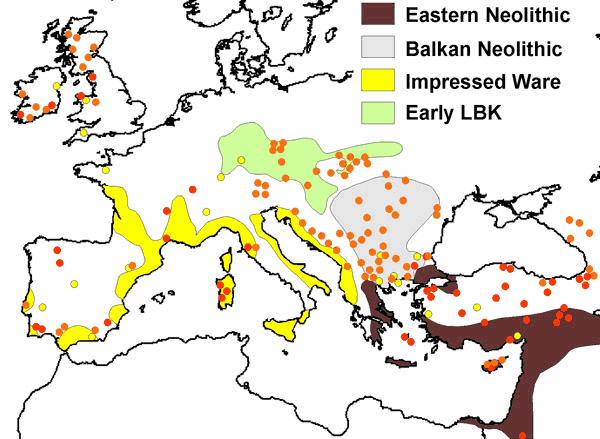
This is from later in the Neolithic. Slovenia, or at least most of it was part of Cardial Impressa from what I can see.
1042px-European-late-neolithic-dutch.svg.png

800px-LocationSlovenia.svg.png

Late Bronze Age Europe:
Europe_late_bronze_age.png

Of course, this is all speculation. The only way to know is to look at ancient genomes. Does anyone know if there are any ancient sample from the area around Slovenia?
The topmost map answers every question, i wonder what could be wrong with it?

Question is for those who are doubting it.
 
I absolutely don't deny that there may have been a movement of more CHG like people up through Italy after the Early Neolithic. I've been beating that drum for five years on this site. However, I would maintain that this was a Copper Age movement that also affected the Balkans.

Your iteration of this idea vastly overstates the differences, however. Remedello and Otzi still plot very near the EEF samples, even if they are less WHG than Copper Age samples of the same time period (approximately 3400 BC) in parts of Central Europe.

Regardless, we weren't discussing the Copper and Bronze Age, where there were differences. We were talking about the Neolithic, and the difference between Neolithic peoples in Slovenia versus neighboring people right across the modern border in northeastern Italy, not between those Neolithic Slovenians and Neolithic Tuscans or Remedello.

Bottom line, could some of the differences stem from the Neolithic? Perhaps, but I doubt it was major. Were the two areas differently impacted by subsequent migrations? Perhaps, but until we get Bronze Age Italian genomes and genomes from Slovenia, I wouldn't be so sure it's a major difference. I think the major differences probably came with the period from, perhaps. 400 BC to the Slavic migrations.

Hopefully, with time we'll get more and more samples and the details will become more clear.

there is a cryptic passage about contemporary Chl CO1[baden] in kilinc et al but she is not incl into the overall shared drift conclusion, given the burial rite of remedello in contrast to rinaldone there could be an earlier tiszapolgar/carpathian link involved maybe indicated by the clear shift in VBQ; it could be kilinc et al sample pop was not extensive enough maybe the lipson et al data can shed more light into the CHG drift and a carpatho/balkan<anatolia route alternative is the direct anatolian material/copper driven migration; if there was a direct border exchange friul/slovenia i do not know but the early site of sammardenchia indicates a crossroads of mediterranean and carpathian with both types of obsidian found;
 
Rumantsch speakers live close to the Italian border, not north of the Alps.

they occupy the higher Rhin valley... so in the north side of the Alps
 
europe-map1.gif


Neolithic farmers eventually spread over all of Europe, including Slovenia, except for the far northeast. The people who used to live there were different from the people who live there now. The difference is the Early Medieval Era migrations, which did not have the same impact on Italy or Spain as they did in parts of the northern Balkans and Central Europe.

Language and politics were also barriers to gene flow.

this is not about the early neolithic, it has to do with later
I don't know, what was the subsistence of the Slavs when they arrived in Slovenia? And of the Veneto-Friuli Italians in the same era?
 
there may be other reasons, but I don't know the specific history
why did the Slavs stop in Slovenia and not enter the Veneto-Friuli?
were the Veneto-Friuli succesfull in resisting the Slavs, while the Slovenes were not?
 
Very roughly Slovenia now is profiting land by climatological conditions for timber, cows and corn (the last from America). Only cows were profited by sure in prehistory there, so the maximum population possible would be much less than the farming population of Veneto-Friul, where as I cam remember climatology is milder as to have vineyards.

It's like putting side by side the Toscana and the Altai Autonomous Republic.
 
this is not about the early neolithic, it has to do with later
I don't know, what was the subsistence of the Slavs when they arrived in Slovenia? And of the Veneto-Friuli Italians in the same era?

That's precisely my point, Bicicleur. The major differences occurred later, not in the Neolithic, as some are trying to argue, and I would maintain that most of it dates to the Slavic migrations, but whatever the ancient dna shows, it shows. I have no horse in this race. Why would it matter to me?

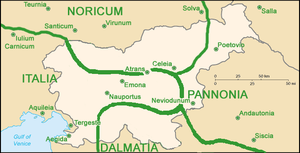
"In the Iron Age, present-day Slovenia was inhabited by Illyrian and Celtic tribes until the 1st century BC, when the Romansconquered the region establishing the provinces of Pannonia and Noricum. What is now western Slovenia was included directly under Roman Italia as part of the X region Venetia et Histria. Important Roman towns located in present-day Slovenia included Emona, Celeia and Poetovio. Other important settlements were Nauportus, Neviodunum, Haliaetum, Atrans, and Stridon."

300px-Si_romap.png


"During the migration period, the region suffered invasions of many barbarian armies, due to its strategic position as the main passage from the Pannonian plain to the Italian peninsula. Rome finally abandoned the region at the end of the 4th century. Most cities were destroyed, while the remaining local population moved to the highland areas, establishing fortified towns. In the 5th century, the region was part of the Ostrogothic kingdom, and was later contested between the Ostrogoths, the Byzantine Empire and the Lombards."

As we learned just recently from the Lombard paper,there was still a very "southern" type population in the Pannonian plain when the Lombards went through there.

"The Slavic ancestors of present-day Slovenes settled in the East Alpine area at the end of the 6th century. Coming from two directions, North (via today's East Austria and Czech Republic), settling in the area of today's Carinthia and west Styria and South (via today's Slavonia), settling in the area of today's central Slovenia."

In the sixth century the Gothic War between the Goths and the Byzantines was raging in Italy. By 568 the Lombards were in control.

As the quotes indicate, Slovenia is the pathway into Italy from the east and northeast. It's a much easier route than the one through Liguria or the Alps for that matter.

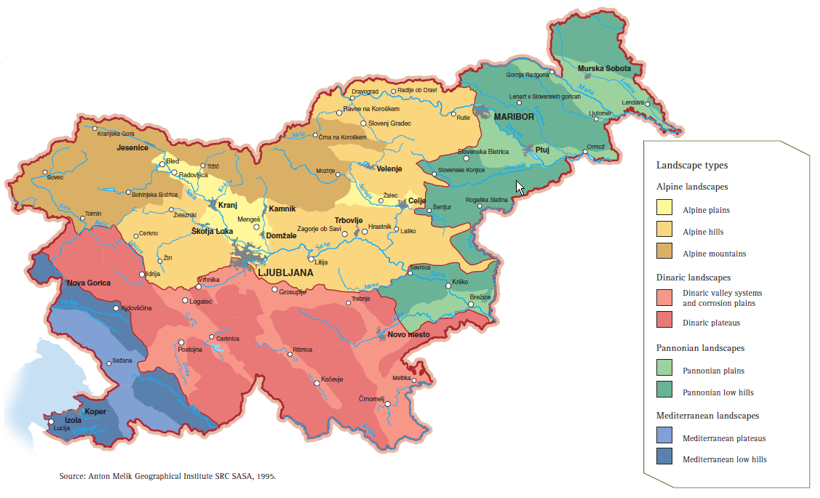
As for climate, topography, land use, there isn't a sharp break at the Italian border, at least not that I've seen.

Slovenia:
"Humid subtropical climate on the coast, continental climate with mild to hot summers and cold winters in the plateaus and in the valleys to the east. Precipitation is high away from the coast, with the spring being particularly prone to rainfall. Slovenia's Alps have frequent snowfalls during the winter.[5]

A short coastal strip on the Adriatic Sea, an alpine mountain region adjacent to Italy and Austria, mixed mountain and valleys with numerous rivers to the east."

Geography_of_Slovenia

diversity_slika_2-an.png


friuli-map-slovenia-complete-watermarked.jpg


Thanks to my first cousin marrying a Venetian (whose last name ended in ich, btw), I already knew about the above. I've also extensively driven the area.

I'm getting extremely tired of people having decided opinions about Italian pre-history, but especially history, when they know nothing about it. This doesn't apply to you, of course, Bicicleur. Your posts are always thoughtful and informative.

@Berun,

Don't you ever get tired of insisting on opinions about matters of which you clearly know very little? If you don't know very much about a subject did it ever occur to you to research it before you opine?
 
they occupy the higher Rhin valley... so in the north side of the Alps

How should this prove they are late newcomers? They are only a few kilometers above the Rhine still in the middle of the Alps not north of the Alps, and the great majority of Romansh people are south of the Rhine.

Anyway the river Rhine rises in the Romansh speaking area of the Chantun Grischun (the only trilingual Swiss Canton: German, Italian, Romansh), few kilometers from the other Swiss Italian-speaking Canton, and not very distant from the Italian border either. The river Rhine has two sources: the Rein Anteriur (Lai da Tuma) and Rein Posteriur. What else can it be? Romansh is a descendant of the spoken Latin language of the Alps that replaced (and likely assimilated) the Celtic (Lepontic) and Raetic languages previously spoken in the area.


640px-English-language_version_of_Linguistic_map_of_Switzerland.png


640px-Rhaeto-Romance_languages.png
 
Angela, again, I'm not denying the impact of historical migrations. My opinions are based on how ecosystem shape population density, economy, and language borders, there are hundreds of cases to learn from. Instead you said Slovenia was EFF but no proof about it (please attach this to ecosystems and not to actual borders).

Pax Augusta, again, the Grisons are in the north of the Alps, in the northern side of the Alps, you can't change it, but you can try to know the region, do you know the investment of effort to cross the Alps? ask to Hannibal... do you know what means to have passes cut by snow half year? do you think that the languages in your last map were united once but cutted by Germans or Venetians? do you think that French is original in Val d'Aosta? do you think that Provenzal is original of the Piemontese valleys? do you think that German is original in South Tyrol?
 
behold, Rumansch people name the Rhine with its German name?....
 
Angela, again, I'm not denying the impact of historical migrations. My opinions are based on how ecosystem shape population density, economy, and language borders, there are hundreds of cases to learn from. Instead you said Slovenia was EFF but no proof about it (please attach this to ecosystems and not to actual borders).

Pax Augusta, again, the Grisons are in the north of the Alps, in the northern side of the Alps, you can't change it, but you can try to know the region, do you know the investment of effort to cross the Alps? ask to Hannibal... do you know what means to have passes cut by snow half year? do you think that the languages in your last map were united once but cutted by Germans or Venetians? do you think that French is original in Val d'Aosta? do you think that Provenzal is original of the Piemontese valleys? do you think that German is original in South Tyrol?

I'm going to say this one last time and then I'm done:

There is no BREAK in the ecosystem at the Italo-Slovenian border.

There were NO non-EEF type people anywhere in Iberia, or the Balkans, or Central Europe, for that matter, in the NEOLITHIC. There would only be people with slightly differing proportions of WHG or perhaps CHG. EVERY SINGLE European genome from the Middle to Late Neolithic shows the same thing. SLOVENIA IS NOT GOING TO BE ANY DIFFERENT. The only reservoirs of WHG types seems to have been in the far north, and there was EHG in the far eastern areas.

Read the papers.

Look at the PCAS. This one is from Kilinc et al. Although different papers might show it a bit differently (in this case the samples are shown further apart), the story is the same. Note the placement of even the two Copper Age samples: Otzi and Baden.

F5ljOCq.png
 
Last edited:
I'm going to say this one last time and then I'm done:

THERE IS NO BREAK IN THE ECOSYSTEM AT THE ITALY SLOVENIAN BORDER.

so either the local population was replaced by the Slavic newcomers or ..

Angela, was the plague also raging in Slovenia prior to the arrival of the Slavs?
 
Pax Augusta, again, the Grisons are in the north of the Alps, in the northern side of the Alps, you can't change it, but you can try to know the region, do you know the investment of effort to cross the Alps? ask to Hannibal... do you know what means to have passes cut by snow half year? do you think that the languages in your last map were united once but cutted by Germans or Venetians? do you think that French is original in Val d'Aosta? do you think that Provenzal is original of the Piemontese valleys? do you think that German is original in South Tyrol?

You're mixing things that have nothing to do with each other, just for the sake of provoking.

I give you one last chance. What are the sources that assume that Romansh are descended from a migration? And from where?


behold, Rumansch people name the Rhine with its German name?....

Rhine is in any language a hydronym of Celtic origin (Gaulish *Rēnos; Proto-Celtic *Rein-os; Latin Rhenus, from Proto-Indo-European *rey- (“to flow”). In Sursilvan is Rein and sursilvan is the Romansh language spoken in the area of the Rhine river. The homonymous river Reno of Emilia-Romagna in Northern Italian languages is Rén.
 
Angela... again with modern borders? I'm just attaching the case to ecosystems, I repeat by third time , ECOSYSTEMS. For actual or older Slovenians in PCA... I'm tired... you just don't understand or you even don't try... I'm not deniying the effect of historical migrations ( and its DNA effects).

Pax Augusta, the same, you only are capable to hear yourselves, where I said that Rumansch is not native? Even so, continuing the provokative discussion... so do you suggest that Rumansch people got the name of the river direct from proto-Celtic? Oh, I know why I"m tired now.
 
Back
Top