
-
Don't want to see ads? Install an adblocker like uBlock Origin or use a Europe-based privacy-friendly browser like Vivaldi or Mullvad.
You are using an out of date browser. It may not display this or other websites correctly.
You should upgrade or use an alternative browser.
You should upgrade or use an alternative browser.
Genetic History of Anatolia during Holocene


Wanderer
Banned
- Messages
- 405
- Reaction score
- 26
- Points
- 0
- Ethnic group
- Ancient
- Y-DNA haplogroup
- J-L283 (z627)
No, Amun is not 'the real Zeus'. Zeus is from proto-Indo-European Dyeus Phter (Sky Father). Zeus is most certainly not a god adopted by the Greeks from Egypt. The most you could say, speculatively, is that they have a common origin.
Danaus, Cadmus etc were Greeks, descended from Inachus the king of Argos. That's why Danaus returns to Greece, the land of his ancestors, and claims the throne of Argos.
If you want to mix mythology with DNA, I might as well point out that 18th dynasty pharaohs of Egypt Amenhotep III, Akhenaten and Tutankhamun had Y-DNA R1b-M269, an Indo-European lineage, and Amenhotep III also had mtDNA H2b, an Indo-Aryan lineage, inherited from his Mitanni mother.
Ramses the third and his a mummy buried next to him were both shown to be e1b1a-M2. The mummy is thought to be the son Pentawaret. Which makes sense. I always thought of egyptians as mixed.
I dont see anything saying those 3 you mentioned had R-M269.
Just says R1b. On wiki it says their r1b clade was not even determined.
R1b is pre indo european.
But R1b is also present in sub sahara africa and north africa.
Wanderer
Banned
- Messages
- 405
- Reaction score
- 26
- Points
- 0
- Ethnic group
- Ancient
- Y-DNA haplogroup
- J-L283 (z627)
https://www.flickr.com/photos/69716881@N02/8624987998No, Amun is not 'the real Zeus'. Zeus is from proto-Indo-European Dyeus Phter (Sky Father). Zeus is most certainly not a god adopted by the Greeks from Egypt. The most you could say, speculatively, is that they have a common origin.
Danaus, Cadmus etc were Greeks, descended from Inachus the king of Argos. That's why Danaus returns to Greece, the land of his ancestors, and claims the throne of Argos.
If you want to mix mythology with DNA, I might as well point out that 18th dynasty pharaohs of Egypt Amenhotep III, Akhenaten and Tutankhamun had Y-DNA R1b-M269, an Indo-European lineage, and Amenhotep III also had mtDNA H2b, an Indo-Aryan lineage, inherited from his Mitanni mother.
https://northern-greece.com/zeus-ammon-kassandra/
Amun (Ammon) was, according to the Egyptians, the king of the gods and patron god of Thebes from the 20th c. B.C. Amun was the focal point of Egyptian worship and when he was combined with other gods such as the sun (Ra) he become Amun Ra. The Greeks had their own king god – Zeus. When the Greeks colonized north Africa in the 6th c. B.C., the city Cyrene (now in Libya) worshipped Zeus Ammon since they understood Ammon to be the equivelent of Zeus.
The oracle in Libya was well respected in Greece. It was 3rd in importance only after the sanctuary of Zeus in Olympia and in Dodona in Epirus. After having been defeated in Asia Minor and Egypt, Darius the king of Persia was on the run. While in Egypt in 331 BC, Alexander took steps to make himself a living god. Tradition has it that Alexander went to the oracle in Siwah and there he was told that he was the son of Zeus Ammon. It is possible that Alexander had also visited the temple in Aphytis since it was close to his home. Arrian of Nicomedia wrote how Alexander wanted to travel to the oracle in Siwa to imitate his ancestors Heracles and Perseus who had travelled there before him.
....

Angela
Veteran member
- Messages
- 21,793
- Reaction score
- 12,345
- Points
- 113
- Ethnic group
- Italian
The latest papers indicate that the Egyptians were between 6-10% Sub-Saharan African prior to the fall of Rome and the beginning of the Arab Slave trade. Now it can go up to 20%. The Copts, as Christians, are closer to the ancestral numbers.
The R1b present could very well be R1b-V88, still present in the area today.
The R1b present could very well be R1b-V88, still present in the area today.
Wanderer
Banned
- Messages
- 405
- Reaction score
- 26
- Points
- 0
- Ethnic group
- Ancient
- Y-DNA haplogroup
- J-L283 (z627)
Herodotus histories.
Also cadmus is son of Aegnor whonis son of Libya and Poseidon. Both libyan gods.
He is of libyan origin / Egyptian


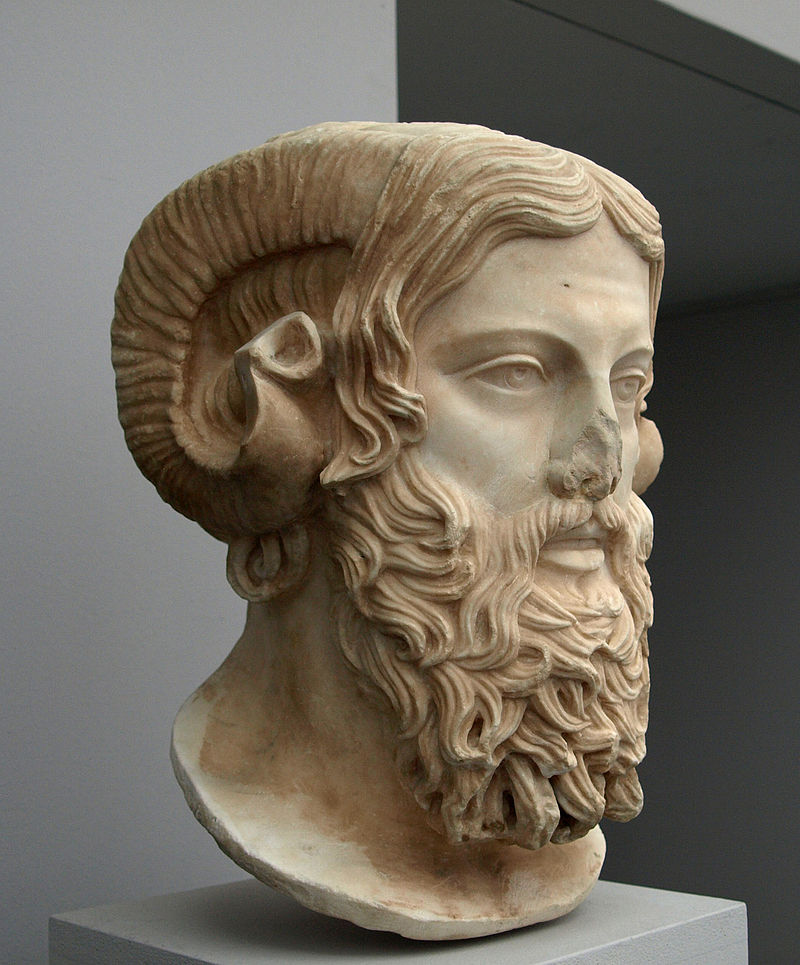
http://ancientheroes.net/blog/alexander-the-great-zeus-ammon
Also cadmus is son of Aegnor whonis son of Libya and Poseidon. Both libyan gods.
He is of libyan origin / Egyptian
http://ancientheroes.net/blog/alexander-the-great-zeus-ammon
Wanderer
Banned
- Messages
- 405
- Reaction score
- 26
- Points
- 0
- Ethnic group
- Ancient
- Y-DNA haplogroup
- J-L283 (z627)
I have ancient greek sources. Why dont you just quote some saying this is false from ancient greek text. Herodotus is the oldest known greek historian of carian decent.Don't you people ever get tired of posting the re-telling of legends as actual heroes? Get a grip.

Southpaw
Regular Member
- Messages
- 2,618
- Reaction score
- 1,424
- Points
- 113
- Ethnic group
- Albanian
- Y-DNA haplogroup
- E-V13
Ramses the third and his a mummy buried next to him were both shown to be e1b1a-M2. The mummy is thought to be the son Pentawaret. Which makes sense. I always thought of egyptians as mixed.
I dont see anything saying those 3 you mentioned had R-M269.
Just says R1b. On wiki it says their r1b clade was not even determined.
R1b is pre indo european.
But R1b is also present in sub sahara africa and north africa.
Ramsess III was likely E-V22, people have remarked how they made the mistake either knowingly or unknowingly after analyzing the STR markers. In the new paper they reposted E1b1a-M2 and refused to correct.

Pax Augusta
Elite member
I have ancient greek sources. Why dont you just quote some saying this is false from ancient greek text. Herodotus is the oldest known greek historian of carian decent.
Herodotus was not a historian in the modern sense of the term. Sometimes he reported facts known in his time, other times not, especially in the more ethnographic part of his writings, it did not always contain things that really happened.
You cannot read ancient authors without having a basis in history, archeology, anthropology, linguistics, and above all without knowing what the scholars of the last 60 years at least have written on the texts of ancient authors.
Wanderer
Banned
- Messages
- 405
- Reaction score
- 26
- Points
- 0
- Ethnic group
- Ancient
- Y-DNA haplogroup
- J-L283 (z627)
Herodotus was not a historian in the modern sense of the term. Sometimes he reported facts known in his time, other times not, especially in the more ethnographic part of his writings, it did not always contain things that really happened.
You cannot read ancient authors without having a basis in history, archeology, anthropology, linguistics, and above all without knowing what the scholars of the last 60 years at least have written on the texts of ancient authors.
So instead of providing some kind of evidence that refutes it, you just tell me he was not a historian. He is the most ancient historian of his time who went around interviewing different people of their time. I already posted the ammon zues bust from 500 bc depicting zues with goat horns to go along.
23abc
Junior Member
- Messages
- 5
- Reaction score
- 4
- Points
- 0
- Ethnic group
- Greek
- Y-DNA haplogroup
- J2
- mtDNA haplogroup
- J1
Would really like to compare Theopetra and Sarakenos to modern populations. And also o Iron Age Paeonians, Illyrians and Logas. I wonder if the 'Balkans' encirclement includes mainland Greece. Seems to me that Sarakenos is very similar to Cretans, while Theopetra might be very similar to mainland Greece today.
So far Sarakenos, Theopetra, Logas 01 and 02, Crete_Armenoi and the Marathon sample seem to be closer to modern Greeks than the four Mycenaeans of the Lazaridis study. And out of those four Mycenaens, two were from Crete. I leave out all the other specimens, because they are either from Sicily or Spain. Who knows who they may have intermixed with. That makes me think whether the earlier image we had developed for Mycenaens is correct. We only have two out of a total of zeven Ancient Greeks from the mainland with a low rate of steppe vs Minoan (1:10). They other five are more like 1:5, or even 1:4.
You say that in Lazaridis' Minoan/Mycenaean paper, 2/4 Mycenaeans are from Crete? This is false. 2 were from Galatas in Argolis, 1 was from Pylos in Messenia, and 1 was from Salamis in Attica.
Additionally, you seem to ignore all the new Mycenaean samples from the recent Southern Arc paper, which added an additional 11 new Mycenaean samples from mainland Greece, and also 2 archaic Greek samples. Of the Mycenaeans, 6 were from Pylos, 3 were from Attica and 2 were from Kastrouli in southern Phocis.
While there is variability in the amount of Steppe, their average is not so different from the Mycenaean average that we had previously.
To make things more interesting, when averaging all 15 Mycenaean samples together, their average is almost identical to the average of the genetic cluster 480BCE_1 from Himera, which the paper identified as definite Greek soldiers. They are also very similar to the two Phocaean colonists from Empuries in Spain, and the Thracians from southern Thrace.
[TABLE="class: distances"]
[TR]
[TH]Distance to:[/TH]
[TH]GRC_Mycenaean_(n=15)[/TH]
[/TR]
[TR]
[TD]0.01049552[/TD]
[TD]ITA_Sicily_Himera_480BCE_1[/TD]
[/TR]
[TR]
[TD]0.02023135[/TD]
[TD]Iberia_Northeast_Empuries2[/TD]
[/TR]
[TR]
[TD]0.02360508[/TD]
[TD]BGR_KapitanAndreevo_IA[/TD]
[/TR]
[TR]
[TD]0.03057226[/TD]
[TD]BGR_Anc[/TD]
[/TR]
[TR]
[TD]0.03125336[/TD]
[TD]GRC_Koufonisi_Cycladic_EBA[/TD]
[/TR]
[TR]
[TD]0.03189316[/TD]
[TD]BGR_IA[/TD]
[/TR]
[TR]
[TD]0.03294215[/TD]
[TD]ITA_Prenestini_tribe_IA_o[/TD]
[/TR]
[TR]
[TD]0.03420535[/TD]
[TD]GRC_Kastrouli_Anc[/TD]
[/TR]
[TR]
[TD]0.03561312[/TD]
[TD]ITA_Tarquinia_Imperial[/TD]
[/TR]
[TR]
[TD]0.03846649[/TD]
[TD]TUR_Aegean_Izmir_Yassitepe_MBA[/TD]
[/TR]
[/TABLE]
I'm also not sure why you think either the Empuries or the Himeran 480BCE_1 cluster show any signs of having non-Greek admixture. A shift towards Spain and/or Sicily is usually pretty apparent, especially because Greeks of this time period lacked HG admixture which is more abundant in western Europe. A few of the 409BCE Himera samples show an obvious shift towards the Sicani for this reason, as highlighted in the paper itself.
Now, I do agree that the Theopetra samples are certainly interesting, but don't forget that 1. they predate the Mycenaean culture and 2. they aren't even from a location that was part of the Mycenaean world either. I do agree that it's very possible that parts of Greece, especially those outside of the world of the Mycenaeans, may have had much more Steppe admixture but it remains to be seen if this is actually true in the LBA/IA/Classical time periods. Iron Age/Classical era samples from Epirus, Thessaly and Macedonia are definitely needed to shed some light into the genetic structure of northern Greece.
As for your suggestion that this is the reason for the genetic shift in southern Greece, it is definitely a factor to consider, but I have serious doubts it is the main factor at play. More samples are needed to find the exact situation; the singleton from Roman Marathon to me seems more likely to be a Greek with roots from West Anatolia then a good proxy for the average Greek in Attica / Peloponnese. That being said, I do think most Greeks in the areas in question will be a mix of Marathon-type autosomal and the Mycenaean/Himeran-type autosomal, judging by the east-to-west population movements that were occuring in the Roman and Byzantine periods.
Angela
Veteran member
- Messages
- 21,793
- Reaction score
- 12,345
- Points
- 113
- Ethnic group
- Italian
^^Exactly right.
I've said over and over again that it looks from the samples we have that the Mycenaean genetic profile was widespread and persisted for about a thousand years, which is pretty remarkable.
I don't understand this desire to find the Classical Greeks were more "northern" than the Mycenaeans, when all the current evidence suggests they weren't.
The Prenestini sample is also interesting.
I've said over and over again that it looks from the samples we have that the Mycenaean genetic profile was widespread and persisted for about a thousand years, which is pretty remarkable.
I don't understand this desire to find the Classical Greeks were more "northern" than the Mycenaeans, when all the current evidence suggests they weren't.
The Prenestini sample is also interesting.
Pax Augusta
Elite member
So instead of providing some kind of evidence that refutes it, you just tell me he was not a historian. He is the most ancient historian of his time who went around interviewing different people of their time. I already posted the ammon zues bust from 500 bc depicting zues with goat horns to go along.
It is you who should bring evidence of what you claim. Making a copy and paste of stuff found on the internet, as you do, some of which is attributed to ancient authors, is not evidence.
Wanderer
Banned
- Messages
- 405
- Reaction score
- 26
- Points
- 0
- Ethnic group
- Ancient
- Y-DNA haplogroup
- J-L283 (z627)
It is you who should bring evidence of what you claim. Making a copy and paste of stuff found on the internet, as you do, some of which is attributed to ancient authors, is not evidence.
I did. It is evidence.
Diodorus siculus

bigsnake49
Regular Member
- Messages
- 1,881
- Reaction score
- 471
- Points
- 83
- Ethnic group
- Thracian
- Y-DNA haplogroup
- R-PF7558 (LDNA)
- mtDNA haplogroup
- U5a1b1d1 (LDNA)
I have ancient greek sources. Why dont you just quote some saying this is false from ancient greek text. Herodotus is the oldest known greek historian of carian decent.
He's a story teller not a historian or an ethnographer. His travels are not extensive enough to gain first hand knowledge of all the different tribes and ethnicities. Even he admits that some of what he writes are second hand sources. Thucydides even complained that he was a story teller.
Wanderer
Banned
- Messages
- 405
- Reaction score
- 26
- Points
- 0
- Ethnic group
- Ancient
- Y-DNA haplogroup
- J-L283 (z627)
Funny says hereHe's a story teller not a historian or an ethnographer. His travels are not extensive enough to gain first hand knowledge of all the different tribes and ethnicities. Even he admits that some of what he writes are second hand sources. Thucydides even complained that he was a story teller.
https://en.m.wikipedia.org/wiki/Herodotus
Herodotus (/hɪˈrɒdətəs/ hirr-OD-ə-təs; Greek: Ἡρόδοτος Hēródotos; c. 484 – c. 425 BC) was an ancient Greek historian and geographer from the Greek city of Halicarnassus, part of the Persian Empire (now Bodrum, Turkey). He is known for having written the Histories
https://www.britannica.com/biography/Herodotus-Greek-historian
Herodotus was a wide traveler. His longer wandering covered a large part of the Persian Empire: he went to Egypt, at least as far south as Elephantine (Aswān), and he also visited Libya, Syria, Babylonia, Susa in Elam, Lydia, and Phrygia. He journeyed up the Hellespont (now Dardanelles) to Byzantium, went to Thrace and Macedonia, and traveled northward to beyond the Danube and to Scythia eastward along the northern shores of the Black Sea as far as the Don River and some way inland. These travels would have taken many years.
Also when he was doing his works about the egyptians he talked with the egyptian priests who were the historians also of egyptian history.
Bust of "phonecian" heracles or Tyrian Hercules


Last edited:
Dianatomia
Regular Member
- Messages
- 436
- Reaction score
- 174
- Points
- 43
- Ethnic group
- Greek
- Y-DNA haplogroup
- J2a
You say that in Lazaridis' Minoan/Mycenaean paper, 2/4 Mycenaeans are from Crete? This is false. 2 were from Galatas in Argolis, 1 was from Pylos in Messenia, and 1 was from Salamis in Attica.
Additionally, you seem to ignore all the new Mycenaean samples from the recent Southern Arc paper, which added an additional 11 new Mycenaean samples from mainland Greece, and also 2 archaic Greek samples. Of the Mycenaeans, 6 were from Pylos, 3 were from Attica and 2 were from Kastrouli in southern Phocis.
While there is variability in the amount of Steppe, their average is not so different from the Mycenaean average that we had previously.
To make things more interesting, when averaging all 15 Mycenaean samples together, their average is almost identical to the average of the genetic cluster 480BCE_1 from Himera, which the paper identified as definite Greek soldiers. They are also very similar to the two Phocaean colonists from Empuries in Spain, and the Thracians from southern Thrace.
I have stated several times that Classical Greeks plot either close to Mycenaeans or a bit more northern. Perhaps though we didn't have enough Mycenaean specimens to establish that. There was one with more steppe in Crete_Armenoi, but it was discarded by Lazaridis due to bad quality. He once argued in a presentation that he could have been a migrant from the mainland. You are right though, that all four Mycenaean specimens were from the mainland.
[TABLE="class: distances"]
[TR]
[TH][/TH]
[TH][/TH]
[/TR]
[/TABLE]
I'm also not sure why you think either the Empuries or the Himeran 480BCE_1 cluster show any signs of having non-Greek admixture. A shift towards Spain and/or Sicily is usually pretty apparent, especially because Greeks of this time period lacked HG admixture which is more abundant in western Europe. A few of the 409BCE Himera samples show an obvious shift towards the Sicani for this reason, as highlighted in the paper itself.
Empuries was settled by Dorian Greeks from Ionia. It didn't seem impossible that they could have intermixed there. Or not. Some soldiers from Himera 'seem' to plot between some Greeks which on average have a bit more Anatolian/Steppe admixture and the Sicani. But at the end of the day, I prefer samples from mainland Greece. What we have now is the next best thing. We have to speculate and estimate that they qualify as Classical mainland Greeks.
Now, I do agree that the Theopetra samples are certainly interesting, but don't forget that 1. they predate the Mycenaean culture and 2. they aren't even from a location that was part of the Mycenaean world either. I do agree that it's very possible that parts of Greece, especially those outside of the world of the Mycenaeans, may have had much more Steppe admixture but it remains to be seen if this is actually true in the LBA/IA/Classical time periods. Iron Age/Classical era samples from Epirus, Thessaly and Macedonia are definitely needed to shed some light into the genetic structure of northern Greece.
Thessaly was part of the Mycenaean world. Not the core though. But that said, isn't Epirus, Thessaly, part of Macedonia where the proto-Greek ethno-genesis took shape? Isn't that the original habitat? It seems to me that there may be two clusters within the Ancient Greek mainframe.
And Logkas as well. The samples found near lake Ohrid could be Molossians. They are quite similar to the Logkas samples. So Mycenaen, Marathon-type and something similar to Logkas could be the three outliers in Classical Greece.That being said, I do think most Greeks in the areas in question will be a mix of Marathon-type autosomal and the Mycenaean/Himeran-type autosomal, judging by the east-to-west population movements that were occuring in the Roman and Byzantine periods.
Last edited:
APO276
Regular Member
Herodotus mentions something he had heard you know, like a tradition, it seems to have been something like the Exodus narrative for example. A story that existed among the Lydians to be clear, not among the Etruscans. The story about the famine and a colony to a far away place could have been a real tradition at least, they could have had folk songs for example (epic poems or sth else).
I never supported that story btw. My view was view them as 'native' until proven otherwise. Off course he can be wrong about many things, but those who think that he made the story up are more ridiculous. The main problem are the (usually Western) scholars who abuse these sources. They build narratives and hypotheses on them, and then instead of criticizing those who abuse the sources we are criticizing Herodotus. Beekes who was publishing incoherent articles on Etruscans using Herodotus as a starting point is Dutch, not Greek neither Korean or Nigerian. Then an Italian scholar abuses Dionysius of Halikarnassus and things go on.
I also saw your other post.
Herodotus account is not a 'Greek account'. It is his own account. If he wanted to connect Etruscans with the Greek word he could give them a Greek origin. His gives an 'anciently Hellenic' origin a population (likely) of the forrest steppe (the Gelonians). There are Greek sources who associate Medes with Thessaly on.. stylistic grounds, why didn't he say that the Etruscans are from Thessaly or Arcadia and whatnot?
Dionysius account is more Greco-centric, if you pay attention. Oenotrians are Hellenes. Trojans are Hellenes. Pelasgians are Hellenes according to his account...
...
Now, I don't care about that topic. Concerning Greeks, interesting that the Theopetra sample is I2-M438. But even people with J2a clades could have had higher EHG related admixture than the ''Mycenaean' average. E.g. the J2a sample from North Macedonia near Ohrid may have been Greek-related (Pelagonian or Pelagonian related).
That's why I believe that even the Logkas related population may not have had Y-DNA R1b-Z2103 or related.
Herodotus narrative on the origin of Greeks is interesting due to its uniqueness compared to other accounts.
I never supported that story btw. My view was view them as 'native' until proven otherwise. Off course he can be wrong about many things, but those who think that he made the story up are more ridiculous. The main problem are the (usually Western) scholars who abuse these sources. They build narratives and hypotheses on them, and then instead of criticizing those who abuse the sources we are criticizing Herodotus. Beekes who was publishing incoherent articles on Etruscans using Herodotus as a starting point is Dutch, not Greek neither Korean or Nigerian. Then an Italian scholar abuses Dionysius of Halikarnassus and things go on.
I also saw your other post.
Herodotus account is not a 'Greek account'. It is his own account. If he wanted to connect Etruscans with the Greek word he could give them a Greek origin. His gives an 'anciently Hellenic' origin a population (likely) of the forrest steppe (the Gelonians). There are Greek sources who associate Medes with Thessaly on.. stylistic grounds, why didn't he say that the Etruscans are from Thessaly or Arcadia and whatnot?
Dionysius account is more Greco-centric, if you pay attention. Oenotrians are Hellenes. Trojans are Hellenes. Pelasgians are Hellenes according to his account...
...
Now, I don't care about that topic. Concerning Greeks, interesting that the Theopetra sample is I2-M438. But even people with J2a clades could have had higher EHG related admixture than the ''Mycenaean' average. E.g. the J2a sample from North Macedonia near Ohrid may have been Greek-related (Pelagonian or Pelagonian related).
That's why I believe that even the Logkas related population may not have had Y-DNA R1b-Z2103 or related.
Herodotus narrative on the origin of Greeks is interesting due to its uniqueness compared to other accounts.