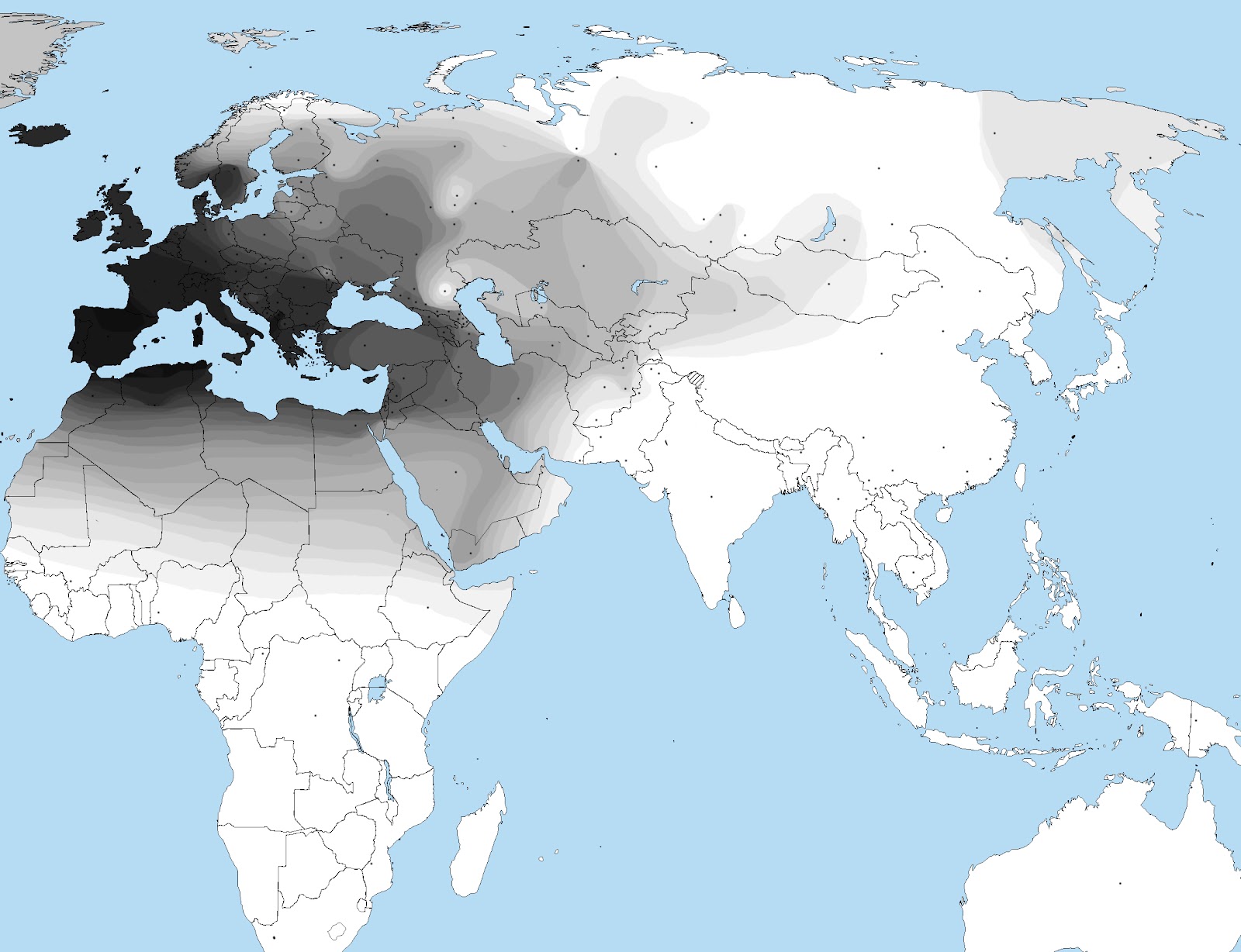
People, the Iain Mathiesen paper on southeastern Europe indicates that the local WHG in the Balkans, who were extremely few in number to begin with, were absorbed, but they made very little difference in the genome of the farmers. That's at least the story so far.
Unless future samples up end that conclusion, relatively high levels of WHG in the Balkans would come from later migrations.
No one knows what the Doric people were like autosomally. We'll have to wait and see if the upcoming ancient Greek dna paper has any samples. That would clear up quite a few matters.
From what we can see from prior papers but also from the Mathiesen et al paper on the genetics of ancient Southeastern Europe, even up to the Iron Age "steppe" ancestry wasn't very widespread in the Balkans. The highest percentages were about 30%, yes, and very sporadic in the different cultures? The Iron Age samples were even less steppe, I believe, than the Bronze Age ones. Some of those samples were Thracian, to the best of my recollection.
Imo, you'd be much better off studying the composition of those samples than looking at modern clusters based on modern populations.
See:
http://biorxiv.org/content/early/2017/05/30/135616