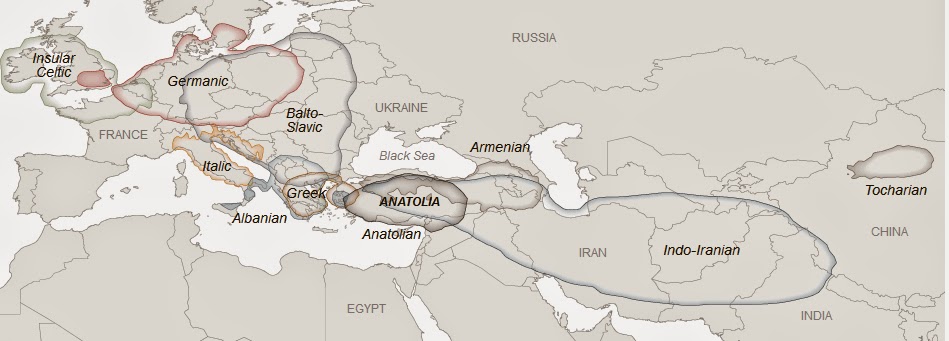
Did you not just said Albanian language is very young?
I am bringing proof that its the opposite, its very old.
Nobody said that Albanians wrote their language.
Under Ottomans Albanians were forbidden write their language and have schools in our language.
There are over 100 priests or muslims hoxha's killed because they kept trying to introduce Albanian language script and schools.
You can read carefully, I wrote about list written documents:
http://en.wikipedia.org/wiki/List_of_languages_by_first_written_accounts
Before 1000 BC
Further information:
Bronze Age writing
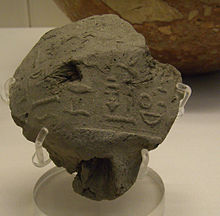
Seal impression from the tomb of
Seth-Peribsen, containing the oldest known complete sentence in
Egyptian
Writing first appeared in the
Near East at the beginning of the 3rd millennium BC. A very limited number of languages are attested in the area from before the
Bronze Age collapse and the rise of
alphabetic writing:
In
East Asia towards the end of the second millennium BC, the
Sino-Tibetan family was represented by
Old Chinese. There are also a number of
undeciphered Bronze Age records:
c. 2690 BC Egyptian Egyptian hieroglyphs in the tomb of Seth-Peribsen (2nd Dynasty),
Umm el-Qa'ab[4] "proto-hieroglyphic" inscriptions from about 3300 BC (Naqada III; see Abydos, Egypt, Narmer Palette)
c. 2600–2500 BC Sumerian Cuneiform texts from Shuruppak and Abu Salabikh (Fara period)[5][6] "proto-literate" period from about 3500 BC (see Kish tablet); administrative records at Uruk and Ur from c. 2900 BC.
c. 2400 BC Akkadian A few dozen pre-Sargonic texts from Mari and other sites in northern Babylonia[7] Some proper names attested in Sumerian texts at Tell Harmal from about 2800 BC.[8] Fragments of the Legend of Etana at Tell Harmal c. 2600 BC.[9]
c. 2400 BC Eblaite Ebla tablets
c. 2300 BC[10] Elamite Awan dynasty peace treaty with Naram-Sin
21st century BC Hurrian Temple inscription of Tish-atal in Urkesh[11]
c. 1650 BC Hittite Various cuneiform texts and Palace Chronicles written during the reign of Hattusili I, from the archives at Hattusa see Hittite cuneiform, Hittite texts
c. 1450 BC Greek Linear B tablet archive from Knossos[12][13][14]
c. 1400 BC Luwian Hieroglyphic Luwian monumental inscriptions, Cuneiform Luwian tablets in the Hattusa archives[15] Isolated hieroglyphs appear on seals from the 18th century BC.[15]
c. 1400 BC Hattic Hittite texts CTH 725–745
c. 1300 BC Ugaritic Tablets from Ugarit[16] see Ugaritic alphabet
c. 1200 BC Old Chinese
First millennium BC
The earliest known alphabetic inscriptions, at
Serabit el-Khadim (c. 1500 BC), appear to record a
Northwest Semitic language, though only one or two words have been deciphered. In the
Early Iron Age, alphabetic writing spread across the Near East and southern Europe. With the emergence of the
Brahmic family of scripts,
languages of India are attested from after about 300 BC. The earliest examples of the Central American
Isthmian script date from c. 500 BC, but a proposed decipherment remains controversial.
[20]

The
Ahiram epitaph is the earliest substantial inscription in
Phoenician.
First millennium AD
From
Late Antiquity, we have for the first time languages with earliest records in
manuscript tradition (as opposed to
epigraphy). Thus,
Old Armenian is first attested in the
Armenian Bible translation.
1000–1500 AD
This list is incomplete; you can help by expanding it.
According to written documents Albanian is young, as a written language.
...
You can see, Greek is written 1450 BC, and Greeks can say a lot in last 3.500 years according to this fact.