• Don't want to see ads? Install an adblocker like uBlock Origin or use a Europe-based privacy-friendly browser like Vivaldi or Mullvad.

Isolating WHG, EEF, EHG, CHG Traits

@Angela my knowledge of blonde hair and EHG came from this post https://www.eupedia.com/forum/threa...athiesen-et-al?p=508123&viewfull=1#post508123


As to Natufians, ah yea sure you could be right :) I was basing my whole point on PCA, Natufians cluster with Saudi Arabians so I thought their phenotypes would be similar.

Somali people are descended of Levantine farmers (before admixture from Iran?) and East African hunter gatherers, if we assume this "curvy nose" didn't come from hunter gatherers of Africa, then it must be Levantine farmers who brought it

tumblr_o2e7ifqcbi1v22j6lo1_500.jpg


tumblr_oslyse1exP1v22j6lo1_500.jpg

West Eurasian gene flow into the Somalis didn't stop with the early Levant farmers, though, did it? They got a lot of their culture from Arabia, yes?

I don't any Somalis; they're not a big group here. However, I just googled them ( I know, lame, right?) and the vast majority seem to have long, rather elegant noses, but not hooked at all. Of course, who knows how representative those pictures are...

As for Caucasus people, that distinctive nose shows up as soon as there are representations of them.

I guess we'll never know for sure.

For the blonde hair, I was quoting from the paper about the alleles present. One derived allele wouldn't make a person present as blonde, though, that's why when they ran the EHG samples through the algorithm they were predicted not to have blonde hair.

I should have been more precise.
 
Well I know them, they are my neighbours :) we have the same nose.

I agree, maybe we'll never know. maybe its associated with both Iran/Caucasus and Levant, that would make it a Basal Eurasian trait.
 
we have some elements concerning EEF pops; as a whole I think I can say that spite they were not identical, as a mean they lacked true brachycephaly, at least at first (though someones built theories about this phenomenon and neolithisation (agriculture?) and their traits were distinguishable from the traits inherited from 'westasian' types, these last having roughly a bit lower braincases (not as low as true 'cromagnoids'), more receding frontal, more 'viril' aspect and more agressive noses, rather fronto-nasal (or less infantile cranial traits), all that as a mean of course. I say that because Eastern and even Central mediterraneans had a not neglictible input of these 'westasians', since Copper and later with more than an historical quick move or slow osmosis. Even Iberians have a visible bit of itaccording to regions.
So it's not so easy to imagine a reliable EEF "type"; I think the 'danubian' type of Coon, come from Catal Höyük Earlt Neol (not later phases) could be a good departure point, though we lack the fleshy part of it!
a rather "soft" type, less sexy and less viril on the bony plan than the today 'mediter' mean.
 
First Natufians had broader faces than today Levant, these last ones a modern mix in some way - they were even different on this aspect from "ancient levant" of some studies - surely Natudians had kept older traits inherited from a roughly said 'cromagnoid' layer (not exactly the European typical type), concerning cranial aspect: some old common basis ('croma's came from South-East I believe) with different drifts and maybe more ancestral african inheritage kept too. As Natudians were not very homogenous we could imagine neolithisation was accompanied by a selection of some less typical element in them, witthout it would be due by force to a natural pressure; hazard can exist in drifts, hard to know? this phenotypical modif does not seem come along with great modification of the total auDNA, if I rely on modern admixtures;
 
we have some elements concerning EEF pops; as a whole I think I can say that spite they were not identical, as a mean they lacked true brachycephaly, at least at first (though someones built theories about this phenomenon and neolithisation (agriculture?) and their traits were distinguishable from the traits inherited from 'westasian' types, these last having roughly a bit lower braincases (not as low as true 'cromagnoids'), more receding frontal, more 'viril' aspect and more agressive noses, rather fronto-nasal (or less infantile cranial traits), all that as a mean of course. I say that because Eastern and even Central mediterraneans had a not neglictible input of these 'westasians', since Copper and later with more than an historical quick move or slow osmosis. Even Iberians have a visible bit of itaccording to regions.
So it's not so easy to imagine a reliable EEF "type"; I think the 'danubian' type of Coon, come from Catal Höyük Earlt Neol (not later phases) could be a good departure point, though we lack the fleshy part of it!
a rather "soft" type, less sexy and less viril on the bony plan than the today 'mediter' mean.

Sounds very reasonable.

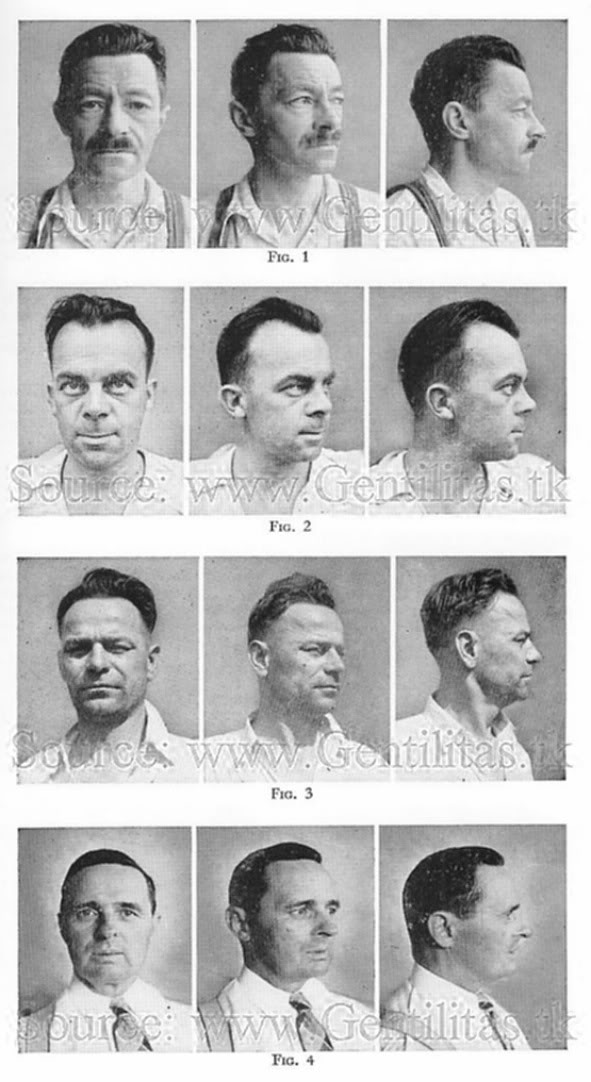
You mean this?
Coon%20Plate%2028.jpg


How would this compare as a modern sample?
rossi-enrico2.jpg

13962738_10153595186506854_4072269758860346613_n%20-%20Copia-kf0G-U46030896372992QdE-1224x916@CorriereFiorentino-Web-Firenze-593x443.jpg


What do you think of this reconstruction of the Neolithic woman from Malta...

local_05_1_temp-1368685899-51947d4b-620x348.jpg


It's 3600 BC, however, so time enough for some CHG to have made its way there.
 
not sure if already posted
http://www.sciencedirect.com/science/article/pii/S0018442X10001071?via=ihub
(1) biological divergence between the Sardinian and peninsular Italian populations; (2) similarity/continuity among Neolithic, Bronze Age and recent Sardinians; (3) biological separation between the Nuragic and Etruscan populations; (4) contribution of a Palaeo-Mesolithic gene pool to the genetic structure of current Sardinians
 
not sure if already posted
http://www.sciencedirect.com/science/article/pii/S0018442X10001071?via=ihub
(1) biological divergence between the Sardinian and peninsular Italian populations; (2) similarity/continuity among Neolithic, Bronze Age and recent Sardinians; (3) biological separation between the Nuragic and Etruscan populations; (4) contribution of a Palaeo-Mesolithic gene pool to the genetic structure of current Sardinians

Were you able to get access to the full paper or at least able to see the tables clearly?
 
I was able to circumvent it by right clicking on the images, and selecting "Open in new tab". It gives a slightly larger image from the thumbnail. Which I zoomed in on, and took screen caps. It's not the best resolution, especially in regards to the map. But at least we can see the PCAs a bit clearer.

dMS8gBf.png
 
"The results showed the tendency to progressive differentiation between Sardinian groups and peninsular Italian groups, with the possible exception of a discontinuity showed by the Bonnànaro (Early Bronze Age) Sardinian sample."

....curiously Bonnanaro material culture is very similar to that found in the North-east of Italy at that time (Polada, Early Bronze Age...a well known fact)

just an example..

Museo_Rambotti_-_St_38320_-_Tazza_-_Lavagnone.jpgM.Sanna_aprile_068.jpg
 
^^So, perhaps a smidgen of northeastern ancestry in them?

Interesting that Otzi so often clusters with Nuragic people.
 
Were you able to get access to the full paper or at least able to see the tables clearly?

no i dont, though the tables would be interesting as they most prob would incl the indeces; as for #50 i really dont know but i understand OZI as ozieri not much as ötzi;
 
^^So, perhaps a smidgen of northeastern ancestry in them? Interesting that Otzi so often clusters with Nuragic people.
Yes probably, they did not come directly from the Northeast, but likely from Tuscany or Liguria. I have a book written in the 90s about these stuffs...the Beaker and Bonnanaro individuals in Sardinia were often brachycephals or Corded type and Recent Mediterraneans/Aquitanian-Mediterraneans (??? What does it mean? experts?). Later they were mostly "reabsorbed" by the older Mediterranean majority.
 
Yes probably, they did not come directly from the Northeast, but likely from Tuscany or Liguria. I have a book written in the 90s about these stuffs...the Beaker and Bonnanaro individuals in Sardinia were often brachycephals or Corded type and Recent Mediterraneans/Aquitanian-Mediterraneans (??? What does it mean? experts?). Later they were mostly "reabsorbed" by the older Mediterranean majority.

It's because of the genetics of Aquitaine, i.e. southwestern France. The heavily EEF, low steppe "profile" runs across southern France all the way to Aquitaine, which fronts on the Atlantic and has no coast on the Mediterranean. We know that now because someone finally took a sample there.

So, on a lot of graphs, PCAs, especially older ones, you're only looking at maybe half or two thirds of the country.

Actually, the same applies to Portugal and Galicia but I figure they think people understand that.

It's odd how for years people were convinced that there was only one type of "French" genetic profile. I kept on telling them that southern France was different, but you would think I was speaking Greek. :) You only needed to be there once to know that.

2000px-Aquitaine_in_France.svg.png
 
i'm pretty sure that they are talking about Physical types in this Book (there are just few citations of Cavalli Sforza...it was published in 1995), like some sort of sub-type of the Mediterranean kind, but i'm not an expert regarding Phenotypes, I only know the basics :)
 
i'm pretty sure that they are talking about Physical types in this Book (there are just few citations of Cavalli Sforza...it was published in 1995), like some sort of sub-type of the Mediterranean kind, but i'm not an expert regarding Phenotypes, I only know the basics :)

I last read this stuff probably seven years ago, but from what I remember Corded Ware is dolichocephalic. Brachycephaly was more present in Bell Beaker. I think there was some feeling that more brachy types came into Europe with metals, perhaps "Dinaric" types.

Coon thought that Dinarics were a blend between Atlanto-Meds and Alpines, but honestly, I don't think there was a consensus on exactly what constituted and "Atlanto Med".

These kinds of inconsistencies are why I rather gave up on it all, in addition to the muddying of the waters on anthro-fora where they just made up their own definitions, from what I could see. Thus, when most actual anthropologists seemed to feel Iberia was gracile med central with very few Atlanto Meds and the anthrofora had it all populated by Atlanto-Meds.

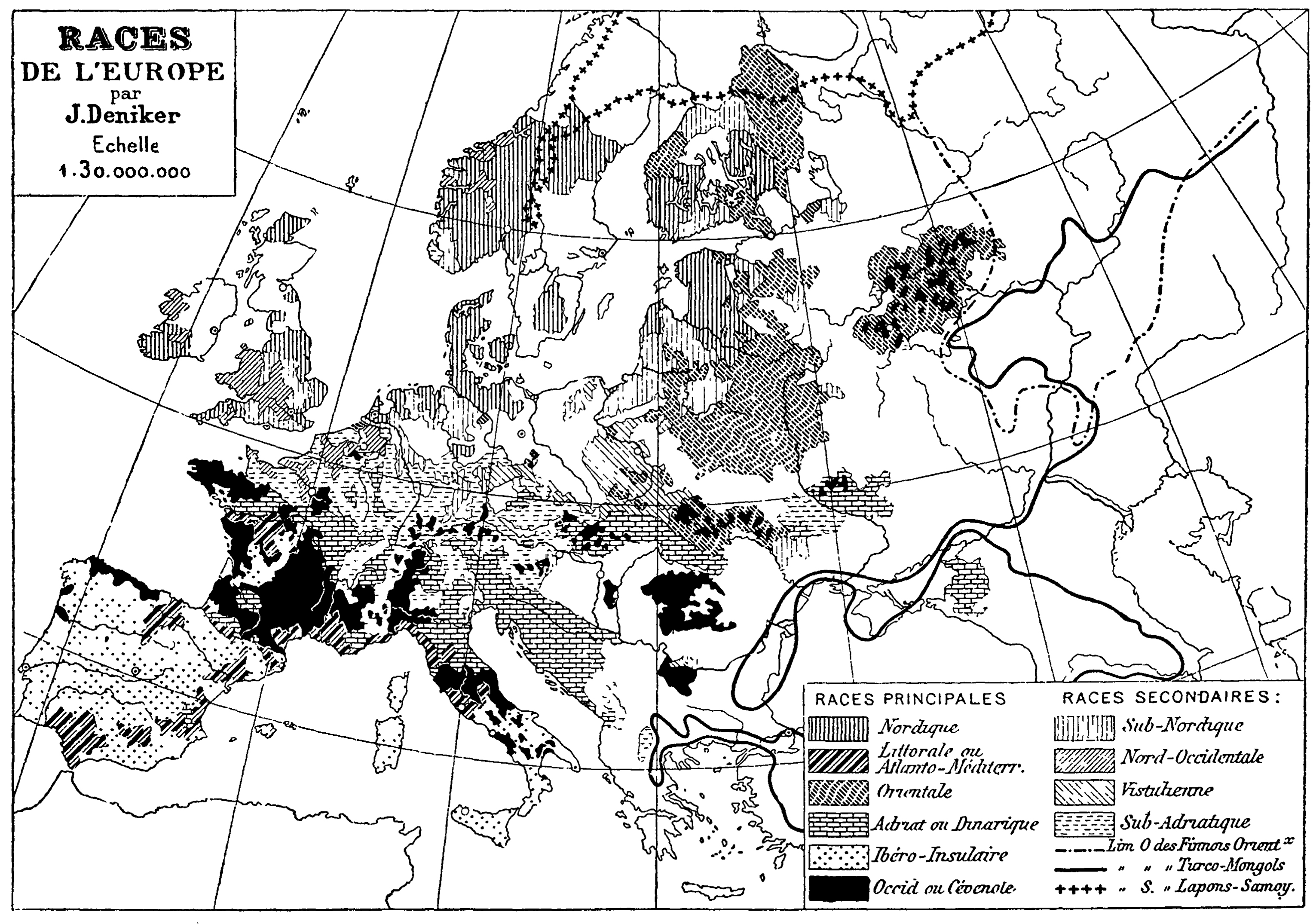
I mean look at the differences here:
640px-Passing_of_the_Great_Race_-_Map_4.jpg


Deniker%27s_Races_de_l%27Europe_%281899%29.jpg


attachment.php


W9wv95b.jpg


Like results from testing companies, a lot of people just pick the one they prefer for whatever reason.

If you can find a cite for what you were quoting that would be interesting.
 
yes i know Corded type was long head, in the book the author, a Doctor and Physical anthropologist, wrote that in the tombs of that period (Early Bronze Age) new brachy and dolico types appeared, included "Aquitanian-Mediterraneans and Recent Mediterraneanas" according to "Charles classification"... but nevermind...i trust DNA more :)
 
I last read this stuff probably seven years ago, but from what I remember Corded Ware is dolichocephalic. Brachycephaly was more present in Bell Beaker. I think there was some feeling that more brachy types came into Europe with metals, perhaps "Dinaric" types.

Coon thought that Dinarics were a blend between Atlanto-Meds and Alpines, but honestly, I don't think there was a consensus on exactly what constituted and "Atlanto Med".

These kinds of inconsistencies are why I rather gave up on it all, in addition to the muddying of the waters on anthro-fora where they just made up their own definitions, from what I could see. Thus, when most actual anthropologists seemed to feel Iberia was gracile med central with very few Atlanto Meds and the anthrofora had it all populated by Atlanto-Meds.

.
I understand why you were discouraged: every map with uniform colours covering regions and supposed to represent a dominant type is to be excluded - reality of types can be discussed but when well elaborated, these types can be of some use if they are shown in their mixtures, their complexity - then we can see some more or less affinities between pop's. In France, History is often illustrated in the variations of the diverse mixes of types, and I think it's the same for other countries. Th
 
That said, the remote links between pops are better showed by global auDNA spite some phenotypical recent evolutions can be useful for some precise discriminations
 
First Natufians had broader faces than today Levant, these last ones a modern mix in some way - they were even different on this aspect from "ancient levant" of some studies - surely Natudians had kept older traits inherited from a roughly said 'cromagnoid' layer (not exactly the European typical type), concerning cranial aspect: some old common basis ('croma's came from South-East I believe) with different drifts and maybe more ancestral african inheritage kept too. As Natudians were not very homogenous we could imagine neolithisation was accompanied by a selection of some less typical element in them, witthout it would be due by force to a natural pressure; hazard can exist in drifts, hard to know? this phenotypical modif does not seem come along with great modification of the total auDNA, if I rely on modern admixtures;
to be more precise:
Natufians :
supposed to be descendants of ‘Geometric Kebarians’ HG’s what seems partly right only -


WILSHAW : Natufian Hayonim (H), Nahal Oren (N-O) and Ain Mallah (A-M) -


- the original HG’s groups which gave birth to Natufians were diverse ; it seems that Kebarians were not the only « fathers » - as a mean Natufians showed a between position compared to Ancient Levant (their immediate predecessors) and Maghreb HG’s by example -
- the first Natufians taken as a mean (3 sites) were closer to Maghrebin HG’s (M-HG’s) and by time got closer to Ancient Levant (A-L) and then a bit closer to Recent Levant (R-L), on the way from A-L to R-L but closer to the A-L -
- except in final stage, 3 Natufians sites showed heterogeneity (biologically, not culturally!) ; individuals can be correctly attributed to their respective internal group around 70 % - homogeneity and loss of diversity came later unifying diverse Natufian sites – at first stages, A-M site was closer to M-HG’s -
- the general trend (author’s opinion) is a moderate shortening + broadening of the skulls, and narrowing of the faces, put on the account of neolithicization (in fact rather in the very late stages) -​


I agree (with modesty) to the author conclusions stating the first Natufians sites showed a rather well shared culture but more than one ancestral pop biologically speaking (some of the features could be the result of introgressions from Anatolia horizons (higher skull, lower frontal angle, narrower face, aspect more marked in H and N-O, less in A-M site) -
& but :
Natufians separated first groups were between Maghreb HG’s and Ancient Levant : M-HG’s had low skulls, A-L high skulls – all of them had rather broad faces but as Natufians taken as a mean
A-L had high skulls and low frontal angles, M-HG’s had low skulls and high frontal angles -
spite the Natufians mean was rather closer to A-L compared to M-HG’s, they already showed they were not only on the straight way between both -
Recent Levant, whatever the part of lifestyle attached to Neolithicization (which could distord the straight way), show tendancies which cannot be explained by an osmosis between both : their only (relatively) homogenous trait is the narrower faces, but they show great heterogeneity concerning breadth/lenght of skulls, frontal angle and skull height, what is for me the evidence they received other pops inputs after Natufian’s times because I doubt it could be only the result of a drift based upon pure hazard in a rather short time and out of isolation – in some way they show kind of a regression (only at first sight) for some features compared to late Natufian means : I see here a ‘west-asian’ (Caucasus or Zagros input, with something recalling the ‘cappadocian med’ type mean, with a bit lower skull and higher frontal angle ; I regreat I cannot compare the shapes ; ATW these last tendencies can have the same remote origin than among the M-HG’s : old traits can be shared for some peculiar details even when pops have diverged since lo,g enough time and the allover auDNA has strongly drifted meanwhile.
I don’t refute (!) the authors global conclusions about neolithicization and morphology (progressive sedentism) but I find it’s a bit simplistic to input the whole transformation having given us the Recent Levant pop of Palestine to this unique change of culture ; I know we cannot always explain modif's by newcomers introgression and we have to explain the birth of new long faced or narrow faced types as for a part among Anatolian farmers introgression, but we had already some Paleo and Meso HG’s of Europe with longer faces than say our beloved ‘croma’. It’s a pity we don’t have in this study a craniologic survey of Jericho Neolithic pop, before recent Levant ; what we have is only a discret traits survey showing they lacked some of the most common peculiarities of Natufians (founder effect traits absent in other sites? Small sample of Natufians?)

a reproach to all these modern metric surveys : they compare often close enough pop’s, exaggerating their differences, without we could have a whole variation scale to put them in perspective ;
 
Sounds very reasonable.

You mean this?
at do you think of this reconstruction of the Neolithic woman from Malta...

local_05_1_temp-1368685899-51947d4b-620x348.jpg


It's 3600 BC, however, so time enough for some CHG to have made its way there.

concerning the 4 males pictures supposed to illustrate 'danubian' type, I think the two central ones are the better concerning a very high skull, of CI dolicho-meso - the third (second of both) has nevertheless a too ascending nose tip (something borrebylike?)- ATW I would bet 'danubians' had not the rather turned down and pointed nose tip of most of Near-easterners and even western Mediterraneans of today - in Turkey and even among Arabic pops, some people show more "mean european" noses-
the female : I 'll say nothing about her fleshy parts - what is sure is she doesn't show seemingly ANY evident 'cappadocian' or 'indo-afghan' input and her face is too long+narrow and her skull not enough high to evocate 'danubian' type 'danubian face was rather narrow compared to the Hg's mean but was not soo long - someones would say kind of 'atlanto-med', a premodern concept based upon little ! but a crossing between 'nordic' and certain 'med' could produce this; very unprecise answer of mine. I don't have the nude crania here.
&: BTW old scientists didn't agree concerning 'atlanto-med' type by force concerning its supposed genesis from preceding types -
 
Back
Top