• Don't want to see ads? Install an adblocker like uBlock Origin or use a Europe-based privacy-friendly browser like Vivaldi or Mullvad.

The genetic history of Ice Age Europe

Can you dicribed which populations were mammoth's hunters and which were not, and why?
Post 214 should have been self-explanatory, check post 218 too.
 
Certainly a higher population ratio of WHG to pre LGM populations HGs could explain the final "product". Also, genetic game of genomic adaptation and selection can do this job too. WHG genome could have been positively selected as more suitable to post glacial scenario, even if initial mixing events were 50/50. Same way Neanderthal genome seems to be weeded out with time passing by.

Yes. And there is even a paper out one that.
http://dienekes.blogspot.nl/2015/03/natural-selection-and-ancient-european.html

However, the amount of genes, SNP's and what not that don't do a thing is far larger than coding genes, so I gather this will have only a tiny effect, if visible at all.
 
there is very little - not to say none - archeological evidence of human presence in western Siberia before LGM
the Usht-Ishim bone found is an exception
I doubt there was any exchange of human DNA between the Altaï area and Europe before LGM
this study now seems to confirm that
from earlier studies we know there was exchange during mesolithic
during LGM travelling across western Siberia was impossible for humans and I suspect even for Mammoths, while south of the icecaps there was permafrost not allowing any plants to grow on which mammoths could feed
there was a corridor though along the northern mountain slopes between the Hindu Kush and the Altaï Mountains which was frequently used by paleolithic men

in western Europe mammoths went extinct allread during early Magdalenean, when the first huters started turining north


http://www.sciencemag.org/news/2016/01/grisly-find-suggests-humans-inhabited-arctic-45000-years-ago

When they dated the remains, the researchers got another surprise: The mammoth died 45,000 years ago. That means that humans lived in the Arctic more than 10,000 years earlier than scientists believed, according to a new study.
 
@Epoch,

I took a look at the mammoth paper to which Moesan provided a link, and indeed up until around 14,000 YBP, the approximate date of the Villabruna man, there were mammoths still in Europe, although only north of the Alps in central Europe and far to the east on the steppe. Where there were mammoths there were probably mammoth hunters. However, why, absent ancient dna from them, would we assume that they were the same as the Villabrunians?

Let's leave aside for now the fact that the authors of the paper don't see any indication of Mal'ta type gene flow into the Villabrunians.

Looking just at the culture, at approximately the same time that the mammoths died out didn't the Villabrunians already have a very different culture, one adapted to a different climate and different flora and fauna?
The epigravettian in northeastern Italy is dated to 18,000 YBP.

Isn't it the case that only when the climate changed in the north did they themselves move north? Upon reaching those areas they might have encountered some survivors of the prior cultures. Couldn't that be the reason that the hunter-gatherers who show East Asian admixture are in the north?

In terms of Italy itself, there are Aurignacian sites, and Gravettian sites (Bilancino in Toscana is dated to 29,000 to 20,000 YBP)and the conventional wisdom has been that they populated Italy from north to south. I’m not sure that I think that’s necessarily true any longer. Even if it is, that’s no evidence that the same was true of the Villabrunians.

It seems to me that the evidence points to new people, adapted to a new culture, moving from south to north, whether they are the result of admixture or not.

The skeletal features of these Villabrunians/WHGs are quite different from those of the Aurignacians/Gravettians who preceded them according to the researchers who actually examined the remains, more “modern” looking, and indeed from the remains of Mal'ta, who the anthropologists who examined those remains claimed had some "Mongoloid" features. There were howls of denial all over some blogs, but the ancient dna now shows that indeed the anthropologists may have been onto something because there is definitely East Asian affinity in Mal'ta, not to mention the fact that EDAR showed up in the SHG. Indeed, according to this paper, if I'm remembering it correctly, the Mal'ta lineage isn't even considered West Eurasian any longer is it? I practically got virtually attacked for suggesting such a thing when the Lazaridis paper came out. Perhaps, as Rethel mentioned upthread Mal'ta himself is actually a mix of ENA with some more western lineage.

It would certainly help if they tested these earlier remains from Italy.

Not that I know any more than anyone else where that source is actually located. I’m just brainstorming here. Given that their culture, technology, was adapted to southern refugia, somewhere around the Mediterranean and the Black Seas is probably a good bet. So, perhaps indeed Italy, or areas around the Crimea, or parts of Anatolia, despite the fact that Gravetto-Danubian seems to feel there weren't many settlements there. The same was said of Italy, let's not forget.

Everyone had me convinced that Italy was virtually uninhabited in the Paleolithic. Yet there is Villabruna, and the Arene Candide and Pagliacci. Italy and Anatolia and the Balkans have been densely inhabited for millennia. Civilization lies on top of civilization. We can't plow up a field without hitting Roman and Etruscan remains, and in my area, the older statue stele. Who knows what's buried even further down. In Fivizzano about a half hour from where I was born there are natural grottoes and caverns. I’ve seen dates of 57,000 to 29,000 years ago for some of the area, with remains of dhole and leopards, cave bears, wolves and foxes. Lithic assemblages have been found from the Mousterian, but there are some things from the Neolithic as well. The excavations were sporadically and haphazardly done.It may be that it has been so continuously used that it won’t provide very clear answers, but somebody should give it a shot.

(Guido Barbujani, when he was hosting the 2014 Evolution conference in Firenze, took some of the participants to visit the Equi grottoes, and gives an overview here on pages 11-14. There are also come great pictures.
http://eshe.eu/static/eshe/files/PESHE_3_2014_Florence.pdf)

As to how Villabruna like people might have made it to northern Iberia, the modern topographical map you posted gives a slightly wrong impression, I think. This is my backyard, and I’ve hiked this area all my life, and I’m no mountain climber. It’s perfectly normal to hike from Portovenere near LaSpezia to Riomaggiore in the Cinque Terre (5 hours), from there to Monte Rosso al Mare (3 hours), and from there to Levanto in three more hours, and so on to Finale Ligure, near which we find the Arene Candide site. From there it’s a short distance to what is now the French Riviera. (The times I’ve given are on more modern man-made trails-I just posted a video on the travel section- so traversing the trails further inland would be longer, although you can also use the small river valleys.)
http://www.maphill.com/italy/liguria/detailed-maps/terrain-map/

Even the highest points of the Ligurian Alps can be reached relatively easily because the entire area is criss-crossed by small rivers and their valleys, as this guide explains.
https://www.youtube.com/watch?v=xVTnzXoXF4s

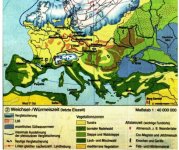
Regardless, in the LGM, while it was a hell of a lot colder, there was a narrow coastal strip.
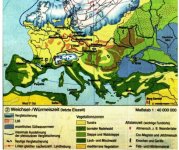
Cartomaster map of Italy during the LGM.jpg
 
from the remains of Mal'ta, who the anthropologists who examined those remains claimed had some "Mongoloid" features. There were howls of denial all over some blogs, but the ancient dna now shows that indeed the anthropologists may have been onto something because there is definitely East Asian affinity in Mal'ta, not to mention the fact that EDAR showed up in the SHG. Indeed, according to this paper, if I'm remembering it correctly, the Mal'ta lineage isn't even considered West Eurasian any longer is it? I practically got virtually attacked for suggesting such a thing when the Lazaridis paper came out. Perhaps, as Rethel mentioned upthread Mal'ta himself is actually a mix of ENA with some more western lineage.

MA1 having East Asian affinity would be news to me. If he does it's very small. Paleolithic Europeans form a clade as opposed to him, but he's still apart of the big family they are, he's like their cousin. I doubt Mal'ta's people would be classified as having European features because I would guess Euro or West Eurasian specific features come from much more specific ancestors like WHG, Basal Eurasian/UHG hyprid, etc. MA1's people being non-Caucasian might be wrongly classified as East Asian. There's no way MA1's people looked Eastern Asian, no way at all.
 
@Epoch,


Everyone had me convinced that Italy was virtually uninhabited in the Paleolithic. Yet there is Villabruna, and the Arene Candide and Pagliacci. Italy and Anatolia and the Balkans have been densely inhabited for millennia. Civilization lies on top of civilization. We can't plow up a field without hitting Roman and Etruscan remains, and in my area, the older statue stele. Who knows what's buried even further down. In Fivizzano about a half hour from where I was born there are natural grottoes and caverns. I’ve seen dates of 57,000 to 29,000 years ago for some of the area, with remains of dhole and leopards, cave bears, wolves and foxes. Lithic assemblages have been found from the Mousterian, but there are some things from the Neolithic as well. The excavations were sporadically and haphazardly done.It may be that it has been so continuously used that it won’t provide very clear answers, but somebody should give it a shot.
I always found it unbelievable too, together with uninhabited or very sparsely inhabited Balkans.
 
@Epoch,

I took a look at the mammoth paper to which Moesan provided a link, and indeed up until around 14,000 YBP, the approximate date of the Villabruna man, there were mammoths still in Europe, although only north of the Alps in central Europe and far to the east on the steppe. Where there were mammoths there were probably mammoth hunters. However, why, absent ancient dna from them, would we assume that they were the same as the Villabrunians?

The idea was that the mammoth connection would serve as a route for the perceived ANE/Han like admixture in proto-Villabruna, rather than Villabruna proper. But at David more oddities pop up:

Chimp Mbuti Hungary_HG Muierii2 -0.0272 -2.402
Chimp Mbuti Hungary_HG Paglicci133 -0.0273 -2.329
Chimp Mbuti Hungary_HG Pavlov1 -0.0097 -0.695
Chimp Mbuti Hungary_HG Vestonice16 -0.017 -3.736

and

Chimp Mbuti Vestonice16 Ust_Ishim -0.0045 -1.041 613349
Chimp Mbuti Villabruna Ust_Ishim -0.0116 -2.978 734472

and

Chimp Yoruba Vestonice16 Ust_Ishim -0.0077 -1.717 613349
Chimp Yoruba Villabruna Ust_Ishim -0.0152 -3.83 734472

So it looks like Villabruna likes everything post-LGM (as AG3 is) over pre-LGM (as Mal'ta is).

Let's leave aside for now the fact that the authors of the paper don't see any indication of Mal'ta type gene flow into the Villabrunians.

Looking just at the culture, at approximately the same time that the mammoths died out didn't the Villabrunians already have a very different culture, one adapted to a different climate and different flora and fauna?
The epigravettian in northeastern Italy is dated to 18,000 YBP.

Isn't it the case that only when the climate changed in the north did they themselves move north? Upon reaching those areas they might have encountered some survivors of the prior cultures. Couldn't that be the reason that the hunter-gatherers who show East Asian admixture are in the north?

In terms of Italy itself, there are Aurignacian sites, and Gravettian sites (Bilancino in Toscana is dated to 29,000 to 20,000 YBP)and the conventional wisdom has been that they populated Italy from north to south. I’m not sure that I think that’s necessarily true any longer. Even if it is, that’s no evidence that the same was true of the Villabrunians.

It seems to me that the evidence points to new people, adapted to a new culture, moving from south to north, whether they are the result of admixture or not.

The skeletal features of these Villabrunians/WHGs are quite different from those of the Aurignacians/Gravettians who preceded them according to the researchers who actually examined the remains, more “modern” looking, and indeed from the remains of Mal'ta, who the anthropologists who examined those remains claimed had some "Mongoloid" features. There were howls of denial all over some blogs, but the ancient dna now shows that indeed the anthropologists may have been onto something because there is definitely East Asian affinity in Mal'ta, not to mention the fact that EDAR showed up in the SHG. Indeed, according to this paper, if I'm remembering it correctly, the Mal'ta lineage isn't even considered West Eurasian any longer is it? I practically got virtually attacked for suggesting such a thing when the Lazaridis paper came out. Perhaps, as Rethel mentioned upthread Mal'ta himself is actually a mix of ENA with some more western lineage.

IIRC it was Kristiina who mentioned it. The man that excavated the site conferred Mongolid features on Mal'ta.

https://en.wikipedia.org/wiki/Mal'ta-Buret'_culture#Archaelogical_evidence

However, why wasn't it seen in Mal'ta's genome? Fins have a tad noticeable ENA admixture without showing any features.

It would certainly help if they tested these earlier remains from Italy.

Yes. And again, pity Paglicci71 was only 4000 SNPs.

Not that I know any more than anyone else where that source is actually located. I’m just brainstorming here. Given that their culture, technology, was adapted to southern refugia, somewhere around the Mediterranean and the Black Seas is probably a good bet. So, perhaps indeed Italy, or areas around the Crimea, or parts of Anatolia, despite the fact that Gravetto-Danubian seems to feel there weren't many settlements there. The same was said of Italy, let's not forget.

Everyone had me convinced that Italy was virtually uninhabited in the Paleolithic. Yet there is Villabruna, and the Arene Candide and Pagliacci. Italy and Anatolia and the Balkans have been densely inhabited for millennia. Civilization lies on top of civilization. We can't plow up a field without hitting Roman and Etruscan remains, and in my area, the older statue stele. Who knows what's buried even further down. In Fivizzano about a half hour from where I was born there are natural grottoes and caverns. I’ve seen dates of 57,000 to 29,000 years ago for some of the area, with remains of dhole and leopards, cave bears, wolves and foxes. Lithic assemblages have been found from the Mousterian, but there are some things from the Neolithic as well. The excavations were sporadically and haphazardly done.It may be that it has been so continuously used that it won’t provide very clear answers, but somebody should give it a shot.

(Guido Barbujani, when he was hosting the 2014 Evolution conference in Firenze, took some of the participants to visit the Equi grottoes, and gives an overview here on pages 11-14. There are also come great pictures.
http://eshe.eu/static/eshe/files/PESHE_3_2014_Florence.pdf)

There is also Fumane
http://www.ice-age-europe.eu/visit-us/network-members/fumane-cave.html
http://www.visual-arts-cork.com/prehistoric/fumane-cave-paintings.htm

Is there evidence for wild horses in Italy?

As to how Villabruna like people might have made it to northern Iberia, the modern topographical map you posted gives a slightly wrong impression, I think. This is my backyard, and I’ve hiked this area all my life, and I’m no mountain climber. It’s perfectly normal to hike from Portovenere near LaSpezia to Riomaggiore in the Cinque Terre (5 hours), from there to Monte Rosso al Mare (3 hours), and from there to Levanto in three more hours, and so on to Finale Ligure, near which we find the Arene Candide site. From there it’s a short distance to what is now the French Riviera. (The times I’ve given are on more modern man-made trails-I just posted a video on the travel section- so traversing the trails further inland would be longer, although you can also use the small river valleys.)

I think mountains wouldn't have stopped anyone, but the mountains were mostly covered with ice caps IIUC and there were - quite importantly - arctic deserts, even if I am not sure this was the case in the Mediterranean Alps. Also, Loess deposits point to vegetationless floodplains.


http://www.maphill.com/italy/liguria/detailed-maps/terrain-map/

Even the highest points of the Ligurian Alps can be reached relatively easily because the entire area is criss-crossed by small rivers and their valleys, as this guide explains.
https://www.youtube.com/watch?v=xVTnzXoXF4s

Regardless, in the LGM, while it was a hell of a lot colder, there was a narrow coastal strip.


Is there anything known from that strip?
 
Last edited:
@Angela

What if the scenario for Italy would be a similar one as for the Fanco-Cantabrian refuge: A resurge of Aurignacian Italians?
 
@Angela

What if the scenario for Italy would be a similar one as for the Fanco-Cantabrian refuge: A resurge of Aurignacian Italians?

The Villabrunians don't look like Aurignacian people to me, though. They don't even look like Gravettians. Granted, you're hearing that from someone whose training in physical anthropology consists of one university class in it and whatever reading I've done on my own, so I'm no authority. :) That's why I keep posting pictures on the anthropology section and asking questions of Moesan, who knows a heck of a lot more about it than I do. Unfortunately there's no substitute for examining the remains, and even the pictures I find don't show all views, or the measurements aren't posted in the article. Then there's all the disagreement in the field itself.
http://www.eupedia.com/forum/threads/29518-Collection-of-skulls?p=480126#post480126

Still, all the indications to me are that Villabruna comes from a different looking bunch, shorter, with a different skull shape, narrower jaw, etc., adapted to a different climate and flora and fauna, I think. My hunch is that the majority of his ancestry is from a line that diverged pretty early from the prior inhabitants of Europe, although a couple of thousand years of drift could also explain it. He could well have some ancestry from the prior groups, of course.

As we discussed upthread somewhere, in the majority of cases a total change of subsistence strategy, technology, etc. comes with a major genetic change, i.e. new people.

I do think it's possible that this Villabrunian group moved north from Italy or from the Balkans or the Crimea or other Black Sea areas if they were also there. In terms of Italy, the majority of them could have gone around the east end of the Alps, or they could have gone into the marsh lands and then moved on from there.

In that regard, while we can't know precisely what the once marshy areas of the northern Adriatic were like during the LGM or early post-LGM period, if they were anything at all like modern marshy areas they would have been a cornucopia of good things to eat, from fish and birds to small game. I also don't think we know if, like modern marshy areas in places like Louisiana in the U.S., for example, there were bits of land above the water where shelters could have been built.
https://s-media-cache-ak0.pinimg.com/736x/d9/ae/c3/d9aec33480904420c0b9cef30d1656b2.jpg

Regardless, it could relatively easily be traversed.
 
Is there anything known from that strip?
Let's keep it in perspective. At about same time a group of hunter gatherers made it through Bering "Bridge" from Siberia to America. At least 1,000 km through arctic wasteland and very close to Glacial Edge. However difficult the journey was they made it, men and women together. In this case, passing Alps through the coast was a "walk in the park" for WHGs.
 
Let's keep it in perspective. At about same time a group of hunter gatherers made it through Bering "Bridge" from Siberia to America. At least 1,000 km through arctic wasteland and very close to Glacial Edge. However difficult the journey was they made it, men and women together. In this case, passing Alps through the coast was a "walk in the park" for WHGs.

I think they followed the Mammoths. It is wat Eurogenes post makes clear. As there was mammoth gene flow up and forth Beringia there also was human gene flow.

me said:
The fact that Aurrignacian admixture is different (higher) in West-European WHG than more east makes the case for partial isolation between WHG and Magdalenian.
EDIT: No, not true. A third admixture is proof of proper contact.

Were there horses in Italy? It is one of the Magdalenian game animals.
 
My two cents… for what it’s worth.
From a geographical perspective It would seem that southern Italian/Sicilian peninsula would be an ideal place for a population to be isolated for a very long time regardless of the status of the Adriatic basin, eh?

They could’ve worked out their small game and marine resources chops. In the end, that skill would've been most advantageous. Always fish, birds and rabbits... deer, horse?

What if Italy had more to offer in that regard, could it not have supported a larger population than previously thought if such things were on their menu?

Pagliacci was also an Aurignacian site, too.

Maybe some went farther south? And obviously sooner or later some went west along the Ligurian coast, probably all the way to the Gulf of Lion where they met Goyet-ish Aurignacian ancestors of El Miron.
 
Last edited:
My two cents… for what it’s worth.
From a geographical perspective It would seem that southern Italian/Sicilian peninsula would be an ideal place for a population to be isolated for a very long time regardless of the status of the Adriatic basin, eh?

They could’ve worked out their small game and marine resources chops. In the end, that skill would've been most advantageous. Always fish, birds and rabbits... deer, horse?

What if Italy had more to offer in that regard, could it not have supported a larger population than previously thought if such things were on their menu?

Pagliacci was also an Aurignacian site, too.

Maybe some went farther south? And obviously sooner or later some went west along the Ligurian coast, probably all the way to the Gulf of Lion where they met Goyet-ish Aurignacian ancestors of El Miron.

It certainly seems like a rather parsimonious version of how things could have gone.
 
epoch;480116]The idea was that the mammoth connection would serve as a route for the perceived ANE/Han like admixture in proto-Villabruna, rather than Villabruna proper.

Ok. That's slightly different then. Still, as I said, from the paper:
"Second, we detect an excess of allele sharing with east Asians in a subset of Villabruna Cluster individuals— beginning with an ~13,000-year-old individual from Switzerland—as revealed by significant statistics of the form D(Test1, Test2; Han, Mbuti) (Fig. 4b and Extended Data Fig. 3). For example, Han Chinese share more alleles with two Villabruna Cluster individuals (Loschbour and LaBrana1) than they do with Kostenki14"
http://genetics.med.harvard.edu/reich/Reich_Lab/Welcome_files/FuQ_nature17993.pdf

They seem to me to be proposing that the direct Villabruna line doesn't have any, or appreciably any, of this ancestry, and instead it enters the cluster later and in a more northerly locale with Bichon. That would mean this ancestry either existed in those more northerly regions in the remnants of the prior groups, or this "East Asian" flow came west across the steppes in the very late stages of the LGM or post LGM. That makes much more sense to me from an archaeological point of view. I don't know of any evidence showing Mal'ta like influence in lithics etc moving west into central Europe, do you?

IIRC it was Kristiina who mentioned it. The man that excavated the site conferred Mongolid features on Mal'ta.

My apologies to Kristiina if she reads this. The first mention of that idea that I remember reading is from Rethel's post upthread.

However, why wasn't it seen in Mal'ta's genome? Fins have a tad noticeable ENA admixture without showing any features.

I've been wondering about that too. I don't know if this makes sense but could it have something to do with the fact that "East Asian", as a group or cluster is really a Post LGM composite? I have never followed the population genetics papers relating to East Asia, so that could be totally off base. If it isn't, could it be that Mal'ta is so old that what it has is a lot of ENA, which is only part of what went in to make "East Asian"?

Is there evidence for wild horses in Italy?
There were apparently lots of them. There were wild horses in various places around Europe. The numbers waxed and waned depending on the time period and the climate and flora. They apparently increased in places where there was open grassland, which we would assume, and when it was cooler and drier apparently.

Anyway, this is an old anthropology text which talks about caves in Italy being littered with horse bones. It's outdated in many ways, but I presume that horse bones are horse bones.
https://books.google.com/books?id=v...ge&q=Wild horses in Paleolithic Italy&f=false


This is a more recent text:
https://books.google.com/books?id=t...ge&q=Wild horses in Paleolithic Italy&f=false

I think mountains wouldn't have stopped anyone, but the mountains were mostly covered with ice caps IIUC and there were - quite importantly - arctic deserts, even if I am not sure this was the case in the Mediterranean Alps. Also, Loess deposits point to vegetationless floodplains.

Is there anything known from that strip?

From the map, the ice cap didn't reach the coast. The coastal strip is marked as having vegetation, so how terrible could it have been? It may have been at certain periods, but certainly not in the period depicted on this map. We also don't know when these hypothetical proto-Villabrunians made his trek to northern Spain in time to create El Miron. If they made it at the time depicted in the map or one like it, I think it was hardly all that difficult a route, especially as they were always in reach of the sea and all those resources.

Here is the map again for those who have joined us late.
Cartomaster map of Italy during the LGM.jpg
You can take a look at the paper from which it came. There's a wealth of data for all of Europe.
http://129.187.45.33/CartoMasterNew/fileadmin/user_upload/Jaunsproge_Report.pdf
 
epoch;480116]The idea was that the mammoth connection would serve as a route for the perceived ANE/Han like admixture in proto-Villabruna, rather than Villabruna proper.

Ok. That's slightly different then. Still, as I said, from the paper:
"Second, we detect an excess of allele sharing with east Asians in a subset of Villabruna Cluster individuals— beginning with an ~13,000-year-old individual from Switzerland—as revealed by significant statistics of the form D(Test1, Test2; Han, Mbuti) (Fig. 4b and Extended Data Fig. 3). For example, Han Chinese share more alleles with two Villabruna Cluster individuals (Loschbour and LaBrana1) than they do with Kostenki14"
http://genetics.med.harvard.edu/reich/Reich_Lab/Welcome_files/FuQ_nature17993.pdf

They seem to me to be proposing that the direct Villabruna line doesn't have any, or appreciably any, of this ancestry, and instead it enters the cluster later and in a more northerly locale with Bichon. That would mean this ancestry either existed in those more northerly regions in the remnants of the prior groups, or this "East Asian" flow came west across the steppes in the very late stages of the LGM or post LGM. That makes much more sense to me from an archaeological point of view. I don't know of any evidence showing Mal'ta like influence in lithics etc moving west into central Europe, do you?

IIRC it was Kristiina who mentioned it. The man that excavated the site conferred Mongolid features on Mal'ta.

My apologies to Kristiina if she reads this. The first mention of that idea that I remembered reading is from Rethel's post upthread.

However, why wasn't it seen in Mal'ta's genome? Fins have a tad noticeable ENA admixture without showing any features.

I've been wondering about that too. I don't know if this makes sense but could it have something to do with the fact that "East Asian", as a group or cluster is really a Post LGM composite? I have never followed the population genetics papers relating to East Asia, so that could be totally off base. If it isn't, could it be that Mal'ta is so old that what it has is a lot of ENA, which is only part of what went in to make "East Asian"?

Is there evidence for wild horses in Italy?
There were apparently lots of them. There were wild horses in various places around Europe. The numbers waxed and waned depending on the time period and the climate and flora. They apparently increased in places where there was open grassland, which we would assume, and when it was cooler and drier apparently.

Anyway, this is an old anthropology text which talks about caves in Italy being littered with horse bones. It's outdated in many ways, but I presume that horse bones are horse bones.
https://books.google.com/books?id=v...ge&q=Wild horses in Paleolithic Italy&f=false


This is a more recent text:
https://books.google.com/books?id=t...ge&q=Wild horses in Paleolithic Italy&f=false

I think mountains wouldn't have stopped anyone, but the mountains were mostly covered with ice caps IIUC and there were - quite importantly - arctic deserts, even if I am not sure this was the case in the Mediterranean Alps. Also, Loess deposits point to vegetationless floodplains.

Is there anything known from that strip?

From the map, the ice cap didn't reach the coast. The coastal strip is marked as having vegetation, from the map legend, so how terrible could it have been? It may have been at certain periods, but certainly not in the period depicted on this map. We also don't know when these hypothetical proto-Villabrunians made their trek to northern Spain in time to create El Miron. If they made it at the time depicted in the map or one like it, I think it was hardly all that difficult a route, especially as they were always in reach of the sea and all those resources.

You can take a look at the paper from which it came. There's a wealth of data for all of Europe.
http://129.187.45.33/CartoMasterNew/fileadmin/user_upload/Jaunsproge_Report.pdf
 
I think they followed the Mammoths. It is wat Eurogenes post makes clear. As there was mammoth gene flow up and forth Beringia there also was human gene flow.
No problem with this. As long as people can find food on their way they can survive and travel. If big part of WHG food was of marine source they could easily cross Alps along the coast. As long as there was grass in summer they could have hunt deer, horse, rabbits, birds, etc.
I'm not sure why you doubt in ability of HGs to pass through?
 
It certainly seems like a rather parsimonious version of how things could have gone.

Parsimonious indeed, the notion needs work--a lot of work.

And thank you for the maps and thesis links, btw.

But I guess I have to like the idea that people, hanging out down in the south of Italy, or wherever it was, quietly (and probably quite flexibly) hunting and gathering timid little woodland creatures and fishing, would ultimately prevail, while their sexier, attention grabbing mammoth, bison, aurochs, reindeer and or whatever big game there was hunting cousins up north would ultimately hunt themselves out of food, and/or be unable to adapt quickly enough to changing climatic conditions... Gravettians, Solutreans and Magdalenians haven't made as significant impact upon the population genetics of modern Europe.

That could just be human nature, I suppose, that we get so overspecialized that we find ourselves redundant, or we're inflexible in the face of changing conditions we fail to learn new, adaptive behavior.
 
@Angela, epoch

If ANE had had a lot in common with East Asians we'd know. We don't know much about East Asian origins yet because of a lack of ancient genomes from there, however even if East Asians are a mixture of multiple distinct Crown Eurasians, and if MA1 shared significant decent from one of those branches we'd know. MA1 clearly is a brother to Paleolithic Europeans. If researchers decades ago said his people had Mongoloid features, they were mistaken. There's no point to discussing this, it is impossible for his people to have had East Asian skeletal features. His people had little in common with East Asians besides being Crown Eurasians, and therefore could not have had East Asian skeletal features.

Chances are they had Caucasoid or generic human features and were mistaken as Mongoloid. Native Americans are a good place to look because they're 40% ANE. Some of them look East Asian and some don't. Maybe their non-East Asian like features are from ANE.
 
Back
Top