


| Contents |
|---|

Introduction
Assisi, a medieval hill town in Italy's Umbria region, sits on the western slopes of Monte Subasio at an elevation of 400 metres. Located 19 kilometres east of Perugia, this UNESCO World Heritage site is renowned as the birthplace of St Francis, founder of the Franciscan order, and St Clare, founder of the Poor Clares. The town, built in distinctive pink stone from Monte Subasio, features narrow winding streets surrounded by medieval walls and preserves its historical layers from ancient Umbrian, Etruscan, and Roman times. Its most significant landmark is the 13th-century Basilica of San Francesco, which houses some of Italy's finest Early Renaissance frescoes by masters including Giotto, Cimabue, and Simone Martini. Beyond its religious significance as a major Catholic pilgrimage site, Assisi offers remarkable architectural heritage, including the Roman Temple of Minerva, the Cathedral of San Rufino, and the imposing Rocca Maggiore fortress overlooking the Umbrian valley.
Interesting Facts about Assisi
- Assisi, a UNESCO World Heritage Site, is the birthplace of St. Francis, founder of the Franciscan order, and St. Clare, founder of the Poor Clares.
- The Basilica of St. Francis in Assisi comprises two stacked churches (Upper and Lower) adorned with frescoes by Giotto, Cimabue, and other medieval masters.
- The hill where the Basilica of St. Francis stands was originally named "Colle dell?Inferno" (Hill of Hell) before being renamed "Colle del Paradiso" (Hill of Paradise) after the church's construction.
- Assisi's 13th-century Basilica of St. Francis was built in just 25 years, an unusually short timeframe for such a monumental structure.
- The town survived devastating earthquakes in 1997 that severely damaged its famous basilica, which reopened after extensive restoration within two years.
- Assisi contains a well-preserved Roman Temple of Minerva dating from the 1st century BCE, later converted into a church.
- St. Francis created the first-ever nativity scene display in 1223 at Greccio, a tradition now celebrated worldwide during Christmas.
- The Eremo delle Carceri, a peaceful mountain hermitage near Assisi, was frequented by St. Francis for meditation and features ancient forest chapels.
- Assisi's medieval Calendimaggio spring festival features historical parades, floral decorations, and competitions between the town's ancient neighbourhood factions.
- The entire town remains surrounded by intact 14th-century defensive walls, blending Roman foundations with medieval architecture.

History
The history of Assisi stretches back to approximately 1000 BCE when Umbrian settlers established fortified villages on the high ground of what would become this remarkable Italian town. Around 450 BCE, the Etruscans gradually took control of the area, but their dominion was relatively short-lived, as the Romans conquered central Italy following the Battle of Sentinum in 295 BCE. Under Roman rule, the settlement flourished as the municipium of Asisium, with many structures from this period still visible today, including the city walls, forum (now Piazza del Comune), and the Temple of Minerva (now the Church of Santa Maria sopra Minerva).
The town's religious significance began in 238 CE when Bishop Rufino converted Assisi to Christianity, though he was later martyred for his efforts. The city faced significant upheaval in 545 when the Ostrogoths, led by King Totila, destroyed much of the town, after which it fell under successive rules of the Lombards and the Frankish Duchy of Spoleto. By the 11th century, Assisi had emerged as an independent Ghibelline commune, though it frequently clashed with neighbouring Guelph Perugia.
Perhaps the most significant chapter in Assisi's history began in the late 12th century with the birth of Francesco di Bernardone, who would become St Francis of Assisi. Following his capture during a battle with Perugia, Francesco underwent a profound spiritual transformation, renouncing his wealth to become a wandering preacher and founding the Franciscan Order. After his canonisation in 1228, Assisi became an important pilgrimage destination, leading to the construction of magnificent monuments including the Basilica di San Francesco. Though the city experienced periods of decline, particularly during the Black Death of 1348, it eventually found lasting peace under Papal jurisdiction in the mid-16th century, allowing for the development of the beautiful Renaissance architecture that still characterises the town today.
Main Attractions
Basilica di San Francesco
The crown jewel of Assisi, the Basilica di San Francesco stands as one of Christianity's most important pilgrimage sites. This UNESCO World Heritage Site comprises two magnificent churches stacked upon each other, each offering distinct architectural and artistic treasures. The Upper Church exemplifies the height of Gothic architecture, with soaring ceilings adorned with vibrant frescoes depicting the life of St Francis and biblical scenes. Natural light streams through stunning stained-glass windows, creating an ethereal atmosphere throughout the day. The Lower Church, with its darker, more contemplative environment, houses St Francis's tomb in a simple crypt, surrounded by remarkable frescoes by Giotto and other medieval masters. The basilica's construction began in 1228, and its architectural complexity and artistic wealth make it an absolute must-visit.
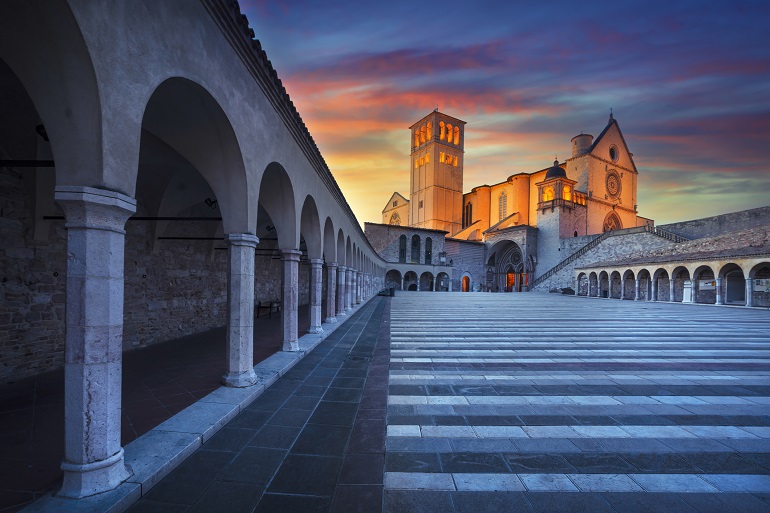
Via San Francesco
This historic thoroughfare serves as Assisi's main artery, connecting Piazza del Comune to the Basilica di San Francesco. The street's medieval character remains intact, with its stone buildings, archways, and narrow side alleys creating an atmospheric journey through time. Shops along the way offer traditional Umbrian products, from local wines and olive oils to handcrafted leather goods and religious articles. Small churches and historic buildings line the street, each with its own story to tell. The gradual descent towards the basilica offers increasingly spectacular views of the surrounding countryside, while the street's many restaurants and cafes provide perfect spots to rest and observe local life. During religious festivals, this street becomes the main processional route, filled with pilgrims and celebrants.
Temple of Minerva
Standing proudly in Piazza del Comune, the Temple of Minerva is one of the best-preserved Roman temple façades in Italy. Built in the 1st century BCE during the reign of Augustus, its six Corinthian columns and perfectly proportioned steps transport visitors back to ancient Roman times. Though the interior was converted into a church in the 16th century and dedicated to Santa Maria sopra Minerva, the external classical architecture remains virtually untouched. The temple's preservation is remarkable, offering visitors a rare glimpse into Roman architectural precision and beauty. The current baroque church interior creates an interesting contrast with the classical exterior, showcasing how different eras have left their mark on this ancient structure.
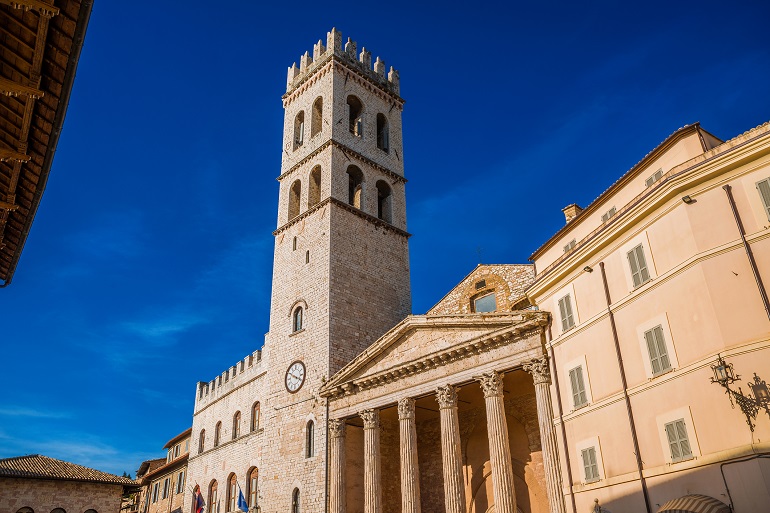
Piazza del Comune
The beating heart of Assisi, Piazza del Comune has served as the town's main square since Roman times. This beautifully preserved medieval piazza is surrounded by some of Assisi's most important secular buildings, including the 13th-century Palazzo del Capitano del Popolo with its Torre del Popolo (bell tower), and the Palazzo dei Priori with its impressive façade. The square's focal point is the Roman Temple of Minerva, while the Renaissance Fountain of Three Lions adds to its charm. Throughout the day, the piazza buzzes with activity as locals and tourists alike gather at its cafes and restaurants. The square hosts various festivals and events throughout the year, maintaining its historic role as Assisi's social centre.
Piazza San Rufino
The square in front of Assisi's cathedral provides a less touristy but equally fascinating space to explore. Dominated by the Romanesque façade of the Cathedral of San Rufino, this piazza offers a glimpse into local life away from the main tourist areas. The square features several medieval palaces, including the birthplace of Saint Clare, now a church. A Roman cistern beneath the square can be visited through the cathedral museum, while the surrounding streets contain some of Assisi's best-preserved medieval houses. The piazza comes alive during the Calendimaggio festival in May, when it serves as one of the main venues for this medieval-inspired celebration.
Cathedral of San Rufino
The Cathedral of San Rufino represents one of the finest examples of Romanesque architecture in Umbria. Its façade, dating from 1140, features intricate stone carvings including mysterious symbols, fantastic beasts, and biblical scenes. This is where both Saint Francis and Saint Clare were baptised, making it a significant site in Franciscan history. The cathedral's bell tower dominates Assisi's skyline, while its interior, though largely renovated in baroque style, contains the original baptismal font used for both saints. The museum within houses important religious artefacts and offers access to fascinating Roman cisterns beneath the cathedral.

Basilica di Santa Chiara
The pink and white striped façade of the Basilica di Santa Chiara creates an unforgettable first impression. Built in the Gothic style between 1257 and 1265, this church is dedicated to Saint Clare, the founder of the Poor Clares and a devoted follower of Saint Francis. The stark interior contrasts dramatically with the ornate exterior, reflecting Clare's commitment to poverty and simplicity. The basilica houses her tomb in a crypt, where visitors can view a wax figure of the saint's body and various relics. The church's side chapel contains the miraculous crucifix that reportedly spoke to Saint Francis at San Damiano, while the piazza in front offers breathtaking views over the Umbrian valley.
Basilica di Santa Maria degli Angeli-Porziuncola
Located in the valley below Assisi proper, this enormous Renaissance church is the seventh largest Christian church in the world. At its heart lies the tiny Porziuncola chapel, where St Francis established his first community and where the Franciscan movement truly began. The basilica also contains the Transit Chapel, marking the exact spot where Francis died in 1226. The surrounding rose garden is said to have grown from the thornless bushes where Francis rolled to overcome temptation - now producing roses without thorns. The contrast between the massive basilica and the tiny chapel it protects perfectly symbolises how Francis's humble movement grew into a worldwide religious order.
Rocca Maggiore
Perched dramatically above Assisi, the Rocca Maggiore stands as a testament to medieval military architecture. Built in the 14th century and expanded during the 16th century, this impressive fortress served as both a defensive structure and a symbol of papal power. Visitors can explore the extensive ramparts, climb the watchtowers, and walk through the covered battlements. The castle's museum showcases medieval weapons and armour, while multimedia installations bring the fortress's history to life. The real treasure, however, is the panoramic view from its towers - on clear days, visitors can see not only all of Assisi but also Perugia, Mount Subasio, and the entire Umbrian valley spread out below.
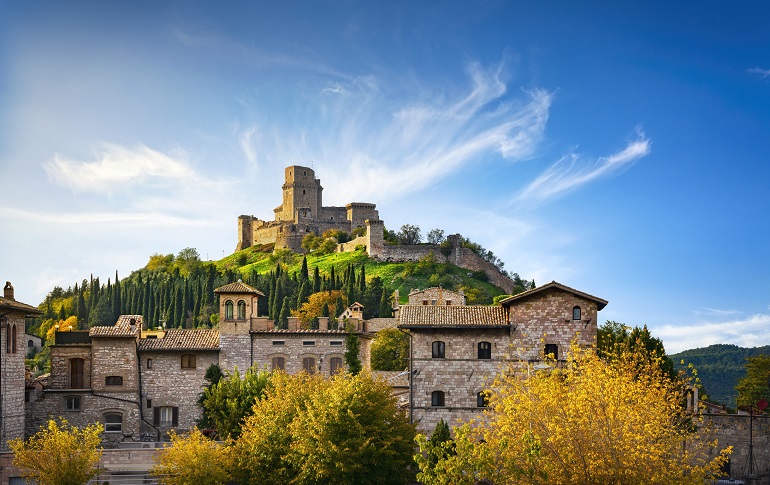
Medieval Walls and Gates
Assisi's medieval walls, built in the 13th century, still encircle much of the old town, providing a tangible link to its medieval past. Eight main gates pierce these walls, each with its own character and history. Porta San Francesco, the main entrance near the basilica, welcomes pilgrims with its imposing arch, while Porta San Pietro offers views towards Perugia. Walking along the walls provides excellent views of both the town and countryside, with ancient guard towers and battlements remaining intact in many places. The walls are particularly beautiful at sunset when the pink stone glows in the evening light, and the paths along them offer peaceful alternatives to the busier streets within.
Top Museums
Roman Forum and Museum
For those interested in Assisi's Roman heritage, the Roman Forum and Museum is an absolute must-visit. This relatively new attraction, located beneath Piazza del Comune, offers a unique opportunity to step back in time and explore the town's ancient past. The museum features the excavated remains of the ancient Roman forum, complete with a Romanesque crypt and an ancient Roman street. As visitors descend into the underground space, they are greeted by an array of Roman capitals, sarcophagi, and other artefacts that paint a vivid picture of life in Roman Assisi.
The excavations reveal fascinating structures such as the base of a temple, a large cistern, fountains, and a dias for the tribunal. To enhance the visitor experience, the museum employs modern technology, offering video presentations that bring the ancient ruins to life. This blend of ancient history and modern presentation techniques makes the Roman Forum and Museum a truly immersive experience.
Pinacoteca Comunale (Municipal Art Gallery)
Art enthusiasts will find themselves captivated by the Pinacoteca Comunale, or Municipal Art Gallery, housed in the elegant Palazzo Vallemani. This gallery is a testament to Assisi's rich artistic heritage, showcasing a remarkable collection of medieval and Renaissance frescoes, as well as paintings on wood panels and canvas from the 14th to 17th centuries. The works on display include pieces by some of Italy's most celebrated artists, including Giotto, Pietro Perugino, and Nicolò di Liberatore.
What sets the Pinacoteca Comunale apart is not only its impressive collection of fine art but also its dedication to preserving local history. A special section of the museum, entitled "Museum of Memory, Assisi 1943-1944," tells the poignant story of 300 Jews saved from the Nazis by Franciscans during World War II. This exhibit serves as a powerful reminder of Assisi's role in recent history and the courage of its citizens.
Treasure Museum of the Basilica of Saint Francis
The Treasure Museum of the Basilica of Saint Francis offers visitors a glimpse into the opulent world of sacred art. Located within the Sacred Convent of Assisi, this museum houses a stunning collection of religious artefacts and artworks. The exhibits are displayed in two rooms of the North Palace, accessible from the Renaissance Cloister of Sixtus IV. Here, visitors can admire exquisite examples of religious craftsmanship, from ornate chalices and reliquaries to intricately embroidered vestments.
Diocesan Museum and Crypt of San Rufino
The Diocesan Museum and Crypt of San Rufino, located in the heart of Assisi, is a treasure trove of religious art and history. The museum is divided into two main sections: the atmospheric crypt and the museum collection housed in the mediaeval cloister and underground passages of Palazzo dei Canonici. The crypt, with its three aisles and apse, is a captivating space that houses rare frescoes and a Roman sarcophagus containing the remains of Saint Rufino, Assisi's patron saint.
The museum collection itself is a veritable feast for the eyes, showcasing a diverse array of religious artefacts that span centuries. Visitors can marvel at detached frescoes, exquisite paintings on wood and canvas, ornate sacred vestments, and intricate ecclesiastical objects. The collection also boasts fine examples of goldsmiths' art, Roman and mediaeval tombstone materials, and colourful procession banners.
Museo della Porziuncola
For those interested in the Franciscan tradition, the Museo della Porziuncola is a must-visit destination. Situated in the former convent of Santa Maria degli Angeli, this museum underwent a significant refurbishment in 1999. It offers visitors valuable insights into the religious and cultural history of Assisi, with a particular focus on the life and legacy of Saint Francis. The museum's exhibits trace the history of the Porziuncola, the small church within the Basilica of Santa Maria degli Angeli, which played a crucial role in the early Franciscan movement.
Local Cuisine
Nestled in the heart of Umbria, Assisi offers a rich culinary heritage that reflects the region's rustic and flavourful traditions. The local cuisine centres around simple yet exquisite dishes, with handmade pasta like strangozzi and umbricelli often served with prized local black truffles or hearty meat sauces. The city is particularly renowned for its exceptional olive oil, produced in the prestigious Assisi-Spoleto olive strip. Traditional delicacies include the torta al testo, a flatbread typically filled with local cured meats and cheeses, and the porchetta umbra, a succulent slow-roasted pork seasoned with herbs. Game features prominently in Assisian cuisine, with dishes such as piccione alla ghiotta (spit-roasted pigeon) and agnello allo scottadito (grilled lamb cutlets) being local favourites. For those with a sweet tooth, the rocciata di Assisi, a strudel-like pastry filled with dried fruits and nuts, offers a perfect conclusion to any meal, especially when paired with the local Vin Santo dessert wine.

Shopping
The heart of retail activity centres around Corso Mazzini, the main shopping street in the city centre, where visitors can explore clothing boutiques, jewellery shops, and charming souvenir stores. The historic Piazza del Comune hosts a variety of upscale shops and boutiques, perfect for finding unique local treasures. For luxury shopping, Boutique Le Sibille near Piazza del Comune showcases designer clothing and accessories, whilst the Centro Commerciale La Fonte on the outskirts provides a more contemporary shopping experience. Local artisans offer exquisite ceramics, particularly at Ferdinando Tontino's shop on Via Portica, and beautiful olive wood crafts can be found throughout the city. Food enthusiasts should not miss the opportunity to purchase regional specialities such as Umbrian olive oil, local wines like Sagrantino di Montefalco, and the famous Perugina chocolates. Traditional crafts make for meaningful souvenirs, whilst the weekly markets provide a vibrant atmosphere to experience local culture and find unique handmade products.
Nature around Assisi
Assisi's natural splendour is dominated by Mount Subasio, a majestic peak offering spectacular panoramic views of the Umbrian countryside. The mountain's regional park features numerous hiking trails suitable for all abilities, where visitors can discover dense oak woods, hillside olive groves, and vibrant wildflower meadows blooming with orchids, crocuses, and violets. The surrounding landscape is particularly enchanting in June and July when the lavender fields burst into colour, whilst the Bosco di San Francesco provides a tranquil nature reserve perfect for peaceful walks. This 64-hectare woodland, managed by FAI (Italian Environmental Fund), is interwoven with cultivated fields and clearings, creating a haven of biodiversity. The area is also renowned for its distinctive pink stone, quarried from Monte Subasio itself, which gives the region's buildings their characteristic rosy glow that changes hue throughout the day.
Mount Subasio Park
The Mount Subasio Regional Park encompasses over 7,000 hectares of protected landscape, offering visitors a chance to experience the natural environment that so inspired St Francis. The park features a network of well-marked hiking trails suitable for all abilities, from gentle walks through flower-filled meadows to challenging hikes to the mountain's summit at 1,290 metres. In spring, the slopes burst with wild orchids and other wildflowers, while ancient olive groves dot the lower elevations. The park's limestone caves, dense forests, and rolling grasslands provide habitat for diverse wildlife, including peregrine falcons and wild boar. Several trails connect important Franciscan sites, allowing pilgrims and hikers to follow in the saint's footsteps.
Eremo delle Carceri
Nestled in a peaceful woodland setting on Mount Subasio, the Eremo delle Carceri offers visitors a glimpse into St Francis's contemplative life. This hermitage, whose name derives from the Italian 'carceri' meaning 'isolated places', sits four kilometres above Assisi in a location chosen by Francis for its solitude. The complex includes several small chapels, a 15th-century church, and the cave where Francis often prayed. Natural grottos and wooden cells used by his followers dot the hillside. The site maintains an atmosphere of profound peace, enhanced by the ancient holm oak woods surrounding it. Visitors can walk the same paths Francis trod, see the bed of rock where he slept, and experience the deep silence that drew him to this special place.
Getting Around
Assisi, a charming hilltop town in Italy's Umbria region, is most conveniently reached by train from Rome, with tickets costing around 12 euro for a 2-3 hour journey. The train station is located in Santa Maria degli Angeli, at the base of Assisi's hill. From the station, visitors can take the Assisi Link bus, which departs every 30 minutes and costs 1.30 euro, to reach the historic centre. For those who enjoy walking, there's a scenic 45-minute uphill path called the Mattonata that leads directly to the centre. Once in Assisi, the historic centre is best explored on foot, though be prepared for steep cobblestone streets. Most of the city centre is a restricted traffic zone, making walking the most practical option. For those wanting to explore the broader region, having a car is beneficial, though parking is available at Piazza Porta Nuova, about a 20-minute walk from the historic centre.
Best Time to Visit
The optimal time to visit Assisi is during the late spring and early autumn months, particularly May and September, when you can enjoy pleasant temperatures between 20°C and 26°C. These months offer comfortable conditions for exploring the picturesque Italian town, with fewer crowds than the peak summer season. Whilst summer months (June to August) boast the most sunshine and warmest weather, with temperatures reaching up to 30°C, they tend to be quite hot and crowded with pilgrims. The shoulder seasons provide a perfect balance of mild weather and fewer tourists, making it ideal for sightseeing. It's best to avoid November, which is the wettest month with up to 104mm of rainfall, and the winter months from December to February when temperatures can drop to as low as 3°C.