Eupedia Forums
Site NavigationEupedia Top > Eupedia Forum & Japan Forum
Page 6 of 24 FirstFirst ... 4567816 ... LastLast
Results 126 to 150 of 598

Thread: Scythian/Sarmatian DNA, your thoughts.

  1. #126
    Regular Member Achievements:
    500 Experience Points3 months registered

    Join Date
    11-09-11
    Posts
    165


    Country: Canada


    Quote Originally Posted by Bodin View Post
    No ,Iranians came from the North , but Medes could be refuge of I2a2 from Europe that were conquered by incoming IE / Iranians from North and exepted languague , or maybe even Masagets( similar culture to Sarmathians , and ancestors of Alans ) who use to live eats of Caspian sea ( how else to explain I2a2 in Kurds? - they are the only one with that haplogroup in aeria ) . Diodorus mention Sarmathians are descendants of Medes , and I2a2 match Sarmathian spread ( no it is not Balkan haplogroup -it is to young to be there since Paleolithe , even Neolithe ) .
    About R1b - it is from Anatolia - all R1b* is from there , I believe you speack about Treilles , all of researched Neolitic sites was in West Europe - so R1b was not in west Europe , but it was probably in central Europe and Balkans . If R1b had comed from east with R1a during Bronze Age , they would be a lot more mixed ( there is almoust no R1a in Spain, and France )
    Iranians came from the north? Based on what? The Iranians, like the ancient Indo-Aryan Indians, used the term "Aryan", where do you think the Aryan homeland was? Search up Ariana and you'll see what you'll find, surely, it's not the steppes in Ukraine/Russia if that's where you're getting at.

  2. #127
    Regular Member Achievements:
    500 Experience Points3 months registered

    Join Date
    11-09-11
    Posts
    165


    Country: Canada


    Quote Originally Posted by Goga View Post
    In all parts of Kurdistan there's between 16-33% of I2a, no matter where you are and in all parts of Kurdistan there is very much R1a. Much more than in other West Asian populations except Iranians in East Iran near Central Asia!

    All Kurds are the same and don't have different backgrounds! All Kurds are descendants of the Medes and speak the same Kurdish language, but different dialects! I mean all these Kurdish dialects have same origin.
    With all due respect, the Kurds still carry a large chunk of native West Asian lineages such as J1 and J2, unless you're implying that the original Medes carried these same lineages, then no, the Kurds are not just from the Medes.

  3. #128
    Regular Member Achievements:
    Overdrive1000 Experience Points3 months registered
    Bodin's Avatar
    Join Date
    14-08-11
    Location
    Praia , Cape Verde
    Posts
    504

    Y-DNA haplogroup
    I2a1b-Din
    MtDNA haplogroup
    X2

    Ethnic group
    Srbin
    Country: Serbia


    Quote Originally Posted by Cobol19 View Post
    Iranians came from the north? Based on what? The Iranians, like the ancient Indo-Aryan Indians, used the term "Aryan", where do you think the Aryan homeland was? Search up Ariana and you'll see what you'll find, surely, it's not the steppes in Ukraine/Russia if that's where you're getting at.
    No thats not what I am getting at , they comed from Central Asia and that is North , not from Pacistan which is east.

  4. #129
    Regular Member Achievements:
    500 Experience Points3 months registered

    Join Date
    11-09-11
    Posts
    165


    Country: Canada


    Quote Originally Posted by Bodin View Post
    No thats not what I am getting at , they comed from Central Asia and that is North , not from Pacistan which is east.
    Did you search up Ariana? Even if they came from Central Asia, I2a2 is absent there.

  5. #130
    Regular Member Achievements:
    Overdrive1000 Experience Points3 months registered
    Bodin's Avatar
    Join Date
    14-08-11
    Location
    Praia , Cape Verde
    Posts
    504

    Y-DNA haplogroup
    I2a1b-Din
    MtDNA haplogroup
    X2

    Ethnic group
    Srbin
    Country: Serbia


    Quote Originally Posted by Cobol19 View Post
    With all due respect, the Kurds still carry a large chunk of native West Asian lineages such as J1 and J2, unless you're implying that the original Medes carried these same lineages, then no, the Kurds are not just from the Medes.
    No nation is just from one nation , every nation is from mixed origin

  6. #131
    Regular Member Achievements:
    1000 Experience PointsOverdrive1 year registered

    Join Date
    06-06-11
    Posts
    1,085
    Points
    4,488
    Level
    19
    Points: 4,488, Level: 19
    Level completed: 60%, Points required for next Level: 162
    Overall activity: 33.0%


    Country: Netherlands


    Quote Originally Posted by Cobol19 View Post
    With all due respect, the Kurds still carry a large chunk of native West Asian lineages such as J1 and J2, unless you're implying that the original Medes carried these same lineages, then no, the Kurds are not just from the Medes.
    What I mean is that all Kurds are related to each other. Their autosomal DNA is very close to each other. Kurdish 'haplogroups' are almost equally spread over the whole Kurdish region. In some areas there's more J2 in some areas there's more I2 or R1, but in general all Kurdish areas show the same pattern.
    J2, J1, E, I2a, R1a etc. are almost equally spread in all Kurdish people. Sorani, Zaza-Gorani, Kurmanji, Feyli and Laki Kurds have all almost the same DNA! No matter to what haplogroups they do belong, their admixture (autosomal DNA) is almost identical to each other!

  7. #132
    Regular Member Achievements:
    500 Experience Points3 months registered

    Join Date
    11-09-11
    Posts
    165


    Country: Canada


    Quote Originally Posted by Goga View Post
    What I mean is that all Kurds are related to each other. Their autosomal DNA is very close to each other. Kurdish 'haplogroups' are almost equally spread over the whole Kurdish region.
    J2, J1, E, I2a, R1a etc. are almost equally spread in all Kurdish people. Sorani, Zaza-Gorani, Kurmanji, Feyli and Laki Kurds have all almost the same DNA! No matter to what haplogroups they do belong, their admixture (autosomal DNA) is almost identical to each other!
    Yes, but I never said they're not the same people, I just said they're a diverse nation, meaning they have different ancient backgrounds.

  8. #133
    Regular Member Achievements:
    Overdrive1000 Experience Points3 months registered
    Bodin's Avatar
    Join Date
    14-08-11
    Location
    Praia , Cape Verde
    Posts
    504

    Y-DNA haplogroup
    I2a1b-Din
    MtDNA haplogroup
    X2

    Ethnic group
    Srbin
    Country: Serbia


    Quote Originally Posted by Cobol19 View Post
    Did you search up Ariana? Even if they came from Central Asia, I2a2 is absent there.
    Ariana was just province in Persian empire , sanscrit Arian mean elevated , noble , lot of IE speacking peoples called themselves like that , Ossetians call themselves Iron , There is some I2a2 in Central Asia , even after many Turco Mongolic invasions

  9. #134
    Regular Member Achievements:
    Overdrive1000 Experience Points3 months registered
    Bodin's Avatar
    Join Date
    14-08-11
    Location
    Praia , Cape Verde
    Posts
    504

    Y-DNA haplogroup
    I2a1b-Din
    MtDNA haplogroup
    X2

    Ethnic group
    Srbin
    Country: Serbia


    Quote Originally Posted by Cobol19 View Post
    Yes, but I never said they're not the same people, I just said they're a diverse nation, meaning they have different ancient backgrounds.
    No Kurds are not diverse nation they just mixed with native and incoming populations , like every other nation

  10. #135
    Regular Member Achievements:
    500 Experience Points3 months registered

    Join Date
    11-09-11
    Posts
    165


    Country: Canada


    Quote Originally Posted by Bodin View Post
    Ariana was just province in Persian empire , sanscrit Arian mean elevated , noble , lot of IE speacking peoples called themselves like that , Ossetians call themselves Iron , There is some I2a2 in Central Asia , even after many Turco Mongolic invasions
    I2a2 in Central Asia? Provide your sources please.

    Quote Originally Posted by Bodin View Post
    No Kurds are not diverse nation they just mixed with native and incoming populations , like every other nation
    Which means a nation with diverse ancient backgrounds, same thing.

  11. #136
    Regular Member Achievements:
    1000 Experience PointsOverdrive1 year registered

    Join Date
    06-06-11
    Posts
    1,085
    Points
    4,488
    Level
    19
    Points: 4,488, Level: 19
    Level completed: 60%, Points required for next Level: 162
    Overall activity: 33.0%


    Country: Netherlands


    Quote Originally Posted by Cobol19 View Post
    Yes, but I never said they're not the same people, I just said they're a diverse nation, meaning they have different ancient backgrounds.
    Ok. But 1 nation with several ancestors!

    But back to Sarmatians and Scythians. According to you Scythians came from Central Asia, but who were the Sarmatians? Where did they came from? Were they the same as Scythians or had they different DNA, like I2a for example.

  12. #137
    Regular Member Achievements:
    500 Experience Points3 months registered

    Join Date
    11-09-11
    Posts
    165


    Country: Canada


    Quote Originally Posted by Goga View Post
    Ok. I do agree with you!

    But back to Sarmatians and Scythians. According to you Scythians came from Central Asia, but who were the Sarmatians? The same as Scythians or had they different DNA, like I2a for example.
    They're some form of Scythians which later became known as Alans and apperantly their modern offspring being the Ossetians, an important note to mention here however is that the Ossetians lack some of these lineages that you guys are discussing (Like R1a1a), in other words this is a good example on how a population can be Iranianized.

  13. #138
    Regular Member Achievements:
    1 year registered5000 Experience PointsOverdrive
    Awards:
    User with most referrers
    zanipolo's Avatar
    Join Date
    22-03-11
    Location
    Eastern Australia
    Posts
    1,830
    Points
    8,124
    Level
    26
    Points: 8,124, Level: 26
    Level completed: 96%, Points required for next Level: 26
    Overall activity: 99.9%

    Y-DNA haplogroup
    T1a2b (T-L446)
    MtDNA haplogroup
    H26a1

    Ethnic group
    Venet
    Country: Australia


    Quote Originally Posted by Cobol19 View Post
    Well one thing for sure is that they migrated from Asia to Europe, not the other way around

    I'm not saying there's no Scythian ancestry in Europe, but it's clearly blown out of proportion, it's likely something very small and all the R1a1a there is mostly a product of the early Indo-Europeans, not Scythians.
    Yes , iranians migrated north wards and became slavitized over time.

    The Scythian as I studied it , eventually became a ugric people who where with the hunnic invasions and later became the hungarians/magyars. Hungary has ugric with no finnic . Sometime in the ancient times these scythian split or as some say they are a branch of the sarmatians.

    isn't R1a1a originally a ukrainian group ?. where they not the peucini a germanic people?

  14. #139
    Regular Member Achievements:
    1 year registered5000 Experience PointsOverdrive
    Awards:
    User with most referrers
    zanipolo's Avatar
    Join Date
    22-03-11
    Location
    Eastern Australia
    Posts
    1,830
    Points
    8,124
    Level
    26
    Points: 8,124, Level: 26
    Level completed: 96%, Points required for next Level: 26
    Overall activity: 99.9%

    Y-DNA haplogroup
    T1a2b (T-L446)
    MtDNA haplogroup
    H26a1

    Ethnic group
    Venet
    Country: Australia


    Quote Originally Posted by Goga View Post
    Ok. But 1 nation with several ancestors!

    But back to Sarmatians and Scythians. According to you Scythians came from Central Asia, but who were the Sarmatians? Where did they came from? Were they the same as Scythians or had they different DNA, like I2a for example.
    some recent comments have suggested that the sarmatian ended up being the croat and serbs ( south -slavic people) who brought I2a2 from north of the black sea into ancient Illyrian lands.
    If this is true then, the illyrians would have I1 and the Greek "myth" that illyrians where Thraci and dominated from the baltic sea to the balkans in per-bronze age would be true. but thats another story.

  15. #140
    Regular Member Achievements:
    1000 Experience PointsOverdrive1 year registered

    Join Date
    06-06-11
    Posts
    1,085
    Points
    4,488
    Level
    19
    Points: 4,488, Level: 19
    Level completed: 60%, Points required for next Level: 162
    Overall activity: 33.0%


    Country: Netherlands


    Quote Originally Posted by Cobol19 View Post
    They're some form of Scythians which later became known as Alans and apperantly their modern offspring being the Ossetians, an important note to mention here however is that the Ossetians lack some of these lineages that you guys are discussing (Like R1a1a), in other words this is a good example on how a population can be Iranianized.
    "Genetic Evidence Concerning the Origins of South andNorth Ossetians:

    Average pairwise Fst values are smaller between Ossetians and Iranians than between Ossetians and Caucasians for both mtDNA and the Y chromosome, significantly so for mtDNA, which suggests an Iranian origin of Ossetians. Subsequent and largely male-mediated migrations between Ossetians and neighbouring groups in the North and South Caucasus, respectively, would explain the greater similarity between Ossetians and Caucasians for the Ychromosome, as discussed previously."

    http://www.eva.mpg.de/genetics/pdf/N....AnHG.2004.pdf

  16. #141
    Regular Member Achievements:
    1000 Experience PointsOverdrive1 year registered

    Join Date
    06-06-11
    Posts
    1,085
    Points
    4,488
    Level
    19
    Points: 4,488, Level: 19
    Level completed: 60%, Points required for next Level: 162
    Overall activity: 33.0%


    Country: Netherlands


    Quote Originally Posted by zanipolo View Post
    some recent comments have suggested that the sarmatian ended up being the croat and serbs ( south -slavic people) who brought I2a2 from north of the black sea into ancient Illyrian lands.
    If this is true then, the illyrians would have I1 and the Greek "myth" that illyrians where Thraci and dominated from the baltic sea to the balkans in per-bronze age would be true. but thats another story.
    Well that's might be true. I can't find any other explanation! And this will change my perception on the ancient Greek historians that not all of them were a bunch of biased liars with a lot imagination.

  17. #142
    Regular Member Achievements:
    500 Experience Points3 months registered

    Join Date
    11-09-11
    Posts
    165


    Country: Canada


    Quote Originally Posted by Goga View Post
    "Genetic Evidence Concerning the Origins of South andNorth Ossetians:

    Average pairwise Fst values are smaller between Ossetians and Iranians than between Ossetians and Caucasians for both mtDNA and the Y chromosome, significantly so for mtDNA, which suggests an Iranian origin of Ossetians. Subsequent and largely male-mediated migrations between Ossetians and neighbouring groups in the North and South Caucasus, respectively, would explain the greater similarity between Ossetians and Caucasians for the Ychromosome, as discussed previously."

    http://www.eva.mpg.de/genetics/pdf/N....AnHG.2004.pdf
    I don't have the paper myself, but Dienekes commenting on the latest study from the latest paper on the Caucasian populations (Which includes Ossetian samples):

    http://dienekes.blogspot.com/2011/05...-caucasus.html

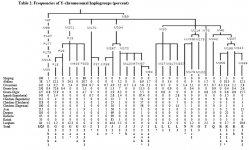
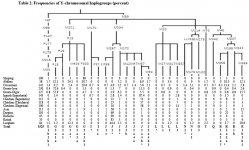
    Also this was the frequency:

    21ff56142ce8.jpg

    As you can see, both Ossetian groups carried less than 1% R1a1a* (Older form of R1a1a which was likely from the ancient Iranians), 0% R1a1a7 (Eastern European form), and 0% I* or I2a (This one is for Bodin who's claiming I2a2 for ancient Iranians).

  18. #143
    Regular Member Achievements:
    1000 Experience PointsOverdrive1 year registered

    Join Date
    06-06-11
    Posts
    1,085
    Points
    4,488
    Level
    19
    Points: 4,488, Level: 19
    Level completed: 60%, Points required for next Level: 162
    Overall activity: 33.0%


    Country: Netherlands


    Quote Originally Posted by Cobol19 View Post
    I don't have the paper myself, but Dienekes commenting on the latest study from the latest paper on the Caucasian populations (Which includes Ossetian samples):

    http://dienekes.blogspot.com/2011/05...-caucasus.html

    Also this was the frequency:

    21ff56142ce8.jpg

    As you can see, both Ossetian groups carried less than 1% R1a1a* (Older form of R1a1a which was likely from the ancient Iranians), 0% R1a1a7 (Eastern European form), and 0% I* or I2a (This one is for Bodin who's claiming I2a2 for ancient Iranians).
    Ok thanks! Very much G2a in the Ossetian groups!

    No according to Bodin I2a-din Sarmatians were NOT like Scythians. Accroding to him Sarmatians and Scythians were different people. He is saying that Scythians were R1a folks and Sarmatians I2a-din folks. And that the Sarmatians and Medes were the same. According to him Sarmatians are the 'Solar Medes'.

  19. #144
    Regular Member Achievements:
    500 Experience Points3 months registered

    Join Date
    11-09-11
    Posts
    165


    Country: Canada


    Quote Originally Posted by zanipolo View Post
    isn't R1a1a originally a ukrainian group ?. where they not the peucini a germanic people?
    It's not Ukrainian originally, it exists in South Asia and it predates the Indo-Aryan migration by its existence in tribal Indians:

    http://www.pnas.org/content/suppl/20...714Table_3.pdf

    Some Indian R1a1a indeed share Indo-European ancestors with Eastern Europeans, but a lot of them have nothing to do with Indo-Europeans.

  20. #145
    Elite member Achievements:
    1000 Experience Points1 year registered

    Join Date
    14-11-10
    Posts
    411
    Points
    4,307
    Level
    19
    Points: 4,307, Level: 19
    Level completed: 15%, Points required for next Level: 343
    Overall activity: 30.0%


    Country: Germany


    Cobol19 could you please provide the source or a link for the posted percentages of Haplogroups
    First of all Haplogroup R2a is absent among Gypsies the only Gypsy Group where R2a was founded , were settlers in Tajikistan originally from Germany. We can be sure that these R2a were given to this Gypsies by native Tajiks because R2a is absent among any other Gypsy group. Linking Haplogroup R2a with H is insane.and there is by far no correlation between them. I don´t know where you got this from cobol19. You sound a bit Indocentrics trying to prove that R2a and R1a did developed in India and not Central Asia.

    In the two studies "Annals of Human Genetics" and "Testing hypotheses of language replacement in the Caucasus: evidence from the Y-chromosome" 16% R2a among Chechens and 8% among Ossetians was found. All scientist agree that R2a developed close to R1a somewhere in todays Tajikistan.
    R2 is found throughout West-, Southwest-, South Asia, East and South Europe.
    http://www.familytreedna.com/public/...ction=yresults

    Back to the Scythians, Medes etc. Like I mentioned sometime before allmost all
    schoolers agree that a Nation called the "Medes" were the product of various North Iranic tribes.
    Mede was more a title later becoming the name of a confederation. from historic records we know that Mede was also the title of many Scythians and Cimmerians. for more informations "Carola Metzner-Nebelsick: Kimmerier In: Reallexikon der Germanischen Altertumskunde,"

    Many of the so called "Medes" were in fact Cimmerians and Scythians. If we look at historic records we see, that throughout the whole former Median empire there are traces of Cimmerians and Scythians-Alans. Cimmerians in Edessa, Cappadocia,Hakkari,Van and around the Zagroß. Persian records talk about Gmira(the Proto-Iranian word for Cimmerians with the meaning mobile unites, nomadic groups). There are records that South of Lak Urmiya a Region was called Gamirk the same name which was also used by the Cimmerians moving into Cappadocia. Even today this Region is called by Kurds Gawirk! This M=W/V soundshift is very typical for some Kurdish languages like Kurmanji known by any linguist. As example The North Iranian Hamin becomes Havin. Even today in this Region a Kurdish tribe lives which is called Gorani. The Word Gorani derives from Old Iranic Gairi which means Highlanders. Gairi is another Version for the Name of Cimmerians in pre historic times.

    Then there are the Alans one of the biggest Kurdish tribes. Someone must be very ignorant to not see the connection between them and the Alans of Sarmatia. 99% of historians are sure that the Alan tribe among Kurds are simply the Alans(Sarmatians). The Alan tribe of Kurds live throughout Kurdistan from East Anatolia to Zagros. From Dersim, Van, Hakkari to Kirmashan you can find the Alans. unfortunately after the Dersim massacre especially members of the Alan tribe in Dersim were deported to West Anatolia to be assimilated.

    a wedding of the Kurdish Alan tribe.


    The Region around Sine(Sanandaj) and Mahabad is traditionally called by their People Erdalan. In Kurdish it means Erd(place, earth) Alan. The place of Alans.
    Alan Kurdish dance Group from Erdalan.


    The Alans also play a big role in Kurdish love stories
    With regard to the Alans, we have previously mentioned the large Alanian tribal confederations among the Kurds, such as Alans of Piranshahr and Sardasht south of lake Urmia or the Alan aristocracy who ruled for centuries over what is nowadays Iranian province of Kurdistan (Ardalan, or Ard-Alan), immidiately to south of the former.
    We have also referred to the name of the mythological Kurdish hero of the Epic of Mem u Zin, "Memê Alan" (or Mam the Alan). This classic love story is considered to be the épopée of the Kurdish literature. One more interesting fact with regard to the story is pointed out by the French orientalist and expert on Kurdish literature, Roger Lescot. He rightfully identified the origin of the story in a narration by Chares of Mytilene, a Greek historian of the 4th century BC. Chares informs us that the love story which is about a prince and a Scythian princess, is originally recited by the Scythians of Caucasus mountains.
    the story was filmed here some excerpts. Zîn is the woman. Memê Alan(Mem the Alan) is men.


    Now the thing is some people totally ignore this because they use the linguistics as reason. Those People usually have zero knowledge about the Iranic languages and how they are classified. The difference between Northwest and Northeast Iranic is super small. In fact the factors which are used for this separation are so small that simple loud shifts could effect that a Northeast Iranic language is considered Northwest. Thats why MANY linguists started to Question this system and recognized that in fact the difference between the NW and NE Iranic is smaller as that between NW and SW Iranic. Many linguists in fact do classify like this.

    They put Kurdish together with the East Iranic languages in a Central Group and Persian, Kathanese have their own separate branch.

    We Kurds just like any other People are the product of different tribes. The Reason why so many Kurds insist on the Median heritage, is because the forefather of Kurds were united under this title just like they are today under the term Kurd. But I don´t like it when Medes are mentioned as if it was one tribe. Med was a title used for Scythians, Parthians, Cimmerians, Alans, Mitannis and even Caucasian tribes(Hurrians) etc. and the Kurdish tribes with there diverse names are the product of this. Around Mardin there is even a Kurdish tribe called Mitan! There must be a reason why in Iranian languages Kurd means nomad as well Warrior and why Iranians almost always say "the Kurds are the real Iranians" Now the Question is, did all these tribes move into Media, or were they already present.

  21. #146
    Elite member Achievements:
    1000 Experience Points1 year registered

    Join Date
    14-11-10
    Posts
    411
    Points
    4,307
    Level
    19
    Points: 4,307, Level: 19
    Level completed: 15%, Points required for next Level: 343
    Overall activity: 30.0%


    Country: Germany


    And the Reason why some historians record that Sarmatians are Medes, is also explained above. Mede was a title also used for Scythians. Sauromatan is the real name. Sauro comes from Latin and means something like Lizard. This name was given because of their lizard like Armor. Sauromatan simply "Lizard Medes" The Sarmatians were called descend of Medes because technically they were Medes.

  22. #147
    Regular Member Achievements:
    1 year registered5000 Experience PointsOverdrive
    Awards:
    User with most referrers
    zanipolo's Avatar
    Join Date
    22-03-11
    Location
    Eastern Australia
    Posts
    1,830
    Points
    8,124
    Level
    26
    Points: 8,124, Level: 26
    Level completed: 96%, Points required for next Level: 26
    Overall activity: 99.9%

    Y-DNA haplogroup
    T1a2b (T-L446)
    MtDNA haplogroup
    H26a1

    Ethnic group
    Venet
    Country: Australia


    @ Alan
    your language table is in error

    http://www.korenine.si/zborniki/zbor...jandacek07.pdf

    slovenes are west-slavic and could have originated from sorbs

  23. #148
    Elite member Achievements:
    1000 Experience Points1 year registered

    Join Date
    14-11-10
    Posts
    411
    Points
    4,307
    Level
    19
    Points: 4,307, Level: 19
    Level completed: 15%, Points required for next Level: 343
    Overall activity: 30.0%


    Country: Germany


    Quote Originally Posted by zanipolo View Post
    @ Alan
    your language table is in error

    http://www.korenine.si/zborniki/zbor...jandacek07.pdf

    slovenes are west-slavic and could have originated from sorbs

    No it isnt. It cant be wrong it just has a different type. Every table is different from another. It differs between South, East and West Slavic. Your PDF says Southwest Slavic and it doesent differs so good.

  24. #149
    Regular Member Achievements:
    500 Experience Points3 months registered

    Join Date
    11-09-11
    Posts
    165


    Country: Canada


    Quote Originally Posted by Alan View Post
    Cobol19 could you please provide the source or a link for the posted percentages of Haplogroups
    Which ones? Are you talking about the numbers from YHRD? Just go to www.yhrd.org and search for the haplotypes, this involves some knowledge in STR markers and which haplogroup they represent, so a basic haplotype for R2a for example is:

    DYS393 = 14
    DYS390 = 23
    DYS19 = 14
    DYS391 = 10
    DYS392 = 10

    First of all Haplogroup R2a is absent among Gypsies the only Gypsy Group where R2a was founded , were settlers in Tajikistan originally from Germany. We can be sure that these R2a were given to this Gypsies by native Tajiks because R2a is absent among any other Gypsy group. Linking Haplogroup R2a with H is insane.and there is by far no correlation between them.
    I never said anything about Gypsies, but since we're talking about them, R2a does show up among them but in extreme small numbers, whatever the case is, the Gypsy sample you're talking about comes from the Spencer Wells study back from 2001, here's the link for it:

    http://www.pnas.org/content/98/18/10244.full

    This group is known as Sinti, they were deported from Central Europe (Germany) to Uzbekistan during the second world war, the reason why R2a is significant among them is the same reason why it was so significant among the Yezidie Kurds of Georgia, due to a genetic drift, and while it's possible that they may have received it from local populations, it's also very possible that their ancestors actually carried all along and did indeed come from Germany, it's just that when you have a genetic drift like that, rare spikes happen.

    Check out www.yhrd.org for R2a haplotypes, you'll notice that some Roma Gypsy groups in Eastern Europe actually carry it in small numbers.

    I don´t know where you got this from cobol19. You sound a bit Indocentrics trying to prove that R2a and R1a did developed in India and not Central Asia.
    Indocentric? Not at all, like I said, I'm a West Asian R2a myself, why would I be Indocentric? What I am is honest, South Asian R2a is very diverse and old, people who deny South Asia as a legit home for R2a are not being honest about the subject due to personal agenda, I have no agenda, I'm interested in the truth and believe me when I say, I put a lot of research into this haplogroup since it's my paternal lineage, the best theories usually lead to South Asia or somewhere very close to it as the point of origin.

    In the two studies "Annals of Human Genetics" and "Testing hypotheses of language replacement in the Caucasus: evidence from the Y-chromosome" 16% R2a among Chechens and 8% among Ossetians was found. All scientist agree that R2a developed close to R1a somewhere in todays Tajikistan.
    R2 is found throughout West-, Southwest-, South Asia, East and South Europe.
    http://www.familytreedna.com/public/...ction=yresults
    I already addressed this point, this was also likely due to a genetic drift, specially when you have a small sample like that, didn't you not see the latest study I posted about the Caucasus? Here you go:

    http://mbe.oxfordjournals.org/conten...sr126.abstract

    Here's the frequency from the study:

    21ff56142ce8.jpg

  25. #150
    Elite member Achievements:
    1000 Experience Points1 year registered

    Join Date
    14-11-10
    Posts
    411
    Points
    4,307
    Level
    19
    Points: 4,307, Level: 19
    Level completed: 15%, Points required for next Level: 343
    Overall activity: 30.0%


    Country: Germany


    Quote Originally Posted by Cobol19 View Post
    Which ones? Are you talking about the numbers from YHRD? Just go to www.yhrd.org and search for the haplotypes, this involves some knowledge in STR markers and which haplogroup they represent, so a basic haplotype for R2a for example is:

    DYS393 = 14
    DYS390 = 23
    DYS19 = 14
    DYS391 = 10
    DYS392 = 10
    I was talking about the numbers of Haplogroup H and R2a you shared with us.
    I never said anything about Gypsies, but since we're talking about them, R2a does show up among them but in extreme small numbers, whatever the case is, the Gypsy sample you're talking about comes from the Spencer Wells study back from 2001, here's the link for it:

    http://www.pnas.org/content/98/18/10244.full

    This group is known as Sinti, they were deported from Central Europe (Germany) to Uzbekistan during the second world war, the reason why R2a is significant among them is the same reason why it was so significant among the Yezidie Kurds of Georgia, due to a genetic drift, and while it's possible that they may have received it from local populations, it's also very possible that their ancestors actually carried all along and did indeed come from Germany, it's just that when you have a genetic drift like that, rare spikes happen.
    thats exactly what I was trying to say. Ok sorry my mistake I thought you tried to link R2a to Gypsies because you thought R2 and H correlate. Just like have mentioned R2a is very small among Gypsies and only found among one Sinti Group in Uzbekstan. This is rather given to them by the local Uzbeks. We all know that Gypsies tend to marry males into their community because females are usually not given to them. The same can also be seen in the Balkans were there are more European yDNA haplogroups than mtDNA. My goal was simply to show that R2a did not reached West Asia or the Kurds with the Gypsies but is much longer in this Region.

    Check out www.yhrd.org for R2a haplotypes, you'll notice that some Roma Gypsy groups in Eastern Europe actually carry it in small numbers.
    I actually red somewhere that most of the R2a in East Europe is of Jewish origin. R2a among Gypsies in East Europe is as frequent as R1a or any other non typical Gypsy Haplogroup.

    Indocentric? Not at all, like I said, I'm a West Asian R2a myself, why would I be Indocentric? What I am is honest, South Asian R2a is very diverse and old, people who deny South Asia as a legit home for R2a are not being honest about the subject due to personal agenda, I have no agenda, I'm interested in the truth and believe me when I say, I put a lot of research into this haplogroup since it's my paternal lineage, the best theories usually lead to South Asia or somewhere very close to it as the point of origin.
    No one said the "South Asian" origin of R2a is impossible just like no one did it with R1a. What I denied was that some People tried to connect R2a with the expansion of Gypsies just because this one Sinti Group in Uzbekistan showed some R2a in reality R2a in other Sinti and Roma groups is very rare. You could find more typical Southeast European lineages among them, than R2a! In fact many scientist place the origin of R2 rather in Central Asia around Tajikistan but when someone hears South Asia, he also has to know what can be meant under this geographical Term. It is the same dilemma with Dienekes "South Asian" component.


    I already addressed this point, this was also likely due to a genetic drift, specially when you have a small sample like that, didn't you not see the latest study I posted about the Caucasus? Here you go:

    http://mbe.oxfordjournals.org/conten...sr126.abstract

    Here's the frequency from the study:

    21ff56142ce8.jpg
    I will look over it, Thank you.

Page 6 of 24 FirstFirst ... 4567816 ... LastLast

Similar Threads

  1. Replies: 22
    Last Post: 18-02-13, 08:00
  2. Your Thoughts on Public Nudity
    By strongvoicesforward in forum Psychology
    Replies: 36
    Last Post: 07-01-12, 04:34
  3. What are your thoughts on Green Design Houses?
    By Revenant in forum Nature & Environment
    Replies: 1
    Last Post: 23-05-06, 14:59

Posting Permissions

  • You may not post new threads
  • You may not post replies
  • You may not post attachments
  • You may not edit your posts
  •