Languages & Education
Map of languages in Europe by linguistic groups

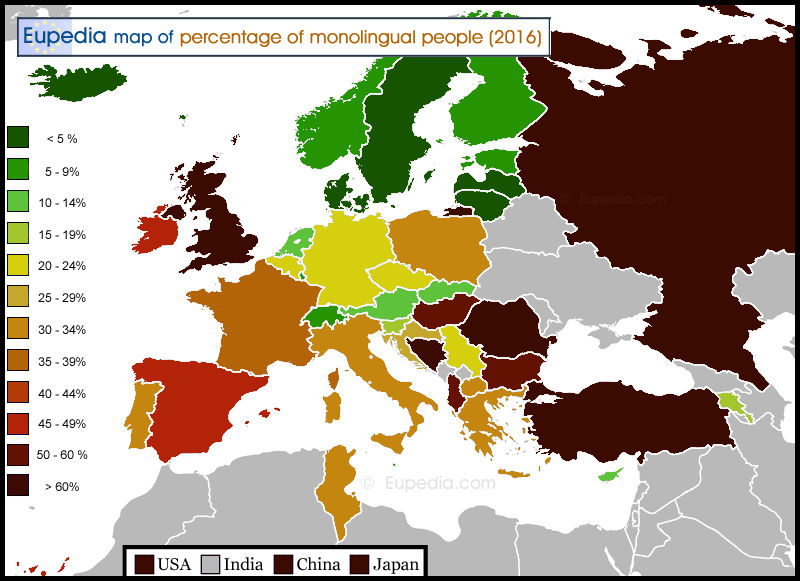
Percentage of people who cannot speak more than one language
This map is based on the data from Eurostat for 2016 for the EU. Other sources were used for non-EU countries.
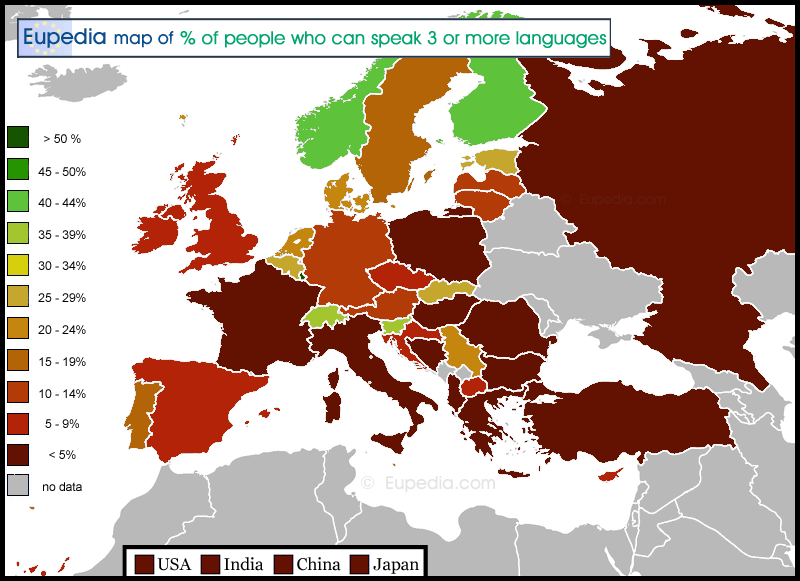
Percentage of people who can speak three languages of more
This map is based on the data from Eurostat for 2016 for the EU. Other sources were used for non-EU countries.
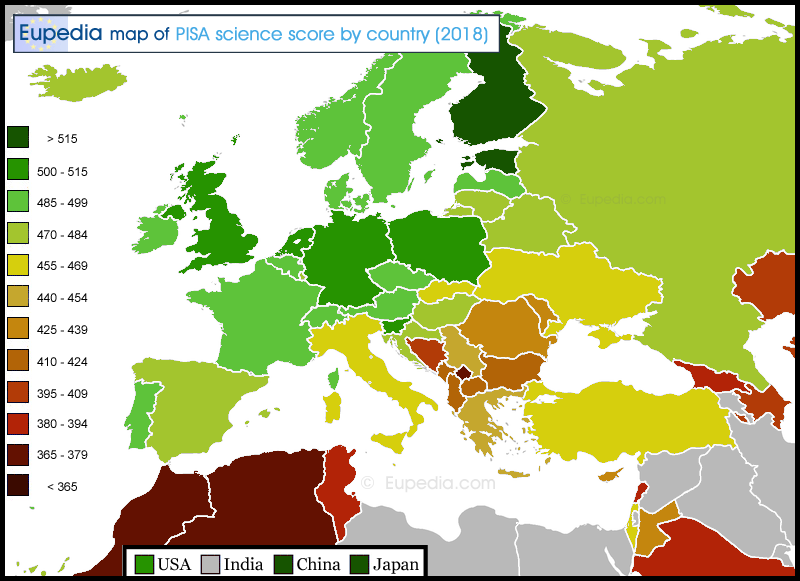
Percentage of English speakers
This map is based on the data from Wikipedia.
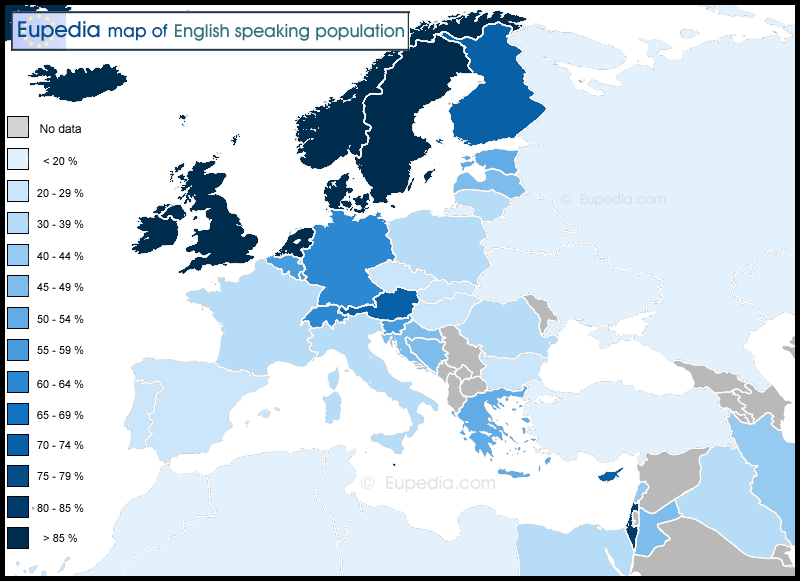
Average national PISA score for reading (2018)
This map is based on the data from OECD's Programme for International Student Assessment (PISA) for 2018. Scores for Spain, Algeria and Tunisia are from 2015 as they did not participate in 2018.
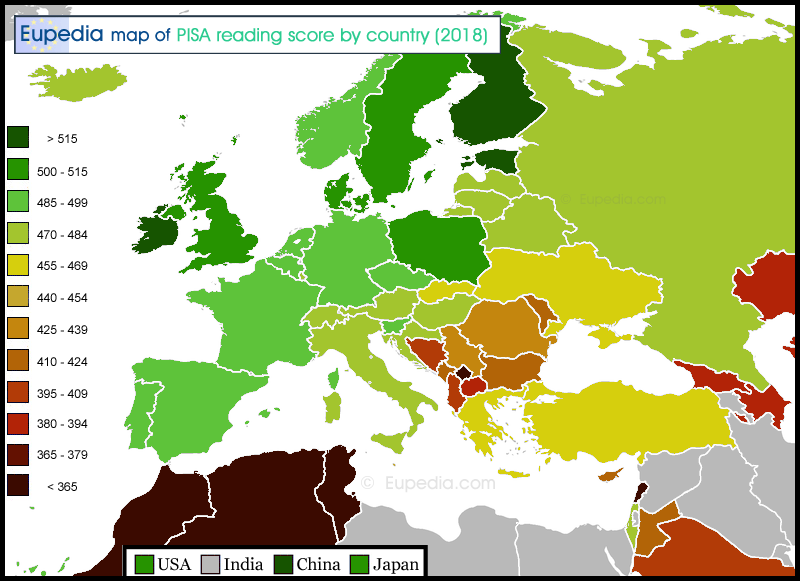
Average national PISA score for mathematics (2018)
This map is based on the data from OECD's Programme for International Student Assessment (PISA) for 2018. Scores for Algeria and Tunisia are from 2015 as they did not participate in 2018.
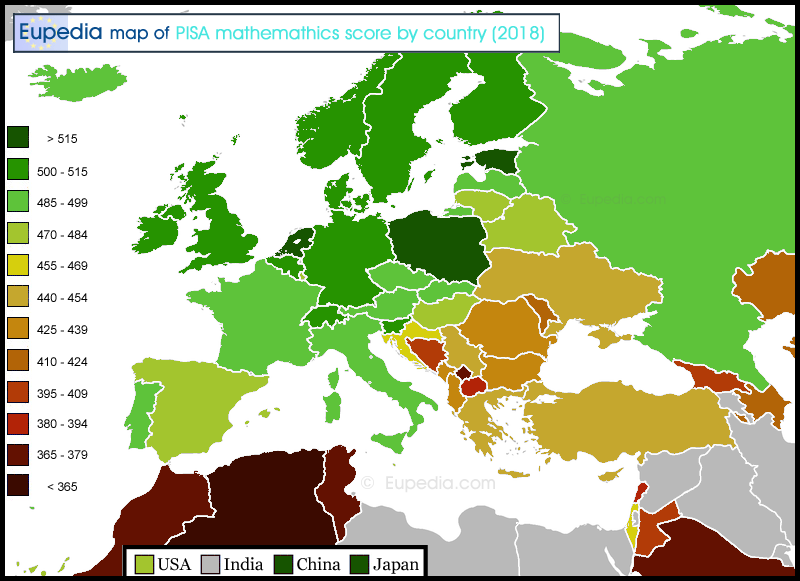
Average national PISA score for science (2018)
This map is based on the data from OECD's Programme for International Student Assessment (PISA) for 2018. Scores for Algeria and Tunisia are from 2015 as they did not participate in 2018.
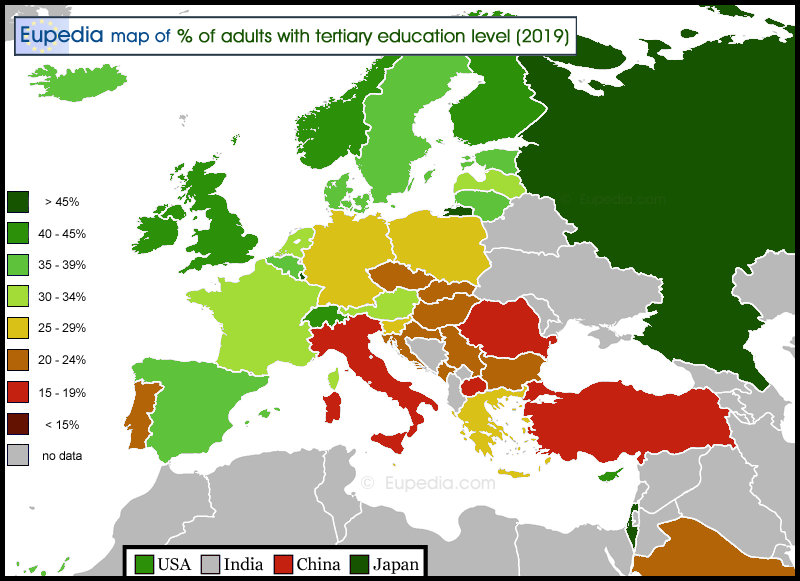
Percentage of adults aged 25 to 64 who completed tertiary education (2019)
This map is based on the data from OECD for 2019 (Eurostat for Cyprus).
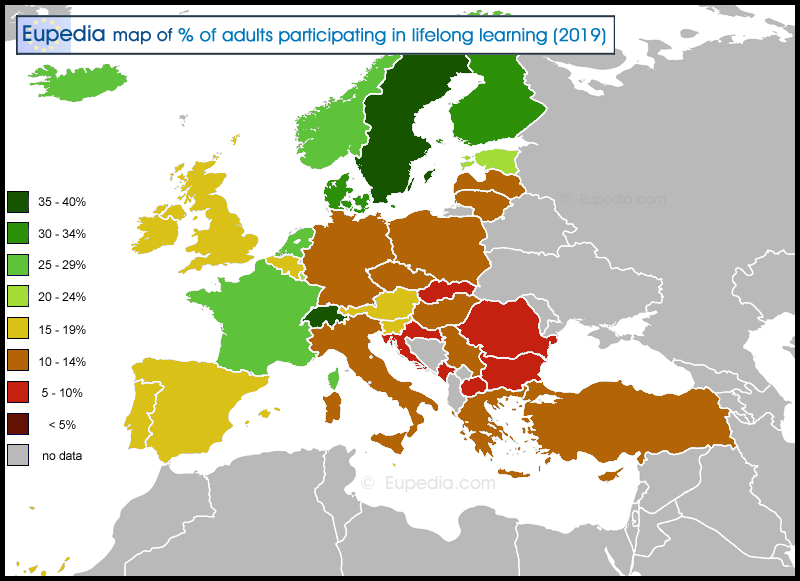
Percentage of adults aged 25 to 64 who participated in lifelong learning (2019)
This map is based on the data from Eurostat for 2019.
Beliefs & Values
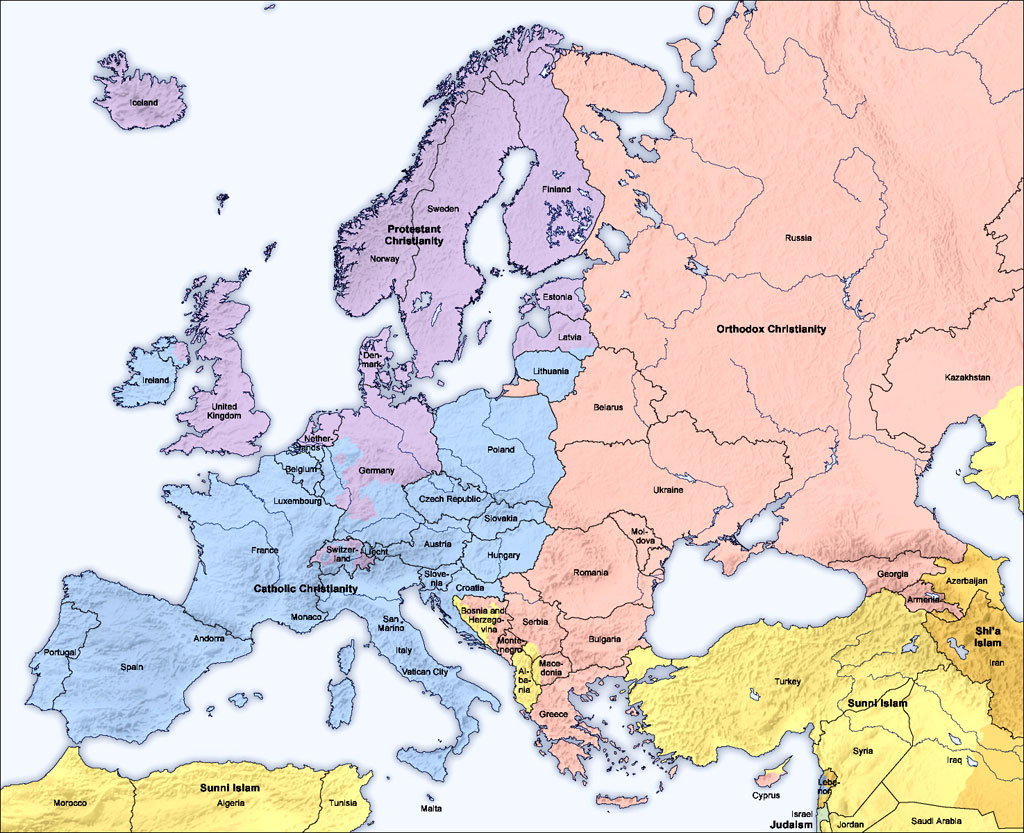
Map of traditional religious majorities by region in Europe

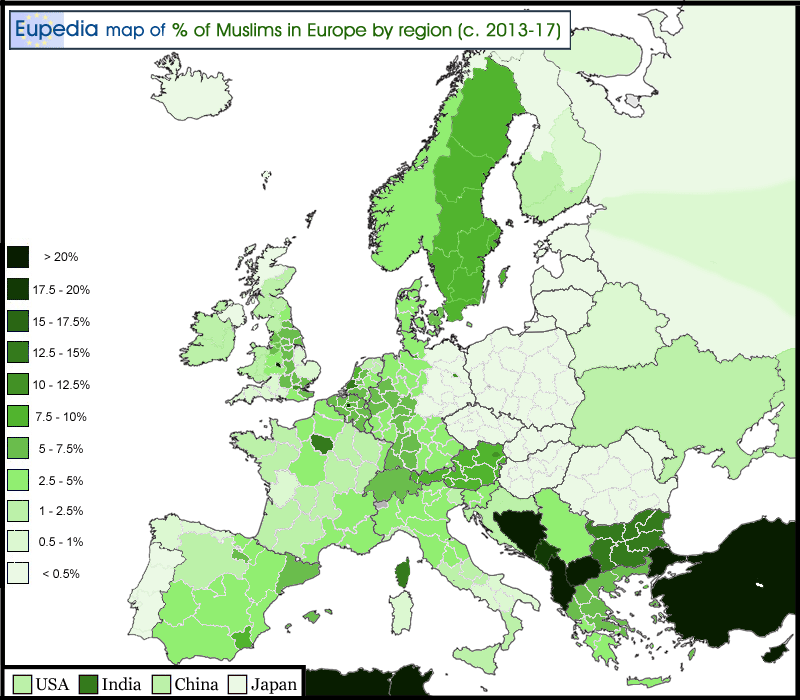
Percentage of Muslims by region (2013-17)
This map is based on the data from the Wikipedia as well as many other sources.
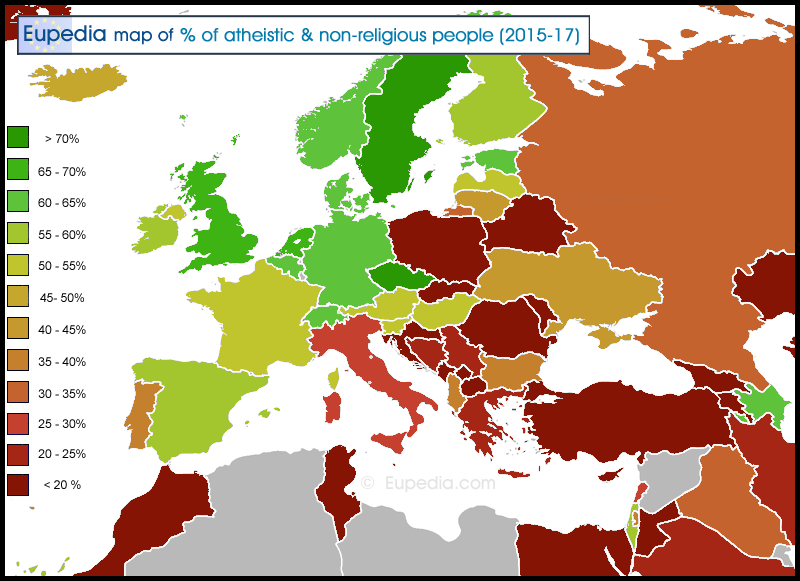
Percentage of Atheists, Agnostics and non-religious people (2015-17)
This map is based on the data from the WIN-Gallup Poll for 2017 and the Pew Research Survey for Central and Eastern Europe for 2015, as well as additional data from Wikipedia for a few missing countries.
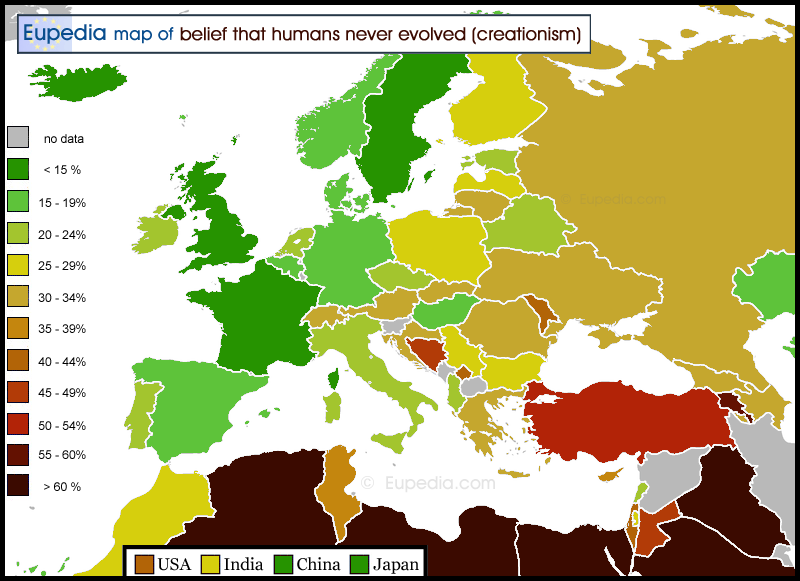
Percentage of people who do not believe in evolution (creationsim).
The percentages of believers used for this map were calculated based on the averages of five different surveys:
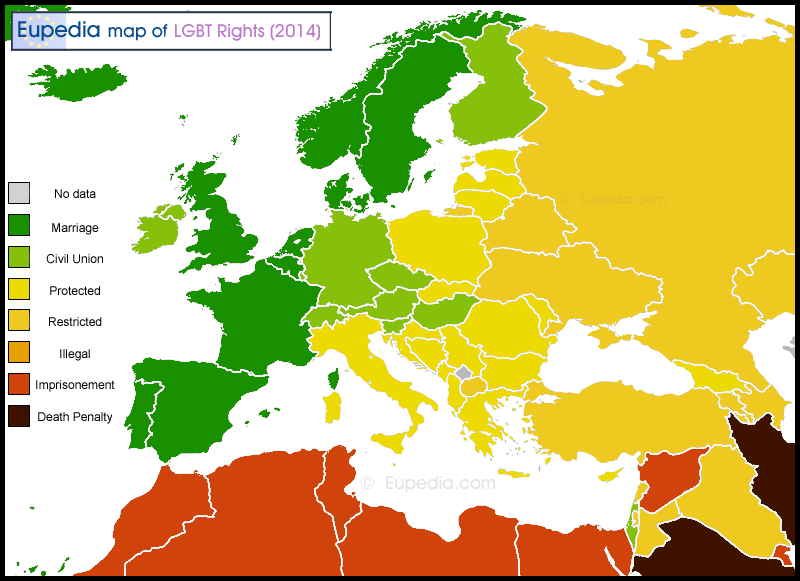
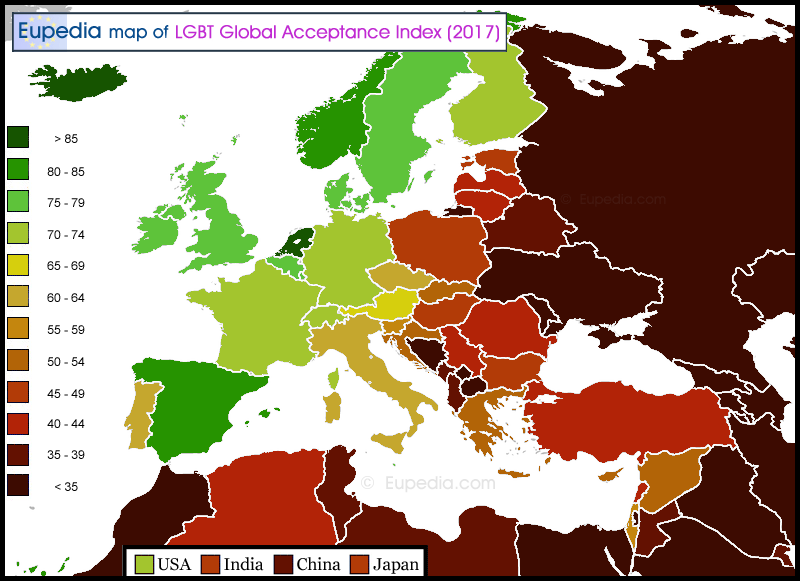
LGBT Global Acceptance Index (2017)
This map is based on the data from the UCLA global report.
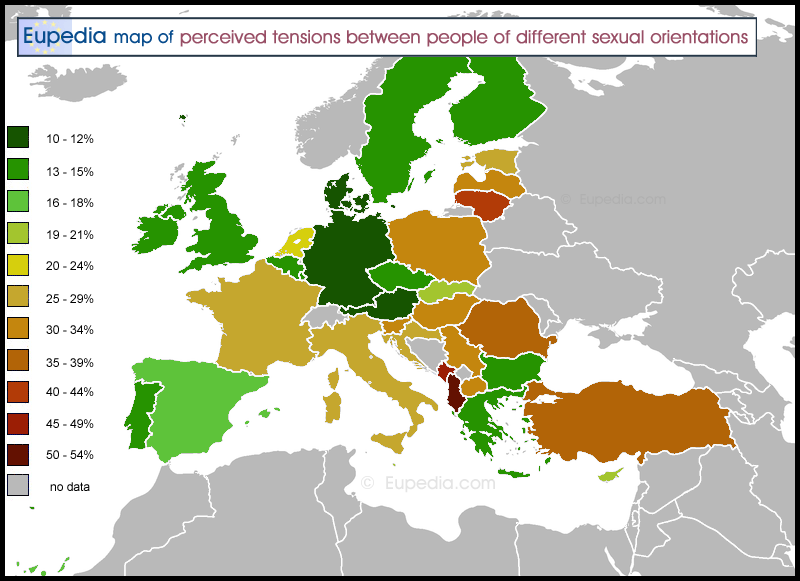
High perceived tensions between people of different sexual orientations
This map is based on the data from Eurofound's European Quality of Life Survey 2016. It shows the percentage of respondents who said that there was a lot of tension.
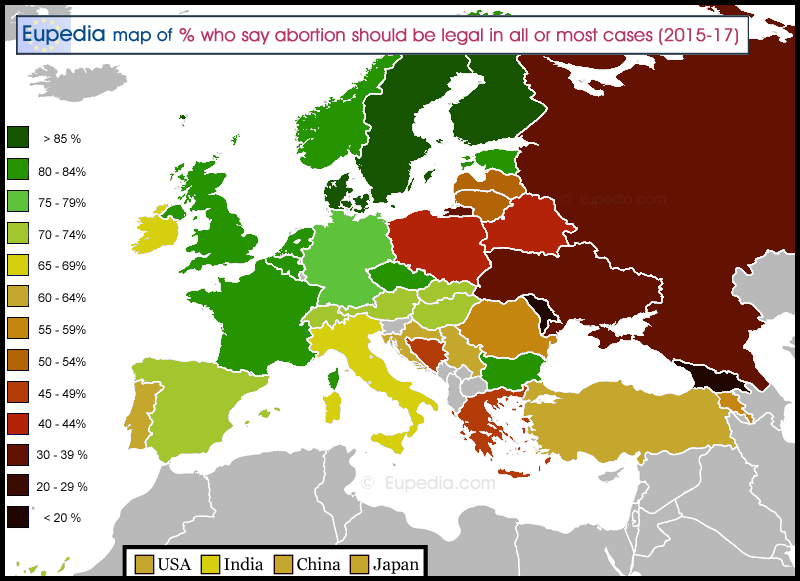
Percentage who say that abortion should be legal in all or most cases (2015-17)
This map is based on the data from the Pew Research, except for Turkey, India, China and Japan, which are from the Ipsos survey for 2017. No data was available for Muslim countries, but another Pew Research survey showed that over 70% of Muslims in Southeast Europe, the Middle East and North Africa believed that abortion was morally wrong (thus less than 30% of support).
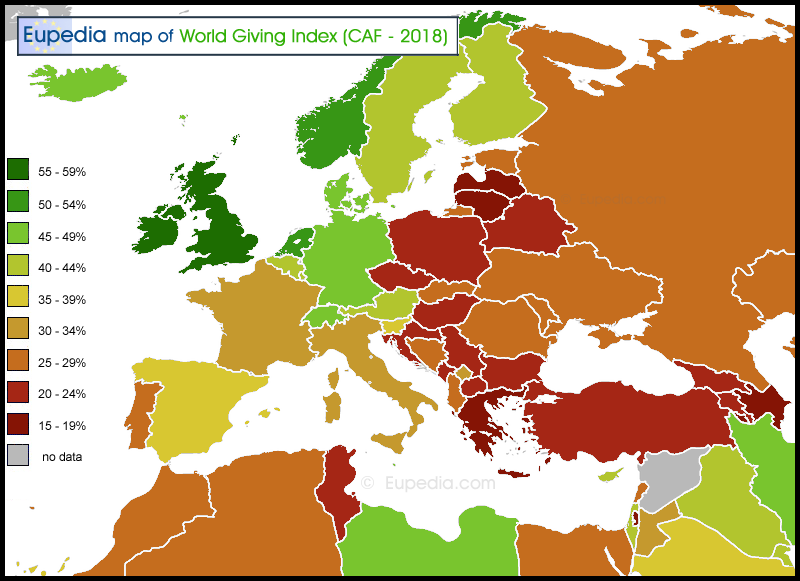
World Giving Index (2018)
This map is based on the data from CAF World Giving Index for 2018. It takes into account the percentage of people who donated money to a charity, volunteered your time to an organisation, and helped a stranger, or someone they didn’t know who needed help. It can be seen as a measure of generosity toward strangers.
Lifestyle
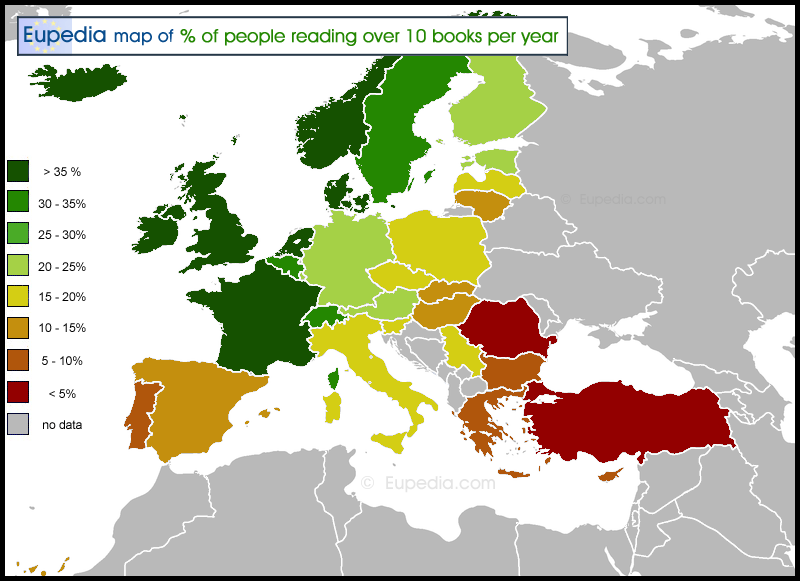
Percentage of people who read at least 10 books over the last 12 months
This map is based on data from Eurostat for 2011 for most countries except for Northwest Europe. Individual sources were used for the United Kingdom (2014), Ireland (2010), France (2018), Switzerland (2017), Belgium (2013), the Netherlands (2018), Denmark (2020) and Norway (2016).
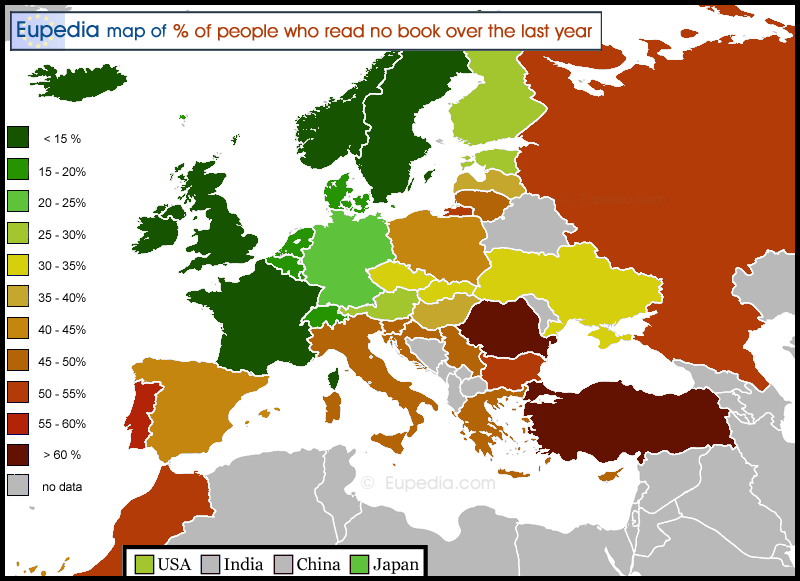
Percentage of people who did not read any book over the last year
This map is based on data from Eurostat for 2011 for most countries except for Northwest Europe. Individual sources were used for the United Kingdom (2014), Ireland (2010), France (2018), Switzerland (2017), Belgium (2013), the Netherlands (2018), Denmark (2020) and Norway (2016), Russia (2019), Ukraine (2018) and Morocco (2014).
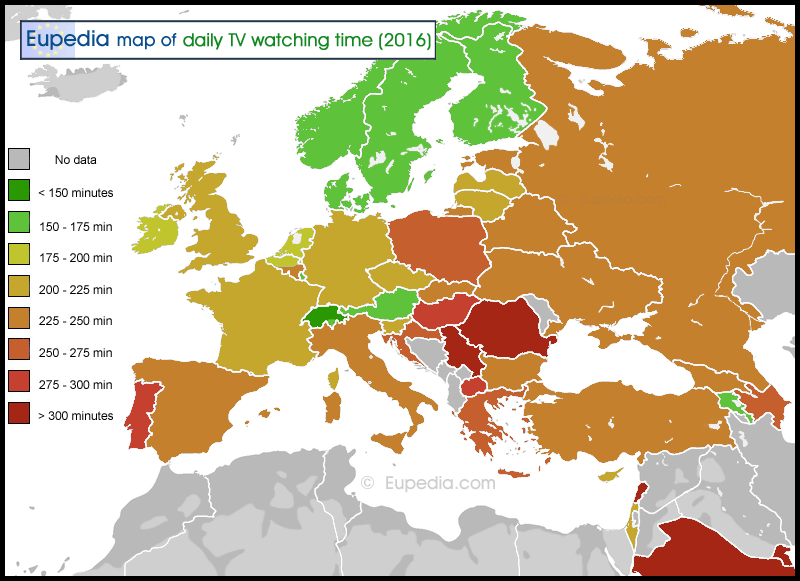
Average time (in minutes) spent watching television daily (2016)
The data for this map comes from Statista (for Europe), Zenith OptiMedia (for the Middle East) and Ipsos (for Lebanon only).
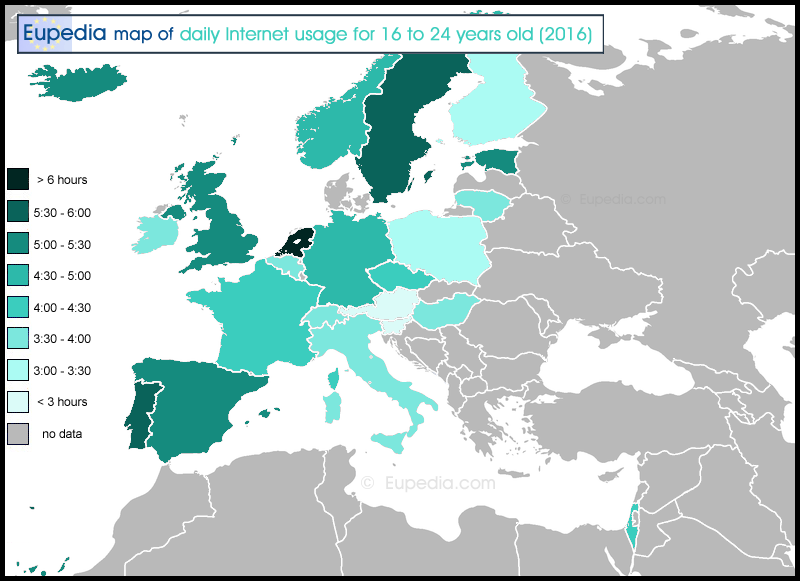
Daily Internet usage for young people in hours and minutes per person (2016)
This map is based on the data from Our World in Data for users aged 16 to 24 years old.
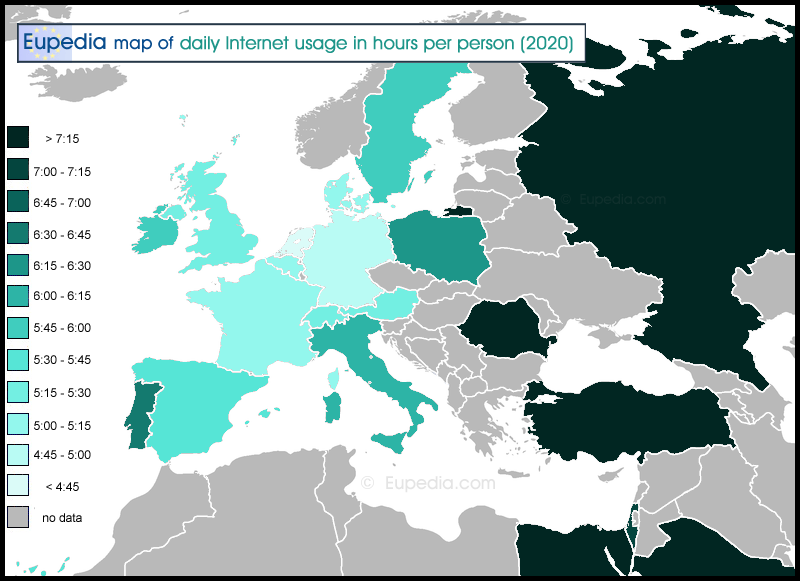
Daily Internet usage in hours and minutes per person (January 2020)
This map is based on the data from Data Reportal for users aged 16 to 64 years old.
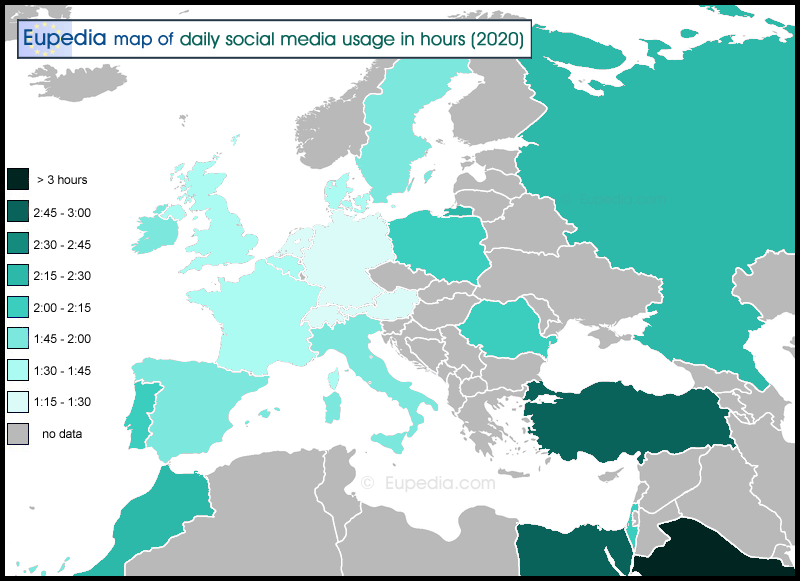
Daily social media usage in hours and minutes per person (January 2020)
This map is based on the data from Data Reportal for users aged 16 to 64 years old.
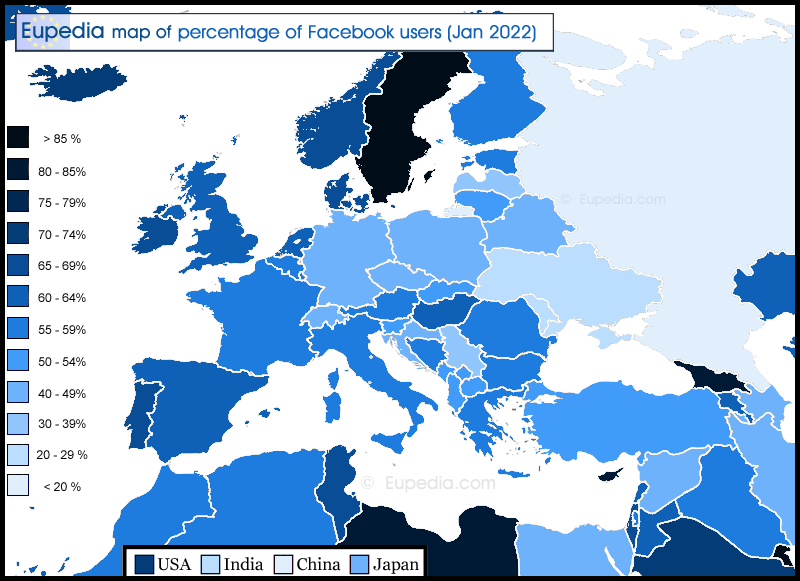
Percentage of Facebook users by country (January 2022)
The percenatages in this map was calculated by dividing the number of Facebook users by the population using data from World Population Review.
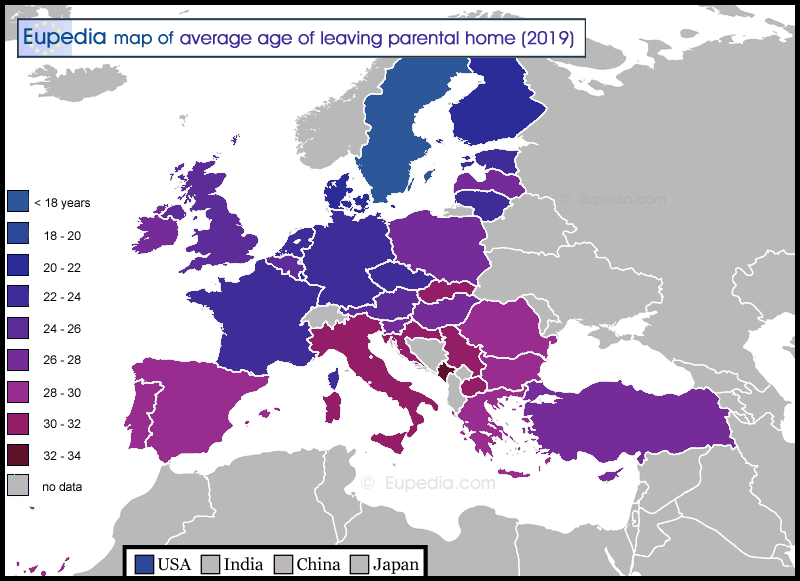
Average age for leaving the parental home (2019)
This map is based on the data from Eurostat for 2019.
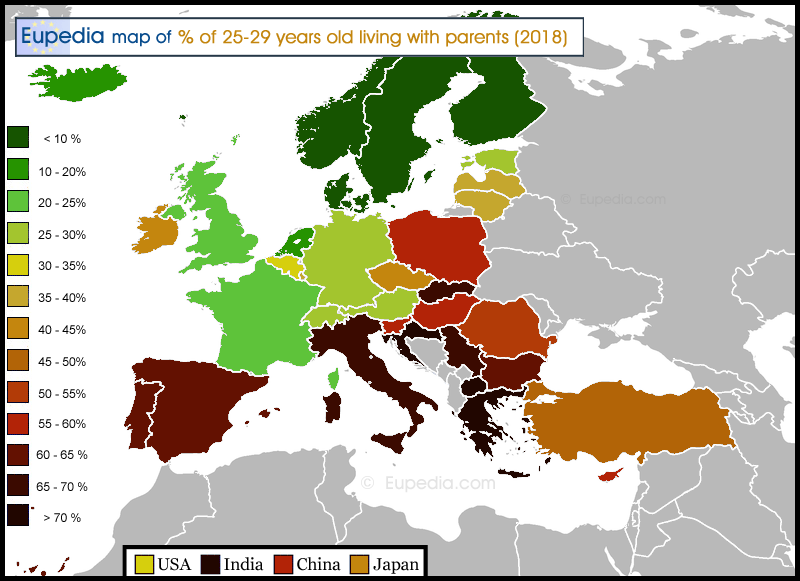
Percentage of people aged 25 to 29 years old living with their parents (2018)
This map is based on the data from Eurostat for Europe. Other sources were used for the USA, India and China and Japan.
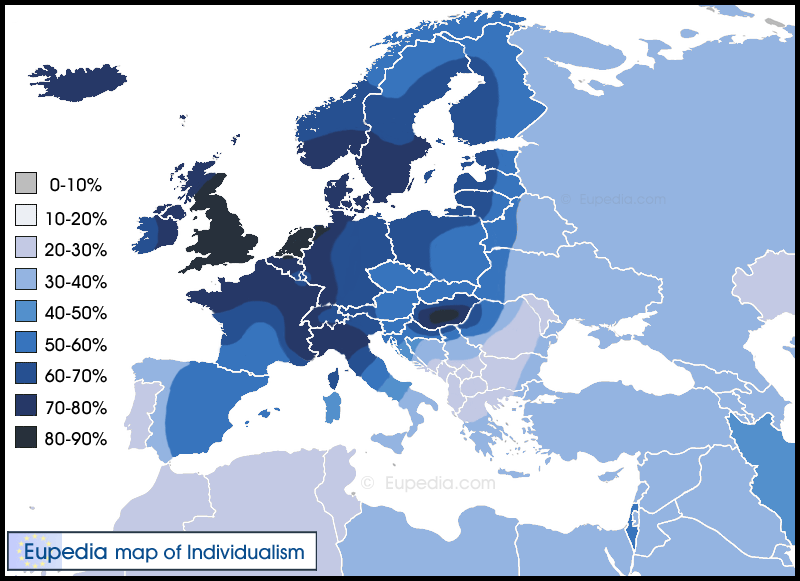
Individualism (2014)
This map is based on the data from Hofstede Centre using Hofstede's cultural dimensions theory. See also Individualism vs Collectivism.
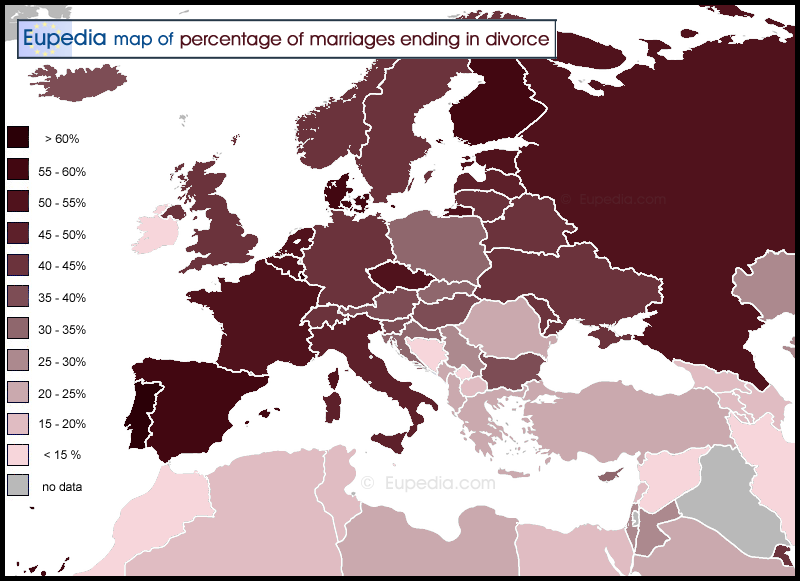
Percentage of marriages ending in divorce (2016)
This map is based on the data from Wikipedia (for Europe).
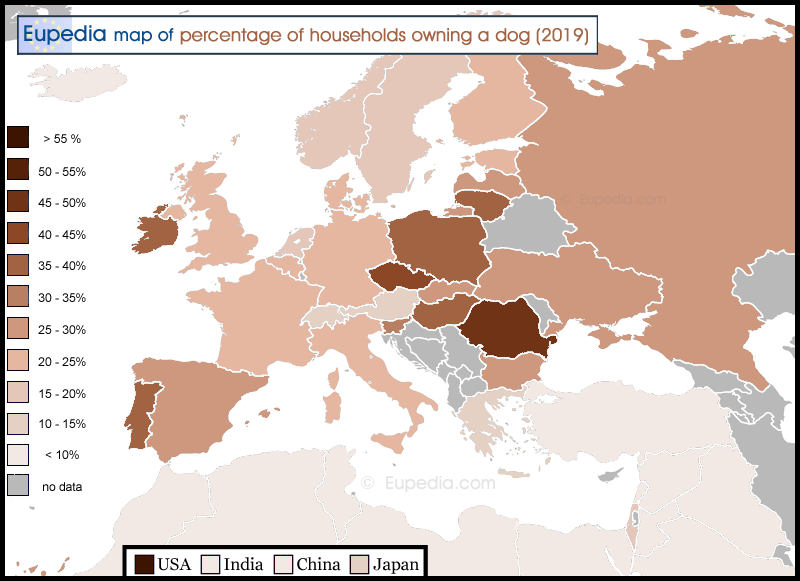
Percentage of households owning a dog (2019)
This map is based on the data from FEDIAF for Europe. Other sources were used for Iceland, Ukraine, the USA, India, China and Japan. Note that pet dogs are very rare in Muslim countries for religious reasons.
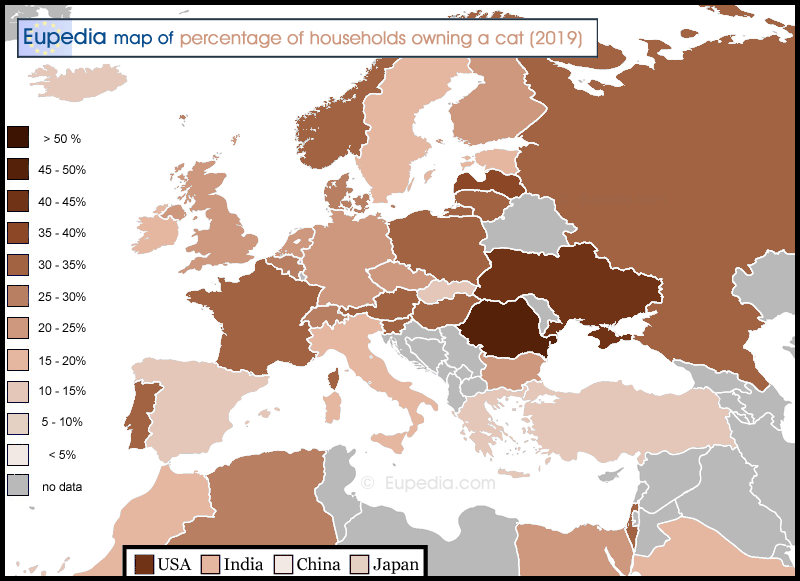
Percentage of households owning a cat (2019)
This map is based on the data from FEDIAF for Europe. Other sources were used for Iceland, Ukraine, Arabic countries, the USA, China and Japan.
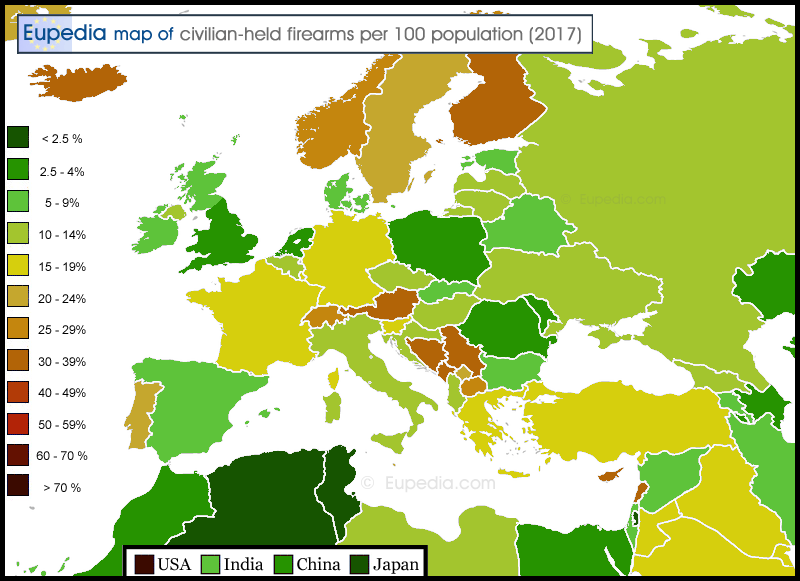
Civilian-held firearms per 100 people (2017)
This map is based on the data from the Small Arms Survey (2017) through Wikipedia. This represents the total number of civilian firearms in a country divided by the population. It is not the same as the gun ownership rate, as some individuals own more than one gun. In the USA there are over 120 firearms for 100 people, by the highest gun ownership rates are found in the states of Wyoming and Montana (each 66%).
And now check
The content of this page is purely indicative and subject to changes, approximations or errors.