• Don't want to see ads? Install an adblocker like uBlock Origin or use a Europe-based privacy-friendly browser like Vivaldi or Mullvad.

Really good DNA Evidence that the Scandinavian migration to Germany never happened

Fire Haired

Regular Member
Messages
688
Reaction score
32
Points
0
Ethnic group
Celto-Germanic, Latino(~6%)
Y-DNA haplogroup
R1b Df27(Spain)
mtDNA haplogroup
U5b2a2(Prussia)
No matter how u put it the German langauge is Indo European it first migrated from Germany to southern Scandnavia about 4,000ybp people get confused and think of teh German langauge to represent Scandinavians when it does not at all it is just a language the Scandvien people are thousends of years older than the German language the proven marker of the German language is R1b U106 aka R1b S21
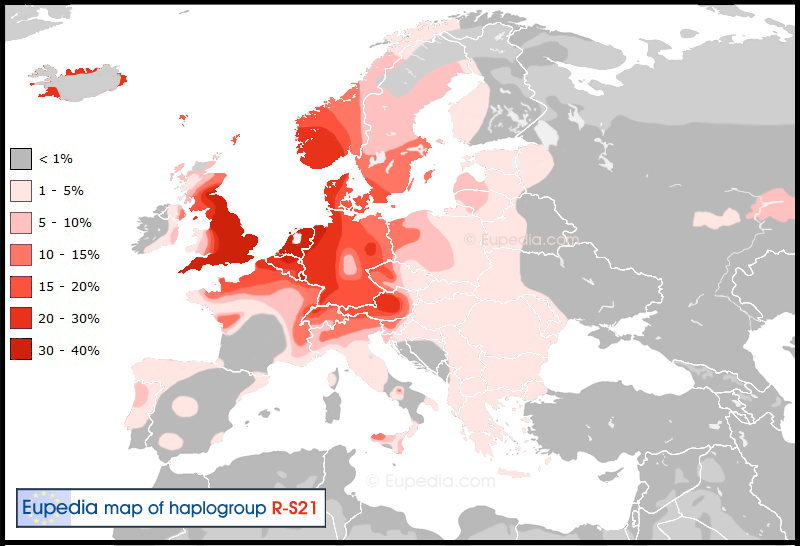
Haplogroup-R1b-S21.gif
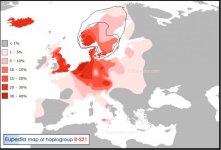
R1b S21 is only about 4,000-5,000 years old it migrated to Scandnavia with teh German langauge and teh Nordic bronze age culture about 4,000ybp
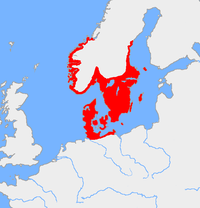
200px-Nordic_Bronze_Age.png


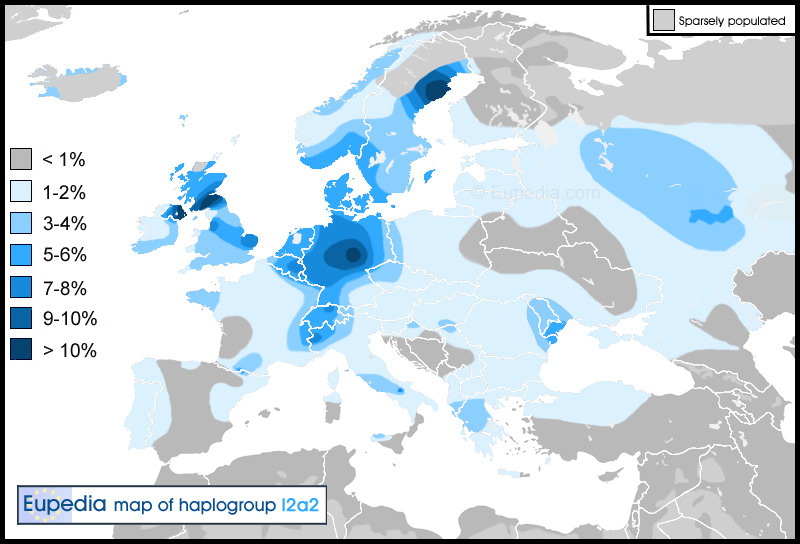
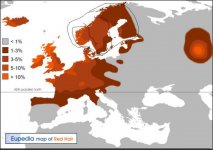
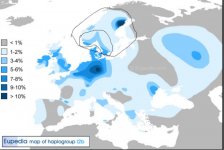
that is why it is centered ins outhern Scandnavia the R1b S21 proto German speakers where teh brother group to proto Italo Celtic speakers who conquered all of western europe between 4,000-3,000ybp their Y DNA is R1b S116 the brother group to Germanic R1b U106 another thing they have in common is high amounts of red hair who ever the proto Germanic Italo Celtic speakers where 6,000ybp they had at least 20% red hair and this is also the reason why red hair in Scandnavia only exsits in areas of r1b s21 and are highest in southern Scandnavia also Y DNA I2a2 is only in teh areas of Y DNA R1b S21, red hair and Germanic languages in Scandnavia
red_hair_map_europe.jpg
Haplogroup-R1b-S21.gif
Haplogroup-I2b.gif


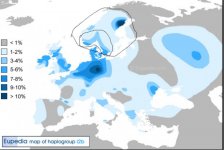
since it seems R1b s21, I2a2, and red hair all come from teh same migration into Scandinavia about 4,000ybp there is no doubt it was from early German speakers and since they had I2a2 that means for a fact they came from germany and that the German language did not begin in Scandnavia

But from what i have seen all experts say teh German langauge migrated down south from Scandnavia just 2,750-2,000ybp but then why do Germans in Scandnavia and Denmark speak a diffenrt form of German than ones in the rest of Europe if they split just 2,500ybp i guess they can explain that with linguistics but it seems we can not find any major Y DNA evidence of a recent migration down south into Germany people say I1 which takes up about 40% of Scandnaviens is evidence since it is second highest in Germany at about 10-20% i dont think that is evidence people because of subclades almost all Scandnaviens have subclade I1a2 i explained in this thread http://www.eupedia.com/forum/threads/28850-Most-I1-in-Europe-is-not-from-Germans-or-Nordics that I1a2 is defintley over 10,000 years old probably 12,000-15,000 years old and that most German I1 is almost never found in Scandinavia but if there was a recent migration from Scandnavia 2,500ybp you would see alot of I1a2 in Germany but u dont u see I1a1, I1a3, I1a4, and I1b which are almost never found in Scandinavia so I1 in Germany is not from Scandinavia it is from Paleolithic left overs and I1 is in every spot in Europe it is about 20,000-25,000 years old Scandinavian I1a2 split from contiental European I1a1, I1a3, I1a4 and I1b over 12,000ybp so really we find hardly any Scandinavian Y DNA in Germany but we do find Scandinavian I1a2 in places Vikings migrated to but if the German language conquered the modern day Germany just 2,5000ybp and they migrated from Scandinavia u would find Scandinavian I1a2 which u dont

Another huge piece of evidence Germans did not migrate from Scandnavia to GErmany 2,500ybp is a 3,000 year old Y DNA sample in central Germany had Germanic Y DNA R1b S21 they reported it as R1b but i put its haplotype into a haplotype subclade predictor and they said it was for sure R1b S21 also R1b S21 is more popular in Germany than in Scandinavia the people teh Germans conquered had German Y DNA R1b S21 they either spoke a Germanic language or a very reltaed langauge to German

my thoery is that west Germanic did not migrate from Scandinavia and the German langauge is 4,000 years old at least and originated in Germany and it never migrated from Scandnavia to Germany
 

Attachments

  • i2a2.jpg
    i2a2.jpg
    33.9 KB · Views: 395
  • i2a22.jpg
    i2a22.jpg
    33.5 KB · Views: 412
  • r1b s21.jpg
    r1b s21.jpg
    34.9 KB · Views: 437
  • redhair.jpg
    redhair.jpg
    39 KB · Views: 424
The cradle of Germanic peoples and culture is Denmark, Scania (southern Sweden) and northern Germany (Schleswig-Holstein). You can't expect to find a lot of similarities between Germany and Norway or central Sweden because indeed there was little migration between the two regions.

Just look at the place of origins of major Germanic tribes from the migration period:

- Angles => from Denmark (Jutland)
- Jutes => from Denmark (Jutland)
- Saxons => from Saxony
- Franks => from Denmark or Saxony
- Burgunds => from Denmark (Borgholm)
- Normans => from Denmark (+ some from Norway)
- Goths => from Scania and/or Gotland
- Lombards => from Scania

Most of the Vikings who settled in Western Europe also came from Denmark.
 
The cradle of Germanic peoples and culture is Denmark, Scania (southern Sweden) and northern Germany (Schleswig-Holstein). You can't expect to find a lot of similarities between Germany and Norway or central Sweden because indeed there was little migration between the two regions.

Just look at the place of origins of major Germanic tribes from the migration period:

- Angles => from Denmark (Jutland)
- Jutes => from Denmark (Jutland)
- Saxons => from Saxony
- Franks => from Denmark or Saxony
- Burgunds => from Denmark (Borgholm)
- Normans => from Denmark (+ some from Norway)
- Goths => from Scania and/or Gotland
- Lombards => from Scania

Most of the Vikings who settled in Western Europe also came from Denmark.

I agree that the center of Germanic life revolved around Denmark, Scania, and Northern Germany. And it's true that most of the Vikings who settled in Western Europe did come from Denmark.

Where I don't agree with your comment is that there was little migration between Norway/central Sweden and the Germanic lands.

These tribes were geared for travel over water. They thought nothing of popping over the Baltic and used the rivers like you use the road in front of your house. I have too many near STR matches in Norway and Sweden to make any other conclusions that these tribes weren't exceptionally well-travelled for the times.

(I can link my direct ancestors solidly back to Jutland.)
 
Last edited:
The new guy does raise some interesting points. What I think people sometimes miss is the major upheaval that surely occurred during the introduction of the first waves of hg. R and the existing I1 and I2a2 populations.

In previous threads I've explained my "hide-out" theory were hg. I members sought difficult to access islands/rocky mountainous areas and even swamps to avoid the better equipped hg. R tribes. Remember the Steppe peoples brought horses, chariots, and advanced weaponry so the first battles would have been lopsided.

What if most if not all of hg. I1 tucked into the Aland Islands to avoid the coming throngs of hg. R members? Check the population maps to see how this matches up.

Then imagine trying to launch horses (much less chariots) in these conditions. In my theory, the southern bands of hg. I would have fled to Hvar and surrounding islands avoid the horse mounted tribes.

Again please refer to the haplogroup maps.

This hypothesis could also help explain some of the extreme bottle-necks we see in I1. And consider mining locations when examing I2a2 locations (central and northern coastal Sweden and the Harz mountains of Germany.)
 
The cradle of Germanic peoples and culture is Denmark, Scania (southern Sweden) and northern Germany (Schleswig-Holstein). You can't expect to find a lot of similarities between Germany and Norway or central Sweden because indeed there was little migration between the two regions.

Just look at the place of origins of major Germanic tribes from the migration period:

- Angles => from Denmark (Jutland)
- Jutes => from Denmark (Jutland)
- Saxons => from Saxony
- Franks => from Denmark or Saxony
- Burgunds => from Denmark (Borgholm)
- Normans => from Denmark (+ some from Norway)
- Goths => from Scania and/or Gotland
- Lombards => from Scania

Most of the Vikings who settled in Western Europe also came from Denmark.

so it seems he German language comes from south scandnavia and the cradle of Germans is from Denmark but what i am saying if German languages did come from Scandnavia where is the Y DNA evidence R1b S21 in Germany is not from those Germans in Scandinavia R1b S21 in Scandinavia came from Germany and the I1 in Germany is from what i have read mainly I1a1, I1a3, I1a4, and I1b all these groups are almost never found in Scandinavia if there was a recent migration from Scandinavia we would see the main Scandinavian subclade I1a2 like we do in england and normandy which are areas vikings went too

i am skeptical about assuming the German language settled Germany just 2,000ybp that sounds way to recent to me and since the German language had to first migrate from Germany to Scandinavia 4,000ybp who ever lived in Germany before the Scandinavian German speakers came spoke a extremely related language to German also the 3,000 year old Y DNA R1b S21 in Germany shows R1b S21 was already in Germany so who ever the native Germans whee their language had been split from the German speakers in scandnavia for only about 3,000-4,000 years so i think they spoke a german langauge and according to wikpedia the proto German langauge exsited just 3,000 years ago then migrated from scandnavia to Germany just 2,750-2,000ybp that sounds to recent for me i think there is a good chance the GErman langauge began 4,000 years ago in Germany migrated north into Scandinavia the west Germanic languages devloped in Germany from 4,000-2,000ybp and the north germanic languages developed in denmark and scandnavia

so according to what the experts say the German language conquered Germany just 2,5000-2,000ybp they had to kill people off to do that i want to know what the archaeological evidence is that a people group was conquered in Germany 2,500-2,000ybp and it sounds to recent for north german and west german to have split not even over 2,500ybp

and the I1 in Germany should be I1a2 like in Scandinavia if it came from a recent migration from those German tribes in Scandinavia so on this website it says that I1b is west Germanic when it is not even connected to Germans or Nordics it split from Scandinavian I1a2 over 15,000ybp it has nothing to do with Germans or Nordics then dont call it west Germanic call it Paloithic or Mesolithic central European dont call I1a1, I1a3, and I1a4 Germanic because tehy are not they are Paloithic or Mesolithic European the I1 in Germany from what i have read is not from Scandinavia they dont have the same subclades which means I1 was the dominet group for Neolithic and Mesolithic and paleolithic Germans

that should be huge new I1 is not just Nordic it may have been the most popular group in Europe before Indo European invasions i dont understand why everyone assumes it is all Germanic or Nordic and never consider any I1 being native to continental Europe or not from Germanic migrations

here is the language those tribes spoke
Angles-from Denmark (Jutland) west Germanic

Jutes- from Denmark(Jutland) west Germanic

Saxons- from Saxony west Germanic

Franks from Denmark or Saxony West Germanic

Burgunds from Denmark east Germanic

Normans- from Denmark North Germanic

Goths from Scania or Gotland east Germanic

Lombards from Scania high German

i still am critcle teh vikings killed many people and where evr they went they left Y DNA I1a2 but we dont find that in Germany if teh same type of people migrated to Germany 2,500-2,000ybp where is teh I1a2 i dont see it and where are teh records they are responsble for al German languages i just cant imagne such a recent migration with almost no Y DNA evidence R1b S21 which is teh Germanic langauge signature was already founded in germanu who ever teh people where before the Germans came spoke a extremely related language i think west Germanic and east Germanic and if u go by the idea that German language spread 2,500-2,000ybp then that means teh German language is just 3,000 or so years old since west Germanic and east Germanic split from north Germanic just 2,500ybp i also think teh Romans who knew the Celts so well and knew the German tribes so well as far back as 2,000ybp would mention the mysterious native Indo European German people that the Scandinavians conquered why dont they maybe because they where also germans
 
so it seems he German language comes from south scandnavia and the cradle of Germans is from Denmark but what i am saying if German languages did come from Scandnavia where is the Y DNA evidence R1b S21 in Germany is not from those Germans in Scandinavia R1b S21 in Scandinavia came from Germany and the I1 in Germany is from what i have read mainly I1a1, I1a3, I1a4, and I1b all these groups are almost never found in Scandinavia if there was a recent migration from Scandinavia we would see the main Scandinavian subclade I1a2 like we do in england and normandy which are areas vikings went too

i am skeptical about assuming the German language settled Germany just 2,000ybp that sounds way to recent to me and since the German language had to first migrate from Germany to Scandinavia 4,000ybp who ever lived in Germany before the Scandinavian German speakers came spoke a extremely related language to German also the 3,000 year old Y DNA R1b S21 in Germany shows R1b S21 was already in Germany so who ever the native Germans whee their language had been split from the German speakers in scandnavia for only about 3,000-4,000 years so i think they spoke a german langauge and according to wikpedia the proto German langauge exsited just 3,000 years ago then migrated from scandnavia to Germany just 2,750-2,000ybp that sounds to recent for me i think there is a good chance the GErman langauge began 4,000 years ago in Germany migrated north into Scandinavia the west Germanic languages devloped in Germany from 4,000-2,000ybp and the north germanic languages developed in denmark and scandnavia

so according to what the experts say the German language conquered Germany just 2,5000-2,000ybp they had to kill people off to do that i want to know what the archaeological evidence is that a people group was conquered in Germany 2,500-2,000ybp and it sounds to recent for north german and west german to have split not even over 2,500ybp

and the I1 in Germany should be I1a2 like in Scandinavia if it came from a recent migration from those German tribes in Scandinavia so on this website it says that I1b is west Germanic when it is not even connected to Germans or Nordics it split from Scandinavian I1a2 over 15,000ybp it has nothing to do with Germans or Nordics then dont call it west Germanic call it Paloithic or Mesolithic central European dont call I1a1, I1a3, and I1a4 Germanic because tehy are not they are Paloithic or Mesolithic European the I1 in Germany from what i have read is not from Scandinavia they dont have the same subclades which means I1 was the dominet group for Neolithic and Mesolithic and paleolithic Germans

that should be huge new I1 is not just Nordic it may have been the most popular group in Europe before Indo European invasions i dont understand why everyone assumes it is all Germanic or Nordic and never consider any I1 being native to continental Europe or not from Germanic migrations

here is the language those tribes spoke
Angles-from Denmark (Jutland) west Germanic

Jutes- from Denmark(Jutland) west Germanic

Saxons- from Saxony west Germanic

Franks from Denmark or Saxony West Germanic

Burgunds from Denmark east Germanic

Normans- from Denmark North Germanic

Goths from Scania or Gotland east Germanic

Lombards from Scania high German

i still am critcle teh vikings killed many people and where evr they went they left Y DNA I1a2 but we dont find that in Germany if teh same type of people migrated to Germany 2,500-2,000ybp where is teh I1a2 i dont see it and where are teh records they are responsble for al German languages i just cant imagne such a recent migration with almost no Y DNA evidence R1b S21 which is teh Germanic langauge signature was already founded in germanu who ever teh people where before the Germans came spoke a extremely related language i think west Germanic and east Germanic and if u go by the idea that German language spread 2,500-2,000ybp then that means teh German language is just 3,000 or so years old since west Germanic and east Germanic split from north Germanic just 2,500ybp i also think teh Romans who knew the Celts so well and knew the German tribes so well as far back as 2,000ybp would mention the mysterious native Indo European German people that the Scandinavians conquered why dont they maybe because they where also germans

I think you might be focusing a bit too much on "Germany", Southern Germany was first Celtic and then later on also came under Roman rule. The Germanic genetic input couldn't have been high and a lot of data confirms this. Just because Germany is called what it is, doesn't mean it is the best representative of the original Germanic people.
 
I agree that the center of Germanic life revolved around Denmark, Scania, and Northern Germany. And it's true that most of the Vikings who settled in Western Europe did come from Denmark.

Where I don't agree with your comment is that there was little migration between Norway/central Sweden and the Germanic lands.

These tribes were geared for travel over water. They thought nothing of popping over the Baltic and used the rivers like you use the road in front of your house. I have too many near STR matches in Norway and Sweden to make any other conclusions that these tribes weren't exceptionally well-travelled for the times.

(I can link my direct ancestors solidly back to Jutland.)

I didn't write 'Germanic lands' but Germany (defined by modern boundaries). There was plenty of exchange within Scandinavia (including Denmark), but much less between say the Rhineland and Norway or Thuringia and central Sweden, in either direction. After the Bronze Age, that is.
 
Both Templar and Maciamo are correct.

Germanic lands does not equal boundaries of modern day Germany.
 
i never said that the bounders of modern germany is what i mean by germany all i mean is central europe around modern Germany and besides pretty much all of the country germany and Austria are dominated by Y DNA R1b s21 more than Scandinavia is and they have very little Italo Celtic R1b S28 or Insular Celtic R1b L21 or just plain Italo Celtic R1b S116 as if the first indo Europeans in most of modern Germany or central Europe where Germans R1b S21

i dont know that much about the history of the german tribes that migrated from denmark 2,500-2,000ybp i know the germans made tons of migrations and i know that the experts say the german langauge spread with tribes from denmark around that time and they are probably right but i think i make a good point the 3,000 ear old Y DNA in central Germany from urnfield culture had germanic R1b S21 and R1b S21 is more popular in Germany and austria than denmark or scandnavia so this means the people that the Germans from Denmark conquered had Germanic R1b S21 and the proto germans migrated to Denmark 4,000ybp from Germany so who ever lived there before spoke either west Germanic and east Germanic or a language that is extremely related to Germanic languages and i dont know if there is any archaeological evidence a people group was conquered in Germany 2,000-2,5000ybp and did the Romans mention the native germans or central Europeans who where being conquered by Germanic tribes there where tons of people in germany before those migration they had to be conquered if they started to speak the langauge of those tribes from denmark no one is just going to start speaking a new langauge and change their identity

and where is the I1a2 in Germany if the GErman langauge spread by Denmark just 2,500-2,000ybp we should find I1a2 which takes up 40% of Danish people but from what i have read German I1 is I1a1, I1a3, I1a4, and I1b all of these are raley ever found in scandnavia or denmark so they dont come from those migrating germans from denmark and they are probably I1 that was left over in Europe like 15,000ybp i think most I1 in Europe is not from Germans or Scandnaviens only teh I1 in areas vikings settled and I1 was probably the main Y DNA haplogroup of people around Germany in the Neolithic. Mesolithic, and maybe Paleolithic age There is no Y DNA evidence that people from Denmark conquered people in Germany just 2,500-2,000ybp i want to hear arguments that show Y DNA evidence because it seems like to me west germanic and east germanic may have already been in germany 3,000ybp
 
Last edited:
I think you might be focusing a bit too much on "Germany", Southern Germany was first Celtic and then later on also came under Roman rule. The Germanic genetic input couldn't have been high and a lot of data confirms this. Just because Germany is called what it is, doesn't mean it is the best representative of the original Germanic people.

in southwestern Germany and switzerland Italo Celtic R1b S28 is most popular while Germanic R1b S21 is not very popular at all it is like 5% but in the country GErmany and austria Germanic R1b s21 is more popular than in Scandnavia or denark and liek i said 3,000 year old y dna in germany had Germanic R1b S21 this is from before those Germanic tribes from denmark migrated so to me this means teh people that lived there before had Germanic R1b S21 and that since Y DNA I2a2 and R1b S21 and red hair are most popular in the same areas of scandnavia this means these people came had native German I2a2, Germanic Indo European R1b S21, and alot of red hair and they came from Germany so if they split from the people with Y DNA R1b S21 just 3,500-4,000ybp i think those people still in germany spoke a Germanic language north Germanic, west germanic, and east Germanic could not have split just 2,500ybp
 
since Y DNA I2a2 and R1b S21 and red hair are most popular in the same areas of scandnavia

I've heard a theory that says that the increased rate of red hair in Norway is the result of Irish/Gaelic slaves. It seems possible considering that it has been proven that many Icelanders have Irish ancestry. The same could apply to Norway.

http://icelandicroots.com/2013/03/17/irish-roots-in-iceland/
 
yes that is true on my norwiegan side they come from wetsern norway and the first person on my norwiegan side to come to america was iven and he had red hair so did his daughter so did hit daughters son and duagther and then i have red hair and i am his great great grand son in that area of norway insular celtic R1b L21 is 15-20% my dad told me that there where scottish immigrants that came in recent times like since the 1600's and also in iceland R1b L21 is 15-20% so vikings did inter marry alot with gealic celts in ireland and scotland that is also probably why red hair is more popular in teh area of norway with more irish and scottish R1b L21 butr not all red hair in scandnvai is from celts almost none of it is only in western norway i think the reason why red hair, r1b s21, and i2a2 are in the same areas of scandnavia is because they come from teh proto Germanic speakers who migrated up to scandnavia about 4,000ybp and started the nordic bronze age and irish and scottish red hair almsot defintley comes from R1b L21 celts that migrated there 4,00-3,000ybp all red hair in western europe almost defintley comes from te proto Italo Celtic Germanic speakers who had R1b L11

also Indo Iranian indo Europeans who migrated to asia from 5,000-4,000ybp also had alot of red hair the tarium mummies have indo Iranian redheads from 3,400 and 3,000ybp also the chinese said the Tocherians also known as the yuezhia who where indo Iranians in western china had high noses like Caucasians red hair full red beards and blue eyes that is such a good description of a redhead that there is no way they made that up plus we have paintings and writtings made by tocherians in china and they where definable white and alot had red hair and they spoke a Indo Iranian language the greeks said the Sythiens where red haired and theyw here also inod iranien u still find redheads in indo iranien ethnic groups like kurds in iraq, syria, and tukrey kalash in pakistan

the only people we know of that have red hair and for sure did not get it from indo Europeans are the udmurts in pontic steppes who had 15-20% red hair and some berber tribes in northwest Africa these berbers have mainly european mtDNA H1, H3, V, and U5b1b Spanish migrated there about 15,000ybp in the Iberian refuge so that could be where tehy got the red hair
 
I do agree that there is some correlation between R1b rate and the presence of red hair. But I think the original Germanic population that arose from the admixture of Paleolithic Europeans and Indo-europeans (during the Nordic Bronze Age), was mostly I1 and R1a. The R1b component I think was incorporated once they expanded further south.

200px-Nordic_Bronze_Age.png
 
I do agree that there is some correlation between R1b rate and the presence of red hair. But I think the original Germanic population that arose from the admixture of Paleolithic Europeans and Indo-europeans (during the Nordic Bronze Age), was mostly I1 and R1a. The R1b component I think was incorporated once they expanded further south.

200px-Nordic_Bronze_Age.png
R1b-U106 is quite young in Scandinavia, so it looks like it got there later than I1 and R1a, the same might be true for R1b-P312.
 
R1b-U106 is quite young in Scandinavia, so it looks like it got there later than I1 and R1a, the same might be true for R1b-P312.

If you read carefully what I wrote, that is exactly what I said. Are you agreeing with me or did you misinterpret what I wrote?
 
If you read carefully what I wrote, that is exactly what I said. Are you agreeing with me or did you misinterpret what I wrote?

I was corroborating your argument...
 
I was corroborating your argument...

Just making sure :)

Someone had rated my comment negatively right before you commented so I wasn't sure if it was you.
 
Again, my "hide-out" hypothesis allows for all of the evidence we see today. Hg. I1 (and all of hg. I) basically had free range over the entire European continent (for THOUSANDS of years). As groups of R began to fold in or maybe even swarm in... most I1 members would have tucked away in difficult to reach environments to avoid them. For the Northern tribes this would be the Aland Islands off the coast of Finland.
 
Last edited:
But of course not every I1 clan would have made it to Aland Islands... some would have picked say a swampy area, another group may have selected mountainous terrain. Some members may have even been captured and eventually allowed to be part of the new tribe/society (this may have taken several generations for a blend to occur). All of these examples would be explained by the I1 maps we see today.
 
Again, my "hide-out" hypothesis allows for all of the evidence we see today. Hg. I1 (and all of hg. I) basically had free range over the entire European continent (for THOUSANDS of years). As groups of R began to fold in or maybe even swarm in... most I1 members would have tucked away in difficult to reach environments to avoid them. For the Northern tribes this would be the Aland Islands of the coast of Finland.


i argee witth u that the hg I people had to hide and get away from R1a and R1b indo europeans but they had no idea what dna was phiscalley the hg I people and the hg R1a and R1b people would have looked identical the only differnce was culture and when the indo europeans came 6,000ybp most of western europe already was not mainly Y DNA I because the G2a farmers had already conquered them most of western europe not counting germany would have had G2a out of 31 y dna samples in pre indo european europe only four had I2a1a and 26 had G2a so in western europe it was the G2a farmers who where hiding and the reason why I1 is still so popular in scandnavia is because there ws never a major indo european invasion and there was never a major G2a farmer invasion i dont think u can explain why I1 survived so well in scandnavia it was just because they where so far away from the action

in southern scandnavia around where the nordic bronze age terriotory R1b u106 is very popular so the I1 people in that area where kind off conquered but they did do alot better than any other hg I people in finland teh reason why I1a2c is not 100% is they where conquered by siberian Uralic N1c1 peopole i think u guys dont consider N1c1 for the reasn I1a2c is not as popular in finland finnish people are in a while different world the ones in the south where affected by early proto balto slavic spaking corded ware culture indo europeans 5,000ybp the ones in the west where affected by Germanic Swedish who had r1b u106 but u guys never mention uralic n1c1 which is teh most opular hg in finland and teh reason why I1 is more popular in western finalnd is not because it came from swedan but because teh n1c1 came from teh east to me it is obvious I1a2 is the nordic haplogroup it was there first over 10,000ybp before r1a r1b and n1c1 i cant belive why people even consider thinking r1b or r1a in nordic areas is older than i1a2 it is obvious i1a2 is the native and orignal nordic hg because it does not represent any known bronze age or Neolithic migrations it is just spread out in the whole nordic area and it just becomes less in some areas because of invasion by indo Europeans or uralic's it is obviously the foudndation hg of scandnavia
 
Back
Top