• Don't want to see ads? Install an adblocker like uBlock Origin or use a Europe-based privacy-friendly browser like Vivaldi or Mullvad.

Where does the Albanian language come from? [VIDEO]

iapygian refers only to the salentine area, ie, taranto and south if the city.....the heel

all inscriptions are ionic greek

link me what you have
only Wikipedia, it's why I wrote about new works because Wiki could be based on old enough works: I'm not peculiary well knowledged on these ancient language; my remark was over all about the link made sometimes between the origin of a language and the kind of alphabet imployed to write it. Sorry.
 
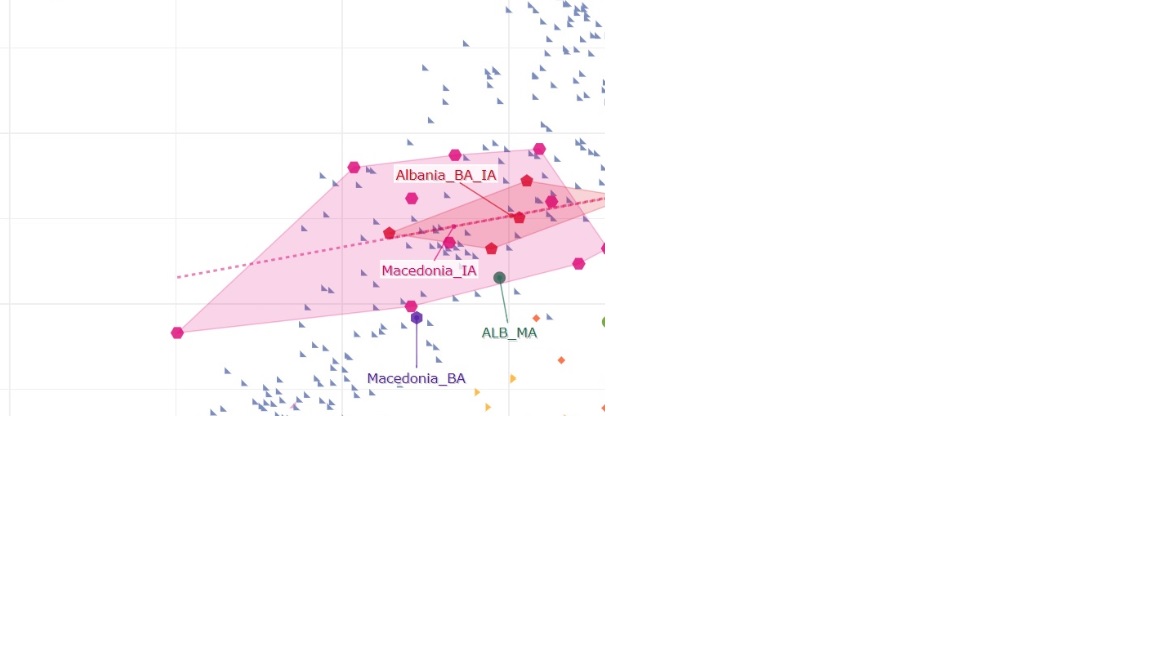
Based on the new samples from Norman site in Sicily(dated 1,100-1,300 AD), we can sort of back into the early mdv Albanian profile. Two of the E-V13 showing clear Albanian ancestry have zero Slavic drift, which is incredible and strongly suggest in the middle ages Albanians as a whole were very low on Slavic admixture (0-8%).

We can speculate medieval Albanians clustered somewhere in the red area.
TcQTrPA.png


The new samples do lead to questions, why is the earliest Albanian ancestry traced to three E-V13 samples and not J2b-L283 or R-Z29758, which are praised for their Dravidian like diversity?
 
Last edited:
According to genarchivist, sample SGNB5 is J2b-L283 and this sample also picks up significant Alb post-mdv ancestry.

lrUeuDt.png
 
The plot twist is that the J2b sample is from the Muslim cemetery. My take is this J2b-L283 ancestor was serf to the Normans, and he escaped or joined the Muslim side, gained freedom and married a Muslim woman.

The Normans did introduce serfdom during their short rule in Albania.
 
Found an interesting abstract that has been presented in a conference in Germany. The work is in German and this google translate, I did manage to find a intro in English from an Albanian news site. It is a cranial analysis, hopefully to be followed by a genetic one?


The transition from Late Antiquity to Early Middle Ages in Albanian habitat from the perspective of historical anthropology

Abstract


The aim of this paper is to present an effort on designing a biological-cultural basis transmitted during centuries regarding the ethnical Anthropology of Albanians. This study is composed of two parts:

– The first one deals with anthropological structure of todays’ Albanians. Here are discussed also the genetical features and their place in the taxonomic systems of European populations. Later, elements of traditional culture are analyzed, elements that have contributed to the consolidation of local anthropological variants.

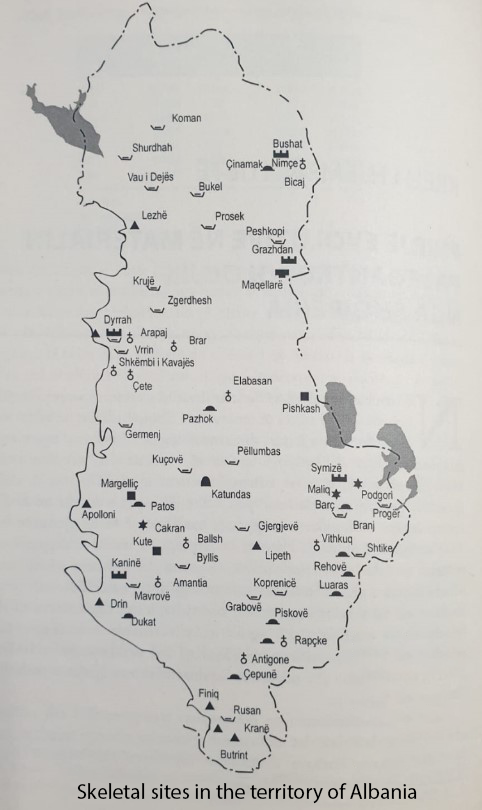
– The second part presents anthropological data of around 800 skeletons collected during archaeological expeditions in 60 sites of country, belonging to a wide period of time from the Neolithikum (6 millennium BC) till the beginning of the XX century. The evolution in time of anthropological features in the areas inhabited by before Illyrians (of the Pellasgian era) up to Arbërs of the Middle Ages includes also the processes accompanying the biological-cultural transfer up to the centuries when the Albanian nation was conceived.

7VqMsf90VUv6sTHQvLw3n64zXWyeWZ5xnMF469pH8fe1sH3tXmieetete7Mtbeo-0BkVdAXPx3avsC6NWI6g_GfUVzDS2PM3GmWaqrASXHmbFWfybF5pP_uH5vr5JCC8QDiQqz2thaSLoHnoCmSAnw


Next, we talk about the Dynarization/ Adriatization process, at the basis of which stand the evolutive trends justifying, up to a certain point, the Illyrian /Albanian continuity.

The development of a new ethnic entity, namely the Arbër, the immediate ancestors of today’s Albanians, may have been the most important event in the current Albanian habitat during the Early Middle Ages. From an ausethnogenetic perspective, the process of brachycephalization was set during this period (7. -8. Jh. n. u. Z. ) with a new intensity, but its beginnings have been particularly sought after in the Albanian highlands since the culturally characterized Hellenic and Roman periods.

Based on numerous series of bones from the early Middle Ages, the author conveys the anthropological structure of corresponding population groups that point to a common genetic base. This can be done best by the systematic representation of the chronological layers of various anthropological features in the cemeteries of Koman (Puka) and Prosek (Mirdita) and last but not least in those from southern Albania, e.g. B. in the cemeteries of Piskova and Pacomit (Përmet), which belong to the Komani culture from the archaeological point of view.

The Nordic and chromagnoid features of certain skeletons from the coastal region (Lezha, Kruja, Durrësi) could be seen with the presence of the first Slavic groups in this area (6. -7. Jh. n. u. Z. ) hang together. A similar situation can be seen in some later series (10. -12. Jh. n. u. Z. ) from southeast Albania: Gostomickë (Skrapar), Shtikë (Kolonja), Rapckë (Përmet) confirm that date to the Bulgarian branch in the region at that time.

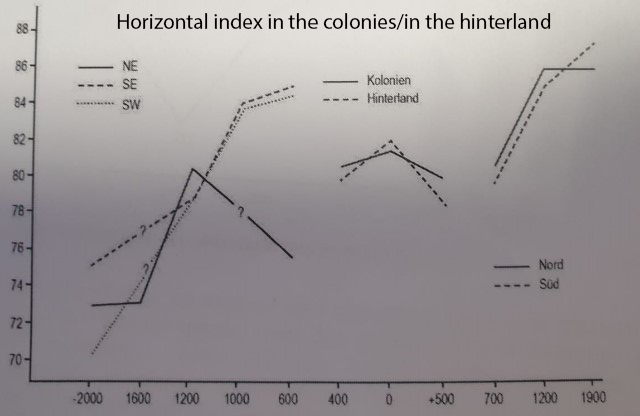
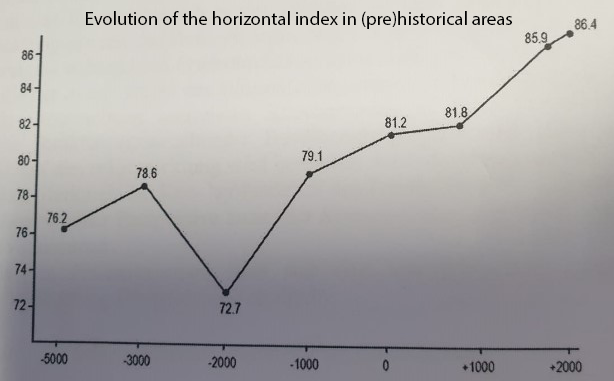
Since the end of the Early Middle Ages, a continuous increase in the horizontal cranial index towards the Brachyskrania has been detected, in the sense that a continuity of the dinarization process is determined.

There the Illyrians, after the 6th. Jh. n. u. Z. in the historical documentation no more than one ethnically characterized population group, the trial in question should be attributed to the Arbër population. During the Late Middle Ages (12). -18. Jh.) the increase in the brachykranization curve is once again recorded, among other things. a. in Pazhok (Belsh) and Çepunë (Gjirokastër), where it has reached its peak in the last two centuries, which should serve as a retrospective reflection of the anthropological situation among today's local population.

The author is hereby of the opinion that the historical anthropology now has a number of arguments to confirm the hypothesis, because of which brachykcephaly among the Albanians has evolved in the direction of dinarization - based on domestic basis. In addition to other western areas of the Balkan Peninsula, which during the historical time belonged to the Illyrii proprie dicti, Albania is apparently considered to be the center of this process.

However, the evidence on the chronologically coherent development of the brachycephalization process in this ethno-cultural area may contribute to the solution of this problem. After this first "high point" in the Early Middle Ages, there were other factors that must be taken into account.

HqRQlJQTDGqKV4hPfYwnpi7quTCkq194sZA7q9f8RGzHa0BOPkvGgTJsBn9yXxj1chz6X6BzZg69EHfvcIWynF2d0ykQhc4NACY-ygAxVM30T-h2q_Tahg5HRNWrJW9bitNKxg12I07_ue1bBzCSvA


-s2mVmIn6QeGvwFQebf_C2cLMTvKuI3RSwoqCype9kMXcqchpcUOYUz1KZLC6O5g1zGlb9izsuvPJuIMquonSEDoavdsU8udTqWEqrvnaI27OdrEBxe7nPEEvz2ySn9nWvg9Rw-s7XG8jeryelqiuw


comment: 900 AD begins a rapid rise of cephalic index.

Prof. dr. Aleksandër Dhima
(Europ. Uni Tirana)
Der Übergang von der Spätantike zum Frühmittelalter im albanischen Lebensraum aus dem Gesichtspunkt der historischen Anthropologie

Die Entwicklung einer neuen ethnischen Entität, nämlich die der Arbër, welche unmittelbare Vorfahren der heutigen Albaner sind, dürfte das wichtigste Ereignis im gegenwärtigen albanischen Lebensraum während des Frühmittelalters gewesen sein. Ausethnogenetischer Perspektive setzte sich der Brachycephalisationsprozess in diesem Zeitraum (7.-8. Jh. n. u. Z.) mit einer neuen Intensität durch, dessen Anfänge jedoch seit der kulturgeprägten hellenistischen und römischen Periode besonders in der albanischen Hochlandschaft zu suchen sind.


Anhand zahlreicher Knochenserien aus dem Frühmittelalter vermittelt der Autor die anthropologische Struktur entsprechender Bevölkerungsgruppen, die auf eine gemeinsame genetische Basis hinweisen. Dies kann bestenfalls durch die systematische Darstellung der chronologischen Schichten verschiedener anthropologischer Merkmale in den Friedhöfen von Koman (Puka) und Prosek (Mirdita) und nicht zuletzt in denen aus Südalbanien wie z. B. in den Friedhöfen von Piskova und Pacomit (Përmet) unter Beweis gestellt werden, die vom archäologischen Gesichtspunkt der Komani-Kultur angehören.


Die nordischen und cromagnoiden Merkmale bestimmter Skelette aus der Küstenregion (Lezha, Kruja, Durrësi) könnten mit der Präsenz der ersten Slawengruppen auf diesem Gebiet (6.-7. Jh. n. u. Z.) zusammenhängen. Eine ähnliche Situation lässt sich noch in mancher späteren Serie (10.-12. Jh. n. u. Z.) aus Südost-Albanien: Gostomickë (Skrapar), Shtikë (Kolonjë), Rapckë (Përmet) bestätigen, die auf die bulgarische Niederlassung in der Region zu dieser Zeit datieren.


Seit Ende des Frühmittelalters wird eine ununterbrochene Erhöhung des horizontalen Schädelindexes in Richtung Brachykranie ermittelt, in dem Sinne, dass eine Kontinuität des Dinarisierungsprozesses festgestellt wird.


Da die Illyrier, nach dem 6. Jh. n. u. Z. in der historischen Dokumentation nicht mehr als eine ethnisch geprägte Bevölkerungsgruppe erscheinen, dürfte der angesprochene Prozess der Arbër-Bevölkerung zugeordnet werden. Während des Spätmittelalters (12.-18. Jh.) wird der Anstieg der Brachykranisationskurve abermals verzeichnet, u. a. in Pazhok (Belsh) und Çepunë (Gjirokastër), wo sie in den letzten zwei Jahrhunderten deren Höhepunkt erreicht, was als retrospektive Wiederspiegelung der anthropologischen Situation bei der heutigen Bevölkerung vor Ort dienen sollte.
Der Autor folgt hiermit der Meinung, die historische Anthropologie verfüge inzwischen über eine ganze Reihe von Argumenten zur Bestätigung der Hypothese, infolgedessen die Brachykcephalie unter den Albanern sich in Richtung Dinariesierung – gestützt auf inländischer Grundlage – entwickelt hat. Neben anderen westlichen Gebieten der Balkanhalbinsel, die im Laufe der historischen Zeit zu den Illyrii proprie dicti gehörten, gilt Albanien anscheinend als Zentrum dieses Prozesses.


Wie dem auch sei, dürfen die Hinweise auf die chronologisch zusammenhängende Entwicklung des Brachycephalisationsprozesses auf diesem ethno-kulturellen Gebiet bei der Lösung dieses Problems beitragen. Nach diesem ersten “Höhepunkt” im Frühmittelalter waren noch andere Faktoren wirksam, die mitberücksichtigt werden müssen.
 
Last edited:
skull shapes and proportions are a mix of genetic and mesologic interactions (and questions of too short endogamy sometimes), without to speak of moves of pop's=crossings that can stay hidden in History - not a very easy question!!! in ancient time, every supporter of a scientific tool was supporting thoeries explained ONLY by their space of knowledge (so this "tool")...
 
Found an interesting abstract that has been presented in a conference in Germany. The work is in German and this google translate, I did manage to find a intro in English from an Albanian news site. It is a cranial analysis, hopefully to be followed by a genetic one?


The transition from Late Antiquity to Early Middle Ages in Albanian habitat from the perspective of historical anthropology

Abstract


The aim of this paper is to present an effort on designing a biological-cultural basis transmitted during centuries regarding the ethnical Anthropology of Albanians. This study is composed of two parts:

– The first one deals with anthropological structure of todays’ Albanians. Here are discussed also the genetical features and their place in the taxonomic systems of European populations. Later, elements of traditional culture are analyzed, elements that have contributed to the consolidation of local anthropological variants.

– The second part presents anthropological data of around 800 skeletons collected during archaeological expeditions in 60 sites of country, belonging to a wide period of time from the Neolithikum (6 millennium BC) till the beginning of the XX century. The evolution in time of anthropological features in the areas inhabited by before Illyrians (of the Pellasgian era) up to Arbërs of the Middle Ages includes also the processes accompanying the biological-cultural transfer up to the centuries when the Albanian nation was conceived.

7VqMsf90VUv6sTHQvLw3n64zXWyeWZ5xnMF469pH8fe1sH3tXmieetete7Mtbeo-0BkVdAXPx3avsC6NWI6g_GfUVzDS2PM3GmWaqrASXHmbFWfybF5pP_uH5vr5JCC8QDiQqz2thaSLoHnoCmSAnw


Next, we talk about the Dynarization/ Adriatization process, at the basis of which stand the evolutive trends justifying, up to a certain point, the Illyrian /Albanian continuity.

The development of a new ethnic entity, namely the Arbër, the immediate ancestors of today’s Albanians, may have been the most important event in the current Albanian habitat during the Early Middle Ages. From an ausethnogenetic perspective, the process of brachycephalization was set during this period (7. -8. Jh. n. u. Z. ) with a new intensity, but its beginnings have been particularly sought after in the Albanian highlands since the culturally characterized Hellenic and Roman periods.

Based on numerous series of bones from the early Middle Ages, the author conveys the anthropological structure of corresponding population groups that point to a common genetic base. This can be done best by the systematic representation of the chronological layers of various anthropological features in the cemeteries of Koman (Puka) and Prosek (Mirdita) and last but not least in those from southern Albania, e.g. B. in the cemeteries of Piskova and Pacomit (Përmet), which belong to the Komani culture from the archaeological point of view.

The Nordic and chromagnoid features of certain skeletons from the coastal region (Lezha, Kruja, Durrësi) could be seen with the presence of the first Slavic groups in this area (6. -7. Jh. n. u. Z. ) hang together. A similar situation can be seen in some later series (10. -12. Jh. n. u. Z. ) from southeast Albania: Gostomickë (Skrapar), Shtikë (Kolonja), Rapckë (Përmet) confirm that date to the Bulgarian branch in the region at that time.

Since the end of the Early Middle Ages, a continuous increase in the horizontal cranial index towards the Brachyskrania has been detected, in the sense that a continuity of the dinarization process is determined.

There the Illyrians, after the 6th. Jh. n. u. Z. in the historical documentation no more than one ethnically characterized population group, the trial in question should be attributed to the Arbër population. During the Late Middle Ages (12). -18. Jh.) the increase in the brachykranization curve is once again recorded, among other things. a. in Pazhok (Belsh) and Çepunë (Gjirokastër), where it has reached its peak in the last two centuries, which should serve as a retrospective reflection of the anthropological situation among today's local population.

The author is hereby of the opinion that the historical anthropology now has a number of arguments to confirm the hypothesis, because of which brachykcephaly among the Albanians has evolved in the direction of dinarization - based on domestic basis. In addition to other western areas of the Balkan Peninsula, which during the historical time belonged to the Illyrii proprie dicti, Albania is apparently considered to be the center of this process.

However, the evidence on the chronologically coherent development of the brachycephalization process in this ethno-cultural area may contribute to the solution of this problem. After this first "high point" in the Early Middle Ages, there were other factors that must be taken into account.

HqRQlJQTDGqKV4hPfYwnpi7quTCkq194sZA7q9f8RGzHa0BOPkvGgTJsBn9yXxj1chz6X6BzZg69EHfvcIWynF2d0ykQhc4NACY-ygAxVM30T-h2q_Tahg5HRNWrJW9bitNKxg12I07_ue1bBzCSvA


-s2mVmIn6QeGvwFQebf_C2cLMTvKuI3RSwoqCype9kMXcqchpcUOYUz1KZLC6O5g1zGlb9izsuvPJuIMquonSEDoavdsU8udTqWEqrvnaI27OdrEBxe7nPEEvz2ySn9nWvg9Rw-s7XG8jeryelqiuw


comment: 900 AD begins a rapid rise of cephalic index.

Are these horizantal index charts based on the historical region of Albania or all of Europe? It looks like there was a major change between 1600BC to 1200BC
 
Last edited:
Another video has surfaced, based on what gjergj says, no E-V13(and by default R-Z2705) population has been found in Albania before 1,000 AD, he does not say so specifically, but he reaffirms their old statement, and continue to allude this population came from "Dardania" which they have yet to define geographically.

bottleneck, qafshishe/grykshishe, lmao. These people are so inept. Can someone let gjergj there are proper Albanian words that perfectly explain the English equivalent? Korje, radhim = bottleneck, linja = fara. Just some tips on how not sounds like a UFO attempting to speak to the public and relate to them.
 
Last edited:
Another video has surfaced, based on what gjergj says, no E-V13(and by default R-Z2705) population has been found in Albania before 1,000 AD, he does not say so specifically, but he reaffirms their old statement, and continue to allude this population came from "Dardania" which they have yet to define geographically.

bottleneck, qafshishe/grykshishe, lmao. These people are so inept. Can someone let gjergj there are proper Albanian words that perfectly explain the English equivalent? Korje, radhim = bottleneck, linja = fara. Just some tips on how not sounds like a UFO attempting to speak to the public and relate to them.
You certainly seem to give a lot of importance to E-V13 when it comes to proto-Albanian when it certainly is not that important, and actually completely ignoring that most of the E-V13 today are medieval founder effects and some are clades or branches that are only concentrated in certain parts of the country and not spread across all Albanian speakers and with no branching since the Bronze Age or Iron Age. One case is the Berisha-Sopi which is only found in the north, huge medieval founder effect, yet makes up 10% of Y-DNA today. Only E-V13 which have proto-Albanian diversity can be part of proto-Albanian.

R-Z2705 wasn't part of the same population as E-V13. This is just your dishonest attempt at trying to make E-V13 some kind of proto-Albanian marker because you know very well today it's barely 20%-30% of Albanians and that they are founder effects, some regions even lower, so in order to make your theory of E-V13 having anything to do with proto-Albanian believeable you're trying to add other lineages. R-Z2705 is under R-CTS1450 which is definitely confirmed to of originated in the Western-Central Balkans along with J-L283 and there is no evidence it was part of the same population as E-V13.

J-PH4679, R-PF7563 and RZ2705 have proto-Albanian diversity and some E-V13 can be added too that might of eventually been part of these populations but most cannot. J-PH4679 is spread across all Albanian speakers from north to south, some even in the south have their own branches since the Bronze Age. They are founder effects but are founder effects within diverse lineages. They are not anymore founder effects than the I2a1b in South Slavs. It's not the case at all for some of the E-V13 in Albanians such as Berisha Sopi which are only concentrated in certain parts of the country and only expanded in the medieval period. If it was proto-Albanian it would be spread across all Albanian speakers but it's not. And it's like this with a lot of the E-V13. Count all of the E-V13 and you'll see only a small fraction have anything to do with proto-Albanian.

As for Kosovars supposedly being Illyrian shifted because they have Slavic, that is completely nonsense considering the J-L283 in Medieval Albania still plots like the Illyrian Iron Age. Slavic doesn't shift people towards these Illyrian samples. Medieval South-Slavic samples we have plot north-east. All your attempts are just dishonest and you're obviously someone that can be considered an extremist. Linguists put proto-Albanian in West-Central Balkans in Late Antiquity, that is where all the non-Slavic placenames survived, from Lezhe, Ulqin on the Adriatic Coast to Shkup and all the way to Nish more inland.
 
You certainly seem to give a lot of importance to E-V13 when it comes to proto-Albanian when it certainly is not that important,

When you and your likes point to Montenegrins being to large extend former Albanians, all you can point to is E-V13, lol. Then you turn around and make back-handed comments about E-V13 not being the real Albanian. Which is it?

R-Z2705 wasn't part of the same population as E-V13. This is just your dishonest attempt at trying to make E-V13 some kind of proto-Albanian marker because you know very well today it's barely 20%-30% of Albanians and that they are founder effects, some regions even lower, so in order to make your theory of E-V13 having anything to do with proto-Albanian believeable you're trying to add other lineages.

This is the official statement from rrenjet. They say E-V13 came with R-Z2705 from "Dardania". It's also pretty obvious from the branching, there are parallel lines found in Prostib, north-western Bulgaria and south-eastern Serbia(this is the least tested part of the Balkans, even less then Greeks).

R-Z2705 is under R-CTS1450 which is definitely confirmed to of originated in the Western-Central Balkans along with J-L283 and there is no evidence it was part of the same population as E-V13.

R-FGC43622 is also under R-CTS1450 and it is without a doubt a Slavic clade. R-CTS1450 is 2,600 BC old. I know you primitives have no concept of time, but I try.

J-PH4679, R-PF7563 and RZ2705 have proto-Albanian diversity and some E-V13 can be added too that might of eventually been part of these populations but most cannot.

That's a third world argument and mindset. With such low-IQ reasoning y-haplogroup H is the real Hindi because it more diverse in Pakistan than R1a and R1a is just a lucky late bloomer.


These two sub-branches are not local, but came with E-V13

Even the breadcrumbs you added can be split to pieces.

As for Kosovars supposedly being Illyrian shifted because they have Slavic, that is completely nonsense considering the J-L283 in Medieval Albania still plots like the Illyrian Iron Age.

No such samples have been published. Are you referring to Kukes-post mdv? Kukes post-mdv samples are less Illyrian-like then Kosovars. Which turns the entire concept over it's head.
 
Last edited:
Same person circulating with hundreds of sock-puppet accounts, using the same Berisha-Sopi argument, looks like he was bullied as a kid by Berisha-Sopi clansmen and has an eternal beef.
 
R-CTS1450 wasn't part of the same population as E-V13 in the Bronze Age and Iron Age Balkans but it was definitely a lineage which was in contact with J-L283. There is not a single E-V13 found in Bronze Age or Iron Age Balkans alongside R-CTS1450. You need to stop inventing things. All R-CTS1450 samples found so far have a West-Central Balkan origin, just like J-L283. And there is no such thing as a 90% E-V13 population in the Roman Era Balkans as can be seen from samples in Timacum Minus and Western Balkans. E-V13 today is barely 20%-30, in Macedonia Albanians it is even lower (under 15%), and the 20%-30% in some regions today is just some medieval founder effects and have no importance for proto-Albanian. Proto-Albanian could of never been a 90% E-V13 population. Linguists put proto-Albanian in the West-Central Balkans in Late Antiquity which is where relevant J-L283, R1b and E-V13 will be found. Albanian as a language is considered to be related to Messapic.

As for the Medieval J-L283 from Albania that plots like the Iron Age, the sample has been carbon dated and confirmed to be a medieval sample and not Iron Age sample. Slavic ancestry doesn't shift people towards Illyrians but away from Illyrians which is why some people plot North-East due to Slavic admixture. You're someone that is incredibly easy to debunk, just like the OP. Get a new hobby.
 
Albanians in Macedonia have ~35% E-V13 based on a peer reviewed science paper highly regarded for the sampling strategy. Rrenjet has no sampling strategy, and therefore should not be considered as ultimate source regarding Albanians especially considering the bias of having no E-V13 member involved with the project.

Simple as that.
 
R-CTS1450 wasn't part of the same population as E-V13 in the Bronze Age and Iron Age Balkans but it was definitely a lineage which was in contact with J-L283. There is not a single E-V13 found in Bronze Age or Iron Age Balkans alongside R-CTS1450.

R-CTS1450 is 2,600 BC, the relevant branch R-Z2705 has yet to appear alongside J2b-L283, it's non-Illyrian distribution is a big argument against links to Illyrians. As to where it was in BA, we will have to wait, given that R-Z2705 falls under R-Y18959, which also has a Slavic branch, and an odd Bulgaria branch, it had to least east of Illyrians.

And there is no such thing as a 90% E-V13 population in the Roman Era Balkans as can be seen from samples in Timacum Minus and Western Balkans

The J2b-L283 and the R-CTS1450 in Timicum were all from the period Dalmatian cohorts were stationed. They are not locals, the ratio does not represent the local population.
These are the ratios of Thraco-Dacian parts of Roman Serbia (n=44).
KywZn9N.png


It includes the J2b Dalmatian auxiliaries in Timacum. When Germanic, Sarmatian and middle eastern haplos are excluded E-V13 is 51%. And the sampling is not ideal given it includes recruits from Dalmatia and the sampling is heavily weighted from a major city.

As for the Medieval J-L283 from Albania that plots like the Iron Age, the sample has been carbon dated and confirmed to be a medieval sample and not Iron Age sample.

There is no J2b-L283 medieval sample, you're a nincompoop that equates R-PF7563 with J2b. That alleged sample has zero IBD sharing with actual Albanians btw.
 
Last edited:
When you and your likes point to Montenegrins being to large extend former Albanians, all you can point to is E-V13, lol. Then you turn around and make back-handed comments about E-V13 not being the real Albanian. Which is it?


This is the official statement from rrenjet. They say E-V13 came with R-Z2705 from "Dardania". It's also pretty obvious from the branching, there are parallel lines found in Prostib, north-western Bulgaria and south-eastern Serbia(this is the least tested part of the Balkans, even less then Greeks).


R-FGC43622 is also under R-CTS1450 and it is without a doubt a Slavic clade. R-CTS1450 is 2,600 BC old. I know you primitives have no concept of time, but I try.


That's a third world argument and mindset. With such low-IQ reasoning y-haplogroup H is the real Hindi because it more diverse in Pakistan than R1a and R1a is just a lucky late bloomer.


These two sub-branches are not local, but came with E-V13

Even the breadcrumbs you added can be split to pieces.


No such samples have been published. Are you referring to Kukes-post mdv? Kukes post-mdv samples are less Illyrian-like then Kosovars. Which turns the entire concept over it's head.

I'm not sure about this line being Slavic, it isn't very common -

Maybe it was Thracian or Vlach, it even has presence in Italy which could mean that it was in Balkans prior to Slavic expansion
 
looks like albanians are still looking for their BC history and refuse to be dardanians
 
The medieval sample from Albania (ALB_MA) plots within the Iron Age cluster of the West-Central Balkans and the sample has been carbon dated and confirmed to be a medieval sample (from the 15th century too apparently)

medievalalbania.jpg
 
Back
Top