Found an interesting abstract that has been presented in a conference in Germany. The work is in German and this google translate, I did manage to find a intro in English from an Albanian news site. It is a cranial analysis, hopefully to be followed by a genetic one?
The transition from Late Antiquity to Early Middle Ages in Albanian habitat from the perspective of historical anthropology
Abstract
The aim of this paper is to present an effort on designing a
biological-cultural basis transmitted during centuries regarding the
ethnical Anthropology of Albanians. This study is composed of two parts:
– Th
e first one deals with
anthropological structure of todays’ Albanians. Here are discussed also the genetical features and their place in the taxonomic systems of European populations. Later, elements of
traditional culture are analyzed, elements that have contributed to the consolidation of local anthropological variants.
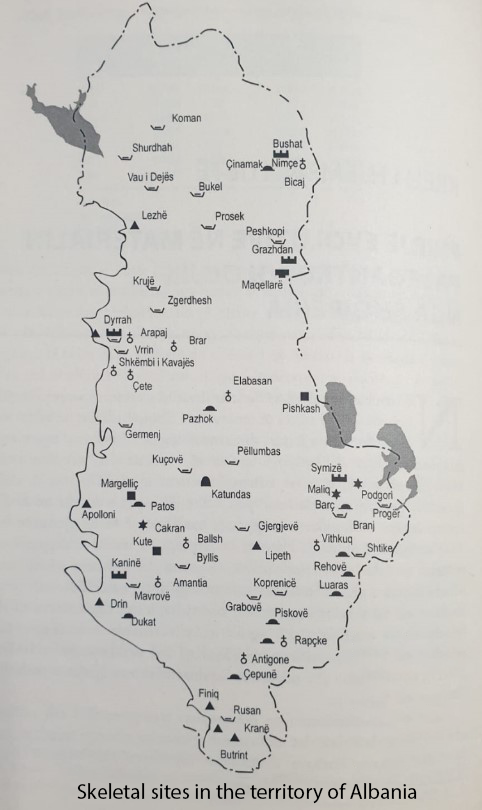
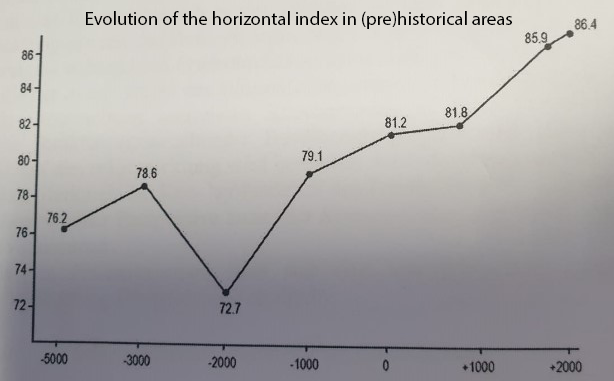
– The second part presents anthropological data of around 800 skeletons collected during archaeological expeditions in 60 sites of country, belonging to a wide period of time from the Neolithikum (6 millennium BC) till the beginning of the XX century. The evolution in time of anthropological features in the areas inhabited by before Illyrians (of the Pellasgian era) up to Arbërs of the Middle Ages includes also the processes accompanying the biological-cultural transfer up to the centuries when the Albanian nation was conceived.
Next, we talk about the
Dynarization/
Adriatization process, at the basis of which stand the
evolutive trends justifying, up to a certain point, the
Illyrian /
Albanian continuity.
The development of a new ethnic entity, namely the Arbër, the immediate ancestors of today’s Albanians, may have been the most important event in the current Albanian habitat during the Early Middle Ages. From an ausethnogenetic perspective, the process of brachycephalization was set during this period (7. -8. Jh. n. u. Z. ) with a new intensity, but its beginnings have been particularly sought after in the Albanian highlands since the culturally characterized Hellenic and Roman periods.
Based on numerous series of bones from the early Middle Ages, the author conveys the anthropological structure of corresponding population groups that point to a common genetic base. This can be done best by the systematic representation of the chronological layers of various anthropological features in the cemeteries of Koman (Puka) and Prosek (Mirdita) and last but not least in those from southern Albania, e.g. B. in the cemeteries of Piskova and Pacomit (Përmet), which belong to the Komani culture from the archaeological point of view.
The Nordic and chromagnoid features of certain skeletons from the coastal region (Lezha, Kruja, Durrësi) could be seen with the presence of the first Slavic groups in this area (6. -7. Jh. n. u. Z. ) hang together. A similar situation can be seen in some later series (10. -12. Jh. n. u. Z. ) from southeast Albania: Gostomickë (Skrapar), Shtikë (Kolonja), Rapckë (Përmet) confirm that date to the Bulgarian branch in the region at that time.
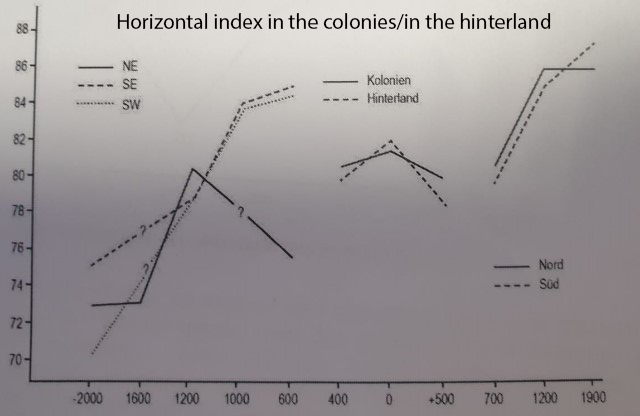
Since the end of the Early Middle Ages, a continuous increase in the horizontal cranial index towards the Brachyskrania has been detected, in the sense that a continuity of the dinarization process is determined.
There the Illyrians, after the 6th. Jh. n. u. Z. in the historical documentation no more than one ethnically characterized population group, the trial in question should be attributed to the Arbër population. During the Late Middle Ages (12). -18. Jh.) the increase in the brachykranization curve is once again recorded, among other things. a. in Pazhok (Belsh) and Çepunë (Gjirokastër), where it has reached its peak in the last two centuries, which should serve as a retrospective reflection of the anthropological situation among today's local population.
The author is hereby of the opinion that the historical anthropology now has a number of arguments to confirm the hypothesis, because of which brachykcephaly among the Albanians has evolved in the direction of dinarization - based on domestic basis. In addition to other western areas of the Balkan Peninsula, which during the historical time belonged to the Illyrii proprie dicti, Albania is apparently considered to be the center of this process.
However, the evidence on the chronologically coherent development of the brachycephalization process in this ethno-cultural area may contribute to the solution of this problem. After this first "high point" in the Early Middle Ages, there were other factors that must be taken into account.
comment: 900 AD begins a rapid rise of cephalic index.