• Don't want to see ads? Install an adblocker like uBlock Origin or use a Europe-based privacy-friendly browser like Vivaldi or Mullvad.
First word Goroh attributes to Romanian/Moldovanian, given that this word is not listed on wiktionary it is definitely dialectal restricted and has no known etymology. It is very likely a Dacian Carpathian word borrowed into Romanian not the other way around.

byh-uvaty is clearly related to an entry from Romanian-Hutsul dictionary where the definition was more accurate as the author listed to plan. The author of the Ukranian dicitonary is focusing on the intenion but is not familiar with meaning of the root word, te bëj/bëhet is used in common Albanain talk when to parents relatives are trying to match couples for marriage, it simply means to become, and of course there is desire behind it, but that's not the root meaning behind the word. Ukranian linguists are missing out. The Albanoid root explanation is re-enforced by the secondary semantic shift in meaning changeable/sudden weather, which in turn strengthens my hypothesis overall as Hutsul words are not one off cognate lookalikes, the semantic drift in meaning mirrors Albanian forms.

Byz/biz is attributed as a loan from Hngarian: bíz. But the Hungarian word has no etymology hence no explanation, and the distribution is clearly Carpathian-Beskides. https://en.wiktionary.org/wiki/bíz

I am certain that similarity to Albanian bes was never noticed because of the taboo of the alleged Illyric roots of Albanian language, and likely a hostile environment that has existed and still exists in academia on the topic.

You finally posted, been waiting a while 😃
 
This post will be centered on one word since the Hutsul lemmas are extremely varied around the very same root word. Another that has been blindly assigned to Hungarian, which itself is flimsily assumed to be related to a Turkic word, a trail that relies on constant wild shifts in meanings over and over.
биров/byrov, birev, birov, byrevvillage head, mayorburrë - 1) male person; man 2) husband 3) real man: brave/courageous person, man of his word, loyal person 4) distinguished person
БИРИЛО/BYRYLOA tall, long-legged, clumsy man.burrë - 1) male person; man 2) husband 3) real man: brave/courageous person, man of his word, loyal person 4) distinguished person
БИРЕШ/BYREŠThe steward, the managerburrë - 1) male person; man 2) husband 3) real man: brave/courageous person, man of his word, loyal person 4) distinguished person
БІРУВАТИ/BIRUVATY, БИРУВАТИ/BYRUVATYTo be able, to have the strength. Example: "Then help your husband when you see that he himself is trying, but he is not yet biruje (L. Kachkovsky. Dovbush's Song, 212)"burrë - 1) male person; man 2) husband 3) real man: brave/courageous person, man of his word, loyal person 4) distinguished person burras - in a manly way, like a man; boldly, courageously burrëri - 1) manhood; manliness, virility 3) courage, pluck; bravery, valor 4) steadfastness, loyalty
БІРИВЛИВИЙ/BIRYVLYVYJA successful person who has the ability. Rich. Mighty. Strong. Example: " But who is he, does he have anything to pay with? — Well, I tell you, the one who works at your father-in-law's place, at Mayorok's, he's not biryvlyvyi (Marko Cheremshyna. Lik, vol. 1, 75)."burras - in a manly way, like a man; boldly, courageously
не біруие/ne biruye'cannot'not a burrë(man)
ЗАБІРУВАТИ/ZABIRUVATYto be more capable; to outdo; to excel; to surpass.burras - in a manly way, like a man; boldly, courageously burrëri - 1) manhood; manliness, virility 3) courage, pluck; bravery, valor 4) steadfastness, loyalty
ВИБІРЦЯ/VYBIRCJALeader of a caroling group.burrë - 1) male person; man 2) husband 3) real man: brave/courageous person, man of his word, loyal person 4) distinguished person
 
Last edited:
Beyond the Hutusls, the word appears in limited form in the neighboring Rusyns, Ukranian linguist attribute it to Hungarian bir: https://en.wiktionary.org/wiki/bír

The Hungarian (bír) version itself only has overlap in the ability aspect of the definition. The Hungarian word is not native and is guessed to be related to Turkic buyur(to order, to command). In fact this word is thought to give the Russian word bojárin--->boyar, making the connection to Carpathian version even more dubious.

Moving past the speculation, on form itself the Hutsul words are closer to Albanian than Turkic, the same can be said of Hungarian. Even more important the Hutsul word has the following definitions: distinguished man/village leader, funny looking man with long legs, the manager/leader of a job/guild, to have the strength/ability, a successful person, to out due another to be more burr(manly). In morphology and meaning the Hutsul words are clearly related to Albanian. The Hungarian explanation, which in turn is guessed haphazardly as Turkic is a weak explanation that relies on constant evolution in meaning and form, and a very prolific growth in the Hutsul dialect.
Given the much numerous cognates the Hutsul dialect shares with Albanian, a relation to Albanian burr through a Dacian substrate is the much more cleaner explanation. And the Hungarian term in turn is a borrowing from Dacian speakers they were in contact and assimilated in the Carpathians/Transylvania.
 
Last edited:
Hutsul byr/bir definition turns out to be more archaic in meaning matching older phases of Albanian. Thanks to some kid that made this entry, nice work.

zfPWufY.png


Burr is a parallel/brother word to bie/bjer. The Hutsul word carries both definitions, a nice of demonstration of Daco-Thracian heritage.
 
БОРШЄВІТИ/BORŠJEVITYMelt, thaw, snow that is melting and turning into a wet, slushy, and muddy mess. 2 Examples: "Boršjevila [winter in the sense of ‘snow’] even in the worst shadows. It spread even on the highest mountain ranges. It crept up even in the deepest whispers (P. Shekeryk-Donykov. Grandpa Ivanchik, 117)" " It got dark outside, a wet winter was approaching, and the boršjevila was painful, so that it was impossible to walk (P. Shekeryk-Donykov. Grandpa Ivanchik, 206)."borë - snow borë-shi - snow with rain
БОХТАР/BOXTARVillage drummer, herald, announcer. Examples: "And it's known in the village how it goes! The elder will call the boxtar and order him: "You, Savka, drum out that on Saturday there will be an auction of Mykhailo Chop's property.(S. Sklyarenko. Karpaty, vol. 1, 112)" "The appearance of some official from the Khust county inevitably sent the village boxtar around the corners with his old drum on a rope over his shoulder and the unhappy news of a new tax. (V. Sychevsky. Chaklunka Synoho Vyru, 67)"botor - 1) entire, general; public 2) civic, communal botsim - publicity botim - [Old] declaration, notification botë - 1) world 2) [Collec] others, strangers
БРАЙ/BRAJA stick made of hard wood with a thickening at the end for chopping the bryndza and stuffing it into a vessel.brajë - a protuberance under a surface: lump, bump, hump
БРАНДЖА/BRANDŽA, БРАНЖА/BRANŽAa group of people, a company. Example:"
You see, the opryshky used to move in small bands. Only when they went on a big raid would they gather into a large camp: sometimes thirty, sometimes forty, sometimes even more people.
For example, if you went to Hungary, there were all the great lords there: landowners, counts, barons, and all the brandzha .(G. Khotkevych, Dovbush, pp. 101–112)"
brenda - inside; within. brendazi - internally; from within; towards the interior, inward
БРУСТУРНИК/BRUSTURNYKHerbal plant, a type of medicinal potionbrushtull - ivy (Hedera helix)
 
Last edited:
Some super nice ones. Albanian braj has no known etymology but half of the Albanian native words have no traceable IE etymology, this is known and even pointed out that many of the words Albanian shares with Romanian are pre-IE, so naturally the pattern carries on with the Hutsuls. Brustull is one of the rare words that Albanian and Hutsuls share aslo with Romanian(busture - burdock)
 
БУБА/BUBAWound. Example: " He loved her like his soul and watched her buba like his own and trembled and fought for her like a mother for a child (O. Manchuk. Forest Maiden, 44)."bubu - expresses worry, misery, or disappointment: alas, oh my, ah me! buburit - 2) to bubble up 3) to rumble; roar
БУБУШКИ/BUBUŠKYSheep droppingsbubuzhel - (Entom) sacred scarab, dung beetle (Scarabaeus sacer)
БУЖЄР/BUŽJERA large piece of somethingbuzhel - plump, chubby
БУТУК/BUTUKPart of the trunk from the root to the branches of a cut treebythak - tree stump, log
БУРИШКАТИ/BURYŠKATYTo carry something reluctantly or against one's will. It also implies a sense of carrying something heavy, burdensome, or sad. Example: "The poor, deceived people / And you, my child, deceived! / What are they buryškajutʹ there again? / A poor, bare coffin! / Oh! I will trumpet for her, / So she can be heard all the way to the ground" (Yu. Fedkovych, Hutsul-nevir, 216).barrëson - 1) to bear, carry, transport, convey 2) (Fin) to carry over [ ] barrshëm - heavy, burdensome barrë - 1) burden; load 2) large quantity/amount 3) [Fig] heavy responsibility 4) (Law) burden on property, encumbrance 5) fetus *From Proto-Albanian *barā
 
First three words have no traceable etymology and that's normal for Daco-Thracian words, in it there is large non-PIE ancestry as has been revealed by genetics.

Romanian shares the following bubă and butuc both of unknown etymology. An Albanoid root source for butuk is a weird one because the Albanian the root word is buttocks/rear-end. It would be the equivalent of the word rump drifting to mean meat and butchery, but when the term became heavily used by the Hutsuls, they likely lost meaning of the root word and the word took a life of its own to expand into other terms:

БУТИН/BUTYN - 1) Forestry, forestry work 2) A forest plot intended for a logging house; a forest cutter. БУТИНАР/BUTYNAR, БУТИНЯР/BUTYNJAR - Someone who works in the forest, in logging.

It shoud point out starting around 1800 AD, the Hutsul economy shifted heavily toward forestry as the Carpathians were exploited by the industrialization that took over Europe.

The last word is the best one, a clear-cut connection to a key Albanian word.
 
Last edited:
ВАТРИЩЕ/VATRYŠčE, ВАТРИШЄ/VATRYŠJE A place where a fire burnedvatër - 1) hearth; fireplace 2) [Fig] home 3) small plot of ground 4) (Spec Geom) focal point 5 )(Physiol) nerve center 6) (Med) localized/chief site of an infection: focus. Bufic- 1) [Old] swollen, inflated 2) plump, chubby
ЗАВАТРА/ZAVATRAA temporary building for shepherds in the meadow.vatër - 1) hearth; fireplace 2) [Fig] home 3) small plot of ground
ЗАВАТРИТИ/ZAVATRYTYLightvatër - 1) hearth; fireplace
ЗВАТЕРКУВАТИ/ZVATERKUVATYTo make a fire, to warm up with fire.vatër - 1) hearth; fireplace
ВГІДНИЙ/VHIDNYJhard-working, diligent, respectedhedhur - adroit, adept; energetic, active, enterprising, lively
годен/hoden1) mighty, strong, powerful 2) can, is able tohedhur - adroit, adept; energetic, active, enterprising, lively
 
The root words vatra and vater a good demonstration, as no one would deny they are Albanoid, In muplitle exaples we see Slavic prefix za and suffix yty. Slavic prefix V and suffix uvaty. A nice reminder that Hutsul words can look superficially Slavic even when the root word is not.
 
ВДАВАТИСЯ/VDAVATYSJATo like; to match someone. Example: "To like; to match someone. – Kahi-kahi… You’re really buhikaes, because I squint when I see you. But you, sarako, haven’t run away far either – no one will sneeze either. – Isn’t it, you’re useless to someone, huh?! – Isn’t it, Nastunko. Well, you’re like that to me too v-daješsja (V. Shkurgan. Not the first time, 210).dua - 1) to want, need 2) to want, wish 3) to like, love 4) to mean, intend dashur(a) - wanted, desired; liked, loved, beloved; lovable, dear, dear; sweetheart, darling, lover
ВДАТИСЯ/VDATYSJA, ВДАТИ СИ/VDATY SY, УДАТИСИ/UDATYSY,
УДАТИСЬ/UDATYS
1) to resort to; to approach someone as a couple 2) To have certain inclinations, abilities, talents. 3) To likedua/do/dojë - 1) to want, need 2) to want, wish 3) to like, love 4) to mean, intend

ВЕРШЕНИТИ СИ/VERŠENYTY SY
Constantly moving, expressing restlessness. Example: "He [the devil] stood still for a few minutes, and then he performed veršenyv.vërshon - 1) to flood, overflow 2) to pour out in a sudden flow: spurt/burst out 3) to rush, pour
ВЕТИТИ/VETYTYTo surpass, to be better, stronger.vete - 1) to go; proceed 2) to reach a level/point: arrive (at a destination); get (to an outcome); last (for a period of time) vetëtit - 1) to shine bright; flash 2) to shine/sparkle (with cleanliness)
ПЕРЕВЕТИТИ/PEREVETYTYTo surpass, to win in something.Slavic pere - over/surpass and Albanian vete - 1) to go; proceed 2) to reach a level/point: arrive (at a destination); get (to an outcome); last (for a period of time). përvetë/përveçëm - special, distinctive
 
ВИДГОНИСТИЙ/VYDHONYSTYJHot-tempered, unbalanced. Example: "She was a frivolous/wasteful, vy-dhonysta, arrogant/haughty, and terribly sharp-tongued/cutting woman. (P. Shekeryk-Donykiv. Grandpa Ivanchik, 141)"dhunues - violent, damaging, dishonoring
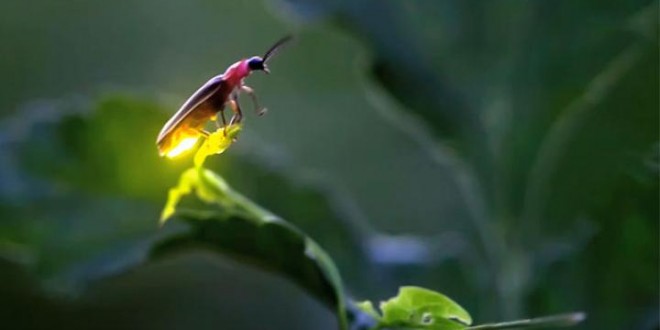
ВИДЖЮДЖЕЛЕНИЙ/VYDŽJUDŽELENYJBeautifully, luxuriously dressed. Example: –"But you, Oleksykha, are vy-dzhudzheleni today! Like a peacock! Be careful, lest someone casts an evil eye on you. – I am not susceptible to the evil eye (B. Zahorulko. Chornohora, bk. 2, 44)."xixëllonjë - 1) (Entom) firefly, glowworm 2) [Colloq] girl/woman who brightens up her surroundings; frivolous girl/woman
ВИДЗИФАТИ/VYDZYFATYSlowly, overcoming fatigue, weakness, to drag oneself. Example: "He only thought about how to vy-dzyfaty home to Liupailivska Kychira, he was so terribly hungry. His legs were failing him from hunger, because he needed to eat (P. Shekeryk-Donykiv. Dido Ivanchik, 464).gjyfqe-het - to get tired, get worn out by exertion
ВИДИБАШКИ/VYDYBAŠKYdecorative elements. Example: "Her dress parts are made of wire, her shirt sleeves are painted, a wide belt encircles her flexible waist. Slippers (kapchury) and leather sandals with all kinds of "vy-dybaškamy" (O. Duchyminska. Trembitali trembitaly, 115).bashkim - to join, join together, unite, combine. The usage in Hutsul based on example likely means "all sorts of combinations"
брашка/braškaband, gangbashkë -together; jointly , from proto-alb bakska
ВИРІЖьИТИ/VYRIŽʹYTYTo perform the rite of burial of the deceased. Example: "Don't be afraid, my children, my journey is not far; I won't burden your house. Tomorrow, you will carry out vyridyte for your mother, and perhaps on Sunday, I too will leave—perhaps God will have mercy and take the sin from the house. Tell me, is that not so! (Marko Cheremshyna. "Grushka," vol. 1, 67)"varrosje - to bury, burial ceremony: funeral varrezë - burial ground, graveyard, cemetery
 
Last edited:
This section had some heavy hitters, so it deserves the spotlight one more day. xixellonje is one of my favorites cognates.
firefly-backtonature-dot-tk-660x330.jpg
 
Last edited:
ВИРОКУВАТИ/VYROKUVATYTo go out, to climb out, to get out (of a place). Example: "As the village(villagers) was vy-rokuvalo on the far mountain, it turned pale, oh those hairy roots, that the wind tore out of the ground and threw onto the rock, to be wet and dry (Marko Cheremshyna. The Village Suffers, vol. 1, 123)"rrok - to grab, to seize. vy - A Slavic prefix meaning "out of" or "upward" vy + rok = To "seize one's way out" or to "grab hold and pull oneself out/up."
ВІТЕРНИЦЯ/VITERNYCJAA mythical female creature that seduces young menvito - 1) (Ornit) ring-dove (Columba palumbus) 2) [Fig] beautiful woman
ВКОРПАТИ/VKORPATYto borrow, to save.koprac - stingy person
КОРПАТИ/KORPATYTo collect, to put something together, to save. Example: He korpav one penny to another (or saved penny by penny), and then bought up estates."koprac - stingy person
ВРІПИТИСЯ/VRIPYTYSJATo lash out at, to jump all over, to lay into, to attack (verbally), or to severely criticize/accuse someone. Example: "He's always oppressed me, burdened me with rent, crushed me with forced labor, and then, when he v-rypytysja, it was as if he swore to drive me into the grave..."rreptësi - 1) severity, harshness 2) strictness; sternness 3) ferocity
ВСОКОТИТИ/VSOKOTYTY1) to watch over, to protectshikoj/shëkoj/shukoj - 1) to look at [ ]; observe 2) to examine [ ] carefully 3) to take care of [ ]: look after [ ]; see to [ ]
ПІДСОКОТИТИ/PIDSOKOTYTYTo lie in wait.UKR pid - under + ALB shikon - 1) to look at [ ]; observe 2) to examine [ ] carefully 3) to take care of [ ]: look after [ ]; see to [ ]
ПОСОКОТИТИ/POSOKOTYTYto watch, to look after.shikon - 1) to look at [ ]; observe 2) to examine [ ] carefully 3) to take care of [ ]: look after [ ]; see to [ ]
 
Last edited:
KORPATY also exists in Romanian with same meaning - cârpănos, of unknown etymology. Sokoty has been introduced in earlier sections, the reason to add the additional variants was to make it dead obvious the root word is centered on to watch/look/observe.
 
ВТРУЧУВАТИ/VTRUČUVATYto shove/push intruc/truç - 1) tamped down, packed hard, compact, dense 2) to tamp/pack [earth] down
ВУЩИНКА/VUŠČYNKAA strip/braid with tassels (or pom-poms) used for tying a shirt (or blouse) at the chest or on the sleeves (i.e., a decorative draw-string or tie).vesh - 1) to clothe [ ]; put on [clothes] 2) to provide [ ] with clothes: dress 3) to wear veshur - 1) clothed; dressed 2) [Colloq] provided with sufficient clothing 3) covered with a thin layer of something: coated
ГАБОВ/HABOVUsed as an order to loggers to stop the descent of felled trees; stop. Example: "Here and there another voice was woven into the general call: “Habov…” They were shouting in that corner, somewhere far away, barely audible. But a skilled ear hears that voice of alarm, the voice of caution, and the head turns in all directions, and a quick eye looks, perhaps here, at times, is danger (A. Krushelnytsky. They are cutting down the forest, 333)."hapu - a command to move out of the way, clear out of the way. hap - to open; open up/out If the tree is falling, the meaning clearly cannot have originally meant to stop, but to get out/bail out of there, a warning shout.
ГАНДРИ/HANDRYбити гандри/byty handry - to do nothing, to waste time; to be lazy.ëndërr - dream ëndërrim/ëndërru - 1) illusion, imagination 2) dream, reverie, daydream, musing
ГИНДРИГАНЯ/HYNDRYHANJAEntertainment, amusement, fun, or frolic. Example: He will find himself a girl out there, the way walnuts are found in a bottle! And what about me? He needs someone for work, not to hyndryhanja (D. Kharovyuk. Palagna, 538).ëndërron - to dream ëndërrim/ëndërru - 1) illusion, imagination 2) dream, reverie, daydream, musing
ГАРБУЗЄ/HARBUZJEгарбузє безчесне/harbuzyé bezchéstne - a worthless, dishonest, dishonorable person. dishonorable scumbag" or "worthless disgrace"harbut - 1) [Old] member of the rabble: commoner, riffraff 2) [Impol] ill-bred/uncouth/coarse person: boor, oaf; brute, barbarian
 
Last edited:
I asked gemini to spell some Albanian words in ukranian in way that it reflects the Albanian pronunciation accurately:
gjyfqehet in Ukranian is Dzh'ufchehet, compare the Hutsul VY-DZYFATY vs Dzh'ufche-het. I do not know the root word here well, but qe is typically a suffix like extension in Albanian so Dzh'uf-che-het is visibly related to dzyf-aty not just in meaning but down to its root word pronunciation.

xixëllonjë in ukranian letters is dzydzel'on'ya which is quite close to the Hutsul Dacian variant DŽJUDŽELENYJ vs dzydzel'on'ya. The resemblance is xixë fare. ;)
 
handry is listed in goroh with unclear etymology, this points out that it likely also appears in some of the Rusyn dialects. It is also in Romanian handraláu, also of unknown etymology and likely dialectal.

The second version hyndryhanja is Hutsul only and is even more obvious in meaning related to Albanian ëndërrim.

Habov was posted in the past, but this Ukranian dictioanry provideds literature examples, which confirm my explanation, the word is clearly a warning call, the same as the American slang timmmbeeerrrrr(timber), warning loggers to get out of the way as a tree is falling down.
 
ГАРДЕҐАТИ/HARDEGATY, ГАРДИКАТИ/HARDYKATY1) To quarrel, to shout. Example: "Grandfather, like an irritated pig, snarled at me with his teeth: "F you, I'm a slave. You're such a wasp. You, you scoundrel. Why are you scaring me? You'd be scaring me with a terrible and big headache if you scared me so badly. You, you damned opryshku. Mo-o-oh. Get us out of here, even if we don't see you, because right now I'll start a load of shit from you."The more the grandfather hardegav, the less I heard, because like a foal fleeing a bear on the mountain pasture, I thundered into the house..." (P. Shekeryk-Donykov. Grandfather Ivanchik, 25)." 2) Go on. Examples "Go away, little one, with your robbers, - Shumei shouted(hardegav) softly at the ermine, spitting at their eyes (P. Shekeryk-Donykov. Grandpa Ivanchik, 167); Even the musicians have already left, and we are still hardykaly around here (L.-P. Strynadyuk. And how did it happen!, 95)."gërthet - 1) to yell, shout 2) to scream 3) (of certain animals) to call loudly: screech, shriek, bellow
ГАРДЕШИСТИЙ/HARDEŠYSTYJTalkative, loquacious, garrulousgërthet - 1) to yell, shout 2) to scream 3) (of certain animals) to call loudly: screech, shriek, bellow
ГІЦКУВАТИ/HICKUVATYto compulsorily remove/seize property.. Example: Give me money, and then go to the courts and to the courts. So what, I will go to the courts and to hick-uvaty his assets, just to get back what is rightfully mine(M. Kozoris. Chornogora speaks, 228).heq - 1) to pick up and take away [5) to separate [ ] from the main part: pull [ ] out, extract; cut [ ] off, cut [ ] out; pull [ ] off, pick [fruit] 6) to remove: take away [ ] from <>; take off [a covering]; wipe [ ] out, extirpate; subtract [a number]; expurgate [a book hiqet - 7) [Fig] to avoid <>; get rid of <>
ГЛЯГАНКА/HLJAHANKAa weak-minded personlehtë - simple-minded; frivolous
ГОСТИТИ/HOSTYTY1) тай гости здоров/taj hosty zdorov - used to express someone’s helplessness or resignation; there is nothing you can do. 2) lyxo(evil/bad) hostyty - to be unlucky in something. Example: "Because we can't go back - we'll be in misfortune hostyty (L.-P. Strynadyuk. And you'll be fine, if only it were!)"heshti - 1) to stop making any sound; stop talking 2) to keep silent, be quiet 3) stillness; silence
ҐАВЕРЛУВАТИ/GAVERLUVATYTo be empty, unoccupied by anyone, nothing; to be idle.gavër - 1) hollow (in a tree or rock); cavern 2) cavity 3) body cavity containing organs: (eye) socket, (abdominal/chest) cavity
 
HARDEGATY as been posted before, it s super common for g to shift to h in Ukranian, hardeg at an ealier point was gardeh or gardeg. The example makes it quite clear in usage, to scream and shout = gërthet.

Hick-uvaty has also been posted before, repeats are mostly due to slight change in definition but also because of the examples in usage in Hutsul folk literature provide much deeper context.

Hostyty has been posted before from the Romanian Hutsul dictionary with similar but slightly different meaning: za-hošyty - to calm down. Both variants show clear relation to Albanian hesht.
 
Back
Top