Do a better research on Goths and Sarmatians, and think once again for considering them as carriers of I-CTS10228. Along the Turkic theory, proposed by our Albanians friends in related threads, it is a nonsense not worth commenting for anyone who knows anything about the Gothic or Sarmatian origin, culture, even Y-DNA results. Many comments by other editors show a real lack of understanding of the topic they are discussing. You should read many scientific articles or books to not make mistaken assumptions.
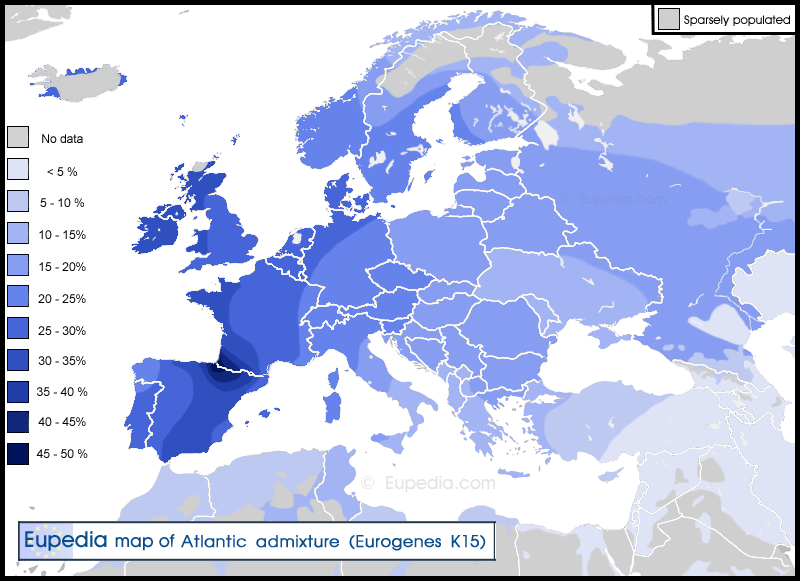
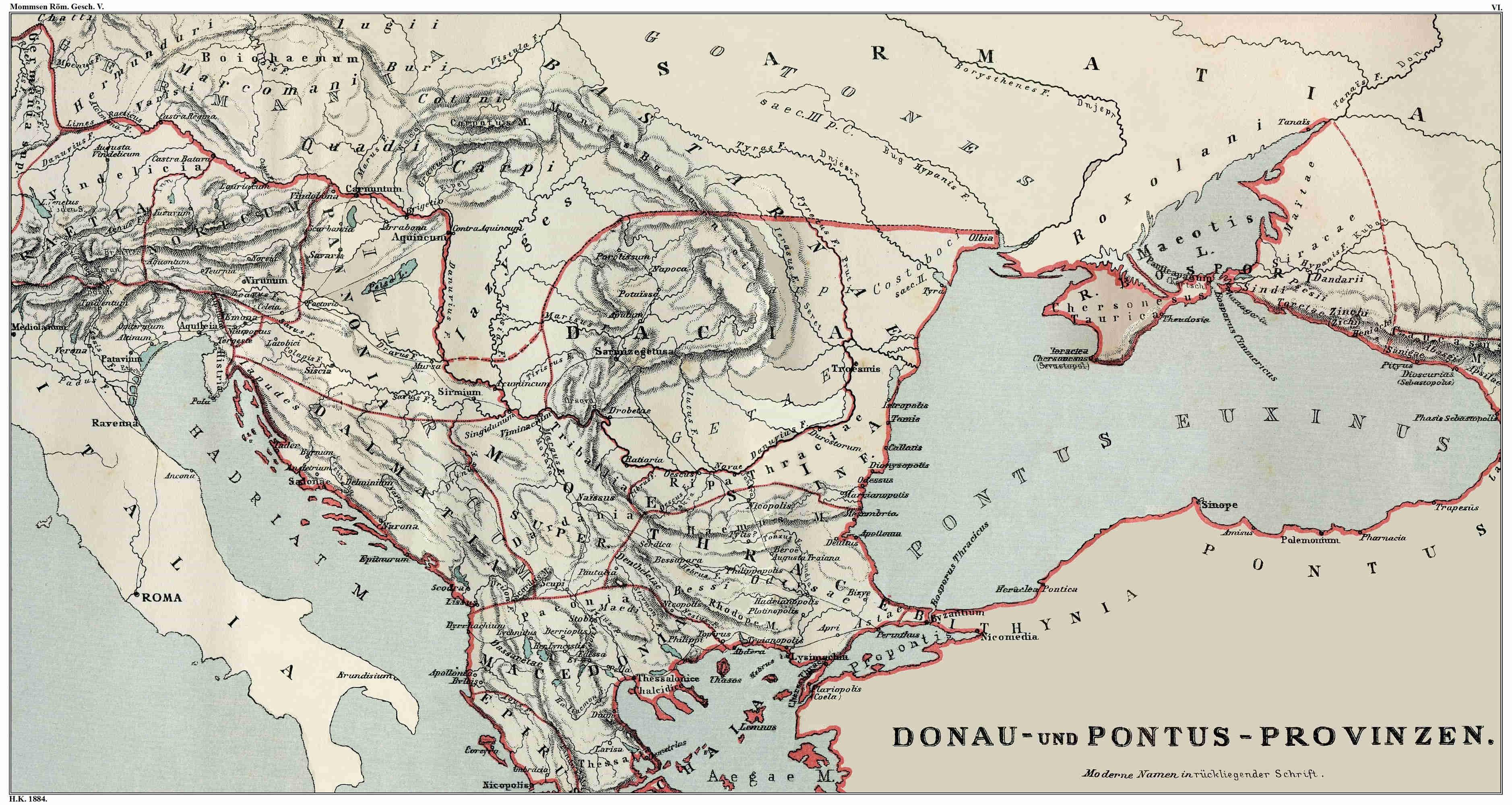
You, Garrick, should focus on Thracian&Illyrian theory, with consideration that it was some kind of stratum widespread in Eastern Europe (like your map before; or basal diversity pointed out by MarkoZ) which at one point became more narrowed, and on which followed up Slavic adstratum (whose previously posted maps in this or related threads are very similar to the Thracian map), and since both were mostly of Indo-European origin, it could explain the so-called Eastern European autosomal tendency (more-or-less, South Slavs are autosomally homogenous between themselves, but autosomally are still very heterogeneous). With such complex and dual hypothesis, and in reality the ethnogenesis of population is built that way and usually is not one-sided (pure Illyrian, Slavic, Germanic etc.), could be explained and implemented the I-CTS10228's and its subclades formation age and TMRCA with historical migrations and complex social events of identity assimilation and so on. Maybe you and we find some clue or not, or simply will arouse other questions and issues which will not make it a possible hypothesis and should try to find another one. I think the Thracian&Slavic combination has some potential for a good start, was it even a mere discussion.
Yes, it is very good path, but it requires a lot of efforts.
Problem is complex. Older clades were practically only in Western Europe and now we have I-CTS10228 which emerged from nowhere. If it is accurate calculated it is formed 5300 years before. TMRCA according Klyosov and Nordvedt is 2300 years. We have 3000 years of "dark", haplogroup barely survived, we can speak about bottleneck.
But you're right for determining TMRCA. According calculating by other methods and with more data TMRCA is over 3000ybp, what is not little difference (700 years).
Carrier of I-CTS10228 after bottleneck emerged probably somewhere in Eastern Europe today's Slovakia/South of Poland/Ukraine/Romania/Hungary etc. we can speculate.
If we see who lived in that territory there were German, Thracian and Sarmatian (more eastern) tribes. These tribes lived next to each other, and mixed, even build common culture. We can analyze these tribes, even cultures, but in these times we cannot speak about Slavs. Even Zarubintsy culture we cannot treat as Slavic, and later Chernyakov culture, etc.
Tecnically speaking I-CTS10228 really can be emerged after bottleneck in any German tribe, but after that he began spreading through Thracians or (mixed Tracians/Germans), toward the South, and through Sarmatians and other populations toward the Eastern and Northern areas where could live Proto Slavs and Balts.
For us it is most interesting Southern direction. According period since 400 years (or more if TMCRA is higher than 2300 ybp) I-CTS10228 bearers reached Balkans most probably in 1st century. It is very important detail, about 5 centuries before Slavic expansion to the Balkans. Theoreticaly younger clade I-PH908 could emerged somewhere in Illyricum and it is Illyrian marker.
In the South (Balkans) I-CTS10228 was Thracian and Illyrian some time. It was enough time for spreading this haplogroup on the Balkans before Slavs. Especially because these areas were quite depopulated due to constant wars between Romans and barbarians.