@Halftap ? all iberians wiped... ? #653
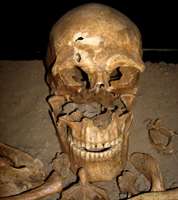
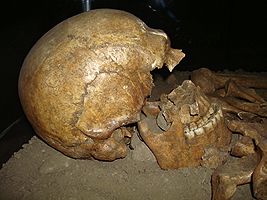
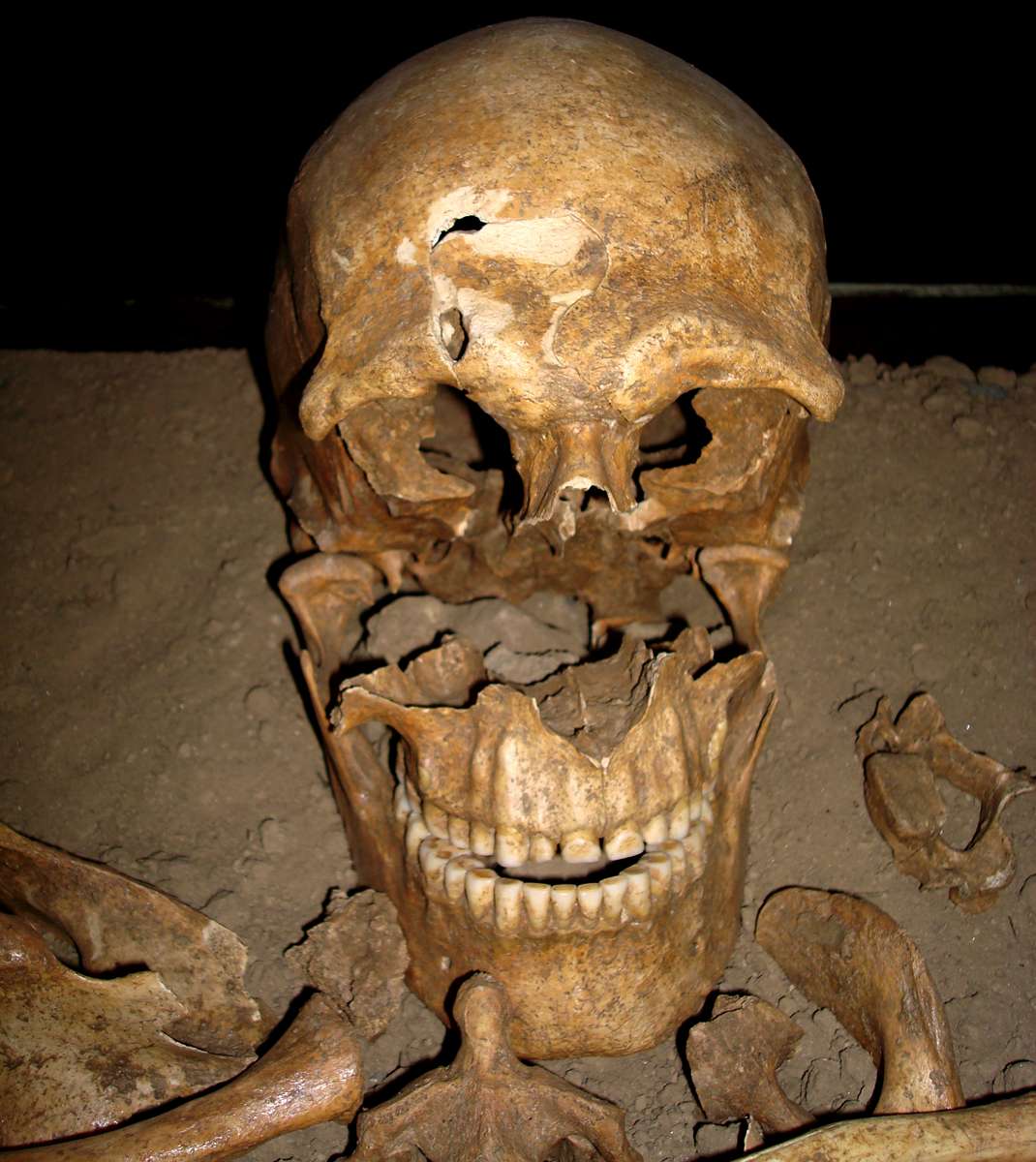
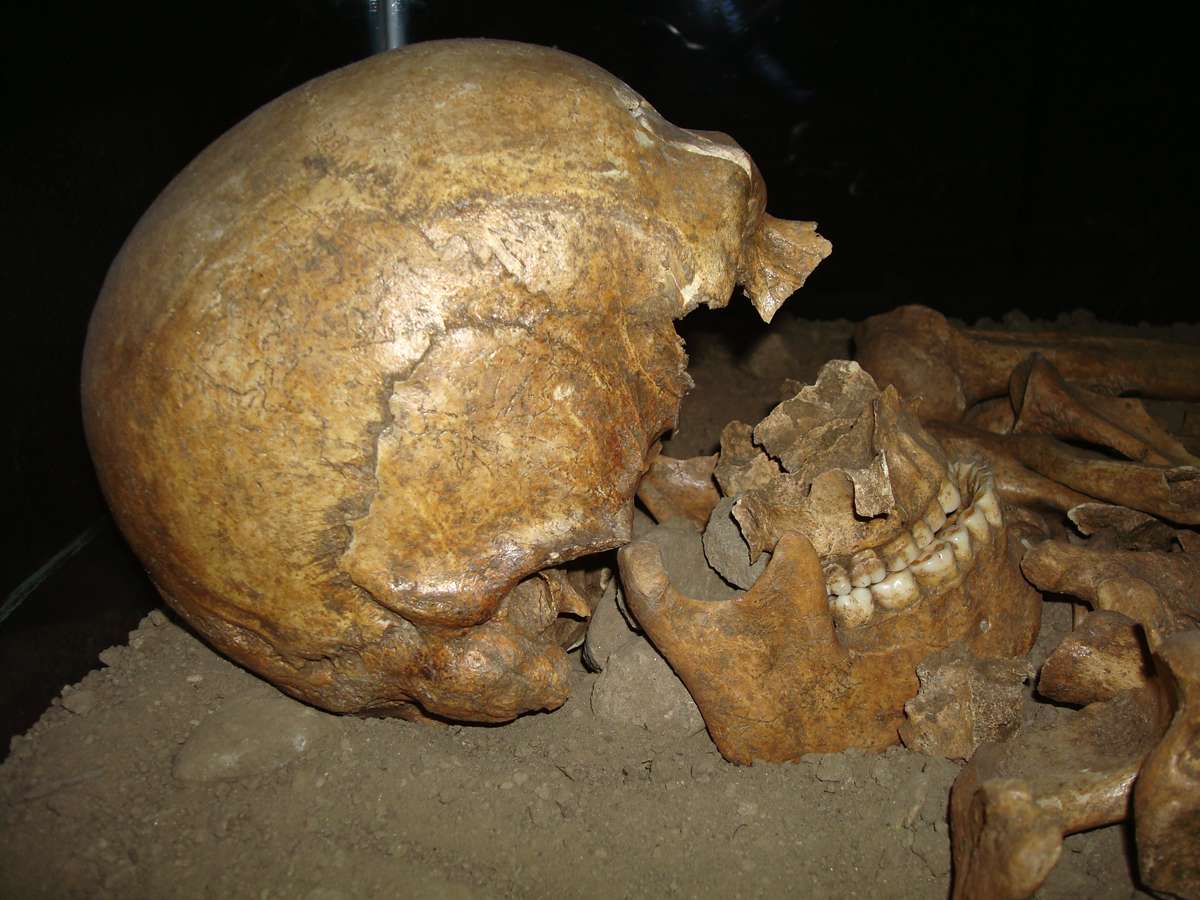
Can you look at the Schela Cladovei skull and tell me what you think about it? I know you have high physical anthropolgy knowledge.
? high physical anthropology knowledge ? is going too far ; rather a big interest in this matter. (I like drawing, so phenotypes).
Concerning the skeletons in Schela Cladovei, classified as Final Mesolithical, set on the romanian bank of the Danube River not far from the famous Iron Gates, I found only pictures of a lone skull, apparently a male ; nothing more, and the face is in a very bad state, missing both zygomatics, what caused the loss of the external parts of orbits ! Hard work.
Bets without true measures are only bets. Let?s try :
based upon profile vs frontal view, I find it rather mesocephalic than dolicho, maybe subdolicho because the angles are not lcear for profile ? Uneasy to say. The vault is high (for Mesolithics, more ?br?nnoid? than ?cromagnoid? in my namings) ? forehead not as receding as among ?br?nn? but as strong browridge, with kind of a ? cap visor ?, primitive trait (more ?br?nnoid? than ?cromagnoid?), seemingly large orbits (more ?br?nnoid? than ?cromagnoid?) of mean index (not so low as ?croma?) - narrow lower jaw with high enough chin (both traits : more ?br?nnoid? than ?cromagnoid?) :
surprisingly or not, a possible evolution of typically ?br?nnoid? in origin towards brachycephaly, so maybe sort of prototype for future ?dinarics? ??? Geographically it would not be amazing, but here it?s a statement of mine based upon ? snuffing method ? ! Or at least some future preponderant element in this so controversial type, homozygotic or not. I red somewhere, without any data, that some brachycephalisation had already been observed in Neolithical Vinca sites population.
Please don?t rely too much on my cephalic index guessings, they are based upon so little (it spites me). The other observation point very well toward a ?br?nn? heritage : no surprise : ancient scholars have noter that among Mesolithic pops of this region, some ? families ? were on a marked ?br?nn? side when others were on a marked ?cro-magnon? side. So the mixture of both phyla - which was already evident in other places of Europe ? was not the rule everywhere there, at least for a time.
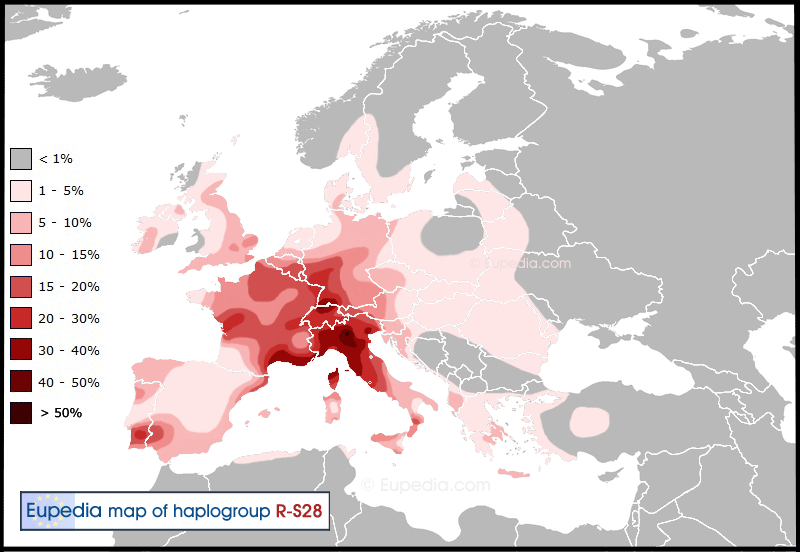
ATW, mixture or not (I think : mixture!), the tendancy of Mesolithic Europe was rather toward the ?br?nnoid? shapes than ?cromagoid?(these shapes, inherited directly of ?br?nn? or of other pops come from East, were surely an heritage common enough among the diverse pops who rambled between western Europe and Central Asia, and who shares some ancient common ancestry, I think. Spite the volatility of Y-haplo?s connections to total autosomes, I keep on thinking that old ?croma? was rather Y-C1 and that in Europe the other more brutal types were present among later Y-I, maybe first Y-J ; first Y-R?s were maybe more on an undifferentiated side of the ancient nord-eurasian types, but here I?m far from the aim of this post, and it?s only pure (dangerous) speculation.
Do take all this with a taste of salt.
Here under, fund on the net :