
-
Don't want to see ads? Install an adblocker like uBlock Origin or use a Europe-based privacy-friendly browser like Vivaldi or Mullvad.
You are using an out of date browser. It may not display this or other websites correctly.
You should upgrade or use an alternative browser.
You should upgrade or use an alternative browser.
Illyrian-Albanian Continuity
- Thread starter Finalise
- Start date
- Status
- Not open for further replies.
FBS
Regular Member
- Messages
- 407
- Reaction score
- 89
- Points
- 28
- Location
- Prishtinë, Kosovo
- Ethnic group
- Kosovar-Albanian
- Y-DNA haplogroup
- E1b1b1a2*
- mtDNA haplogroup
- J1c3
DN is not the same as DRI and DRI has nothing to do with any gods, it simply is descriptive. Humans prior to first civilizations did not give names to the rivers and many other things, they were simply descriptive names.

Ike
Regular Member
- Messages
- 1,128
- Reaction score
- 93
- Points
- 48
So R1b is the Celt addition, afterwards. And we know that Dardanians who were situated mostly in the today's Drenica region were also mixed with Celts, so for me Drenica should have a high percentage of R1b (L23) compared to other Albanians.
Armenian, Anatolian, Albanian ... branch R1b-ht35 is not Celtic. Almost all Albanians R1b are carriers of R1b-ht35.
You can see Maciamo's maps for Celtic branches: R1b S28/U152 doesn't exist in Geg Albanians, R1b-L21 (S145) doesn't exist too, etc.
http://www.eupedia.com/europe/Haplogroup_R1b_Y-DNA.shtml#L21
http://www.eupedia.com/europe/Haplogroup_R1b_Y-DNA.shtml#S28-U152
Albanians, especially Geg Albanians have nothing with Celts.
Geg Albanians are mostly E1b1b1a2 with mix J2, R1b-ht35 and several haplogroups to a lesser extent.
Origin this haplogroups is North Africa, Middle East and Caucasus/Anatolia respectively.
To draw a conclusion, the Illyrian core were E-V13 (old substrate)
I think it can be true, for original Illyrians (of course not for all the tribes in geographic Illyria, carriers of I2a, R1a and another haplogroups, who Greeks called wrong with generic name "Illyrians").
And there is explanation for word Ilir, Illyr, Illyrians.
In Cushitic languages Il, Ila or Ili, that means the eye, is associated with old Deity Horus in Upper Egypt as well as meaning “to make” or “to do”. Maybe E carriers when they came to the Balkans are still cultivated the cult of Horus and may still used the word Ili or similar for the eye and therefore are called humans of eye (cult), ie. Iliryans,
In order to understand the Albanians one should really know their old regional myths and especially old language which is quite archaic. Basing the theories in today’s Albanian is a complete futility because the official Albanian has lost a huge part of its old idiom. The Enver Hoxha politics and imposing of the Tosk dialect has created a big mess.
Today's Albanians (from Tosk language) has some Afro-Asiatic words. These words are Egyptian, Cushitic, Berber etc. But Geg language had more Afro-Asiatic words. Maybe, it was one of reason why communist Enver Hoxha was adopted Tosk language, instead Geg language, that was much more widespread.
FBS
Regular Member
- Messages
- 407
- Reaction score
- 89
- Points
- 28
- Location
- Prishtinë, Kosovo
- Ethnic group
- Kosovar-Albanian
- Y-DNA haplogroup
- E1b1b1a2*
- mtDNA haplogroup
- J1c3
Greeks had it right, it was the Rome that messed things up. Ill, yll, hyll is a star, so Illyrian and Hellenes had the same meaning but in different languages, which at the time it made a lot of sense, glorification of oneself "People of the sun or of the star sun". And the Serbs still claim it today (evnthough in this age does not make any sense) to be the pople from heavens or entitled by heavens so it is very logical that ages ago Illyrians would call themselves people of the stars. For me the greek mythology explaines very well the creation of Illyrians and the role of Cadmus in their genesis.
Regarding your knowledge of Albanian, you have proved in the thread that you started regarding Albanian and Berber that it is very poor, so just do not continue with it, since it is just a repetition of same mistakes.
Regarding your knowledge of Albanian, you have proved in the thread that you started regarding Albanian and Berber that it is very poor, so just do not continue with it, since it is just a repetition of same mistakes.
Greeks had it right, it was the Rome that messed things up. Ill, yll, hyll is a star, so Illyrian and Hellenes had the same meaning but in different languages, which at the time it made a lot of sense, glorification of oneself "People of the sun or of the star sun". And the Serbs still claim it today (evnthough in this age does not make any sense) to be the pople from heavens or entitled by heavens so it is very logical that ages ago Illyrians would call themselves people of the stars. For me the greek mythology explaines very well the creation of Illyrians and the role of Cadmus in their genesis.
Regarding your knowledge of Albanian, you have proved in the thread that you started regarding Albanian and Berber that it is very poor, so just do not continue with it, since it is just a repetition of same mistakes.
It is not good that one member negatively qualifies to another member. You can give your arguments, I have a lot my arguments. And I use many sources, some of them are Albanians.
Carriers of E haplogroup, Albanians, Egyptian, Cushites, Berbers etc. have common roots. It is haplogroup E-M215/E-M35. From this haplogroup proceeds all subclades: E-V68 (of which ocurred haplogroups today's E-V12, E-V13, E-V22) and E-Z827 (of which occured haplogroup E-M81, etc.).
You can see Cushites (carriers of haplogroup E-M35), Egyptians (carriers of haplogroup E-V12, E-V22, etc.), and Albanians (carriers of haplogroup E-V13) have same root, as Berbers, who also originate of E-M35, but compared to E-V68 are another brotherly peoples.
You can see, all of these peoples belong Hamitic race:
http://en.wikipedia.org/wiki/Hamitic
This is important to understand when we talk about original Illyrians (dominantly E-haplogroup).
A lot of tribes who Greeks called wrong "Illyrians" were carriers of I2a, R1a and another haplogroups, today we learn that they were Illyrians but it is only misnomer.
FBS
Regular Member
- Messages
- 407
- Reaction score
- 89
- Points
- 28
- Location
- Prishtinë, Kosovo
- Ethnic group
- Kosovar-Albanian
- Y-DNA haplogroup
- E1b1b1a2*
- mtDNA haplogroup
- J1c3
So according to you this is true: In Sergi's theory, the Mediterraneans were the "greatest race in the world", and had expanded north and south from the Horn of Africa, creating superior civilizations.[2][8] Sergi described the original European peoples as "Eurafricans". The ancient Greeks and Italians were born from "Afro-Mediterraneans" who migrated from western Asia and had originally spoken a Hamitic language before the advent of Indo-European languages. Qouted from your link.http://en.wikipedia.org/wiki/HamiticIt is not good that one member negatively qualifies to another member. You can give your arguments, I have a lot my arguments. And I use many sources, some of them are Albanians.
Carriers of E haplogroup, Albanians, Egyptian, Cushites, Berbers etc. have common roots. It is haplogroup E-M215/E-M35. From this haplogroup proceeds all subclades: E-V68 (of which ocurred haplogroups today's E-V12, E-V13, E-V22) and E-Z827 (of which occured haplogroup E-M81, etc.).
You can see Cushites (carriers of haplogroup E-M35), Egyptians (carriers of haplogroup E-V12, E-V22, etc.), and Albanians (carriers of haplogroup E-V13) have same root, as Berbers, who also originate of E-M35, but compared to E-V68 are another brotherly peoples.
You can see, all of these peoples belong Hamitic race:
http://en.wikipedia.org/wiki/Hamitic
This is important to understand when we talk about original Illyrians (dominantly E-haplogroup).
A lot of tribes who Greeks called wrong "Illyrians" were carriers of I2a, R1a and another haplogroups, today we learn that they were Illyrians but it is only misnomer.
FBS
Regular Member
- Messages
- 407
- Reaction score
- 89
- Points
- 28
- Location
- Prishtinë, Kosovo
- Ethnic group
- Kosovar-Albanian
- Y-DNA haplogroup
- E1b1b1a2*
- mtDNA haplogroup
- J1c3
:useless: hilarious...Therefore in future I'm thinking to use two terms: Hamitic (original) Illyrians and Dinaric (Slavic) Illyrians.
hilarious...
No. It is only way to avoid confusion which inadvertently made by Ancient Greeks.
You can see most of this forum thought that Illyrians were I2a carriers. And scientists write books that Illyrians have origins in peoples of former Yugoslavia. They do not make mistake because a large number of tribes that are considered Illyrians were carriers of I2a, R1a etc.
Dinaric Illyrians can be correct terminology for these tribes.
Original Illyrian tribes around Epirus, South Adriatic sea, etc. were E1b1b1a2 (E-V13) and they have Hamitic origin.
Hamitic Illyrians can be correct terminology for these tribes.
Knowing haplogroups and different origin we can precisely call these two groups of tribes and confusion is gone.
@FBS
The name albanoi has a meaning in aromanian(vlach). Its made up of the words alba + noi. Alba means white and noi means we. Alba is feminine. Alba would be used in a phrase like 'feata alba', meaning that white girl. Albu is the masculine. It would be used in phrase like 'ficioru albu', meaning that white guy. And alb would be used in a phrase like 'est mult alb', meaning i am very white, or in a phrase like 'esti mult alb', meaning he is very white. Alb means white. They all derive from the classical latin word for white albus. Albanoi has no meaning in albanian. Alb doesnt mean mountain in albanian. The albanian word for mountain is mal. The albanoi tribe were romanised people located in presend day albania, mentioned in 150AD, 318 years after illyria was conquered, plenty of time for romanisation to have occured. Theres no connection between the albanoi tribe and albanians
Some people believe that albanians are descended from a group of illyrians who somehow managed to not get romanised, while the rest were romanised. They believe the location where this group must have preserved their language is present day kosovo. Yet you talk about albanians being from dalmatia. Dalmatia is on the coast of the adriatic sea. The lands on the coast were the first to be romanised. Theyre the closest to rome. They were romanised the most
The name albanoi has a meaning in aromanian(vlach). Its made up of the words alba + noi. Alba means white and noi means we. Alba is feminine. Alba would be used in a phrase like 'feata alba', meaning that white girl. Albu is the masculine. It would be used in phrase like 'ficioru albu', meaning that white guy. And alb would be used in a phrase like 'est mult alb', meaning i am very white, or in a phrase like 'esti mult alb', meaning he is very white. Alb means white. They all derive from the classical latin word for white albus. Albanoi has no meaning in albanian. Alb doesnt mean mountain in albanian. The albanian word for mountain is mal. The albanoi tribe were romanised people located in presend day albania, mentioned in 150AD, 318 years after illyria was conquered, plenty of time for romanisation to have occured. Theres no connection between the albanoi tribe and albanians
Some people believe that albanians are descended from a group of illyrians who somehow managed to not get romanised, while the rest were romanised. They believe the location where this group must have preserved their language is present day kosovo. Yet you talk about albanians being from dalmatia. Dalmatia is on the coast of the adriatic sea. The lands on the coast were the first to be romanised. Theyre the closest to rome. They were romanised the most
Last edited:
Therefore in future I'm thinking to use two terms: Hamitic (original) Illyrians and Dinaric (Slavic) Illyrians.
Theres no such thing as Slavic illyrians. Slavs came to the balkans in 500AD. Theres no connection between Slavic and illyrian

Nobody1
Regular Member
- Messages
- 1,033
- Reaction score
- 259
- Points
- 0
Strabo - Book VII/V
among the Illyrians the Autariatae, Ardiaei, and Dardanii, and among the Thracians the Triballi; that is, they were reduced in warfare by one another at first and then later by the Macedonians and the Romans.
The area of Teuta/Τεύτα and Gentius/Γένθιος was the core Illyrian area of the Piracy and Power - and later of the Roman Invasions;
This area lies directly opposite of the Iapyges area in Apulia of the Daunii, Messappii and Peucetii which are pos. also Illyrians;
So the Illyrians of the Autariatae, Ardiaei, and Dardanii could very well be the Indo-European ancestors of the Albanians;
among the Illyrians the Autariatae, Ardiaei, and Dardanii, and among the Thracians the Triballi; that is, they were reduced in warfare by one another at first and then later by the Macedonians and the Romans.
The area of Teuta/Τεύτα and Gentius/Γένθιος was the core Illyrian area of the Piracy and Power - and later of the Roman Invasions;
This area lies directly opposite of the Iapyges area in Apulia of the Daunii, Messappii and Peucetii which are pos. also Illyrians;
So the Illyrians of the Autariatae, Ardiaei, and Dardanii could very well be the Indo-European ancestors of the Albanians;
Ike
Regular Member
- Messages
- 1,128
- Reaction score
- 93
- Points
- 48
Theres no such thing as Slavic illyrians. Slavs came to the balkans in 500AD. Theres no connection between Slavic and illyrian
Why are we talking with people like this? He didn't even bother to read the main pages....
FBS
Regular Member
- Messages
- 407
- Reaction score
- 89
- Points
- 28
- Location
- Prishtinë, Kosovo
- Ethnic group
- Kosovar-Albanian
- Y-DNA haplogroup
- E1b1b1a2*
- mtDNA haplogroup
- J1c3
http://www.etymonline.com/index.php?term=Albania@FBS
The name albanoi has a meaning in aromanian(vlach). Its made up of the words alba + noi. Alba means white and noi means we. Alba is feminine. Alba would be used in a phrase like 'feata alba', meaning that white girl. Albu is the masculine. It would be used in phrase like 'ficioru albu', meaning that white guy. And alb would be used in a phrase like 'est mult alb', meaning i am very white, or in a phrase like 'esti must alb', meaning he is very white. Alb means white. They all derive from the classical latin word for white albus. Albanoi has no meaning in albanian. Alb doesnt mean mountain in albanian. The albanian word for mountain is mal. The albanoi tribe were romanised people located in presend day albania, mentioned in 150AD, 318 years after illyria was conquered, plenty of time for romanisation to have occured. Theres no connection between the albanoi tribe and albanians
Some people believe that albanians are descended from a group of illyrians who somehow managed to not get romanised, while the rest were romanised. They believe the location where this group must have preserved their language is present day kosovo. Yet you talk about albanians being from dalmatia. Dalmatia is on the coast of the adriatic sea. The lands on the coast were the first to be romanised. Theyre the closed to rome. They were romanised the most
I am pasting the text here: Medieval Latin name of the country called by its inhabitants Shqipëri (literally "land of eagles," from shqiponje "eagle"), from Medieval Greek Albania, possibly from a pre-IE word *alb "hill" (also proposed as the source of Alps) or from the PIE root *albho- "white" (see alb). Roman Albania was a land by the Caspian Sea (modern Daghestan); in English Albania was occasionally also a name for Scotland. End of quote.
I did not claim that alb or alp are Albanian words, I said that it means mountain/heights an I consider it an exonyme. Malcor & Arben are old endonyms and both mean the highlanders, I claim that Albania is actually a sort of translation. I think that Illyrian is also an exonyme.
Theres no such thing as Slavic illyrians. Slavs came to the balkans in 500AD. Theres no connection between Slavic and illyrian
We can speak about it. According new scientific findings R1a exist in Balkan about 11.000-12.000 years, and I2a is much older in Balkans compare to 5-6 century. Researches of haplogroups were demolish the myth that R1a and I2a appeared in the Balkans jus before 1.400 years. Now it is very likely that a lot of Illyrian tribes were carriers I2a/R1a, Thracians were carriers of I2a/R1a too, etc. These facts are changing our knowledge. I really think that original Illyrians were Hamitic origin but many tribes which Greeks called Illyrians were I2a/R1a carriers (and another carriers who are not Hamitic E haplogroup), and for me is properly that we call them Dinaric Illyrians.

Sile
Banned
- Messages
- 5,099
- Reaction score
- 582
- Points
- 0
- Location
- Australia
- Ethnic group
- North Alpine Italian
- Y-DNA haplogroup
- T1a2 -Z19945..Jura
- mtDNA haplogroup
- H95a1 ..Pannoni
2 modern made maps below of very similar information - Illyrian migration - Both state Illyrian where in Pannonia around 1000BC, 1 map states Illyrian, another states they are early slavic.
The conclusion is really that the Illyrians are central europeans migrating into the balkans over time.
http://www.sarahwoodbury.com/wp-content/uploads/2010/12/1000-BC-migrations.png
http://www.flickr.com/photos/ancientgreekmapsandmore/450790180/in/pool-595469@N20/lightbox/
Legends
about Illyria and Epirus are strange. The Albanian history and historians have definitely shown signs of incompetence by not contributing and deepening their knowledge to the discovery of
this antiquity.
Referring to the epanoistic dictionary of Epirus
the history of these two names according to the writer (Fatos Mero Rrapaj, 2007) derives from two terms:
Tosks and Geghs. The Tosks derive from the Moloses (Epirus) and the Geghs from the Dardan.
.
The conclusion is really that the Illyrians are central europeans migrating into the balkans over time.
http://www.sarahwoodbury.com/wp-content/uploads/2010/12/1000-BC-migrations.png
http://www.flickr.com/photos/ancientgreekmapsandmore/450790180/in/pool-595469@N20/lightbox/
Legends
about Illyria and Epirus are strange. The Albanian history and historians have definitely shown signs of incompetence by not contributing and deepening their knowledge to the discovery of
this antiquity.
Referring to the epanoistic dictionary of Epirus
the history of these two names according to the writer (Fatos Mero Rrapaj, 2007) derives from two terms:
Tosks and Geghs. The Tosks derive from the Moloses (Epirus) and the Geghs from the Dardan.
.
2 modern made maps below of very similar information - Illyrian migration - Both state Illyrian where in Pannonia around 1000BC, 1 map states Illyrian, another states they are early slavic.
The conclusion is really that the Illyrians are central europeans migrating into the balkans over time.
http://www.sarahwoodbury.com/wp-content/uploads/2010/12/1000-BC-migrations.png
http://www.flickr.com/photos/ancientgreekmapsandmore/450790180/in/pool-595469@N20/lightbox/
Legends
about Illyria and Epirus are strange. The Albanian history and historians have definitely shown signs of incompetence by not contributing and deepening their knowledge to the discovery of
this antiquity.
Referring to the epanoistic dictionary of Epirus
the history of these two names according to the writer (Fatos Mero Rrapaj, 2007) derives from two terms:
Tosks and Geghs. The Tosks derive from the Moloses (Epirus) and the Geghs from the Dardan.
.
Even not very important if name of Illyrian originally from Hamitic E1b1b1a2 (E-V13) carriers or Slavic I2a/R1a carriers. It is possible that Greeks untintentionally made confusion.
It is important to know that about 70% Illyrian tribes were Indo-Europeans, I2a/R1a carriers.
One smaller part of the tribes of Illyria were Hamites, E1b1b1a2 carriers.
Today Albanians developed speculative legends.
There are Albanians who think that now is time for renaissance Hamitic race for wich they think that once ruled the entire Mediterranean and beyond, one of most important figures in their pantheon after Adham, Noah, Ham, and Cush is Nimrod
They write about Nimrod:
The Hamitic E-V13 Nimrod was the first king of Earth to wear a crown thus creating the E-V13 Royal bloodline. We are Kings of Kings and High Priests!
You write about incompetence and lack of depth of knowledge, but in system where myths are interwoven with fantasies, who cares.
Albanian site about Hamitic roots.
http://hamitic.wordpress.com/famous-hamitics-persons-of-halopgroup-e/
Discover your roots (Your Hamitic bloodline)
Returning our Hamitic forefather and roots to its pre-eminence. To lead the world to a Global Peace.
Ham is our root Ancestor, our Father, He is the founder of Haplogroup DE
Ham means Hot – Romantic just as ROMA (Rome) means written backwards AMOR (Love)
Ham
Ham means Hot – Romantic just as ROMA (Rome) means backwards AMOR (Love)
Ham is our root Ancestor, our Father, He is founder of Haplogroup DE. The name Ham seems to be a contraction of Adham’s (Adam) name (The first man created) it seems that Ham showed some of the physical characteristics of Adham (As we can see with people that belongs in Biblical Adam’s Haplogroup A or people who belong to Biblical Noah’s Haplogroup B).
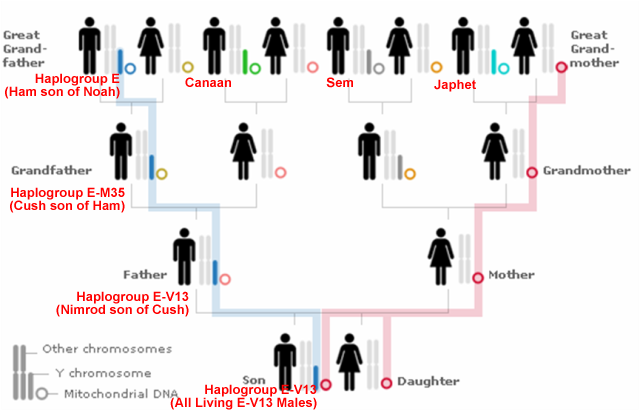
Cush
The Kushites are Divided in 4 major branches: The Latin Kushites (Roman Kushites E-V13, Latin Europeans and Latin Americans) , the Ethiopian Kushites, the Arabian Kushites, and the Indian Kushites or Asiatic Kushites.
Nimrod founder of Albanians

Nimrod first King on Earth
He was the first king of Earth to wear a crown thus creating the E-V13 Royal bloodline.
The First E-V13 and Father of all Romans and E-V13 gene carriers today.
Nimrod was Hamitic and Cushite because his Grandfather was Ham and His Father was Cush, therefore all E-V13 we are Hamitic and Cushites.

The Eye of Nimrod – The Sun of Nimrod – and the Pyramide of Nimrod – The New Age
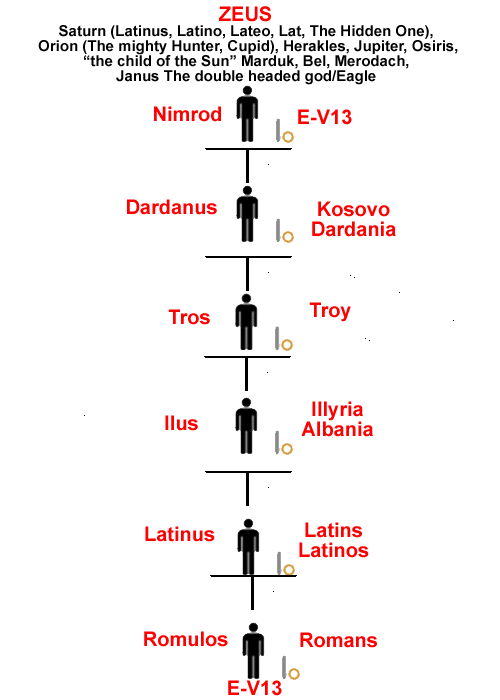
(Not only Illyrians, but all Latins have Albanian roots; picture bellow):

Abuot Illyrians
Illus (Illyria – Albania)
Father of all the Illyrians (Albanians)
Of all Torrent and field of Athens
They will be surprised by light cavalry,
By Albanois Mars, Leo, Saturn in Urn. (Nostradamus C.5:91)
(From Ilus originate Latinus and Romulos)
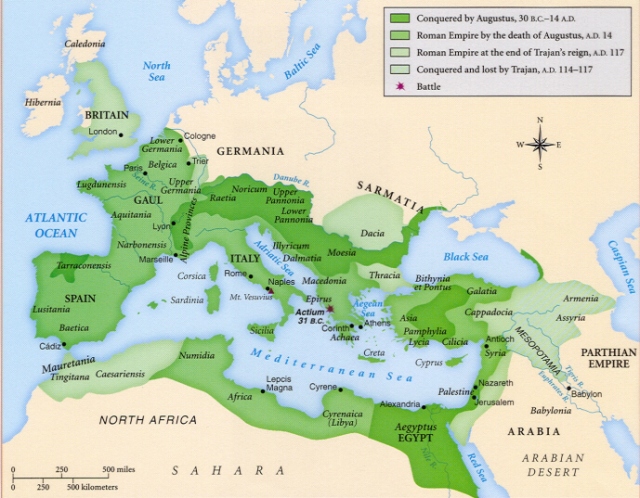
Hamitic Roman Empire from 30 bc to 117 ad.
http://hamitic.wordpress.com/famous-hamitics-persons-of-halopgroup-e/
Discover your roots (Your Hamitic bloodline)
Returning our Hamitic forefather and roots to its pre-eminence. To lead the world to a Global Peace.
Ham is our root Ancestor, our Father, He is the founder of Haplogroup DE
Ham means Hot – Romantic just as ROMA (Rome) means written backwards AMOR (Love)
Ham
Ham means Hot – Romantic just as ROMA (Rome) means backwards AMOR (Love)
Ham is our root Ancestor, our Father, He is founder of Haplogroup DE. The name Ham seems to be a contraction of Adham’s (Adam) name (The first man created) it seems that Ham showed some of the physical characteristics of Adham (As we can see with people that belongs in Biblical Adam’s Haplogroup A or people who belong to Biblical Noah’s Haplogroup B).
Cush
The Kushites are Divided in 4 major branches: The Latin Kushites (Roman Kushites E-V13, Latin Europeans and Latin Americans) , the Ethiopian Kushites, the Arabian Kushites, and the Indian Kushites or Asiatic Kushites.
Nimrod founder of Albanians
Nimrod first King on Earth
He was the first king of Earth to wear a crown thus creating the E-V13 Royal bloodline.
The First E-V13 and Father of all Romans and E-V13 gene carriers today.
Nimrod was Hamitic and Cushite because his Grandfather was Ham and His Father was Cush, therefore all E-V13 we are Hamitic and Cushites.
The Eye of Nimrod – The Sun of Nimrod – and the Pyramide of Nimrod – The New Age
(Not only Illyrians, but all Latins have Albanian roots; picture bellow):
Abuot Illyrians
Illus (Illyria – Albania)
Father of all the Illyrians (Albanians)
Of all Torrent and field of Athens
They will be surprised by light cavalry,
By Albanois Mars, Leo, Saturn in Urn. (Nostradamus C.5:91)
(From Ilus originate Latinus and Romulos)
Hamitic Roman Empire from 30 bc to 117 ad.
- Status
- Not open for further replies.