-
Don't want to see ads? Install an adblocker like uBlock Origin or use a Europe-based privacy-friendly browser like Vivaldi or Mullvad.
You are using an out of date browser. It may not display this or other websites correctly.
You should upgrade or use an alternative browser.
You should upgrade or use an alternative browser.
Napoleon III was not related by blood to Napoleon I, and may be Talleyrand's grandson
- Thread starter Maciamo
- Start date

sparkey
Great Adventurer
- Messages
- 2,248
- Reaction score
- 359
- Points
- 83
- Location
- California
- Ethnic group
- 3/4 Colonial American, 1/8 Cornish, 1/8 Welsh
- Y-DNA haplogroup
- I2c1 PF3892+ (Swiss)
- mtDNA haplogroup
- U4a (Cornish)
I did another quick search for Charles Adam Bylandt, and found another brother of his, Jean Charles Bylandt:

I think I see similarities again.
I think I see similarities again.
They're just trying to make Napoleon look like a cornuto. lol.Any more fathers to suggest? XD pretty disturbing! Thank god I'm handsome as all hell or I'd be worried as f*** lollll

Angela
Veteran member
- Messages
- 21,793
- Reaction score
- 12,345
- Points
- 113
- Ethnic group
- Italian
I did another quick search for Charles Adam Bylandt, and found another brother of his, Jean Charles Bylandt:
I think I see similarities again.
The nose seems similar, but the eyes and eyebrows are still totally off, so I don't know. (Queen Hortense didn't have those eyes and eyebrows either.)
This is the only Van Bylandt I could find:
http://explore.rkd.nl/nl/explore/portraits/record?filters[RKD_algemene_trefwoorden]=pi%C3%ABdestal&query=&start=25
If there are still male line descendants of these families, it would be a simple enough matter to get them to take dna tests, I suppose. They might even like the connection to royalty, even nouveau royalty.
It seems to be true that it's a wise man who knows his own father...
That said, the world of the 17th, 18th and the very early 19th century aristocrats was very different from the world ushered in by Queen Victoria. I think the men in different countries may have been more or less tolerant, as well. I'm reminded of Alfonso II, Duke of Este, about whom Browning wrote his famous poem "My Last Duchess." In my own area, one of the Malatesta's threw his young wife into a dungeon on suspicion of infidelity. The tower is supposedly haunted by her ghost.
 etrified:
The British aristocrat to whom I was referring was Lady Melbourne:
http://en.wikipedia.org/wiki/Elizabeth_Lamb,_Viscountess_Melbourne
"Lady Melbourne had six children that survived childhood; infant twins died in 1788.[3] Of the remaining six, only the eldest, Peniston, was certain to have been fathered by Lord Melbourne."
The Duchess of Devonshire was also notorious, (there's a wonderful biography of her called Georgiana, Duchess of Devonshire...she comes across as an extremely vulnerable person, more sinned against than sinning...) as was her sister, and Lady Melbourne's daughter in law, Lady Caroline Lamb, wife of the future Prime Minister, who literally lost her mind over Lord Byron.
I think a good deal of this is a not unexpected outcome of marrying young girls to the highest bidder, usually a much older man, rather than on any compatibility whatsoever. And the men, of course, were never expected to be faithful. What's unusual in this class in these particular countries and periods is that the husbands, once in possession of an heir, seem to have turned a blind eye. Of course, if that heir died or was childless, the cuckoo in the nest could indeed wind up inheriting. Probably, up until the late 18th century, it was only the Queens who were watched like hawks.
sparkey
Great Adventurer
- Messages
- 2,248
- Reaction score
- 359
- Points
- 83
- Location
- California
- Ethnic group
- 3/4 Colonial American, 1/8 Cornish, 1/8 Welsh
- Y-DNA haplogroup
- I2c1 PF3892+ (Swiss)
- mtDNA haplogroup
- U4a (Cornish)
OK, I just tracked down a Boucheporn portrait to complete our portrait analysis of Napoleon III paternity candidates. Here is René Bertrand de Boucheporn's brother, Anne François Louis Bertrand de Boucheporn:

Interestingly, René Bertrand de Boucheporn named his daughter Hortense. Hortense married into the de Sampigny family, and one of her descendants, her namesake Hortense de Sampigny, became a famous violinist (she's on the left, of course):

Intriguingly, the Bertrand de Boucheporn family is thought to have originated in or near Metz, which is a relatively high I2-M223 area. That said, I'm not sure I see a lot of family similarity to Napoleon III with them. Does anyone?
Interestingly, René Bertrand de Boucheporn named his daughter Hortense. Hortense married into the de Sampigny family, and one of her descendants, her namesake Hortense de Sampigny, became a famous violinist (she's on the left, of course):
Intriguingly, the Bertrand de Boucheporn family is thought to have originated in or near Metz, which is a relatively high I2-M223 area. That said, I'm not sure I see a lot of family similarity to Napoleon III with them. Does anyone?
Angela
Veteran member
- Messages
- 21,793
- Reaction score
- 12,345
- Points
- 113
- Ethnic group
- Italian
OK, I just tracked down a Boucheporn portrait to complete our portrait analysis of Napoleon III paternity candidates. Here is René Bertrand de Boucheporn's brother, Anne François Louis Bertrand de Boucheporn:
Interestingly, René Bertrand de Boucheporn named his daughter Hortense. Hortense married into the de Sampigny family, and one of her descendants, her namesake Hortense de Sampigny, became a famous violinist (she's on the left, of course):
Intriguingly, the Bertrand de Boucheporn family is thought to have originated in or near Metz, which is a relatively high I2-M223 area. That said, I'm not sure I see a lot of family similarity to Napoleon III with them. Does anyone?
I don't see any resemblance. Perhaps the historians should check their dates again. That one day encounter between Queen Hortense and her husband seems very suspicious to me. She wouldn't be the first woman in the world to discover she's pregnant by her lover who then finds such a visit might be a way to claim it is her husband's.
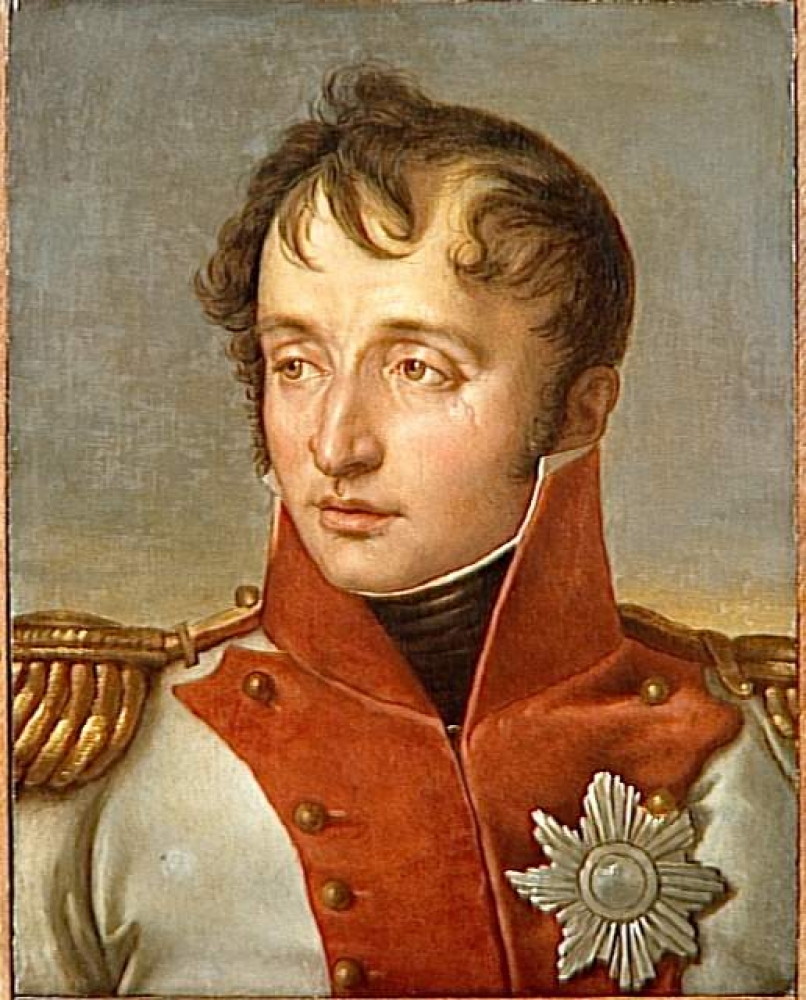
Also, this is a portrait of the child that was recognized as the issue of the Queen and the Count de Blahaut. He certainly looks as if he could be the full sibling of Napoleon III.
http://ookaboo.com/o/pictures/picture/2675870/Charles_Auguste_Louis_Joseph_Demornyde_M
sparkey
Great Adventurer
- Messages
- 2,248
- Reaction score
- 359
- Points
- 83
- Location
- California
- Ethnic group
- 3/4 Colonial American, 1/8 Cornish, 1/8 Welsh
- Y-DNA haplogroup
- I2c1 PF3892+ (Swiss)
- mtDNA haplogroup
- U4a (Cornish)
I don't see any resemblance.
Agreed, after spending some time trying to find a Boucheporn relative portrait, I think he's ended up being a very underwhelming candidate.
I think I'd go:
Top tier: Bylandt, Decazes, Flahaut
Middle tier: Thienon, Verhuell, Villeneuve
Bottom tier: Boucheporn
Boucheporn is the only one that would really surprise me. Thienon still needs a better portrait to look at.
I've also seen an eighth candidate discussed elsewhere, the Marquis de Castellane, who apparently passed through Cauterets at the right time, although Baguley doesn't even consider him, presumably because there's evidence that Hortense did not meet him while he was around. I'd place him in the bottom tier as well.
Also, this is a portrait of the child that was recognized as the issue of the Queen and the Count de Blahaut. He certainly looks as if he could be the full sibling of Napoleon III.
http://ookaboo.com/o/pictures/picture/2675870/Charles_Auguste_Louis_Joseph_Demornyde_M
He also looks like he could be a half sibling, though. I'm far from certain.
sparkey
Great Adventurer
- Messages
- 2,248
- Reaction score
- 359
- Points
- 83
- Location
- California
- Ethnic group
- 3/4 Colonial American, 1/8 Cornish, 1/8 Welsh
- Y-DNA haplogroup
- I2c1 PF3892+ (Swiss)
- mtDNA haplogroup
- U4a (Cornish)
Some news: This story has (finally) gone to press in Le Figaro. Unfortunately, the story is premium content, but there are some third party reports like this one at Atlas. The most interesting news? Apparently the scientists are now going to perform tests on Louis Bonaparte to confirm whether or not the illegitimacy was with Hortense.

Grubbe
Regular Member
- Messages
- 137
- Reaction score
- 13
- Points
- 0
- Ethnic group
- Norwegian
- Y-DNA haplogroup
- R1a Z284
- mtDNA haplogroup
- H5a1k
Considering Marie Louise's morals, this is certainly a possibility. However, Napoleon himself had what have variously been described as blue, blue-grey or grey eyes. Virtually all of his portraits indicate this as well. So any child of his with a light eyed woman should have produced a light eyed child.
http://www.napoleon-series.org/research/napoleon/c_description.html
Here is a picture of Napoleon I showing his light eyes:
http://tiffanyslittleblog.blogspot.no/2011/08/happy-242nd-birthday-napoleon.html
Angela
Veteran member
- Messages
- 21,793
- Reaction score
- 12,345
- Points
- 113
- Ethnic group
- Italian
Here is a picture of Napoleon I showing his light eyes:
http://tiffanyslittleblog.blogspot.no/2011/08/happy-242nd-birthday-napoleon.html
Altogether a quite common "look" in both Liguria and Toscana, his two ancestral (maternal and paternal) areas, sometimes a little darker, sometimes a little fairer, and it can also be found in Corsica, as well, more in the north of the island than the south so far as I can tell from superficial visits.
A comparison with his parents:

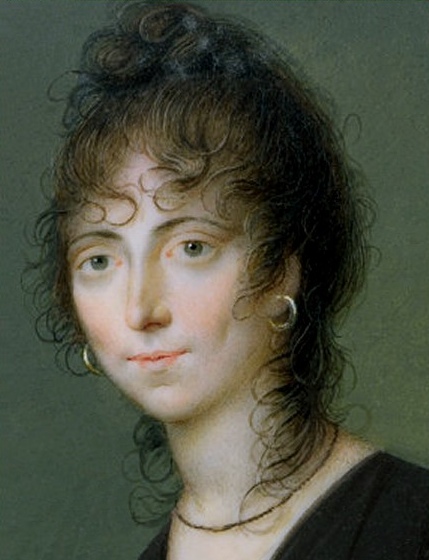

And Louis...I'll be very surprised if he and Napoleon turn out not to be full siblings. My bet is on Hortense having strayed, although, as I said, if the stories of Louis' inclinations are true, she should be given a bit of a pass, in my opinion. Her mother Josephine could also hardly be considered a good role model. She couldn't even be faithful for the few months Napoleon was on campaign in Italy.