
• Don't want to see ads? Install an adblocker like uBlock Origin or use a Europe-based privacy-friendly browser like Vivaldi or Mullvad.

The rise of PIEs in the steppes --- From the Ural or from the from the Caucasus?

I would like to explain what i mean about Summerian

WHY SUMMERIAN LANGUAGE IS A KEY TO UNDERSTAND IE

now lets see 2 summerian words
a) liligi
b) Kur

lets see the Nostradic case
liligi = flowers or mushroom in Summerian
li+li = plural number
lillies lillium in the IE language
Lale in Turkish language

here we see IE and Turkish have simmilar with Summerian

lets the other word kur
kur in Summerian is the mountain the high mountain tops,
lets see in IE
Kurds = mountain people
ancient Greek mountain ορος (k?)oros but top of the mountain Korufe κορυφη
so we see Kor,
Slavic Gora


now lets go to Turkish
the mountain top is teppe tepecik is the hill and Dag is the mountain (Dag tepesi)
teppe reminds me the
Esthonian mae tippu
most Germanic toppen bergtop

I have to admit that i don't know how the aspirations work here among 2 Bigger groups of languistic families
and maybe I am wrong but I am certain the the word dag is missing from both Summerian and IE and the word teppe is surely missing from ancient Greek which in combo with post 26 of El horsto that Greece has the lowest Altaic genetical relation I think is a good start to unlock doors, especially the Summerian and IE connection, and Turkic and IE connection

I just put a dilemma among Nostradic and Ur-Urartian connection of Summerian,
Εng copper GR κυπρος and TR bakir
ENg vision GR ορασις and TR Bakis
English big huge great BLG golyam Pol wielky Summerian gal Turkish buyuk kocaman

So now I put the question in a different form,
IE went from Summerians to steppe, or from steppe to Summerian,
all that in combo that Greek is IE but has the lowest Altai genetical connection but enough Summerian linguistic connection.

thank you, and sory for not using Avestan and Sansqrit and Armenian and rest IE
 
Last edited:
Kamani will you bring more dead people?

Canon George Rawlinson (23 November 1812 – 7 October 1902)
his theory is more than 1 century old
So if someone dies their theories are no good anymore according to you. That makes Einstein and Newton a bunch of idiots because they're dead. Do you even proofread your nonsense anymore, or is it the ouzo speaking.
Where is your doctors of history saying macedonians were greek?
 
So if someone dies their theories are no good anymore according to you. That makes Einstein and Newton a bunch of idiots because they're dead. Do you even proofread your nonsense anymore, or is it the ouzo speaking.
Where is your doctors of history saying macedonians were greek?

indeed you don't know Makedonia, Makedonia has tsipouro not ouzo,
if Rawlinson knew the modern discoveries that been found in excavations he probably had another theory,
understand that,
now about Newton and Einstein, can't you find the difference among Laws and theories?

Even Newton's laws after Laurence transformations (1920's) are overpassed to limited area.

plz read 2 threads about Makedonia, it is boring to write about that again, in another thread that has nothing to do,

From Aristotle's times we have 2 degrees of scientific proves

we start with an αξιωμα axiom
then we create θεωρια theory,
and if theory is eternal we have νομος laws,
and even eternal is something strange,
cause even Newton's laws today are overpassed cause from Laurence transformations.
 
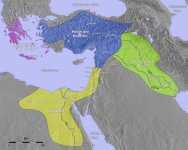
AlterOrient2.jpg

Can you tell where greece is in this map? Mycaneans were the greek speakers, so that kind of locks you guys way more south than you claim. The rest of current greece was a patch-work of pelasgians, illyrians, thracians, and greek minorities.

PS. If you were greek, you would call it ouzo...
 
kamani plz sto nonsences, and facultated, and the read the threads in the forum about,
This forum has another issue than your nationalistic claims.
Myceneans are connected with Vucocar Croatia and Vatin Serbia to sicily
besides Greeks were not Mycenans-Achaians in Homer,


All you want to do I think is to create impressions.
or you just lazy to read the 2 threads in forum.

myceneans is Achain branch of Greeks,
there are also the Aeolians, Ionians, Dorians, Minyans, Ellimeians etc


and plz stop your ...

Tsipoyro is after Greek Στιφος which is the outer part of the grapes, Στιπερα
the sweet part of grapes produce wine, the στιφα part produce Στιφερα->Stipoyra
in plural is Στιφερα -Στιπουρα ->Τσιπουρα
Ouzo is Fancais word
the Greek word is Μαστιχη Masticha
tsipouro is made what is left from wine, so has a στιφη taste and no mastiche
ouzo is a drink that contain mastiche
Tsipoyro is Makedonian word
Tsikoydia is the Cretan word
Raki is the Turkish word
Uzo is another drink that contains gum (Μαστιχη) and the word is from Marseille where first produced.

I am not answering you any more, about that in this thread, about such things,
plz keep in thread

your method
Myceneans = Greeks
Aeolians = non Greek so not in map
is just twisted
does this map contain Aeolians? or Aeolians were not Greeks

besides the best answer to you is what Archaiologists have discover

From Vucedol we see who Myceneans were?
From Varna we see that Myceneans and Thracian had same burial customs much before IE?

and if you want to see who Myceneans were
SEARCH THE VATIN-VRSAC culture
the rest are anachronistic,
in future after Varna finishing all searches we might even both be wrong,

Myceneans and Thracians used burial masks which is a Varna culture custom.
when you understand that go and bring me another 1800 possible theory, or just twist and tell us that Aeolians were not Greeks, or Ionians were Turks, or what ever twisted,

the map is Myceneans at the time of Troy, not does not conclude Aeolians Dorians Ionians etc.
plz search the Vatin-Vrsac culture and don't bring twisted proves,
THE ONLY YOU want TO DO IS TO CrEATE TWISTED IMPRESSIONS.

IT IS LIKE TELLING US THAT SINCE GERMANY OF TODAY IS DEUTSCHLAND, ALL GERMANIC PEOPLE MUST BE THERE, AND ONLY THERE .
BUT GERMANIC PEOPLE ARE ALSO AUSTRIANS DUTCH etc not only Germany.

PS
your map or claim is just like saying that Albania is only gegeria
just like if someone show you the gegeria and say this is Albania,
that much ridiculous claims

Gods I am tired of twisted posts and methods,
 
Last edited:
According to Herodotus the Aeolians were originally Pelasgians. In book seven (7.95) of "The Histories" Herodotus states: "The Aeolians (also, as the Greeks suppose, originally a Pelasgian people) contributed 60. Their equipment was Greek."
So the greeks thought of themselves separate from the pelasgians (which Aeolians were).
First you pretend that the thracian did not exist; we just know their name.. (I guess their existence bothers you because they were in macedonia and they weren't greek).
then your memory comes back and you say they used burial masks just because supposedly they found them in early bronze age Varna. (so now that you can't make them dissapear, you're trying to make them greek)
I might make a few mistakes because I am not a professional historian, but you maliciously mislead people.

Anyway back on the topic:
Hittite 2000 BC - 1200 BC Anatolia, Indo-European
Mycaneans 1900 BC – c. 1200 BC, Indo-European
Phrygians 1200 BC - 675 BC Anatolia, Indo-European
Thracians 1100 BC - Balkans, Indo-European
Illyrians 1100 BC - Balkans, Indo-European
Celtic Hallstat 800 BC - Western Europe, Indo-European

I see a trail of R1b people from the caucasus -> anatolia -> balkans -> western europe. R1b mutations also follow the same story, with the parent clades being in anatolia and balkans.
When Alexander the Great met phrygians (trojans) in anatolia, he considered them to be his own people.
Alexander the Great always had celts and illyrians in his army. On the contrary, the persians always had more greeks fighting in their ranks against Alexander.
Alexander completely destroyed to the ground 30-something greek cities.
Thracians, Illyrians, and celts always allied with the trojans (hittites, phrygians), rather than the greeks.
I see a pattern of this latter wave of R1b tribes, who consolidated in the area around the same time, knowing and helping each other. The mycanean greeks have always been their southern adversary since trojan times.
 
According to Herodotus the Aeolians were originally Pelasgians. In book seven (7.95) of "The Histories" Herodotus states: "The Aeolians (also, as the Greeks suppose, originally a Pelasgian people) contributed 60. Their equipment was Greek."
So the greeks thought of themselves separate from the pelasgians (which Aeolians were).
First you pretend that the thracian did not exist; we just know their name.. (I guess their existence bothers you because they were in macedonia and they weren't greek).
then your memory comes back and you say they used burial masks just because supposedly they found them in early bronze age Varna. (so now that you can't make them dissapear, you're trying to make them greek)
I might make a few mistakes because I am not a professional historian, but you maliciously mislead people.

Anyway back on the topic:
Hittite 2000 BC - 1200 BC Anatolia, Indo-European
Mycaneans 1900 BC – c. 1200 BC, Indo-European
Phrygians 1200 BC - 675 BC Anatolia, Indo-European
Thracians 1100 BC - Balkans, Indo-European
Illyrians 1100 BC - Balkans, Indo-European
Celtic Hallstat 800 BC - Western Europe, Indo-European

I see a trail of R1b people from the caucasus -> anatolia -> balkans -> western europe. R1b mutations also follow the same story, with the parent clades being in anatolia and balkans.
When Alexander the Great met phrygians (trojans) in anatolia, he considered them to be his own people.
Alexander the Great always had celts and illyrians in his army. On the contrary, the persians always had more greeks fighting in their ranks against Alexander.
Alexander completely destroyed to the ground 30-something greek cities.
Thracians, Illyrians, and celts always allied with the trojans (hittites, phrygians), rather than the greeks.
I see a pattern of this latter wave of R1b tribes, who consolidated in the area around the same time, knowing and helping each other. The mycanean greeks have always been their southern adversary since trojan times.


Kamani when I say I am tired, I am,


1)

KAMANI YOU SHOULD BE ASHAMED OF YOUR SHELF,
IF I WAS YOU MAYBE I COMMITED SUICIDE.
THANK GODS I AM NOT

ΗΡΟΔΟΤΟΥ ΙΣΤΟΡΙΑΙ

94

1 Ἴωνες δὲ ἑκατὸν νέας παρείχοντο ἐσκευασμένοι ὡς Ἕλληνες. Ἴωνες δὲ ὅσον μὲν χρόνον ἐν Πελοποννήσῳ οἴκεον τὴν νῦν καλεομένην Ἀχαιίην, καὶ πρὶν ἢ Δαναόν τε καὶ Ξοῦθον ἀπικέσθαι ἐς Πελοπόννησον, ὡς Ἕλληνες λέγουσι, ἐκαλέοντο Πελασγοὶ Αἰγιαλέες, ἐπὶ δὲ Ἴωνος τοῦ Ξούθου Ἴωνες.

95

1 νησιῶται δὲ ἑπτακαίδεκα παρείχοντο νέας, ὡπλισμένοι ὡς Ἕλληνες, καὶ τοῦτο Πελασγικὸν ἔθνος; ὕστερον δὲ Ἰωνικὸν ἐκλήθη κατὰ τὸν αὐτὸν λόγον καὶ οἱ δυωδεκαπόλιες Ἴωνες οἱ ἀπ᾽ Ἀθηνέων. Αἰολέες δὲ ἑξήκοντα νέας παρείχοντο, ἐσκευασμένοι τε ὡς Ἕλληνες καὶ τὸ πάλαι καλεόμενοι Πελασγοί, ὡς Ἑλλήνων λόγος. 2 Ἑλλησπόντιοι δὲ πλὴν Ἀβυδηνῶν (Ἀβυδηνοῖσι γὰρ προσετέτακτο ἐκ βασιλέος κατὰ χώρην μένουσι φύλακας εἶναι τῶν γεφυρέων) οἱ δὲ λοιποὶ οἱ ἐκ τοῦ Πόντου στρατευόμενοι παρείχοντο μὲν ἑκατὸν νέας, ἐσκευασμένοι δὲ ἦσαν ὡς Ἕλληνες. οὗτοι δὲ Ἰώνων καὶ Δωριέων ἄποικοι.


YOU SHOULD BE ASHAMED

DOES IT SAY AEOLIAN KAMANI? TELL US DOES IT SAY AEOLIAN?
IS IONIAN SAME WITH AEOLIAN?


POINT 2


KAMANI WERE PHRYGIANS WERE?

DO YOU KNOW WHY ALEXANDER CONSIDER PHRYGIANS AS HIS Cousins due to Mygdonians?

let me tell you wise guy

1) Bryges were Herodotos places them?

73

1 φρύγες δὲ ἀγχοτάτω τῆς Παφλαγονικῆς σκευὴν εἶχον, ὀλίγον παραλλάσσοντες. οἱ δὲ Φρύγες, ὡς Μακεδόνες λέγουσι, ἐκαλέοντο Βρίγες χρόνον ὅσον Εὐρωπήιοι ἐόντες σύνοικοι ἦσαν Μακεδόσι, μεταβάντες δὲ ἐς τὴν Ἀσίην ἅμα τῇ χώρῃ καὶ τὸ οὔνομα μετέβαλον ἐς Φρύγας. Ἀρμένιοι δὲ κατά περ Φρύγες ἐσεσάχατο, ἐόντες Φρυγῶν ἄποικοι. τούτων συναμφοτέρων ἦρχε Ἀρτόχμης Δαρείου ἔχων θυγατέρα.


SO PHRYGIANS LIVED BESIDE WITH MAKEDONIANS, INFACT NORTH AND WEST OF PAEONIA, EXCEPT EDESSA CITY (in Brygian means water-castle) in where today lake Λυχνιτις (Ohrida) is and Tettovo is to almost river Strymon.
But Brygian language is isotones and isoglosses with Greek and together they make the Greco-Brygian which is part of Greco-Aryan which is a LPIE well known and well attested language since it is very well known to all except you maybe,
Edessa 20 km from Pella was the old Phrygian capital.
Mygdonians are the Hellenised Brygians, the ones who stayed behind,
Bottiaeoi is the 4rth component,
Ellimeians is the 12rst component,
Argites is the 1rst
so Makedonians were 4 components from which 3 were Greek and 1 was Thracian isotones and isoglosses with Greek
go find the Brygian language, or at least the connection of Greco-Brygian.
Hellenistic have much Thracian due to Bryges,
2 major Theories-Hypothesis of LPIE that of Greco-Aryan and the Armenian (Armeno-Thracian) first connection of Greek have Brygian-Phrygian (Greco-Brygian) and then the rest.

want to discuss more your posts?
you want me to quote what you said to us? and discuss more?

well at least change your teacher, or do us a favore and get new books. if you don't commit suicide.

Kamani Phrygians were Balkanic people not Anatolian.

now go back to your anachronistic and Albano-centric propagandistic Theories


PS
you are so twisted that you make Greeks only the Myceneans leaving outside the rest,
and Then you facultated Herodotus thelling us the lie that Aeolians were Pelasgians, while the original say about Ionians,
(you make on purpose Ionians=Aeolians)

AT LEAST ASK FORGIVENESS FROM THE READERS OF THE FORUM, for your mistakes and facultated posts, and for destroying the thread for nationalistic propaganda purposes.


I wonder your claims with Rawlinson are the same type facultated data, or you just found someone and tell us your fairytale and use a random proffesor's signature to give some prestice.
 
KAMANI even if you have interesting thoughts, you seam believing in a kind or fraternity among same Y-HG bearers : if you studied History, even on the top as me, you oought to know people and tribes are not always faithfull to their brethen - and it seams to me you have a very personal way to interpret History -
 
there is a term called continental celtic ...basically from central europe and east of that and then there is the other celtic western Europe and isles

I think I said they where Turkic , but because I have some of these alleles and no Turkic , then I assume they must not be originally turkic.

my STR tests via DNATribes state Udmurt and later Alans , both are in continental celtic group .......check with there site to find out the markers you seek
Percentages express genetic traces of more ancient links between European populations and neighboring and related world populations.

More information about Mediterranean links between Western Europe (including Galician related populations) and Italy is included in these Digest articles: http://dnatribes.com/dnatribes-digest-2010-11-30.pdf and http://dnatribes.com/dnatribes-digest-2012-07-01.pdf


More information about links between Europe and indigenous ethnic groups of the Caucasus Mountains (such as Balkar populations) is available at http://dnatribes.com/dnatribes-digest-2012-05-01.pdf

Thanks for the links - I red a lot -
I'm surprised by the heterogeneity of "reference poles" in DNA tribes - yet i'm not found of STRs but here I see that for every country or region analysis the reference population (genes strong distributions places?) envolved are different: no sound basis...
I'm disappointed!
I conclude: at first sight, a beautiful gift pack paper but fairies tales inside...
 
sorry, I was too hard: not fairy tales concerning the historic digest, but the genetic part is very light
 
KAMANI even if you have interesting thoughts, you seam believing in a kind or fraternity among same Y-HG bearers : if you studied History, even on the top as me, you oought to know people and tribes are not always faithfull to their brethen - and it seams to me you have a very personal way to interpret History -

illyrians, celts, and thracians, appear roughly at the same time in neighboring areas.
Greek mythology consider Keltus, Illyrus, and Gallus as brothers.
Historically they always allie against the greeks who consider them all barbarians.
Ofcourse people don't get along even within the same tribe, there is evidence of the celts harrasing the illyrians and vice-versa.

But when it comes to international conflicts race and culture affinityView attachment 5792
do matter, not to mention common interest. For example a whole bunch of barbarian tribes allied against rome for centuries until they destroyed it.
My greek friend here, who is about to commit suicide, is angry because they have always been taking undue credit for everything within current greek borders.
Sometimes the truth comes from somebody who has the liberty to say it...
 
sorry, I was too hard: not fairy tales concerning the historic digest, but the genetic part is very light

i too initially thought it as fairy-tales, but expert genologists see a lot of merit and fact in their data especially the other thread here which is DNAtribes Jan 2013 issue
 
According to Herodotus the Aeolians were originally Pelasgians. In book seven (7.95) of "The Histories" Herodotus states: "The Aeolians (also, as the Greeks suppose, originally a Pelasgian people) contributed 60. Their equipment was Greek."
So the greeks thought of themselves separate from the pelasgians (which Aeolians were).
First you pretend that the thracian did not exist; we just know their name.. (I guess their existence bothers you because they were in macedonia and they weren't greek).
then your memory comes back and you say they used burial masks just because supposedly they found them in early bronze age Varna. (so now that you can't make them dissapear, you're trying to make them greek)
I might make a few mistakes because I am not a professional historian, but you maliciously mislead people.

Anyway back on the topic:
Hittite 2000 BC - 1200 BC Anatolia, Indo-European
Mycaneans 1900 BC – c. 1200 BC, Indo-European
Phrygians 1200 BC - 675 BC Anatolia, Indo-European
Thracians 1100 BC - Balkans, Indo-European
Illyrians 1100 BC - Balkans, Indo-European
Celtic Hallstat 800 BC - Western Europe, Indo-European

I see a trail of R1b people from the caucasus -> anatolia -> balkans -> western europe. R1b mutations also follow the same story, with the parent clades being in anatolia and balkans.
When Alexander the Great met phrygians (trojans) in anatolia, he considered them to be his own people.
Alexander the Great always had celts and illyrians in his army. On the contrary, the persians always had more greeks fighting in their ranks against Alexander.
Alexander completely destroyed to the ground 30-something greek cities.
Thracians, Illyrians, and celts always allied with the trojans (hittites, phrygians), rather than the greeks.
I see a pattern of this latter wave of R1b tribes, who consolidated in the area around the same time, knowing and helping each other. The mycanean greeks have always been their southern adversary since trojan times.

what are you trying to aim at with all of this ?
 
illyrians, celts, and thracians, appear roughly at the same time in neighboring areas.
Greek mythology consider Keltus, Illyrus, and Gallus as brothers.
Historically they always allie against the greeks who consider them all barbarians.
Ofcourse people don't get along even within the same tribe, there is evidence of the celts harrasing the illyrians and vice-versa.

But when it comes to international conflicts race and culture affinityView attachment 5792
do matter, not to mention common interest. For example a whole bunch of barbarian tribes allied against rome for centuries until they destroyed it.
My greek friend here, who is about to commit suicide, is angry because they have always been taking undue credit for everything within current greek borders.
Sometimes the truth comes from somebody who has the liberty to say it...


kamani first you tell us that E-v13 is neolithic caucasian,
then you tell us that 92% of modern Greeks are not Greeks,
then that your target is me.
then you tell us that Phrygians were Anatolians,
then you tell us that Makedonians were Thracians,
you twisted and facultated data
big example the 7/95 of Herodotus, above,

now you tell us that Thracian were brothers of Celts and not of Greeks, yet the academic comnunities share 3 theories about IE connection and in both 3 Greeks are connected with Thracians via either Cotofeni-Vatin or Via Aryan minor-Asia,

the rest are just imagination of yours, or you do that in purpose,

when Herodotus describes illyrians connected with Keltos (not Galates) youuse it,
But when when Herodotus describes Makedonians and Brygians and Aeolians you twist it and you facultate it as you like,

That is part of your theory

interesting...judging from pictures of the mummy, Ramesses III was sort of caucasoid. This might mean that even the Black African branch E1b1a was originally caucasoid.

http://www.eupedia.com/forum/threads/28269-Ramesses-III-belonged-to-haplogroup-E1b1a


THE BEST THING TO DO IS ASK FORGIVENESS FROM HERODOTUS AND GODS AND THE READERS
for fabricating his books on purpose

seems like some people create an industry to twist history, gennetics, books, data, and they are not ashamed.

Kamani tell us? do you share that Greek Latin and Slavic are Clergy languages?


you didn't even search the Vatin-Vrsac culture, and you speak about R1b and Myceneans,


And again you fabricated data as you like,

Illyrus son of Kadmus who was brother of Egypt and Phoenix
where did you find that you are telling us?
in your post #71. you created them? or you read them at Zeus 10 imaginary works?
Does herodotus say Gauls? Γαλατες? or you put it? as in your above posts were you said Aeolians were Pelasgians instead of what Herodotus say, although you use him?

I wonder have you ever read Herodotos Histories Ηροδοτου Ιστοριαι?
 
what are you trying to aim at with all of this ?
I am trying to point at a possible R1b migration wave to europe after the fall of the hittite empire around or before 1200 BC. The migration split into thracians, illyrians, and celts. The phrygians was the remnant of this wave that stayed in anatolia.
On a sidenote, the romans claimed to descend from the trojans (phrygians, hittites). Coincidentally they were also R1b, based on today italians.
 
I am trying to point at a possible R1b migration wave to europe after the fall of the hittite empire around or before 1200 BC. The migration split into thracians, illyrians, and celts. The phrygians was the remnant of this wave that stayed in anatolia.
On a sidenote, the romans claimed to descend from the trojans (phrygians, hittites). Coincidentally they were also R1b, based on today italians.

Kamani

Phrygians were Balkanic people, not Anatolians as you like them to be,
it means that you never read Herodotus, neither you know Makedonians, neither you read about Alexander or its epigoni, simply you post what ever.

Myceneans were R1b people, genetical search had prove that,
it is written in the threads that you never read.
Myceneans and Thracians were IE but burial rituals such as the Mask show that Myceneans Thracians Makedonians follow the Varna Necroplis ritual, something that is not found yet in Illyrians (or maybe i have not informed abou that)

are you fabricating data again? are you twisting history again?


still you have not ask forgivess for fabricating Herodotus Histories
 
In terms of the route of the celts, I am more inclined towards: Anatolia -> thracia -> illyria -> western europe. A few supporting ideas are:
- albanians have one of the highest percentages in europe of R1b-M269*, the parent version of almost all western european mutations of R1b. The same subclade is also found in bulgaria, romania, greece, anatolia and Iran.
- Anatolia was a much developed area/route in antiquity (Troy for example). People would follow the warmer shorter southern route rather than go the above the black sea route.
-in the trojan war the illyrians allied mostly with the trojans (anatolia), so for some reason they felt more affinity with them than with the cretan greeks.

I agree that the Anatolia-Balkan route is still possible. But the steppe-link should not be discarded too early, since the Balkans underwent frequent and various steppic influx at different times. Regarding the Albanians, I have still no idea of their origin, just the DNAtribes 2013 digest (assuming it's reliable) now contains more hints towards the steppe rather than anatolia:

- complete lack of the East Med component, which is otherwise ubiquitous in Europe and especially in the Balkans.
- very high Altai component (7.9%), which is otherwise half as high in the Balkan average and completely absent in neighbouring Greece
- absolutely highest STR Balochi component in europe so far. (15.3%), which is also zero in Balkans and neighboring Greece. Else It is even higher in far places like Ireland.
- Albanian roots have been traced back to Dacians by some historians and others, which is situated much more north-east in today Romania, thus much closer to the steppes.

Else, the Albanians would have been the last people I would have linked to the steppes, mainly due to their Y-DNA. But this DNAtribes stuff is something new, provided it is no data garbage.

-the albanians, romanians, and greeks are surrounded by slavs in the north and north-west, so the slav migrations cuttoff the connection between the western and eastern R1b.

Although there are some links and common trails, balkan-slavs are not very similar to the rest of the slavic world. They genetically are much more similar to Romanians, Albanians and Vlachs.
 
Kamani

Phrygians were Balkanic people, not Anatolians as you like them to be,
it means that you never read Herodotus, neither you know Makedonians, neither you read about Alexander or its epigoni, simply you post what ever.

Myceneans were R1b people, genetical search had prove that,
it is written in the threads that you never read.

are you fabricating data again? are you twisting history again?


still you have not ask forgivess for fabricating Herodotus Histories

you're still alive ?!!
 
you're still alive ?!!

Yes I am
have you ask forgiveness for your fabricated and false data?

I wonder 2 years in the forum, I learn so many, and many times I change my mind due to what the discuss and the evidences were?

after all that time that you are in the forum?
why you fabricated data?
why you try to give us wrong informations?


do you still believe in your posts? and your made by propagandists theories?

at least have you seen the light of non dogmatic science?
 
I agree that the Anatolia-Balkan route is still possible. But the steppe-link should not be discarded too early, since the Balkans underwent frequent and various steppic influx at different times. Regarding the Albanians, I have still no idea of their origin, just the DNAtribes 2013 digest (assuming it's reliable) now contains more hints towards the steppe rather than anatolia:

- complete lack of the East Med component, which is otherwise ubiquitous in Europe and especially in the Balkans.
- very high Altai component (7.9%), which is otherwise half as high in the Balkan average and completely absent in neighbouring Greece
- absolutely highest STR Balochi component in europe so far. (15.3%), which is also zero in Balkans and neighboring Greece. Else It is even higher in far places like Ireland.
- Albanian roots have been traced back to Dacians by some historians and others, which is situated much more north-east in today Romania, thus much closer to the steppes.

Else, the Albanians would have been the last people I would have linked to the steppes, mainly due to their Y-DNA. But this DNAtribes stuff is something new, provided it is no data garbage.


Although there are some links and common trails, balkan-slavs are not very similar to the rest of the slavic world. They genetically are much more similar to Romanians, Albanians and Vlachs.

The sample size of DNAtribes might be too small for albanians, hence the strange absence of mediteranean component. The steppes route is also a possibility, maybe they both happened at different times. Also to consider is that albanians have a lot of dinaric I2 and R1a, which probably came from the steppes too. Those albanians with dinaric I2 or R1a would not have had a lot of time to get the east-mediteranean component, since they incorporated in the gene pool in the middle ages.
 
Back
Top