J2b2-L283 found in Veliki Vanik in Southern Croatia (1550 BC) can be Mycenaean too. Illyrians emerged in the earliest possible variant 1300 BC. Proto-Illyrians (they are no Illyrians, it is difference) were in Danube region.

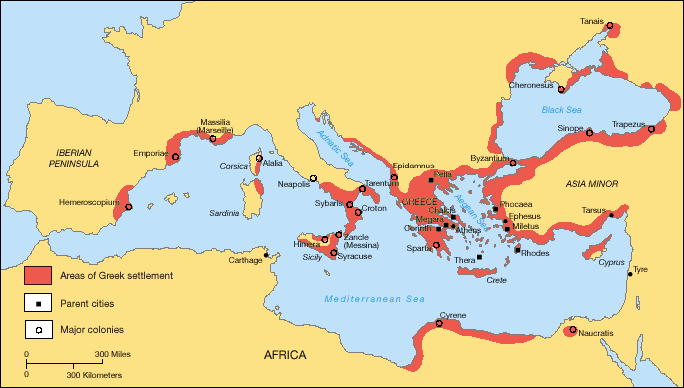
Mycenaeans developed complex trade network in Mediterranean since 17th till 11 century BC. They trade with several counties including Italy, from south to north. They probably brought J2b2 L283 in Italy and beyond, wherever they traded. In the isle of Brach was one of Mycenaean points. We can see isle of Brach is very near location in Veliki Vanik where J2b2 L283 is found. And Brach in ancient time traded with region present days southern Dalmatia, Herzegovina.
The Croatian J2b2-L283 possibly being of Mycenaean source/trader, doesn't add up to me. The sample comes from 1550 BC and it was a little boy from further inland, which indicates J2b2-L283 was in the area earlier than Myceaneans were even mentioned. Furthermore, for your theory to hold true, that would mean J2b2-L283 was one of the major markers of the Myceaneans. But yet this marker is virtually non-existent in the Greek Islands, Pontic Greeks, as well as North Africa, Anatolia (where virtually all J2b seems to be J2b1-M205). See my analysis of Greek J2b2-L283 haplotypes here.
Lastly, and more importantly, there is no Myceanean ancient DNA to date. So we don't even know if they carried any J2b2-L283 to begin with.
On the other hand, I think J2b2-L283 mutation is too old for all subclades to be called "Illyrian" or "Proto-Illyrian". However, its main branches below J-Z2507, like J-Z1296 and J-Y15058 can be, as they are showing a Bronze Age expansion. What we also see is that the greatest subclade diversity of the above mentioned branches is achieved precisely in the Western Balkans.
As Azzurro mentioned raw data analysis of the Croatian J2b2-L283 sample (when available) should give us a better idea. In addition, we need more aDNA. But at the moment J2b2-L283 lineages are much likelier to be Illyrian or Proto-Illyrian, than Myceanean. (Or they could in theory be both, assuming J2b2-L283, TMRCA 5900 ybp, expanded from a "neutral" zone and its lineages made it to both places).
R1b-Z2103 found in that time nothing to do with Illyrians because Illyrians emerged between 1300 BC and 1000 BC (different sources), and proto-Illyrians arrived 2000 BC in the Balkans most probably via Bosphorus. It means Vucedol culture nothing to do with Illyrians.
EDIT: This is also premature to say. R1b-BY611, which stems from R1b-Z2103, has a TMRCA of ~3200 ybp, and it's most common in the western Balkans. Furthermore, some historians state that Illyrians or Proto-Illyrians descent from the Vucedol culture, where R1b-Z2103 was found.
Last edited: