• Don't want to see ads? Install an adblocker like uBlock Origin or use a Europe-based privacy-friendly browser like Vivaldi or Mullvad.

Proto-Greeks

Status
Not open for further replies.
J2b2-L283 found in Veliki Vanik in Southern Croatia (1550 BC) can be Mycenaean too. Illyrians emerged in the earliest possible variant 1300 BC. Proto-Illyrians (they are no Illyrians, it is difference) were in Danube region.
YI0SXbf.jpg

Mycenaeans developed complex trade network in Mediterranean since 17th till 11 century BC. They trade with several counties including Italy, from south to north. They probably brought J2b2 L283 in Italy and beyond, wherever they traded. In the isle of Brach was one of Mycenaean points. We can see isle of Brach is very near location in Veliki Vanik where J2b2 L283 is found. And Brach in ancient time traded with region present days southern Dalmatia, Herzegovina.

The Croatian J2b2-L283 possibly being of Mycenaean source/trader, doesn't add up to me. The sample comes from 1550 BC and it was a little boy from further inland, which indicates J2b2-L283 was in the area earlier than Myceaneans were even mentioned. Furthermore, for your theory to hold true, that would mean J2b2-L283 was one of the major markers of the Myceaneans. But yet this marker is virtually non-existent in the Greek Islands, Pontic Greeks, as well as North Africa, Anatolia (where virtually all J2b seems to be J2b1-M205). See my analysis of Greek J2b2-L283 haplotypes here.
Lastly, and more importantly, there is no Myceanean ancient DNA to date. So we don't even know if they carried any J2b2-L283 to begin with.

On the other hand, I think J2b2-L283 mutation is too old for all subclades to be called "Illyrian" or "Proto-Illyrian". However, its main branches below J-Z2507, like J-Z1296 and J-Y15058 can be, as they are showing a Bronze Age expansion. What we also see is that the greatest subclade diversity of the above mentioned branches is achieved precisely in the Western Balkans.

As Azzurro mentioned raw data analysis of the Croatian J2b2-L283 sample (when available) should give us a better idea. In addition, we need more aDNA. But at the moment J2b2-L283 lineages are much likelier to be Illyrian or Proto-Illyrian, than Myceanean. (Or they could in theory be both, assuming J2b2-L283, TMRCA 5900 ybp, expanded from a "neutral" zone and its lineages made it to both places).

R1b-Z2103 found in that time nothing to do with Illyrians because Illyrians emerged between 1300 BC and 1000 BC (different sources), and proto-Illyrians arrived 2000 BC in the Balkans most probably via Bosphorus. It means Vucedol culture nothing to do with Illyrians.

EDIT: This is also premature to say. R1b-BY611, which stems from R1b-Z2103, has a TMRCA of ~3200 ybp, and it's most common in the western Balkans. Furthermore, some historians state that Illyrians or Proto-Illyrians descent from the Vucedol culture, where R1b-Z2103 was found.
 
Last edited:
The Croatian J2b2-L283 possibly being of Mycenaean source/trader, doesn't add up to me. The sample comes from 1550 BC and it was a little boy from further inland, which indicates J2b2-L283 was in the area earlier than Myceaneans were even mentioned. Furthermore, for your theory to hold true, that would mean J2b2-L283 was one of the major markers of the Myceaneans. But yet this marker is virtually non-existent in the Greek Islands, Pontic Greeks, as well as North Africa, Anatolia (where virtually all J2b seems to be J2b1-M205). See my analysis of Greek J2b2-L283 haplotypes here.

On the other hand, I think J2b2-L283 mutation is too old for all subclades to be called "Illyrian" or "Proto-Illyrian". However, its main branches below J-Z2507, like J-Z1296 and J-Y15058 can be, as they are showing a Bronze Age expansion. What we also see is that the greatest subclade diversity of the above mentioned branches is achieved precisely in the Western Balkans.

As Azzurro mentioned raw data analysis of the Croatian J2b2-L283 sample (when available) should give us a better idea. In addition, we need more aDNA. But at the moment J2b2-L283 lineages are much likelier to be Illyrian or Proto-Illyrian, than Myceanean. (Or they could in theory be both, assuming J2b2-L283, TMRCA 5900 ybp, expanded from a "neutral" zone and its lineages made it to both places).


EDIT: This is also premature to say. R1b-BY611, which stems from R1b-Z2103, has a TMRCA of ~3200 ybp, and it's most common in the western Balkans. Furthermore, some historians state that Illyrians or Proto-Illyrians descent from the Vucedol culture, where R1b-Z2103 was found.

You need to note that the Mycenaean culture went as far north into the Adriatic sea to Istria where Castellieri civilization is found and they being noted as coming from the sea. The first castellieri were indeed built along the Istrian coasts and present the same Megalithic appearance characterizing in the Mycenaean civilization.
 
The Croatian J2b2-L283 possibly being of Mycenaean source/trader, doesn't add up to me. The sample comes from 1550 BC and it was a little boy from further inland, which indicates J2b2-L283 was in the area earlier than Myceaneans were even mentioned. Furthermore, for your theory to hold true, that would mean J2b2-L283 was one of the major markers of the Myceaneans. But yet this marker is virtually non-existent in the Greek Islands, Pontic Greeks, as well as North Africa, Anatolia (where virtually all J2b seems to be J2b1-M205). See my analysis of Greek J2b2-L283 haplotypes here.

On the other hand, I think J2b2-L283 mutation is too old for all subclades to be called "Illyrian" or "Proto-Illyrian". However, its main branches below J-Z2507, like J-Z1296 and J-Y15058 can be, as they are showing a Bronze Age expansion. What we also see is that the greatest subclade diversity of the above mentioned branches is achieved precisely in the Western Balkans.

As Azzurro mentioned raw data analysis of the Croatian J2b2-L283 sample (when available) should give us a better idea. In addition, we need more aDNA. But at the moment J2b2-L283 lineages are much likelier to be Illyrian or Proto-Illyrian, than Myceanean. (Or they could in theory be both, assuming J2b2-L283, TMRCA 5900 ybp, expanded from a "neutral" zone and its lineages made it to both places).

Mycenaeans brought this haplogroup. We didn't mention Minoans or Neolithic Greeks.

Mycenaean J2b

Additionally, J2b is also found at high frequency in Greece and in regions that used to be part of the ancient Greek world (Ionia, Magna Grecia). However it is almost absent from Crete (where J2a1 lineages are dominant). J2b was also not found among Neolithic Anatolian or European farmers, and is absent from central Anatolia. This suggests that J2b was not associated with the Neolithic Greeks nor with the Minoan civilisation, but may well have come to Greece with the Mycenaeans, who also appear to have been pushed out of the Steppe by the advance of the Srubna culture.

...
It doesn't matter if sample was boy or adult. Mycenaeans had children, didn't they.

...
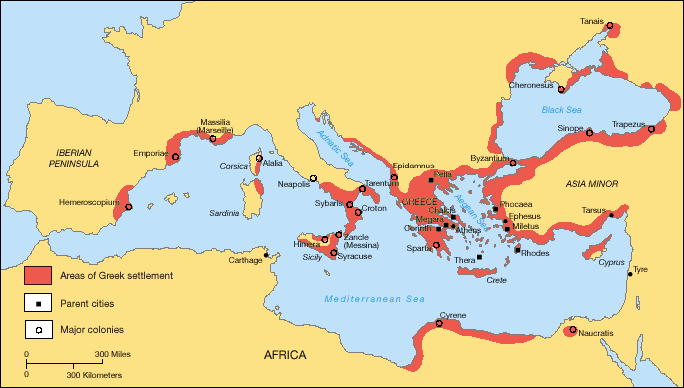
What is fascinating is the situation of the expansion of the Greek settlements in the Mediterranean. The Greeks were genuine cosmopolitan traders who transmitted culture and surely their haplogroups. You can see all the shores of today's Albania (and much in the land) is in this image under the Greek colonies. Many Albanians today carry Greek haplogroups. The same is the situation with Italians, Spaniards, French, Egyptians, Ukrainians, Turks, etc., even the Russians!

Colonies05.png
 
EDIT: This is also premature to say. R1b-BY611, which stems from R1b-Z2103, has a TMRCA of ~3200 ybp, and it's most common in the western Balkans. Furthermore, some historians state that Illyrians or Proto-Illyrians descent from the Vucedol culture, where R1b-Z2103 was found.

R1b-Z2103 (Balkanic and Asian branch in Eupedia) is widespread in Caucasus, parts of Russia, Europe etc. In the Balkans and beyond R1b-Z2103 is associated with Thracian, especially Dacians/Free Dacians. Yes they could brought everywhere around Balkans, Italy etc. It is interesting but requires another topic, not to burden this topic.

Vucedol culture is neither proto-Illyrian nor Illyrian. Serbian scholar Bogdan Brukner thought that it was proto-Illyrian but this thinking is obsolete. Because this culture was between 3000-2200 BC. Proto-Illyrians entered in the Balkans 2000 BC.
 
R1b-Z2103 (Balkanic and Asian branch in Eupedia) is widespread in Caucasus, parts of Russia, Europe etc. In the Balkans and beyond R1b-Z2103 is associated with Thracian, especially Dacians/Free Dacians. Yes they could brought everywhere around Balkans, Italy etc. It is interesting but requires another topic, not to burden this topic.

Vucedol culture is neither proto-Illyrian nor Illyrian. Serbian scholar Bogdan Brukner thought that it was proto-Illyrian but this thinking is obsolete. Because this culture was between 3000-2200 BC. Proto-Illyrians entered in the Balkans 2000 BC.

R1b-Z2103 has been found in Yamnaya culture.
 
Could Thessaly be the homeland of the proto-greeks ?

9780691029511.png


From the "Coming of the Greeks" by Robert Drews, the book has its flaws (based on older research?), but I like his argument from mythology and linguistics that Thessaly was the homeland of the proto-greeks.

"The argument is based on linguistics and on the Greek myths. The latter make Thessaly something of an Hellenic cradle. Here the original Hellas was located, and it was here that Prometheus begat Deucalion, Deucalion begat Hellen, and Hellen begat Aeolus, Dorus, and Xuthus. Despite Nilsson's arguments to the contrary, it is evident that a great many myths have Thessalian connections, and that some must have originated in Thessaly"

"(for example, the Titanomachy, the battle between the Lapiths and the Centaurs, the expedition of the Argonauts). It is from Thessaly that many of the heroic genealogies proceed, and, of course, it was Thessaly's Mt. Olympus that the Greeks regarded as the home of the gods."

"Linguistic considerations are also pertinent. The differentiation of North Greek from the South Greek dialect of the Linear B tablets shows clearly enough that by 1200 B.C., Greek had for several centuries been spoken in the lands north of the "Mycenaean" zone. Perhaps one can go further. A detailed analysis of the dialectal evidence led Wyatt to the conclusion that Thessaly was linguistically the most conservative area of Greece, a residual area from which rather than to which Greek speakers moved. He therefore assumed "that the PG [ProtoGreek] world was restricted to Thessaly, though it may not have embraced all of Thessaly," and he suggested that South Greek arose when some of the Proto-Greek speakers "moved away from Thessaly and established colonies elsewhere in the south of Greece."

"There is, then, some reason to believe that the great Thessalian plain (far and away the largest plain in all of Greece) was the initial destination of the PIE speakers who came to the Greek mainland, and that from Thessaly the PIE speakers went on to subjugate the plains further to the south."

"If Thessaly was the original "home of the heroes," we would expect to find that during the Mycenaean Age there was a greater concentration of Greek speakers in Thessaly than elsewhere. Unusually good evidence to that effect comes from what is widely regarded as the earliest extant piece of Greek literature: the Catalog of the Ships, in the second book of the Iliad. In the catalog, which seems to have been composed when the geography of Mycenaean Greece was still a living memory, almost one-quarter of the Achaeans' ships (280 of 1186) come from Thessaly (in contrast, only 50 come from Attica, 40 from Euboea, 80 from Boeotia, 80 from all of Crete). We may say with some confidence that early in the Dark Age the Greeks recalled that during the Age of the Heroes, more warriors had lived in Thessaly than anywhere else
"
Fun fact: E-V13 in Greece is highest in Thessaly https://www.eupedia.com/forum/threa...-origin/page11?p=495469&viewfull=1#post495469

Haplogroup-E-V13.gif
 
@Ironside

The city of Larissa in Thessaly was inhabited by Pelasgians ( Not Greeks linguistically )

Herodotus
“ἥντινα δὲ γλῶσσαν ἵεσαν οἱ Πελασγοί, οὐκ ἔχω ἀτρεκέως εἰπεῖν… ἦσαν οἱ Πελασγοὶ βάρβαρον γλῶσσαν ἱέντες”

[What language however the Pelasgians used to speak I am not able with certainty to say… the Pelasgians used to speak a Barbarian language]

Homer
“Ἱππόθοος δ᾽ ἄγε φῦλα Πελασγῶν ἐγχεσιμώρων
τῶν οἳ Λάρισαν ἐριβώλακα ναιετάασκον·”


[Hypothecs from Larissa, for her soil
Far-famed, the spear-expert Pelasgians brought.]


E-V13 is high in Thessaly,
but it's peak is in north Albania and Kosovo,
(less influenced from migrations than Thessaly probably)
And according to the rules of phonology the Greek letter TH ( θ ) in the rest IE languages is DH ( δ )
THessaly / DHessaly - ''dhe'' = earth,ground,soil,land, etc. Alb
An etymology that derives from Greek authors of course but it makes sense as well.

 
@ moderators,

Plz remove this stupid Albanian propaganda,

it is all mistaken,
and all he wants to provoke with just nonsenses to make impressions,
as you will bellow it is not only stupid,
but fake, inaccurate, false, non scientific,

just like every post he posted before in another thread,


@ LAB

stop reading science fiction bokks,
they do harm your brain,

Thessaly and Phthia is the same,

Θεσσαλια και Φθια εν και το αυτο

Θεσσαλια = Θεσις + (Σ)Αλς= εκει που ειναι η θαλασσα = sea area, POSITION OF SEA
Φθια = εκει που φθινει χανετε, = there were sea and dry land are lost POSITION WHICH REDUCES


and Again you tell us nothing,

Only in your mind such decedence theories,


you just want to destroy every serious linguistic thread with crup book stories,

your post is like the bellow commercial of middle 1900's


3_736.jpg


You are so DUMB THAT YOU BELIEVE THAT ALBANIANS ARE PELASGIANS
A STUPID THEORY MADE BY GREEKS AT EARLY 1900's
JUST TO BRING FRIENDSHIP AMONG 2 NATIONS.

LOOK WHAT YOU WRITE

The city of Larissa in Thessaly was inhabited by Pelasgians ( Not Greeks linguistically )


BUT DO YOU KNOW HOW MANY LARISSAS EXIST IN GREECE AND WERE WHERE THE OTHERS?

Keep smoking,
it does good not only your throat,
but your brain also

IT DOES SO GOOD TO YOUR BRAIN THAT YOU CAN NOT UNDERSTAND THE DIFFERENCE AMONG LARISSA AND LARISA

look what you post Ignorant

Homer
“Ἱππόθοος δ᾽ ἄγε φῦλα Πελασγῶν ἐγχεσιμώρων
τῶν οἳ Λάρισαν ἐριβώλακα ναιετάασκον·”


[Hypothecs from Larissa, for her soil
Far-famed, the spear-expert Pelasgians brought.]


BUT YOU ARE SO DUMB AND IGNORANT,
AND THE THEORY THAT ALBANIANS ARE PELASGIANS THAT YOU DO NOT SEE INFRONT YOUR EYE,

THIS LARISA ΛΑΡΙΣΑΙΑ OF HOMER IS NOT IN THESSALY
BUT IN TROY

THIS LARISA

https://en.wikipedia.org/wiki/Larisa_(Troad)

Ιπποθοος

1) Son of Priamos King of Troy
2) Son of Ledes a Pelasgian killed by Aias Telamonios

So stop posting crup from your mind,
just to promote your agenda.

you become already ridiculous by mixing the Hellespontos cities, the Troyan Allies
with the Mycenean and Myrmidonean ones,

notice Ομηρου Ιλιας Iliad Β 835-845, the sentnces you used at your post
Ἄσιος Ὑρτακίδης ὃν Ἀρίσβηθεν φέρον ἵπποι
αἴθωνες μεγάλοι ποταμοῦ ἄπο Σελλήεντος.
Ἱππόθοος δ’ ἄγε φῦλα Πελασγῶν ἐγχεσιμώρων 840
τῶν οἳ Λάρισαν ἐριβώλακα ναιετάασκον:

τῶν ἦρχ’ Ἱππόθοός τε Πύλαιός τ’ ὄζος Ἄρηος,
υἷε δύω Λήθοιο Πελασγοῦ Τευταμίδαο.
αὐτὰρ Θρήϊκας ἦγ’ Ἀκάμας καὶ Πείροος ἥρως

ὅσσους Ἑλλήσποντος ἀγάρροος ἐντὸς ἐέργει. 845


These the allies of Troyans from minor area near Hellespontos,
Σελληεντος is the city of Abydos
Larisa is Larisa of Asia minor etc etc


PS
Gods blind the psycopath, and bring madness to those who pass the limit, insulting abuse opprobrium (υβρις) the Gods, μωρια ερχετε (stupidity comes)

just pathetic,unable to see even your nose infront of you
Pseudoscience, and false data is what you post many posts now,

PS2
Latin comes from Albanian
terra may also come from Albanian Dhe = terra
Oh and Baltic also comes from Albanian
-dawa also comes from Albanian Dhe = dava
offcourse Albanian is mother of all IE languages to you? Greek Latin Baltic sprung from Albanian, correct LAB?
How egoistic stance and post,
because only one Larissa exists today, you felt in your own mind hole,
but do you know how many existed in past?


@ ironside

I think you understand the truth, and what is going on here
 
Last edited:
@Ironside

The city of Larissa in Thessaly was inhabited by Pelasgians ( Not Greeks linguistically )

Herodotus
“ἥντινα δὲ γλῶσσαν ἵεσαν οἱ Πελασγοί, οὐκ ἔχω ἀτρεκέως εἰπεῖν… ἦσαν οἱ Πελασγοὶ βάρβαρον γλῶσσαν ἱέντες”

[What language however the Pelasgians used to speak I am not able with certainty to say… the Pelasgians used to speak a Barbarian language]

Homer
“Ἱππόθοος δ᾽ ἄγε φῦλα Πελασγῶν ἐγχεσιμώρων
τῶν οἳ Λάρισαν ἐριβώλακα ναιετάασκον·”


[Hypothecs from Larissa, for her soil
Far-famed, the spear-expert Pelasgians brought.]


E-V13 is high in Thessaly,
but it's peak is in north Albania and Kosovo,
(less influenced from migrations than Thessaly probably)
And according to the rules of phonology the Greek letter TH ( θ ) in the rest IE languages is DH ( δ )
THessaly / DHessaly - ''dhe'' = earth,ground,soil,land, etc. Alb
An etymology that derives from Greek authors of course but it makes sense as well.


Pelasgian is a meaningless term. It just means pre-"Greek speaking" people of the larger area whom the Greek speakers encountered.

Thanks to the Lazaridis paper we know their genetic composition, and we also know they weren't a very big part of the mix in the resulting population.

As for the Greek speakers, the best geneticists in the world don't know yet whether they came from the steppe down the eastern side of the Balkans into Greece, or from Anatolia. It's clear, however, that they didn't come from Albania or the western side of the Balkans, so whatever point you're trying to make with linguistics is irrelevant.

Btw, you'd better not be posting from the same IP address as Labreria, or both accounts will get a lifetime ban.
 
@Angela

I can speak Greek language and the term Pelasgian doesn't mean such a thing, In fact.. it has not a proper explanation through ancient Greek language when we take in consideration the phonetic rules.
Here's an explanation that is made along with another pre-Hellenic term such as 'Apollon'.


Apolloni-Apallo (Ἀπέλλων)
To explain the etymology, Konda deals first with the name Pelasgos. Pelasg is the synthesis of Pel-as-gai, that is pel=born, as=be-is, and g=earth. A form of “as” is also “a”; “g” is the dative form of the word “ga”-“ge” which here could be the Pelasgic “de”=earth. To support this etymology, Konda indicted that in Greek dialects, “pelasg” is translated to mean “gegenes” which means to be born from earth, autochthonous. The latter could also be said, “I am born from earth” which would be the form of “A –pel-g”. To this, in later Greek was added on (ων) and forming “ Apelgon” (Απέλων). The “g” has been dropped creating “Apellon” which is easier to say. Another form of “pell” (pjell in today’s Albanian) is “poll” which appears in the name “Apollon”, translating as “am born” but essentially meaning “am born from earth.”


Some references from ancient Hellenic historians for Pelasgians

THUCYDIDES (460?-400? B.C)
The Athenian historian Thucydides stated that before the Trojan War the lower Balkan Peninsula was not known as Hellas (Greece) but as "Pelasgicum," which explains why the eighth century poet Homer never referred to Hellenes, but rather to Danaans, Argives and Achaeans (Thu- cydides 1959, 1:3). These were all Pelasgian tribes. The legendary founder of ancient Greece or Hellas was Hellen, who is supposed to have lived in the late eighth century B.c. Thucydides also wrote that the Pelasgians once inhabited Athens and that the massive stone construction under the (4:109) citadel at Athens was Pelasgian (2:17). He clearly distinguished between the Greeks and the neighboring Epirotes, referring to the "Chaonians and other neighboring barbarians (2:68), also to a thousand "barbarians," Chaonians, besides Thesprotians and Molossians, who once aided the warriors of Corinth (2:80).


HERODOTUS (485?-425? B c.)
The Greek historian Herodotus was called the father of history and had a great deal to say about the Pelasgians. First, their territory. The entire territory later called Greece was first called Pelasgia (Herodotus 1942, 2:56). These Pelasgians had lived in Samothrace, the island just north of Troy, before they came to Attice (2:51). In northwestern Peloponnesus the Ionians "inhabited the land now called Achaea and were called, according to the Greek account Aegialean Pelasgi, or Pelasgi of the Sea Shore"; afterwards they were called lonians (7:94). The Islanders were a Pelasgian race who in later times took the name lonians. The Aeolians too were anciently called Pelasgians (7:95). Their language was different from Greek. The original Athenians were Pelasgians who spoke the ''barbarous'' Pelasgian language (1:57). Herodotus wrote that Pelasgians living on the island of Lemnos opposite Troy once kidnapped Hellenic women of Athens for wives,but the Athenian women created a crisis by teaching their children ''the language of Attica'' instead of that of the Pelasgian boys (6:138). Herodotus wrote that the Pelasgians spoke a language unlike that of any of their neighbors (1:57). The Pelasgians antedated the Greeks in what was later called Greece. Herodotus characterized the Hellenic Athenians as ''excessively migratory'' but stated that "the Pelasgians or Lacedaemons" had always been there (1:56). Significantly enough, he undentified the Spartans as Pelasgians rather than Greeks. The Hellenic race increased because numerous tribes of barbarians voluntarily entered their ranks (1:58). In Achaia, in northernmost Peloponnesus, the Molossians and Arcadian Pelasgians were recognized as ''distinct tribes'' (1:146). But the inhabitants of the peninsula were eventually driven from their homes by the invading Dorians, only in Arcadia did the natives remain, not being compelled to migrate (2:171) Repeatedly, Herodotus identified the Spartans as Pelasgians associating them with the drama of Troy. Argos was then preeminent above all the states which would later be known as Hellas (1:1). A series of kidnappings culminated in that of Helen of Argos (1:3), a Lacedaemo- nian girl from Sparta (1:4). During the reign of Croesus, about 550 B.c., the Pelasgian Spartans were still masters of most of Peloponnesus and "held first rank in Greece" (1:69). Herodotus noted that barbarians throughout Greece but "especially the Lacedaemonians disparaged the tradesman and onored the warrior (2:167), which again would identify the Spartan as a barbarian rather than a Greek. One fascinating expression occurred again again in Iliad, "the flowing haired Achaeans." Herodotus wrote that at the mountain pass of Thermopylae the night before meeting the Persian hordes (481 B.c.) a Persian spy had noted the Spartan warriors ceremoniously "combing their long hair." When he reported back that the enemy soldiers seemed rather effeminate, a more knowledgeable interpreter warned the Persians that , "it is their custom when they are about to hazard their lives, to adorn their heads with care.. This is the first kingdom and town in Greece, and these are the bravest men'' (7:208-9). Leonidas and his 300 Spartans fought to the very last man. The monument erected where they fell bears the inscription, "Go, stranger. and to Lacedaemon tell that here, obeying her behests, we fell'' (7:228). We shall note again and again that Greek historians and geograph ers and writers insisted on the distinction between the original Pelasgians and their rivals the Hellenic Greek newcomers. They also identified the Spartans as Pelasgians rather than Greeks. Traditional "Greek" history may be rewritten some dat, but that lies quite beyond this present work.

HoMER (EIGHTH CENTURY B.c.)
The blind poet Homer has left us two magnificent epic poems unifying traditions passed down orally more than 500 years. His first, the Iliad, was probably composed about 750 B.c Without introduction, it plunges the reader into the camp of Achilles, who was besieging the city of Troy in northwest Asia Minor, a city which controlled the Hellespont. Gradually it is learned that Agamemnon, king of Mycenae, and his brother Menelaus ing of Sparta, had married two sisters from Sparta. Paris, son of King Priam of Troy, had abducted one of them, the beautiful Helen, wife of Menelaus. The two brothers summoned the princes of the region to join them in war against Troy. Thousands of Pelasgian warriors espoused the cause of their kinsmen and sailed to Troy. Helen's was the "face that launched a thousand ships," 1,200 according to Thucydides (1:10) The siege dragged on for ten years. In single combat Hector, oldest son of Troy's King Priam, killed Patroclus, Achilles' dearest friend. Achilles swore vengeance and killed Hector in single combat. The Iliad closes with the mourning and funeral for Hector conducted by the Trojans. Who were these heroes of the Iliad? Priam, king of Troy, was named a descendant of Dardanos (3 7:89). Dardanos was the first king of Troy, and he originally named the city Dardania (20:215-18). So Priam and his people were called Dardanians, sons and daughters of Dardanos (18:230). This Indo-European people migrated westward into Asia Minor and became closely identified with Troy (7:88), one of its gates being called the "Dardanian Gate" (5:66). The nearby strait to the Balkans became known as the Dardanelles, and still further west the Albanian region Kosova was anciently called Dardania. Listed as allies of the Trojans were the "noble Pelasgoi" (10:130), probably the same fighters called elsewhere the "rough Pelasgians from Larissa's rich plowland" (2:811-12). But strangely enough the other protagonists in this Trojan drama were also Pelasgians. The beautiful Helen, kidnapped by Paris, was actually Helen of Pelasgian Argos (2:21-22; 7:88), the wife of Menelaus, king of Pelasgian Sparta. Commander-in-chief of the expedition was Agamemnon, king of Mycenae, often associated with neighboring Argos (1:2). Serving in the army of Agamemnon were the brothers of Helen, the family originating in Lacedaemon (3:36-37, 41), the powerful Pelasgian military city also called Sparta. Then there was the legendary Achilles, king of the Myrmidons (1:61; 9:109; 18:229) in Thessaly, son of the early and great Pelasgian chieftain Peleus. The Aeolians, Ionians and Dorians are never mentioned by Homer, but the besieging troops are repeatedly addressed as Achaeans, or Argives or Danaans. Who were these? Achaea was the province on the northern border of Pelasgian Mycenae. The Argives were natives of Pelasgian Argos. Danaans were so named after Danaus, the early king of Argos. Although some Trojan allies did speak other tongues (4:49) it ears that the classic heroes both within and outside the walls of Troy were Pelasgians rather than Greeks. They all conversed readily in the same language; they venerated the same heroes; they shared the same expertise in breeding and training horses; they had the same augurs consulting the same gods; they practiced the same religious sacrifices and prayers; and they followed the same traditions and manners such as burial customs. One expressed it this way, "Homer immortalized the homogeneity of their speech and culture" (Adamidi 1903, 9). Within the walls and outside the walls, those Trojan heroes were all Pelasgians, not Greeks.
Homer's second epic poem was the Odyssey, written somewhat later probably about 725 B.c. The Pelasgian hero Achilles had died, struck in the heel by an arrow. His son Pyrrhus Neoptolemy immediately took his place at the siege of Troy. Eventually, by the stratagem of the Trojan Horse, they captured the city and utterly destroyed it. King Priam and most of his men were killed, all the women being carried away into slavery. The legendary date for the fall of Troy was about 1184 B.c. The Odyssey narrated the ten-year wanderings of Ulysses or Odysseus, another hero of the siege, as he attempted to rejoin his family and resume his rule as king of Ithaca. This was one of the small Ionian islands of the west coast of Greece. Herodotus identified the lonians as Pelasgians (Herodotus 1942, 7:94-95). The Odyssey gives further evidence of this as it pictures Ulysses consulting the Pelasgian oracle at Dodona when he needed counsel (19:340). Furthermore his army friend King Menelaus offered to make Ulysses ruler over ''Pelasgian Argos" (4:233-38). Mentioning Pelasgian colonies on Crete, Ulysses later told his faithful wife Penelope of the "bold Pelasgi" natives, the Dorians and Achaeans, and King Minos who each ninth year consulted Jove in his sanctuary (19:201-7) Homer's seeming preoccupation with the Pelasgian origin of his heroes may well support Strabo's theorizing about the blind poet's own Pelasgian background. Certainly, scholars are agreed that although these epic poems were transmitted to us in the Greek language, the text did include many curious expressions and constructions traceable to the earlier Pelasgian language. In fact, Gounaris in his "Introduction to Indo-European" even theorized that the name Homer derived from the Pelasgian expression of compassion for a blind man: Ho imjer (o, the poor man (Liria June 1985,7)


And thanks to Luigi Cavali Sforza we know this
''A new treatment of the problem has been given in a still unpublished analysis (Piazza et al., but see Cavalli-Sforza, 2000 where main results are anticipated) of a set of lexical data (200 words) in 63 Indo-European languages published by Dyen et al. (1992). From a linguistic distance matrix whose elements are the fraction of words with the same lexical root for any pair of languages and its transformation to make the matrix elements proportional to time of differentiation, we were able to reconstruct a linguistic tree. The root of the tree separates Albanians from the others, with a reproducibility rate (the error in reconstructing the tree) of 71 percent. The next oldest branch is Armenian. The simplest interpretation is that the language of the first migrant Anatolian farmers survives today in two direct descendants, Albanian and Armenian, which diverged from the oldest pre-Indo-European languages in different directions but remained relatively close to the point of origin.''


p.s The forum has a report button which you can use if you think I'm 'Laberia' .. :)
 
@ Yetos

What I'm posting are from Greek authors of 19th century and even early 20th, they are all true and easy to understand, it just needs you to speak Albanian language, I'm sure though that your grandfathers spoke Albanian - Arvanitika, it was the language of Athens & Pelopponesus ( Morea ) just 100 years ago, so you can get some advise easily i think.
Angela was curious about where Greeks came from, the answer is that they always been there, they just changed their language and the whole world is frustrated now preventing them to understand that Albanians ( 40% E-V13 in North ) and Greeks ( Of Attica - Pelopponesus - Thessalia ) are of the same origin, and spoke the same language even 100 years ago.
Otherwise how can you explain that in a village 12 miles outside of Athens the pupils and their parents did not even knew a single word of Greek language?


simple image hosting

p.s It's just a forum and you don't have to be frustrated and angry with someone else's point of view,
personally if i don't understand something i just read more. ;)
 
@Angela

I can speak Greek language and the term Pelasgian doesn't mean such a thing, In fact.. it has not a proper explanation through ancient Greek language when we take in consideration the phonetic rules.
Here's an explanation that is made along with another pre-Hellenic term such as 'Apollon'.


Apolloni-Apallo (Ἀπέλλων)
To explain the etymology, Konda deals first with the name Pelasgos. Pelasg is the synthesis of Pel-as-gai, that is pel=born, as=be-is, and g=earth. A form of “as” is also “a”; “g” is the dative form of the word “ga”-“ge” which here could be the Pelasgic “de”=earth. To support this etymology, Konda indicted that in Greek dialects, “pelasg” is translated to mean “gegenes” which means to be born from earth, autochthonous. The latter could also be said, “I am born from earth” which would be the form of “A –pel-g”. To this, in later Greek was added on (ων) and forming “ Apelgon” (Απέλων). The “g” has been dropped creating “Apellon” which is easier to say. Another form of “pell” (pjell in today’s Albanian) is “poll” which appears in the name “Apollon”, translating as “am born” but essentially meaning “am born from earth.”


Some references from ancient Hellenic historians for Pelasgians

THUCYDIDES (460?-400? B.C)
The Athenian historian Thucydides stated that before the Trojan War the lower Balkan Peninsula was not known as Hellas (Greece) but as "Pelasgicum," which explains why the eighth century poet Homer never referred to Hellenes, but rather to Danaans, Argives and Achaeans (Thu- cydides 1959, 1:3). These were all Pelasgian tribes. The legendary founder of ancient Greece or Hellas was Hellen, who is supposed to have lived in the late eighth century B.c. Thucydides also wrote that the Pelasgians once inhabited Athens and that the massive stone construction under the (4:109) citadel at Athens was Pelasgian (2:17). He clearly distinguished between the Greeks and the neighboring Epirotes, referring to the "Chaonians and other neighboring barbarians (2:68), also to a thousand "barbarians," Chaonians, besides Thesprotians and Molossians, who once aided the warriors of Corinth (2:80).


HERODOTUS (485?-425? B c.)
The Greek historian Herodotus was called the father of history and had a great deal to say about the Pelasgians. First, their territory. The entire territory later called Greece was first called Pelasgia (Herodotus 1942, 2:56). These Pelasgians had lived in Samothrace, the island just north of Troy, before they came to Attice (2:51). In northwestern Peloponnesus the Ionians "inhabited the land now called Achaea and were called, according to the Greek account Aegialean Pelasgi, or Pelasgi of the Sea Shore"; afterwards they were called lonians (7:94). The Islanders were a Pelasgian race who in later times took the name lonians. The Aeolians too were anciently called Pelasgians (7:95). Their language was different from Greek. The original Athenians were Pelasgians who spoke the ''barbarous'' Pelasgian language (1:57). Herodotus wrote that Pelasgians living on the island of Lemnos opposite Troy once kidnapped Hellenic women of Athens for wives,but the Athenian women created a crisis by teaching their children ''the language of Attica'' instead of that of the Pelasgian boys (6:138). Herodotus wrote that the Pelasgians spoke a language unlike that of any of their neighbors (1:57). The Pelasgians antedated the Greeks in what was later called Greece. Herodotus characterized the Hellenic Athenians as ''excessively migratory'' but stated that "the Pelasgians or Lacedaemons" had always been there (1:56). Significantly enough, he undentified the Spartans as Pelasgians rather than Greeks. The Hellenic race increased because numerous tribes of barbarians voluntarily entered their ranks (1:58). In Achaia, in northernmost Peloponnesus, the Molossians and Arcadian Pelasgians were recognized as ''distinct tribes'' (1:146). But the inhabitants of the peninsula were eventually driven from their homes by the invading Dorians, only in Arcadia did the natives remain, not being compelled to migrate (2:171) Repeatedly, Herodotus identified the Spartans as Pelasgians associating them with the drama of Troy. Argos was then preeminent above all the states which would later be known as Hellas (1:1). A series of kidnappings culminated in that of Helen of Argos (1:3), a Lacedaemo- nian girl from Sparta (1:4). During the reign of Croesus, about 550 B.c., the Pelasgian Spartans were still masters of most of Peloponnesus and "held first rank in Greece" (1:69). Herodotus noted that barbarians throughout Greece but "especially the Lacedaemonians disparaged the tradesman and onored the warrior (2:167), which again would identify the Spartan as a barbarian rather than a Greek. One fascinating expression occurred again again in Iliad, "the flowing haired Achaeans." Herodotus wrote that at the mountain pass of Thermopylae the night before meeting the Persian hordes (481 B.c.) a Persian spy had noted the Spartan warriors ceremoniously "combing their long hair." When he reported back that the enemy soldiers seemed rather effeminate, a more knowledgeable interpreter warned the Persians that , "it is their custom when they are about to hazard their lives, to adorn their heads with care.. This is the first kingdom and town in Greece, and these are the bravest men'' (7:208-9). Leonidas and his 300 Spartans fought to the very last man. The monument erected where they fell bears the inscription, "Go, stranger. and to Lacedaemon tell that here, obeying her behests, we fell'' (7:228). We shall note again and again that Greek historians and geograph ers and writers insisted on the distinction between the original Pelasgians and their rivals the Hellenic Greek newcomers. They also identified the Spartans as Pelasgians rather than Greeks. Traditional "Greek" history may be rewritten some dat, but that lies quite beyond this present work.

HoMER (EIGHTH CENTURY B.c.)
The blind poet Homer has left us two magnificent epic poems unifying traditions passed down orally more than 500 years. His first, the Iliad, was probably composed about 750 B.c Without introduction, it plunges the reader into the camp of Achilles, who was besieging the city of Troy in northwest Asia Minor, a city which controlled the Hellespont. Gradually it is learned that Agamemnon, king of Mycenae, and his brother Menelaus ing of Sparta, had married two sisters from Sparta. Paris, son of King Priam of Troy, had abducted one of them, the beautiful Helen, wife of Menelaus. The two brothers summoned the princes of the region to join them in war against Troy. Thousands of Pelasgian warriors espoused the cause of their kinsmen and sailed to Troy. Helen's was the "face that launched a thousand ships," 1,200 according to Thucydides (1:10) The siege dragged on for ten years. In single combat Hector, oldest son of Troy's King Priam, killed Patroclus, Achilles' dearest friend. Achilles swore vengeance and killed Hector in single combat. The Iliad closes with the mourning and funeral for Hector conducted by the Trojans. Who were these heroes of the Iliad? Priam, king of Troy, was named a descendant of Dardanos (3 7:89). Dardanos was the first king of Troy, and he originally named the city Dardania (20:215-18). So Priam and his people were called Dardanians, sons and daughters of Dardanos (18:230). This Indo-European people migrated westward into Asia Minor and became closely identified with Troy (7:88), one of its gates being called the "Dardanian Gate" (5:66). The nearby strait to the Balkans became known as the Dardanelles, and still further west the Albanian region Kosova was anciently called Dardania. Listed as allies of the Trojans were the "noble Pelasgoi" (10:130), probably the same fighters called elsewhere the "rough Pelasgians from Larissa's rich plowland" (2:811-12). But strangely enough the other protagonists in this Trojan drama were also Pelasgians. The beautiful Helen, kidnapped by Paris, was actually Helen of Pelasgian Argos (2:21-22; 7:88), the wife of Menelaus, king of Pelasgian Sparta. Commander-in-chief of the expedition was Agamemnon, king of Mycenae, often associated with neighboring Argos (1:2). Serving in the army of Agamemnon were the brothers of Helen, the family originating in Lacedaemon (3:36-37, 41), the powerful Pelasgian military city also called Sparta. Then there was the legendary Achilles, king of the Myrmidons (1:61; 9:109; 18:229) in Thessaly, son of the early and great Pelasgian chieftain Peleus. The Aeolians, Ionians and Dorians are never mentioned by Homer, but the besieging troops are repeatedly addressed as Achaeans, or Argives or Danaans. Who were these? Achaea was the province on the northern border of Pelasgian Mycenae. The Argives were natives of Pelasgian Argos. Danaans were so named after Danaus, the early king of Argos. Although some Trojan allies did speak other tongues (4:49) it ears that the classic heroes both within and outside the walls of Troy were Pelasgians rather than Greeks. They all conversed readily in the same language; they venerated the same heroes; they shared the same expertise in breeding and training horses; they had the same augurs consulting the same gods; they practiced the same religious sacrifices and prayers; and they followed the same traditions and manners such as burial customs. One expressed it this way, "Homer immortalized the homogeneity of their speech and culture" (Adamidi 1903, 9). Within the walls and outside the walls, those Trojan heroes were all Pelasgians, not Greeks.
Homer's second epic poem was the Odyssey, written somewhat later probably about 725 B.c. The Pelasgian hero Achilles had died, struck in the heel by an arrow. His son Pyrrhus Neoptolemy immediately took his place at the siege of Troy. Eventually, by the stratagem of the Trojan Horse, they captured the city and utterly destroyed it. King Priam and most of his men were killed, all the women being carried away into slavery. The legendary date for the fall of Troy was about 1184 B.c. The Odyssey narrated the ten-year wanderings of Ulysses or Odysseus, another hero of the siege, as he attempted to rejoin his family and resume his rule as king of Ithaca. This was one of the small Ionian islands of the west coast of Greece. Herodotus identified the lonians as Pelasgians (Herodotus 1942, 7:94-95). The Odyssey gives further evidence of this as it pictures Ulysses consulting the Pelasgian oracle at Dodona when he needed counsel (19:340). Furthermore his army friend King Menelaus offered to make Ulysses ruler over ''Pelasgian Argos" (4:233-38). Mentioning Pelasgian colonies on Crete, Ulysses later told his faithful wife Penelope of the "bold Pelasgi" natives, the Dorians and Achaeans, and King Minos who each ninth year consulted Jove in his sanctuary (19:201-7) Homer's seeming preoccupation with the Pelasgian origin of his heroes may well support Strabo's theorizing about the blind poet's own Pelasgian background. Certainly, scholars are agreed that although these epic poems were transmitted to us in the Greek language, the text did include many curious expressions and constructions traceable to the earlier Pelasgian language. In fact, Gounaris in his "Introduction to Indo-European" even theorized that the name Homer derived from the Pelasgian expression of compassion for a blind man: Ho imjer (o, the poor man (Liria June 1985,7)


And thanks to Luigi Cavali Sforza we know this
''A new treatment of the problem has been given in a still unpublished analysis (Piazza et al., but see Cavalli-Sforza, 2000 where main results are anticipated) of a set of lexical data (200 words) in 63 Indo-European languages published by Dyen et al. (1992). From a linguistic distance matrix whose elements are the fraction of words with the same lexical root for any pair of languages and its transformation to make the matrix elements proportional to time of differentiation, we were able to reconstruct a linguistic tree. The root of the tree separates Albanians from the others, with a reproducibility rate (the error in reconstructing the tree) of 71 percent. The next oldest branch is Armenian. The simplest interpretation is that the language of the first migrant Anatolian farmers survives today in two direct descendants, Albanian and Armenian, which diverged from the oldest pre-Indo-European languages in different directions but remained relatively close to the point of origin.''


p.s The forum has a report button which you can use if you think I'm 'Laberia' .. :)


oh boy
the man after all this crap, inaccurate, false, and lies, he posted before
he continues, with false linguistic, facultated crap,
AND HE BELIEVES HE KNOWS GREEK.


Just pathetic,
just post for impression,
like some protestants, who are stuck in one word, losing the book.
only he stuck in a stupid idea, and with false linguistic he believes he can cheat us

a quote,

Apolloni-Apallo (Ἀπέλλων)
To explain the etymology, Konda deals first with the name Pelasgos. Pelasg is the synthesis of Pel-as-gai, that is pel=born, as=be-is, and g=earth. A form of “as” is also “a”; “g” is the dative form of the word “ga”-“ge” which here could be the Pelasgic “de”=earth. To support this etymology, Konda indicted that in Greek dialects, “pelasg” is translated to mean “gegenes” which means to be born from earth, autochthonous. The latter could also be said, “I am born from earth” which would be the form of “A –pel-g”. To this, in later Greek was added on (ων) and forming “ Apelgon” (Απέλων). The “g” has been dropped creating “Apellon” which is easier to say. Another form of “pell” (pjell in today’s Albanian) is “poll” which appears in the name “Apollon”, translating as “am born” but essentially meaning “am born from earth.”


and he knows Greek,

Maybe the word Pel-ma means also Born from Ma?
The stupidity continues
Πελ μα = the flat underneath of the foot, the
Πελ αγος =a Greek word for the Flat surface of endless sea
etc etc

@LAB

I feel sorry for you,
you believe that you are a Pelasgian?
and someone wake you from your dream,
you build facultated theories, and used even false data
just to live your dream.

Your ignorance is revealed at post #48 and in many many others before,

PS
at least decide, what are you? Illyrian or Pelasgian,
maybe for you you are all, a Hellenas Dorieus, an Illyrian, a Pelasgian,
and then come and tell us what we are.


Homer's second epic poem was the Odyssey, written somewhat later probably about 725 B.c. The Pelasgian hero Achilles had died, struck in the heel by an arrow.

just look where the your perverted idea has driven you

you named Achilleus the king of Myrmidones and Mycenean allies
as a Pelasgian who were ally with Troyans and enemies with Myrmidones,

so in your mind Pelasgians=Myrmidones OXYMORON
ANOTHER LIE OF YOURS LIKE IN #47

i think after this post everybody understand the role and your agenda,
and how a big Liar you Are.

Goebels would envy you
 
@LAB,
I'm a great admirer of Cavalli-Sforza, but he wasn't a linguist; he was a geneticist. He followed the Anatolian theory of the Indo-European languages proposed by Rehnquist, among others, which twenty or more years of anthropology, archaeology, and genetics have proven untenable. NONE of the Indo-European languages arrived in Europe with the Neolithic farmers. They arrived much later, along with proven migrations from the east, starting around 3000 BC. The scientific and even linguistic community has moved far beyond speculations based on statements by ancient authors who had no way of knowing anything whatsoever either about genetics or linguistics. That doesn't mean that your grouping of these languages is necessarily incorrect, only the time and perhaps the direction of their arrival.

As for your essay on the term "Pelasagian", the fact that it means "autochthonous" was precisely my point in saying that it referred to "pre-Greek" speakers. You're not negating my point, you're proving it.

Please read the following papers so you can bring yourself up to speed and won't be cluttering these threads with irrelevant essays on matters which have either been disproved or cannot yet be proved.

Lazaridis et al 2014:http://www.nature.com/nature/journal...ture13673.html

Gamba et al: https://www.nature.com/articles/ncomms6257

Haak et al 2015: http://www.nature.com/nature/journal...ture13673.html

Lazaridis et al 2016:http://www.nature.com/nature/journal...ture13673.html

Iain Mathiesen et al 2015:https://www.biorxiv.org/content/early/2017/05/30/135616

Olalde et al:https://www.biorxiv.org/content/early/2017/05/30/135616

Cassidy et al:http://www.pnas.org/content/113/2/368.full

Scheuenemann et al (with Johanes Krause): https://www.ncbi.nlm.nih.gov/pmc/articles/PMC5459999/

Lazaridis et al: https://reich.hms.harvard.edu/sites/...ure23310_0.pdf

Btw, pressing the report button would be rather silly for me, since as a moderator the report would just come to me. :)

I will check the IP addresses, but that's not the only way to decide if someone is posting under two identities.

@Yetos,
Cut out the insults or I'll be forced to do something about it.
 
@ Angela


i reveal him twice in the last hour,

just read my post the truth,

he is writing simple lies for ignorants,
and he believes that we are all idiots,
he is insulting our ability to think.
 
^^This is the last time I'm going to warn you. Next time you get another infraction.

Anybody who has read respectable population genetics blogs and papers for the last ten years knows nonsense when they see it. He's not convincing anyone.

Your remedy if you think someone is posting material unsourced in academic genetics and worse, which is contradicted by science, is to clearly state so in your own post, and if it continues and may mislead newbies, your recourse is to report the post. One of the moderators will respond, as I just did. The remedy is not to start hurling insults.
 
@ Yetos

What I'm posting are from Greek authors of 19th century and even early 20th, they are all true and easy to understand, it just needs you to speak Albanian language, I'm sure though that your grandfathers spoke Albanian - Arvanitika, it was the language of Athens & Pelopponesus ( Morea ) just 100 years ago, so you can get some advise easily i think.
Angela was curious about where Greeks came from, the answer is that they always been there, they just changed their language and the whole world is frustrated now preventing them to understand that Albanians ( 40% E-V13 in North ) and Greeks ( Of Attica - Pelopponesus - Thessalia ) are of the same origin, and spoke the same language even 100 years ago.
Otherwise how can you explain that in a village 12 miles outside of Athens the pupils and their parents did not even knew a single word of Greek language?


simple image hosting

p.s It's just a forum and you don't have to be frustrated and angry with someone else's point of view,
personally if i don't understand something i just read more. ;)

@ Lab

This also from middle 1900,
A DOCTOR says that smoking is good for throat,
would you smoke today if a doctor from 1900 says to you is good for your throat?

3_736.jpg


or
you would not cause today Doctors say different things?


celebrity-smoking-ad_barbara-stanwyck-lm.jpg


or this

d07ef8009f38a3b85f800375b1071d83.jpg


At least look at this one
1950s-ad-camels-doctor.jpg


such are your sources,


yes even RONALD REAGAN (The later president?)
Tells us that smoking is good
and must send them as gift for Christmas

6a00e553a80e10883401a3fcd57538970b-800wi.png


I say to you start smoking
is good
Tyrone Power does,
Ronald reagan the President of USA also say so
even doctor say so,

these are my sources from 1900's
DO YOU TRUST THEM TODAY?
 
Btw, you'd better not be posting from the same IP address as Labreria, or both accounts will get a lifetime ban.

@LAB,
I will check the IP addresses, but that's not the only way to decide if someone is posting under two identities.
This is not true, but first of all is not serious, especially because you are a moderator in this forum.
 
@ Lab

This also from middle 1900,
A DOCTOR says that smoking is good for throat,
would you smoke today if a doctor from 1900 says to you is good for your throat?

3_736.jpg


or
you would not cause today Doctors say different things?


celebrity-smoking-ad_barbara-stanwyck-lm.jpg


or this

d07ef8009f38a3b85f800375b1071d83.jpg


At least look at this one
1950s-ad-camels-doctor.jpg


such are your sources,


yes even RONALD REAGAN (The later president?)
Tells us that smoking is good
and must send them as gift for Christmas

6a00e553a80e10883401a3fcd57538970b-800wi.png


I say to you start smoking
is good
Tyrone Power does,
Ronald reagan the President of USA also say so
even doctor say so,

these are my sources from 1900's
DO YOU TRUST THEM TODAY?

The ability to produce crap of this individual is amazing......and all because Albanians do not share Greek agenda that Epirus was where Porto-Greeks were formed.


Sent from my iPhone using Eupedia Forum
 
The ability to produce crap of this individual is amazing......and all because Albanians do not share Greek agenda that Epirus was where Porto-Greeks were formed.


Sent from my iPhone using Eupedia Forum


I do not think is the Albanians,
especislly the high or abroad educated ones,

but certain Albanian circles,
we all know who.
 
Pre-Greeks ( Pelasgians ) spoke similar language with pre-Romans ( Etruscans ) as historians of that time witnessed, but even without the statements of ancient authors we know that,

-Etruscan language is written RTL (13,000+ inscriptions)
-Lemnian (Pelasgian) language is written RTL (Lemnos steele)

Both with quite similar alphabets ''pre-Greek''

Phonology of letters in ancient Greek language from Babiniotis. http://5dim-tavrou.att.sch.gr/lexiko_bambinioti.pdf
Β=*μπ / Γ=*γκ / Δ=*ντ / Ζ=*dz / Υ= germ. *ü / Χ=*kh

Although these are not the only letters with different phonology,
Letter was also in use from Etruscans, and when we put Albanian language in the equation of
''pre-Gr'' / ''pre-Latin'' / ''early-Gr'' / ''Albanian''
then we have some interesting results, if we take in consideration that

*Θ = DH or D

*Χ = KH


-Etruscan letter ''X'' in the word Romaχ is Romakh ( Alb. Romak)
-Etruscan word ''ΧΙΜΘ'' (one hundred) becomes KHIMD or KHIND ( Alb. Qind).
-Etruscan word ''ΘU'' which is translated as ''Two'' from Z.Mayani and not ''One'' becomes DU (Alb. Dy - Gr. Dyo) Z.Mayani noticed that this word is found in more inscriptions and words starting with it, like ''ΘULUTER'' , if the meaning is ''one'' then it's not worth to mention, he linked this word with the Illyrian ''Dimalium''
suggesting that Dy=2 -Mal= mountain .Alb '' Two mountains'' and so Θuluter = Dy - lutes which means '' Two prayers''
etc,etc


Same rules on pre-Greek terms such as mythology, toponyms but even words of Greek language are again interesting when Albanian is in the equation, always *Θ = dh / d
Alb. Gr.
Dheus > Theos
Dhea > Thea
Deti > Thetis
Do > The
barDHe > parTHeno / parTHenon (= White / because of the marbles )
emaDHia > emaTHia
DHessaly > THessaly
DHesprotia > THesprotia
amalDHia > amalTHia
Dera > THira
erDHa > irTHa
enDe > anThos
Dra > THraso
etc,etc,

So Cavalli Sforza's method for Albanian as the oldest IE brunch should not be named wrong from those who have never studied Albanian.

@Yetos
ἢ τὰν ἢ ἐπὶ τᾶς - Doric
ja tan ja mbi të - Geg. Alb
 
Status
Not open for further replies.
Back
Top