Origins
Paleolithic mammoth hunters
Haplogroup R* originated in North Asia just before the Last Glacial Maximum (26,500-19,000 years before present). This haplogroup has been identified in the 24,000 year-old remains of the so-called "Mal'ta boy" from the Altai region, in south-central Siberia (Raghavan et al. 2013). This individual belonged to a tribe of mammoth hunters that may have roamed across Siberia and parts of Europe during the Paleolithic. Autosomally this Paleolithic population appears to have passed on its genes mostly to the modern populations of Europea and South Asia, the two regions where haplogroup R also happens to be the most common nowadays (R1b in Western Europe, R1a in Eastern Europe, Central and South Asia, and R2 in South Asia).
The series of mutations that made haplogroup R1* evolve into R1a probably took place during or soon after the Last Glacial Maxium. Little is know for certain about R1a's place of origin. Some think it might have originated in the Balkans or around Pakistan and Northwest India, due to the greater genetic diversity found in these regions. The diversity can be explained by other factors though. The Balkans have been subject to 5000 years of migrations from the Eurasian Steppes, each bringing new varieties of R1a. South Asia has had a much bigger population than any other parts of the world (occasionally equalled by China) for at least 10,000 years, and larger population bring about more genetic diversity. The most likely place of origin of R1a is Central Asia or southern Russia/Siberia.
From there, R1a could have migrated directly to eastern Europe (European Russia, Ukraine, Belarus), or first southward through Central Asia and Iran. In that latter scenario, R1a would have crossed the Caucasus during the Neolithic, alongside R1b, to colonise the Pontic-Caspian Steppe. In the absence of ancient Y-DNA from those regions the best evidence supporting a Late Paleolithic migration to Iran is the presence of very old subclades of R1a (like M420) in the region, notably in the Zagros mountains. However these samples only make up a fraction of all R1a in the region and could just as well represent the descendants of Eastern European hunter-gatherers who branched off from other R1a tribes and crossed from the North Caucasus any time between 20,000 and 8,000 years ago. The logic behind this is that most known historical migrations in Eurasia took place from north to south, as people sought warmer climes. The only exception happened during the Holocene warming up of the climate, which corresponds to the Neolithic colonisation of Europe from the Near East. A third possibility is that R1a tribes split in two around Kazakhstan during the Late Paleolithic, with one group moving to eastern Europe, while the other moved south to Iran.
| Did R1a come to Europe with Neolithic farmers ? |
|---|
|
Some people have theorized that R1a was one of the lineages of the Neolithic farmers, and would have entered Europe through Anatolia, then spread across the Balkans toward Central Europe, then only to Eastern Europe. There are many issues with this scenario. The first is that 99% of modern R1a descends from the branch R1a-M417, which clearly expanded from the Bronze Age onwards, not from the early Neolithic. Its phylogeny also points at an Eastern European origin. Secondly, most of the R1a in Middle East are deep subclades of the R1a-Z93 branch, which originated in Russia (see below). It could not have been ancestral to Balkanic or Central European R1a. Thirdly, there is a very strong correlation between the Northeast European autosomal admixture and R1a populations, and this component is missing from the genome of all European Neolithic farmers tested to date - even from Ötzi, who was a Chalcolithic farmer. This admixture is also missing from modern Sardinians, who are mostly descended from Neolithic farmers. This is incontrovertible evidence that R1a did not come to Europe with Neolithic farmers, but only propagated from Eastern Europe to the rest of Europe from the Bronze Age onwards.
|
Bronze Age Proto-Indo-Europeans
R1a is thought to have been the dominant haplogroup among the northern and eastern Proto-Indo-European tribes, who evolved into the Indo-Iranian, Thracian, Baltic and Slavic people. The Proto-Indo-Europeans originated in the Yamna culture (3300-2500 BCE). Their dramatic expansion was possible thanks to an early adoption of bronze weapons and the domestication of the horse in the Eurasian steppes (circa 4000-3500 BCE). Individuals from the southern part of the Steppe are believed to have carried predominantly lineages belonging to haplogroup R1b (L23 and subclades), while the people of northern forest-steppe to the north would have belonged essentially to haplogroup R1a. The first expansion of the forest-steppe people occured with the Corded Ware Culture (see Germanic branch below). The forest-steppe origin of this culture is obvious from the usage of corded pottery and the abundant use of polished battle axes, the two most prominent features of the Corded Ware culture. This is also probably the time when the satemisation process of the Indo-European languages began, considering that the Balto-Slavic and Indo-Iranian language groups belong to the same Satem isogloss and both appear to have evolved from the Catacomb and Srubna cultures.
Ancient DNA testing has confirmed the presence of haplogroup R1a-M417 in samples from the Corded Ware culture in Germany (2600 BCE), from Tocharian mummies (2000 BCE) in Northwest China, from Kurgan burials (circa 1600 BCE) from the Andronovo culture in southern Russia and southern Siberia, as well as from a variety of Iron-age sites from Russia, Siberia, Mongolia and Central Asia.
Geographic distribution
Distribution of haplogroup R1a in Europe
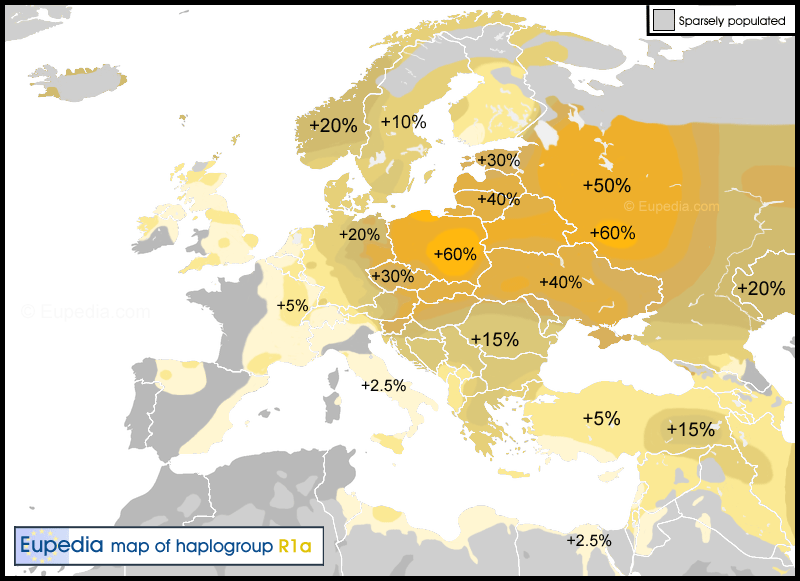
Distribution of haplogroup R1a-M458 in Europe
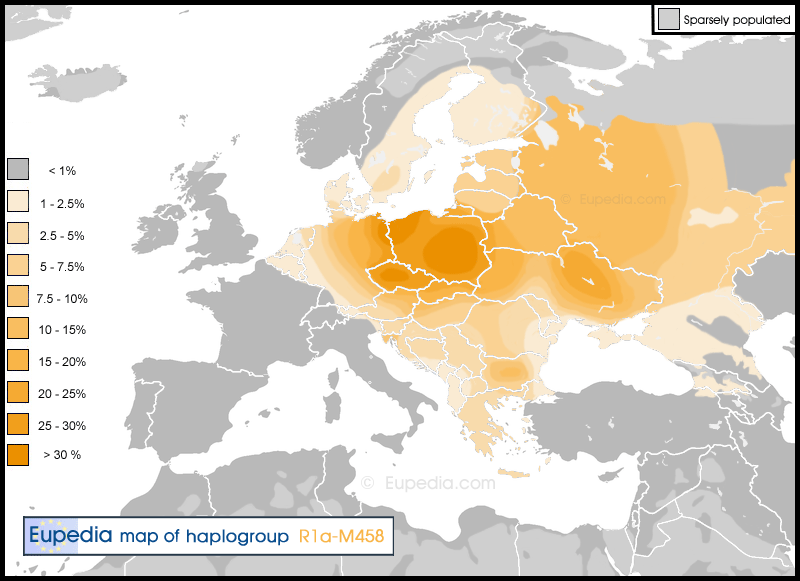
Distribution of haplogroup R1a-M558 (CTS1211) in Europe

Distribution of haplogroup R1a-Z93 in Eurasia

Nowadays, high frequencies of R1a are found in Poland (57.5% of the population), Ukraine (40 to 65%), European Russia (45 to 65%), Belarus (51%), Slovakia (42%), Latvia (40%), Lithuania (38%), the Czech Republic (34%), Hungary (32%), Norway (27%), Austria (26%), Croatia (24%), north-east Germany (24%) Sweden (19%), and Romania (18%).
Phylogeny of R1a
If you are new to genetic genealogy, please check our Introduction to phylogenetics to understand how to read a phylogenetic tree.
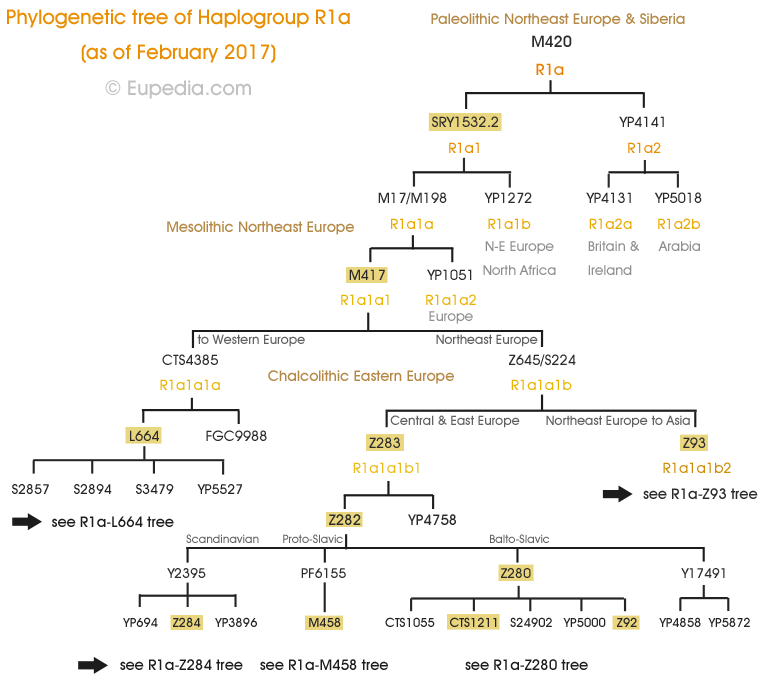
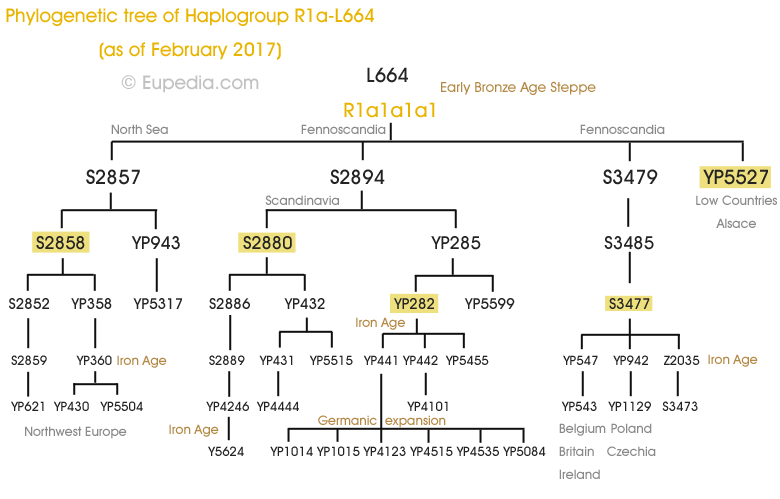
Click to enlarge

Click to enlarge

Click to enlarge

Click to enlarge

99% R1a people belong to subclades of R1a1a1 (R1a-M417), which is divided in the following subclades:
- R1a-L664 is essentially Northwest European, found chiefly in West Germany, the Low Countries and the British Isles.
- R1a-Z645 makes up the majority of R1a individuals from Central Europe to South Asia.
- R1a-Z283 is the main Central & East European branch.
- R1a-Z284 is a Scandinavian subclade with an epicentre in central Norway. It is found also in places colonised by the Norwegian Vikings, like some parts of Scotland, England and Ireland. Several subclades were identified, including L448, L176.1, Z287/Z288, Z66 and Z281 about which little is known at the moment.
- R1a-M458, primarily a Slavic subclade, with maximum frequencies in Poland, the Czech Republic, Slovakia, but is also fairly common in southeast Ukraine and northwest Russia.
- its subclade R1a-L260 is clearly West Slavic, with a peak of frequency in Poland, the Czech Republic and Slovakia, and radiating at lower frequencies into East Germany, East Austria, Slovenia and Hungary.
- R1a-Z280 is also an Balto-Slavic marker, found all over central and Eastern Europe (except in the Balkans), with a western limit running from East Germany to Switzerland and Northeast Italy. It can be divided in many clusters: East Slavic, Baltic, Pomeranian, Polish, Carpathian, East-Alpine, Czechoslovak, and so on.
- its subclade R1a-L365 is a Pomeranian cluster found also in southern Poland.
- R1a-Z93 is the main Asian branch of R1a. It is found in Central Asia, South Asia and Southwest Asia (including among Ashkenazi Jews). R1a-Z93 is the marker of historical peoples such as the Indo-Aryans, Persians, Medes, Mitanni, or Tatars. Z93 also pervaded the genetic pool of the Arabs and Jews.
- R1a-F1345 is one of the main Middle Eastern clades.
- R1a-CTS6 is the Jewish subclade of R1a, which formed 3500 years ago and has a TMRCA of 2800 years.
History of R1a
The Germanic branch
The first major expansion of R1a took place with the westward propagation of the Corded Ware (or Battle Axe) culture (2800-1800 BCE) from the northern forest-steppe in the Yamna homeland. This was the first wave of R1a into Europe, the one that brought the Z283 subclade to Germany and the Netherlands, and Z284 to Scandinavia. The Corded Ware R1a people would have mixed with the pre-Germanic I1 and I2 aborigines, which resulted in the first Indo-European culture in Germany and Scandinavia, although that culture could not be considered Proto-Germanic - it was simply Proto-Indo-European at that stage, or perhaps or Proto-Balto-Slavic.
Germanic languages probably did not appear before the Nordic Bronze Age (1800-500 BCE). Proto-Germanic language probably developed as a blend of two branches of Indo-European languages, namely the Proto-Balto-Slavic language of the Corded-Ware culture (R1a-Z283) and the later arrival of Proto-Italo-Celto-Germanic people from the Unetice culture (R1b-L11). This is supported by the fact that Germanic people are a R1a-R1b hybrid, that these two haplogroups came via separate routes at different times, and that Proto-Germanic language is closest to Proto-Italo-Celtic, but also shares similarities with Proto-Slavic.
The R1b branch of the Indo-Europeans is thought to have originated in the southern Yamna culture (northern shores of the Black Sea). It was the first one to migrate from the steppes to the west, invading the Danube delta around 4200 BCE, then making its way around the Balkans and the Hungarian plain in the 4th millennium BCE. It is likely that a minority of R1a people accompanied this migration of R1b tribes. Those R1a men would have belonged to the L664 subclade, the first to split from the Yamna core. These early steppe invaders were not a homogeneous group, but a cluster of tribes. It is possible that the R1a-L664 people were one or several separate tribes of their own, or that they mixed with some R1b tribes, notably R1b-U106, which would become the main Germanic lineage many centuries later. The R1b-R1a contingent moved up the Danube to the Panonian plain around 2800 BCE, brought to an end the local Bell Beaker culture (circa 2200 BCE) and Corded Ware culture (c. 2400 BCE) in Central Europe, and set up the Unetice culture (2300-1600 BCE) around Bohemia and eastern Germany. Unetice can be seen as the source of future Germanic, Celtic and Italic cultures, and is associated mainly with the L11 subclade of R1b.
The late Unetice culture expanded to Scandinavia, founding the Nordic Bronze Age. R1a-L664 and R1b (L11 and U106) presumably reached Scandinavia at this time. The people of the Nordic Bronze Age probably spoke a Proto-Germanic language. For over a thousand years while this culture existed, the Proto-Germanic R1b et R1a-L664 tribes would have acquired vocabulary from the pre-existing Corded Ware population that they assimilated, which was itself a blend of Proto-Balto-Slavic languages (linked to haplogroup R1a-Z284) and languages of non-Indo-European origin (linked to haplogroups G2a, I1 and I2). The Nordic Bronze Age was a melting pot of these three populations, which intermingled both genetically and linguistically, little by little creating a new ethnicity and culture as time went by.
The first genuinely Germanic language has been estimated by linguists to have come into existence around (or after) 500 BCE, just as the Nordic Bronze Age came to an end, giving way to the Pre-Roman Iron Age. The uniqueness of some of the Germanic vocabulary copared to other Indo-European languages suggests that borrowings from indigenous pre-Indo-European languages took place (Germanic substrate theory). The Celtic language itself is known to have borrowed words from Afro-Asiatic languages spoken by the descendants of Near-Eastern farmers who had settled in Central Europe. The fact that present-day Scandinavia is composed of roughly 40% of I1, 20% of R1a and 40% of R1b reinforces the idea that the Germanic ethnicity and language had acquired a tri-hybrid character by the Iron Age.
The Slavic branch
The origins of the Slavs go back to circa 3500 BCE with the northern Yamna culture and its expansion across Central and Northeast Europe with the Corded Ware culture. The M458 and Z280 lineages spread around Poland, Belarus, Ukraine and western Russia, and would form the core of the Proto-Balto-Slavic culture. The high prevalence of R1a in Baltic and Slavic countries nowadays is not only due to the Corded Ware expansion, but also to a long succession of later migrations from Russia, the last of which took place from the 5th to the 10th century CE. The Slavic branch differentiated itself when the Corded Ware culture absorbed the Cucuteni-Tripolye culture (5200-2600 BCE) of western Ukraine and north-eastern Romania, which appears to have been composed primarily of G2a-U1 et I2a1b-M423 lineages descended directly from Paleolithic Europeans, with some other Near-Eastern farmer lineages (notably E-V13, J2a and T1a). It is surely during this period that I2a2, E-V13 and T spread (along with R1a) around Poland, Belarus and western Russia, explaining why eastern and northern Slavs (and Lithuanians) have between 10 and 20% of I2a1b lineages and about 10% of Middle Eastern lineages (18% for Ukrainians).
The Corded Ware period was followed in the steppes by the Srubna culture (1800-1200 BCE), and around Poland by the Trzciniec culture (1700-1200 BCE). Mathieson et al. (2015) and Krzewinska et al. (2018) each retrieved the Y-DNA from six Srubna individuals, and all 12 of them belonged to haplogroup R1a. Those tested for deep clades were positive for Z93, the Indo-Iranian branch.
The last important Slavic migration is thought to have happened in the 6th century CE, from Ukraine to Poland, Slovakia and Slovenia, filling the vacuum left by eastern Germanic tribes who invaded the Roman Empire. Both the M458 and the Z280 branches are associated with this late Slavic migration, but more particularly Z280.
Interestingly, the Czechs do not carry much Z280, a factor that strongly differentiates them from their Slovak, Hungarian and Slovene neighbours. Czechs R1a belongs in majority to M458, with subclades such as L1029>YP1703 (TMRCA 1800 years), L260>YP256>YP654 (TMRCA 2200 years), L260>YP256>YP254>Y2905 (TMRCA 1850 years) and L260>YP1337 (TMRCA 1750 years). Other R1a clades found in the Czech Republic include Z280>Y35>CTS3402>YP237>YP951 (TMRCA 2500 years) CTS1211>Y35>YP4278 (TMRCA 1850 years), some Z92 and Z93, as well as the Germanic L664 (S3479>S3485>S3477>YP942; TMRCA 1800 years). The age of these subclades concord with the historical Slavic expansion during the Late Antiquity and Early Middle Ages.
Regional disparities also exist in ex-Yugoslavia, but among deeper clades. Bosnian and Serbian R1a belongs for the most part to a young clade of CTS1211 (Y33>CTS8816>Y3300>Y5647>YP611>YP3987>YP3992 subclade; TMRCA 950 years), with a minority of older M458 (CTS11962>L1029 subclade; TMRCA 2200 years) and Z92 (Y4459>YP617 subclade; TMRCA 3400 years). Croatian R1a falls almost exclusively within CTS1211, but to another clade (Y35>CTS3402>Y2613>Y2608 subclade, TMRCA 1950 years), with a small minority of YP340>P278.2 (TMRCA 2100 years). The R1a-Y3300 (aka L1280) found in Serbia and Bosnia seems to have expanded from Poland via Hungary during the early medieval period. The Croatian R1a-Y2608 also expanded from Poland during the same period, but via Czechia, Slovakia, Austria and Slovenia.
Bulgarian R1a is very diverse in comparison to Dinaric R1a. Subclades equally divided between M458 (mostly the pan-Slavic L1029 subclade) and Z280, but with a huge diversity within the latter, (Y33>CTS8816, YP237>YP235>L366, YP343>YP39082>YP340, Z92>YP617 and Z92>Z685). There is also a little bit of very old R1a-M198 (M417-), and some R1a-Z93, notably the Y15121 subclade found in Iran, India and the Middle East, and which could have come with the Scythians or other Iranic steppe tribes. Little data is available for neighbouring Macedonia, but it includes at least L1029 (under M458) and L366 (under CTS1211).
Romanians have an even greater diversity of R1a clades than Bulgarians, despite not being speakers of a Slavic language. In fact, not all Romanian R1a is of Slavic origin. It includes Germanic clades (L664>S2894>YP285>YP282 and Z283), Iranian ones (Z93) and Jewish ones (CTS6). The Slavic clades represented include L1029 (under M458>CTS11962) and YP951 (under CTS1211>Y35>CTS3402>YP237>).
Historically, no other part of Europe was invaded a higher number of times by steppe peoples than the Balkans. Chronologically, the first R1a invaders might have come with the westward expansion of the Sredny Stog culture (from 4200 BCE), which led the way to a succession of steppe migrations that lasted for over 2,000 years until the end of the Yamna culture (3500-2000 BCE). These early invasions from the Steppe were probably conducted in majority by R1b men, accompanied by a small number of R1a. Then came the Thracians (1500 BCE), followed by the Illyrians (around 1200 BCE), and much later the Huns and the Alans (400 CE), the Avars, the Bulgars and the Serbs (all around 600 CE), and the Magyars (900 CE), among others. These peoples originated from different parts of the Eurasian Steppe, anywhere between Eastern Europe and Central Asia, thus contributing to the relatively high diversity of R1a subclades observed in Carpathians and the Balkans today, especially in Bulgaria and Romania. Nevertheless, the vast majority of R1a in Southeast Europe today appears to be of Slavic origin.
The Baltic branch
The Baltic branch is thought to have evolved from the Fatyanovo culture (3200-2300 BCE), the northeastern extension of the Corded Ware culture. Early Bronze Age R1a nomads from the northern steppes and forest-steppes would have mixed with the Uralic-speaking inhabitants (N1c1 lineages) of the region. This is supported by a strong presence of both R1a and N1c1 haplogroups from southern Finland to Lithuania and in northwest Russia. Saag et al. (2021) analysed the remains of 26 Bronze Age farmers from the Fatyanovo Culture and all 15 male individuals belonged to haplogroup R1a, including the subclades YP1301, M417 (x4), Z645 (x5) and Z93 (x6).
Latvian and Lithuanian clades of R1a include typical Balto-Slavic lineages like M458, CTS1211 and Z92, as well as some Ashkenazi Jewish (CTS6), Germanic (L664 and Z284) and even Indo-Iranian lineages (Z93>Z94>L657). The Balto-Slavic lineages include the following deep clades, most with a relatively recent TMRCA.
- M458
- CTS11962
- L1029
- YP417
- YP418
- YP1137 (TMRCA = 1550 ybp)
- Z280
- CTS1211
- Y35
- CTS3402
- Y33
- YP237
- YP235
- YP951
- YP1410 (TMRCA = 2500 ybp)
- YP420
- YP343
- S24902
- YP561
- YP4094 (TMRCA = 3700 ybp)
- Z92
Migration map of haplogroup R1a from the Neolithic to the late Bronze Age (c. 1000 BCE)

Click to enlarge.
The Indo-Iranian branch
Proto-Indo-Iranian speakers, the people who later called themselves 'Aryans' in the Rig Veda and the Avesta, originated in the Sintashta-Petrovka culture (2100-1750 BCE), in the Tobol and Ishim valleys, east of the Ural Mountains. It was founded by pastoralist nomads from the Abashevo culture (2500-1900 BCE), ranging from the upper Don-Volga to the Ural Mountains, and the Poltavka culture (2700-2100 BCE), extending from the lower Don-Volga to the Caspian depression.
The Sintashta-Petrovka culture, associated with R1a-Z93 and its subclades, was the first Bronze Age advance of the Indo-Europeans west of the Urals, opening the way to the vast plains and deserts of Central Asia to the metal-rich Altai mountains. The Aryans quickly expanded over all Central Asia, from the shores of the Caspian to southern Siberia and the Tian Shan, through trading, seasonal herd migrations, and looting raids.
Horse-drawn war chariots seem to have been invented by Sintashta people around 2100 BCE, and quickly spread to the mining region of Bactria-Margiana (modern border of Turkmenistan, Uzbekistan, Tajikistan and Afghanistan). Copper had been extracted intensively in the Urals, and the Proto-Indo-Iranians from Sintashta-Petrovka were exporting it in huge quantities to the Middle East. They appear to have been attracted by the natural resources of the Zeravshan valley for a Petrovka copper-mining colony was established in Tugai around 1900 BCE, and tin was extracted soon afterwards at Karnab and Mushiston. Tin was an especially valued resource in the late Bronze Age, when weapons were made of copper-tin alloy, stronger than the more primitive arsenical bronze. In the 1700's BCE, the Indo-Iranians expanded to the lower Amu Darya valley and settled in irrigation farming communities (Tazabagyab culture). By 1600 BCE, the old fortified towns of Margiana-Bactria were abandoned, submerged by the northern steppe migrants. The group of Central Asian cultures under Indo-Iranian influence is known as the Andronovo horizon, and lasted until 800 BCE.
The Indo-Iranian migrations progressed further south across the Hindu Kush. By 1700 BCE, horse-riding pastoralists had penetrated into Balochistan (south-west Pakistan). The Indus valley succumbed circa 1500 BCE, and the northern and central parts of the Indian subcontinent were taken over by 500 BCE. Westward migrations led Old Indic Sanskrit speakers riding war chariots to Assyria, where they became the Mitanni rulers from circa 1500 BCE. The Medes, Parthians and Persians, all Iranian speakers from the Andronovo culture, moved into the Iranian plateau from 800 BCE. Those that stayed in Central Asia are remembered by history as the Scythians, while the Yamna descendants who remained in the Pontic-Caspian steppe became known as the Sarmatians to the ancient Greeks and Romans.
The Indo-Iranian migrations have resulted in high R1a frequencies in southern Central Asia, Iran and the Indian subcontinent. The highest frequency of R1a (about 65%) is reached in a cluster around Kyrgyzstan, Tajikistan and northern Afghanistan. In India and Pakistan, R1a ranges from 15 to 50% of the population, depending on the region, ethnic group and caste. R1a is generally stronger is the North-West of the subcontinent, and weakest in the Dravidian-speaking South (Tamil Nadu, Kerala, Karnataka, Andhra Pradesh) and from Bengal eastward. Over 70% of the Brahmins (highest caste in Hindusim) belong to R1a1, due to a founder effect.
Maternal lineages in South Asia are, however, overwhelmingly pre-Indo-European. For instance, India has over 75% of "native" mtDNA M and R lineages and 10% of East Asian lineages. In the residual 15% of haplogroups, approximately half are of Middle Eastern origin. Only about 7 or 8% could be of "Russian" (Pontic-Caspian steppe) origin, mostly in the form of haplogroup U2 and W (although the origin of U2 is still debated). European mtDNA lineages are much more common in Central Asia though, and even in Afghanistan and northern Pakistan. This suggests that the Indo-European invasion of India was conducted mostly by men through war. The first major settlement of Indo-Aryan women was in northern Pakistan, western India (Punjab to Gujarat) and northern India (Uttar Pradesh), where haplogroups U2 and W are the most common today.
| The Tarim mummies |
|---|
|
In 1934 Swedish archaeologist Folke Bergman discovered some 200 mummies of fair-haired Caucasian people in the Tarim Basin in Northwest China (a region known as Xinjiang, East Turkestan or Uyghurstan). The oldest of these mummies date back to 2000 BCE and all 7 male remains tested by Li et al. (2010), were positive for the R1a1 mutations. The modern inhabitants of the Tarim Basin, the Uyghurs, belong both to this R1b-M73 subclade (about 20%) and to R1a1 (about 30%).
The first theory about the origins of the Tarim mummies is that a group of early horse riders from the Repin culture (3700-3300 BCE) migrated from the Don-Volga region to the Altai mountain, founding the Afanasevo culture (c. 3600-2400 BCE), whence they moved south to the Tarim Basin. Another possibility is that the Tarim mummies descend from the Proto-Indo-Iranian people (see above) who expanded all over Central Asia around 2000 BCE from the Sintashta-Petrovka culture. An offshoot would have crossed the Tian Shan mountains, ending up in the Tarim Basin. This theory has the merit of matching the dating of the Tarim mummies. Either way, most of the mummies tested for mtDNA belonged to the Mongoloid haplogroup C4, and only a few to European or Middle Eastern haplogroups (H, K and R).
There is some controversy regarding the possible link between the Tarim mummies and the Tocharian languages, a Centum branch of the Indo-European family which were spoken in the Tarim Basin from the 3rd to 9th centuries CE. It is easy to assume that the Tarim mummies were Proto-Tocharian speakers due to the corresponding location and the Indo-European connection. However, the Tarim mummies predate the appearance of Tocharian by over two millennia, and Tocharian is a Centum language that cannot be descended from the Satem Proto-Indo-Iranian branch. Other Centum branches being all related to haplogroup R1b, and Tocharian being the only eastern Centum language, it is possible that the Tocharian speakers is instead associated to the Central Asian R1b1b1 (M73) subclade, also found among the modern Uyghurs inhabiting the Tarim basin.
|
| Turkic speakers and R1a |
|---|
|
The present-day inhabitants of Central Asia, from Xinjiang to Turkey and from the Volga to the Hindu Kush, speak in overwhelming majority Turkic languages. This may be surprising as this corresponds to the region where the Indo-Iranian branch of Indo-European speakers expanded, the Bronze-Age Andronovo culture, and the Iron-Age Scythian territory. So why is it that Indo-European languages only survives in Slavic Russia or in the southern part of Central Asia, in places like Tajikistan, Afghanistan or some parts of Turkmenistan ? Why don't the Uyghurs, Uzbeks, Kazakhs and Kyrgyzs, or the modern Pontic-Caspian steppe people (Crimean Tatars, Nogais, Bashkirs and Chuvashs) speak Indo-European vernaculars ? Genetically these people do carry Indo-European R1a, and to a lesser extent also R1b, lineages. The explanation is that Turkic languages replaced the Iranian tongues of Central Asia between the 4th and 11th century CE.
Proto-Turkic originated in Mongolia and southern Siberia with such nomadic tribes as the Xiongnu. It belongs to the Altaic linguistic family, like Mongolian and Manchu (some also include Korean and Japanese, although they share very little vocabulary in common). It is unknown when Proto-Turkic first emerged, but its spread started with the Hunnic migrations westward through the Eurasian steppe and all the way to Europe, only stopped by the boundaries of the Roman Empire.
The Huns were the descendants of the Xiongnu. Ancient DNA tests have revealed that the Xiongnu were already a hybrid Eurasian people 2,000 years ago, with mixed European and North-East Asian Y-DNA and mtDNA. Modern inhabitants of the Xiongnu homeland have approximately 90% of Mongolian lineages against 10% of European ones. The oldest identified presence of European mtDNA around Mongolia and Lake Baikal dates back to over 6,000 years ago.
It appears that Turkic quickly replaced the Scythian and other Iranian dialects all over Central Asia. Other migratory waves brought more Turkic speakers to Eastern and Central Europe, like the Khazars, the Avars, the Bulgars and the Turks (=> see 5000 years of migrations from the Eurasian steppes to Europe). All of them were in fact Central Asian nomads who had adopted Turkic language, but had little if any Mongolian blood. Turkic invasions therefore contributed more to the diffusion of Indo-European lineages (especially R1a1) than East Asian ones.
Turkic languages have not survived in Europe outside the Pontic-Caspian steppe. Bulgarian language, despite being named after a Turkic tribe, is actually a Slavic tongue with a mild Turkic influence. Hungarian, sometimes mistaken for the heir of Hunnic because of its name, is in reality an Uralic language (Magyar). The dozens of Turkic languages spoken in the world today have a high degree of mutual intelligibility due to their fairly recent common origin and the nomadic nature of its speakers (until recently). Its two main branches Oghuz and Oghur could be seen as two languages about as distant as Spanish and Italian, and languages within each branch like regional dialects of Spanish and Italian.
|
The Greek branch
Little is known about the arrival of Proto-Greek speakers from the steppes. The Mycenaean culture commenced circa 1650 BCE and is clearly an imported steppe culture. The close relationship between Mycenaean and Proto-Indo-Iranian languages suggest that they split fairly late, some time between 2500 and 2000 BCE. Archeologically, Mycenaean chariots, spearheads, daggers and other bronze objects show striking similarities with the Seima-Turbino culture (c. 1900-1600 BCE) of the northern Russian forest-steppes, known for the great mobility of its nomadic warriors (Seima-Turbino sites were found as far away as Mongolia). It is therefore likely that the Mycenaean descended from Russia to Greece between 1900 and 1650 BCE, where they intermingled with the locals to create a new unique Greek culture.
R1 populations spread genes for light skin, blond hair and red hair
There is now strong evidence that both R1a and R1b tribes during the Bronze Age contributed to the diffusion of the A111T mutation of the SLC24A5 gene, which explains apporximately 35% of skin tone difference between Europeans and Africans, and most variations within South Asia. The distribution pattern of the A111T allele (rs1426654) of matches almost perfectly the spread of Indo-European R1a and R1b lineages around Europe, the Middle East, Central Asia and South Asia. The mutation was probably passed on in the Early neolithic to other Near Eastern populations, which explains why Neolithic farmers in Europe already carried the A111T allele (e.g. Keller 2012 p.4, Lazaridis 2014 suppl. 7), although at lower frequency than modern Europeans and southern Central Asians.
The light skin allele is also found at a range of 15 to 30% in in various ethnic groups in northern sub-Saharan Africa, mostly in the Sahel and savannah zones inhabited by tribes of R1b-V88 cattle herders like the Fulani and the Hausa. This would presuppose that the A111T allele was already present among all R1b tribes before the Pre-Pottery Neolithic split between the V88 and P297 branches. R1a populations have an equally high incidence of this allele as R1b populations. On the other hand, the A111T mutation was absent from the 24,000-year-old R* sample (Mal'ta boy) from Siberia, and is absent from most modern R2 populations in Southeast India and Southeast Asia. Consequently, it can be safely assumed that the mutation arose among the R1* lineage during the late Upper Paleolithic, probably some time between 20,000 and 13,000 years ago.
Fair hair was another physical trait associated with the Indo-Europeans. In contrast, the genes for blue eyes were already present among Mesolithic Europeans belonging to Y-haplogroup I. The genes for blond hair are more strongly correlated with the distribution of haplogroup R1a, but those for red hair have not been found in Western or Central Europe before the Bronze Age, and appear to have been spread primarily by R1b people (=> see The origins of red hair).
The maternal lineages (mtDNA) corresponding to haplogroup R1a
Comparing the regions where haplogroup R1a is found today with the modern mtDNA frequencies, it transpires that the maternal lineages that correlate the most with Y-haplogroup R1a are mt-haplogroups C4a, H1b, H1c, H2a1, H6, H7, H11, T1a1a1, U2e, U4, U5a1a and W, as well as some subclades of I, J, K, T2 and V. See the main article for more details:
Famous individuals
R1a-L664 branch (Germanic)

The Drake DNA Surname Project managed to identify the haplogroup of Sir Francis Drake, the famous English navigator and privateer from the Elizabethan era. Two of his known descendants were tested by two different companies and both lineages had practically identical STR values, which confirmed their recent common ancestry. Other Drakes also turned up with the same haplotype. All of them belong to the typically north-western European R1a-L664 (DYS388=10).
R1a-Z284 branch (Norse)

In 2003, an Oxford University scientist traced the Y-chromosome signature of Somerled of Argyll (1100-1164), a military and political leader of the Scottish Isles of Norse-Gaelic descent. Somerland drove the Vikings out of Scotland and became King of Mann and the Isles. He was the founder of Clan Somhairle, the father of the founder of Clan MacDougall, and the paternal grandfather of the founder of Clan Donald (which includes the MacDonalds and MacAlisters). The researcher reported that the tested members of these clans with a confirmed paper trail all belonged to the Norwegian variety of R1a-L448, and more specifically to the subclade L176.1, which to date has been found almost exclusively among the descendants of Somerled. In 2005, geneticist Bryan Sykes asked for DNA samples from clan chiefs (Lord Godfrey Macdonald, Sir Ian Macdonald of Sleat, Ranald MacDonald of Clan Ranald, William McAlester of Loup and Ranald MacDonnell of Glengary) to complete the project, and all matched the presumed Somerled haplotype. Not all Macdonalds, MacAlisters and MacDougalls are descended from Somerled though. The majority (about 70%) are members of the Celtic haplogroup R1b. Check the Donald Clan Genetic Genealogy Project for more information.
Clan Cochrane is a Lowlands Scottish clan descending from a Viking who settled in what is now Renfrewshire. The oldest attested ancestor of the clan is Waldenus De Cochrane (1240-1300). The Cochran DNA Project determined that the clan's original lineage is R1a-Z284 > S4458 > S5301 > S5153 > L448 > YP355 > YP609 > YP4252 > YP4248 > YP5007, which confirms the Scandinavian origin of the clan. The clan chief has held the title of Earl of Dundonald since 1669.
Clan Home (or Hume) is a Lowlands Scottish clan that held immense power for much of the Middle Ages and dominated the eastern Scottish Borders. It produced no fewer than eight Wardens of the Eastern March – more than any other family. The Home family descends in the male-line from Cospatric I (died after 1073), the Anglo-Danish Earl of Northumbria. Several clan members with genealogies going back to the 13th or 14th century tested at the Home/Hume DNA Project and belong to R1a-Z284 > S4458 > S5301 > S5153 > L448 > CTS4179 > YP276 > YP5728 > BY66158, a lineage that is indeed of Scandinavian origin. The clan chief has held the title of Earl of Home since 1605.

An analysis of the Hume DNA Project has provided conclusive evidence that the Scottish philosopher, historian and economist David Hume (1711-1776) belonged to haplogroup R1a-Z284 > S4458 > S5301 > S5153 > L448 > CTS4179. This subclade is the most common Scottish variety of R1a. It is believed to have come from Norway with the Vikings. David Hume was one of the fathers of the Scottish Enlightenment and one of the leading Empiricist philosophers.

The American actor, producer, writer, and director Tom Hanks (b. 1956), best known for his roles in the films Philadelphia, Forrest Gump, Saving Private Ryan, Catch Me If You Can, The Da Vinci Code, was found to belong to haplogroup R1a-Z284 > S4458 > S5301 > S5153 > YP959 through the Hanks DNA Surname Project as a descendant of William Hanks of Richmond, Virginia.

The American journalist, television personality Anderson Cooper (b. 1967), best known for being the primary anchor of the CNN news show Anderson Cooper 360°, belongs to haplogroup R1a according to the PBS TV series Finding Your Roots. R1a members of the Cooper DNA Project belong to the Scandinavian/Scottish R1a-Z284 > L448 branch.
R1a-M458 branch (Germano-Slavic)

The Serbian-American scientist and inventor Nikola Tesla (1856-1943) is most famous for his work on the modern alternating current (AC) electricity supply system, the induction motor, the Tesla coil, etc. His haplogroup was first thought to be I2a-L147.2+ based on the results of another (unrelated) Tesla from the same village as his father. However, the testing of actual relatives, published on the Serbian DNA Project at Poreklo, showed that his Y-DNA line was more probably R1a-M458 (L1029 subclade).
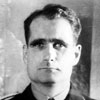
A forensic analysis was conducted by McCall et al. (2019) to solve the Doppelgänger conspiracy theory regarding Rudolf Hess (1894-1987), a Nazi politician who was Deputy Führer to Adolf Hitler from 1933 to 1941. Hess flew solo to Scotland in an attempt to negotiate peace with the United Kingdom during World War II. He was taken prisoner and eventually convicted of crimes against peace, serving a life sentence until his suicide in 1987. He hqs been speculqted thqt the prisoner was an imposter and not Rudolf Hess. The DNA analysis of the only known extant DNA sample from prisoner ‘Spandau #7’ proved to be a match to the Hess male line, thereby refuting the Doppelgänger Theory.
R1a-Z280 branch (Balto-Slavic)

The Swedish actor Max von Sydow, who played in eleven films by Ingmar Bergman and many Hollywood movies and series, including more recently Game of Thrones, was identified as a member of haplogroup R1a-Z280 (Pomeranian P269 subclade) through the test of a 2nd paternal cousin at FTDNA.

King Willem-Alexander of the Netherlands, belongs to haplogroup R1a-Z280 (north-western Slavic S18681 subclade) according to the testing of a distant cousin with FTDNA. He is the son of Queen Beatrix of the Netherlands and German diplomat Claus von Amsberg, whose family hails from Mecklenburg.
R1a-Z92 branch (East Slavic)
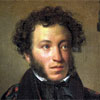
The Russian poet, playwright, and novelist of the Romantic era Alexander Pushkin (1799-1837), who is considered by many to be the greatest Russian poet and the founder of modern Russian literature, probably belonged to R1a-Z92 > YP617 > YP682 according to the testing of a distant cousin descending from Gregory "Pushka" Alexandrovich Morhinin, founder of the Pushkin family (reported on the Serbian genealogy website poreklo.rs).
R1a-Z93 branch (Indo-Iranian)

Based on descendant testing, it appears most likely that the sultans of the Ottoman dynasty belonged to haplogroup R1a-Z93. This has not been officially confirmed yet. All sultans of the Ottoman Empire (1299-1922) descend in patrilineal line from Osman I, making it one of the longest reigning Y-chromosomal lineage in history.

The Israeli politician Benjamin Netanyahu, who has served four times as Prime Minister of Israel, belongs to haplogroup R1a-Z93 (Jewish Y2630 subclade) according to his brother's Ido's DNA test at FTDNA.
Unknown R1a branch
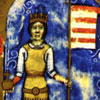
The DNA of King Béla III of Hungary (c. 1148-1196) was tested by Olasz et al. (2018). His Y-DNA was identified as R1a (possibly the Z93 branch and Z2123>Y934 clade based on STR values, but unconfirmed), while his mtDNA was H1b. Béla was a member of the Árpád dynasty, which ruled over Hungary (and Croatia from 1091) from the arrival of the Magyars in the 9th century until 1301.
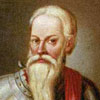
A team led by Prof. Albinas Kuncevičius tested the DNA extracted from the remains of Mikołaj "the Red" Radziwiłł (1512-1584), Count Palatine of Vilnius and Grand Chancellor of Lithuania, and of his son Mikołaj Radziwiłł (1546-1589). They identified them as a members of haplogroup R1a. By extension, the whole Radziwiłł family would belong to that haplogroup. The Radziwiłł are a princely lineage originally from Lithuania who also played an important role in Belarusian, Polish and German history.
Other famous members of haplogroup R1a
- Alexander Mozhaysky (1825-1890) : was an admiral in the Imperial Russian Navy, aviation pioneer, researcher and designer of heavier-than-air craft.
- Nikolay Przhevalsky (1839-1888) : was a Russian geographer and a renowned explorer of Central and East Asia.
- Jesse James (1847-1882) : an American outlaw, bank and train robber, guerrilla, and leader of the James–Younger Gang. A descendant of his grandfather, reverend John Martin James (1775-1827), tested on the James Y-DNA Project and was found to belong to R1a-Y2395 > Z284> L448 > CTS4179> YP386, a Scandinavian branch of R1a also found in Britain.
- Vladimir Arsenyev (1872-1930) : was a Russian explorer of the Far East who recounted his travels in a series of books telling of his military journeys to the Ussuri basin.
- Nikita Mikhalkov (b. 1945) : is a Russian filmmaker, actor, and head of the Russian Cinematographers' Union.
- Ben Carson (b. 1951) : an American politician, public servant, author, and neurosurgeon who has served as the 17th United States Secretary of Housing and Urban Development. His Y-haplogroup was revealed in the book "Finding Your Roots" (2014).
- Tõnu Trubetsky (b. 1963) : is an Estonian punk rock/glam punk musician, film and music video director, and individualist anarchist.
- Yevgeny Mironov (b. 1966) : is a Russian film and stage actor, Meritorious Artist of the Russian Federation, the People's Artist of Russia, and the State Prize of the Russian Federation laureate.
Follow-up
Ask your questions and discuss about haplogroups on the Forum